Goldcast Belongs to Cvent Now: The Buying Question
Cvent announced its Goldcast acquisition in December 2025 and completed its ON24 acquisition in April 2026. Two shortlist names, one owner, one live contract question.
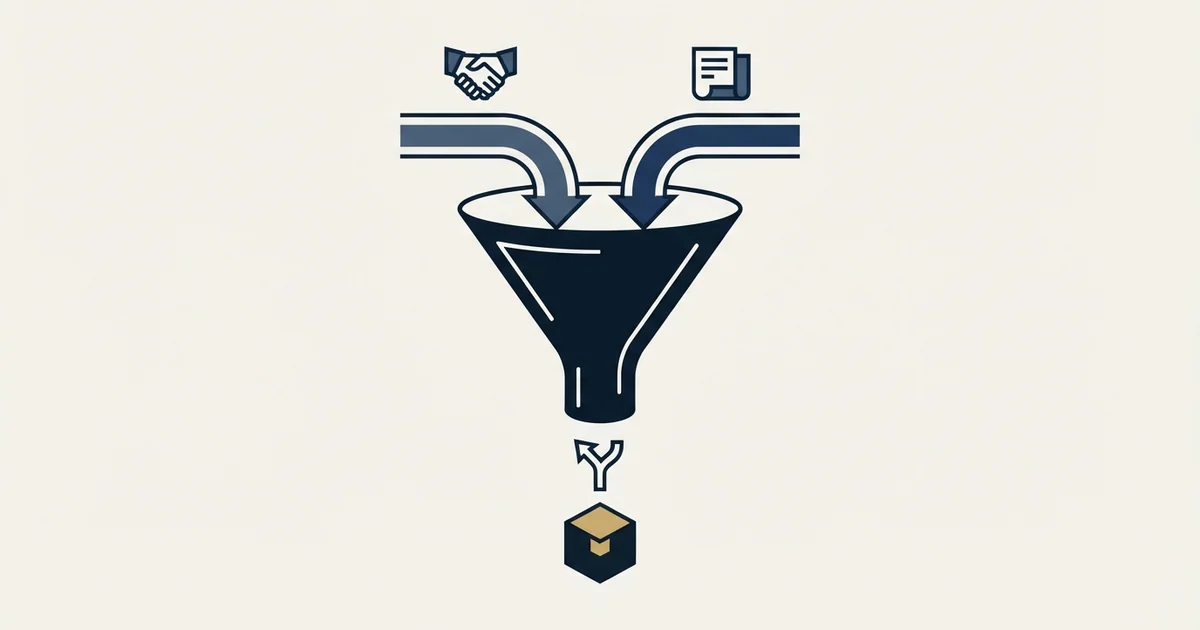
Goldcast is a B2B video content platform built around repurposing webinar and event recordings, and a Cvent company since Cvent announced the acquisition on 15 December 2025. Cvent also completed its ON24 acquisition on 1 April 2026. No price is published, so contract length is the live decision.
Key takeaways
- Cvent announced its acquisition of Goldcast on 15 December 2025 and completed its acquisition of ON24 on 1 April 2026, so two shortlist rivals now share an owner.
- Goldcast splits its product into Events, Content Lab, Recording Studio and Agents, and names demand generation, event and field, content and marketing ops as its buyers.
- Goldcast's pricing page carries no currency figures; every plan routes to a demo or a free start, so a comparison before the sales calls is about shape rather than cost.
- Under new ownership, the roadmap question moves to the portfolio owner, and a shorter contract term buys the option to see which product gets built.
Reviewed and updated September 21, 2026
Between December 2025 and April 2026, one company bought two of the platforms a B2B marketing team would have shortlisted against each other. Cvent announced the acquisition of Goldcast on 15 December 2025, and announced the completion of its acquisition of ON24 on 1 April 2026. Both statements come from Cvent's own press releases, and whether Goldcast is worth the investment for demand generation now starts from that consolidation.
If you are evaluating Goldcast, that is the fact the evaluation now turns on, and it is not on the product pages. A feature comparison between Goldcast and ON24 is a comparison between two products with the same owner, and every roadmap question you would normally ask a vendor has become a question about somebody else's portfolio strategy.
What Goldcast is
Goldcast is a B2B video content platform. Its own site splits the product into four named pieces: Goldcast Events for webinars, virtual events and field events, Goldcast Content Lab for repurposing a video library into clips, blogs and social posts, Goldcast Recording Studio for recording and editing podcasts and customer stories, and Goldcast Agents for AI workflows that create, optimise and amplify video.
The company positions itself around what happens to the recording after the event rather than around running the event itself. Cvent's release calls it "an innovative video content platform built for B2B webinars and events" and says the combination will allow marketing teams "to instantly turn live event moments into on-brand video clips, summaries, and recaps."
That emphasis is the honest differentiator. Plenty of platforms will stream a webinar. The pitch here is that the hour you recorded becomes a month of content, which matters because a recording is the asset in this format that keeps producing after the live event is over.
Who the product is sold to is visible on the same page and is worth reading before a demo, because it tells you whose problem the roadmap serves. The site names its personas as demand generation, event and field, content, marketing ops and marketing leaders, and its use cases as webinars, virtual events, content repurposing, video hubs, video editing, shows and series, field events and podcasts. That is a marketing-department product rather than an events-department one, and the two buy differently. An events team evaluates registration, check-in and the attendee experience. A demand generation team evaluates what comes out of the recording and whether it reaches a CRM. If the person running your evaluation is on the events side, expect the demo to answer questions they were not asking.
Goldcast also publishes research on the category. Its site promotes a benchmark report on "What 26,190 webinars from 522 B2B companies reveal about attendance," engagement and AI. Vendor-published research is worth reading and worth reading as what it is, which is a study designed by a company selling into its own findings.
Is Goldcast worth the investment for demand generation?
It can be, when the reason for buying is what happens to the recording. Goldcast names demand generation as a persona and sells the work that turns webinars and events into clips, posts and hubs. Its price is not published and it now belongs to Cvent, which also owns ON24, so the investment case rests on contract length and on who staffs the follow-up.
Two tests settle most cases. The first is whether the repurposing layer is the reason you are buying or a feature nobody on the team will run, because an unused content lab is the most expensive part of a platform to leave idle. The second is whether the registrations it produces reach a CRM and get a timely, specific follow-up, since that is where a webinar programme's value is decided. Goldcast's own homepage, read for this update, does not mention Cvent, so the ownership question has to be raised in the sales call rather than read off the site.
What Cvent's own releases say, and what they do not

The Goldcast release, datelined Tysons VA on 15 December 2025, sets out the intended benefits in a list that begins "Simplify tech stacks by bringing together event management, engagement analytics and video creation in one place" and goes on to "Combine Cvent's event insights with Goldcast's video engagement metrics for a clearer view of buyer intent". The same page puts Cvent at "~30,000 customers" at that date and places Goldcast "among Deloitte's 2025 Technology Fast 500".
The ON24 release, datelined Tysons Va. on 1 April 2026, announces completion rather than intent, calling ON24 "a trusted webinar and digital engagement platform for B2B enterprise marketing". It also commits to continued investment: Cvent "plans to continue to invest in and grow the ON24 platform", and tells existing customers to "expect the same industry-leading experience they trust today".
Neither release gives a figure for what Cvent paid, on the copy of each page read for this update. Deal values circulate in trade coverage and in social posts and are absent from both primary sources, so no number appears here.
What actually changes for a buyer
Three things move, and only the third is usually discussed.
The shortlist
- Goldcast against ON24 is now one supplier
- The price tension a rival supplied is gone
The roadmap
- Answered by the portfolio owner
- A commitment to invest does not pick a winner
The contract
- Length becomes the live decision
- A shorter term buys the option to wait
The shortlist collapses. A procurement process that put Goldcast against ON24 was comparing two suppliers. It is now comparing two products from one supplier, which removes the competitive tension that was doing much of the work on price and terms. If your leverage in that negotiation was a credible alternative, check whether the alternative is still owned by somebody else.
The roadmap question changes owner. A vendor commitment to keep investing in a product is a genuine statement and it is the acquirer's statement, not the acquired team's. Cvent has said it plans to continue investing in ON24 and has said the combination will unify event and video workflows. Both are reasonable and neither tells you which product wins a feature that only one of them needs to have in three years.
The contract length becomes the decision. This is the practical one. A multi-year commitment signed during a portfolio integration is a bet on which product the acquirer prioritises, made with less information than the acquirer has. A shorter term costs more per month and buys the option to see what gets built.
| Ask | Why it matters now |
|---|---|
| Which product owns which capability in the combined roadmap | A stated commitment to keep investing does not settle which product wins a feature |
| The data-export path, documented before signing | Leaving is cheapest to plan while you still have leverage |
| Whether your renewal lands before or after integration milestones | A multi-year term is a bet on the acquirer's priorities |
| The price of a shorter term, stated explicitly | The premium is the cost of the option to see what gets built |
| Which support organisation you will actually reach | Support arrangements can change during an integration |
The pricing question has one honest answer
Goldcast does not publish prices on the plans page read for this article. That page, as served for this update, contains no currency figures of any kind. Every plan routes to Get a Demo or to a free start, and the page is organised around products and use cases rather than around tiers with numbers attached.
Withheld rates are the norm across webinar platforms, and what BigMarker publishes instead of a rate shows the same quote-only structure alongside an attendee ceiling.
That is ordinary at the enterprise end of this category and it has one practical consequence rather than a moral one. The shortlist you can build by reading is not the shortlist you can build by asking, so budget the calls. It also means any third-party page quoting a Goldcast price is quoting something it was told or inferred, and the ownership change makes that class of figure rot faster than usual.
The other consequence is worth planning for. When price is discovered rather than published, the comparison you can actually run before the calls is on shape rather than on cost: which products in the portfolio you would use, how many events a year, and whether the repurposing layer is the reason you are buying or a feature you will not staff.
Where webinar platforms sit in an outbound motion
RevenueFlow runs cold email and LinkedIn rather than webinars, so we do not operate Goldcast, ON24 or Cvent. Everything above comes from those companies' own pages and press releases rather than from using the products.
The part of this we do have a view on is what happens either side of the event, and it is where the value in the format tends to leak away.
The registration list is the asset, not the attendance rate. A registration is a person who gave you a work email in exchange for a promise about a named topic on a named date, and it survives a no-show, which is why treating no-shows as a lower tier is usually wrong. Our piece on webinar lead generation works the arithmetic through and makes the case for choosing a topic by who it excludes.
Follow-up is the other half, and it is where house doctrine differs from what every platform's own playbook recommends. We do not run reminder ladders or post-event nurture sequences, because a sequence of unanswered messages under an unanswered message is a bump. We contact people on things they did: they registered and the session is tomorrow, they watched the recording six weeks later, they asked a question in the session. A date passing is not something the recipient caused. The messages that fit that model are in event outreach email templates, and the equivalent motion around a physical event is in conference lead generation and booking meetings before you arrive.
The point where the two motions meet is the one Cvent's own releases keep naming: first-party data captured across formats. That data is only worth what the follow-up does with it, and a platform contract does not staff the follow-up. Which is the underlying argument in demand gen strategy, that funding every channel evenly is what not making a decision looks like.
The short version
Goldcast is a B2B video content platform built around repurposing the recording, organised into events, content lab, recording studio and AI agents, and it has been a Cvent company since Cvent announced the acquisition on 15 December 2025. Cvent completed its acquisition of ON24 on 1 April 2026, so the two platforms a B2B marketer would have compared now share an owner.
Nothing about the products got worse on those dates. What changed is that the shortlist lost its competitive tension, the roadmap answer moved to a portfolio owner, and contract length became the live decision rather than a formality. No price appears on the plans page fetched for this article, so the comparison available before the sales calls is about shape rather than cost.
If the reason you are buying a webinar platform is pipeline rather than production, the registration list is the asset and the follow-up decides what it is worth. See what a first campaign produces against the same audience and compare.
Sources: Cvent's own press releases on the Goldcast and ON24 acquisitions and goldcast.io's pricing and home pages. Ownership and packaging change, so verify current terms with the vendor before relying on them.
Sources: Cvent, acquisition of Goldcast, Cvent closes acquisition of ON24, Goldcast pricing, Goldcast home
Frequently asked questions.
Frequently asked questions- Is Goldcast worth the investment for demand generation?
- It can be, when the reason for buying is what happens to the recording. Goldcast names demand generation as a persona and sells repurposing of webinars and events into clips and posts. Its price is not published and it now belongs to Cvent, which also owns ON24, so the case rests on contract length and on who staffs the follow-up.
- Who owns Goldcast?
- Cvent. Cvent announced the acquisition of Goldcast on 15 December 2025, describing it as a video content platform built for B2B webinars and events. Cvent also completed its acquisition of ON24 on 1 April 2026, so two platforms B2B marketers used to compare against each other now have the same owner.
- How much does Goldcast cost?
- Goldcast does not publish prices. Its pricing page carries no currency figures and routes every plan to a demo or a free start, so any price quoted by a third party was told to them or inferred. Budget the sales calls, and ask for a shorter-term price as well as the multi-year one.
- What changes for a buyer after the Cvent acquisition?
- The shortlist lost its competitive tension, since Goldcast and ON24 now share an owner. Roadmap questions become questions about Cvent's portfolio, and contract length becomes the live decision: a multi-year term is a bet on which product the acquirer prioritises, while a shorter one costs more per month and buys the option to wait.
About the author.

Ben Carden is CRO at RevenueFlow, which builds and operates outbound revenue engines for B2B companies. Previously at Gartner Enterprise. Studied at London School of Economics.
Ben Carden · CRO
Connect on LinkedIn →Explore more.
Ready to scale your outreach?
We build GTM engines that book real meetings. See the receipts.
Related articles.
BigMarker Pricing: What the Vendor Publishes
BigMarker prints Request a Quote against all three plans. The structure it does publish, and the meter that caps attendance rather than registration.
eWebinar Pricing: Two Meters and a Level That Moves
eWebinar does not ask you to pick a plan. Published webinars set the level and registrants set the overage, and the two directions do not move on the same schedule.
BrightTALK Pricing: What the Vendor Does Not Publish
Six BrightTALK surfaces carry no price at all. The $500 figure filling that gap is a 2022 scrape on a listing the vendor says it does not manage.
On-Demand Webinars: What Changes When You Take the Date Away
A live webinar earns most of its value from the date. Removing it keeps the topic signal and the address, and loses the deadline, the burst and the room.
ABM vs ABX: What Demandbase Added to the Model
One of these terms belongs to a vendor. What Demandbase says ABX adds, the three things that genuinely change, and the three that stay identical.
Unbounce Alternatives: Two Boundaries, Four Meters
Teams leave Unbounce at two published boundaries: the 500 visitor entry ceiling and testing starting on the third tier. Each alternative moves one, both or neither.