ABM vs ABX: What Demandbase Added to the Model
One of these terms belongs to a vendor. What Demandbase says ABX adds, the three things that genuinely change, and the three that stay identical.
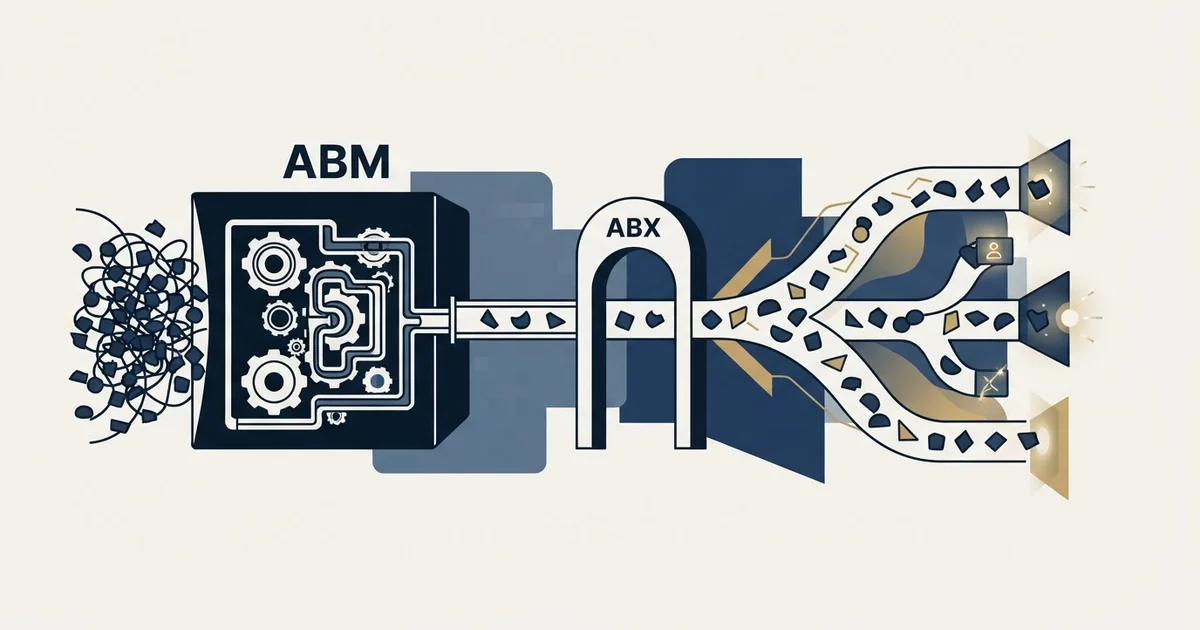
Account-based marketing is an industry category term. Account-based experience is Demandbase's own extension, which its FAQ defines as a strategy orchestrating marketing and sales actions across the whole B2B customer journey. Three things genuinely differ: customer success joins the programme, engagement is signal-triggered, and reporting extends past the close.
Key takeaways
- Demandbase publishes both definitions on its own FAQ page and frames the second as an evolution of the first rather than a competing model.
- The substantive difference is sequencing: engagement triggered by evidence that an account is in motion rather than by the programme calendar.
- The list, the channels and the three tiers are identical under either name, so a channel purchase driven by the acronym is buying a product rather than a motion.
- Contact coverage across the target list is the precondition neither acronym contains, and it is computable from your own CRM before anything is spent.
Reviewed and updated October 1, 2026
A marketing lead gets asked in a board meeting whether the team is running ABM or ABX. The honest answer is usually that nobody in the room could state the difference, that the programme has not changed, and that the second acronym arrived in the deck because a vendor used it. That is a fair description of how most people meet the term, and it is worth resolving properly, because underneath the vocabulary there are two operational changes that either apply to your organisation or do not.
The short version is that one of these terms belongs to a company. Account-based marketing is a category name used across the industry. Account-based experience is a term Demandbase introduced for its own extension of the idea, and it says so on its own pages.
Where the second term came from
Demandbase sets out the distinction on its own FAQ page, answered on 28 August 2026, and the useful thing about that page is that it declines to frame the two as rivals: its own conclusion is that "ABX is an evolution of ABM to consider the whole customer journey".
It defines account-based marketing as "a GTM strategy for finding the right fit accounts that represent significantly higher expansion or growth opportunities and targeting them with tailored marketing and sales support", which is a description that matches how the term is generally used.
On the second term it is explicit about authorship. The page states that "Demandbase has expanded on ABM to take into account the customer experience and increased sales and marketing alignment", and defines the result as "a go-to-market strategy that uses data and insights to orchestrate relevant, trusted marketing and sales actions throughout the B2B customer journey". It presents the result as an extension rather than as a competing model.
That provenance matters when you are deciding whether to adopt the word. A category term describes what an industry does. A vendor term describes what a vendor built, and it usually encodes that vendor's product boundaries. Neither of those is a reason to reject it, and both are reasons to know which one you are holding.
The three things that actually change
Strip out the vocabulary and there are three operational differences worth arguing about. Everything else in the comparison is restatement.
Who is in the programme
The account-based marketing version has two functions in it: marketing selects and engages, sales works the accounts. The handoff between them is where the programme lives or dies, which is why so much account-based writing is really writing about that seam.
The experience version adds customer success and extends the programme past the close. The same account data and the same coordinated plays are used for onboarding, adoption, renewal and expansion, which means the programme has an owner after the contract is signed rather than ending at it.
Whether that addition is real in your company is a structural question rather than a marketing one. If customer success has its own account priorities, its own data and its own reporting line, calling the programme account-based experience does not merge them. It just renames the gap.
When you engage
This is the substantive difference and it is the one Demandbase leans on hardest. Its FAQ describes the older approach as one where "the main emphasis was on pinpointing valuable accounts and making efforts to engage them, without necessarily considering whether it was the right time to engage or if they were genuinely interested in receiving communication from your company".
Read plainly, that is a claim about sequencing. A targeting-first programme decides who is worth reaching and then reaches them on the programme's schedule. A signal-first programme decides who is worth reaching, and then waits for evidence that this particular account is in motion before spending the expensive part of the budget on it.
The second is better when the signals are real and the list is large enough that accounts come into market at different times. It is worse when the signals are weak, because a programme that waits for a signal it cannot see does nothing at all, and the accounts that were reachable get contacted by somebody else.
What gets measured
The reporting unit changes from the account in a buying cycle to the account across its lifetime. Engagement and pipeline from target accounts remain, and retention, expansion and adoption join them.
That change is easy to announce and hard to instrument. It requires the customer record and the marketing record to join, which is the same requirement that already defeats a good share of account-based reporting before the extension. Where the join does not exist, the extended programme reports activity summaries in more places rather than account movement in one.
- Account-based marketing: marketing and sales
- Account-based experience: marketing, sales and customer success
- The seam moves from close to renewal
- Renaming the programme does not merge the reporting lines
- Account-based marketing: the programme calendar
- Account-based experience: evidence the account is in motion
- Signal quality decides whether the second is better or slower
- A weak signal produces a programme that waits
- Account-based marketing: engagement and pipeline from target accounts
- Account-based experience: the same, plus retention and expansion
- Requires the customer record to join the marketing record
- Without the join, both report activity
What does not change
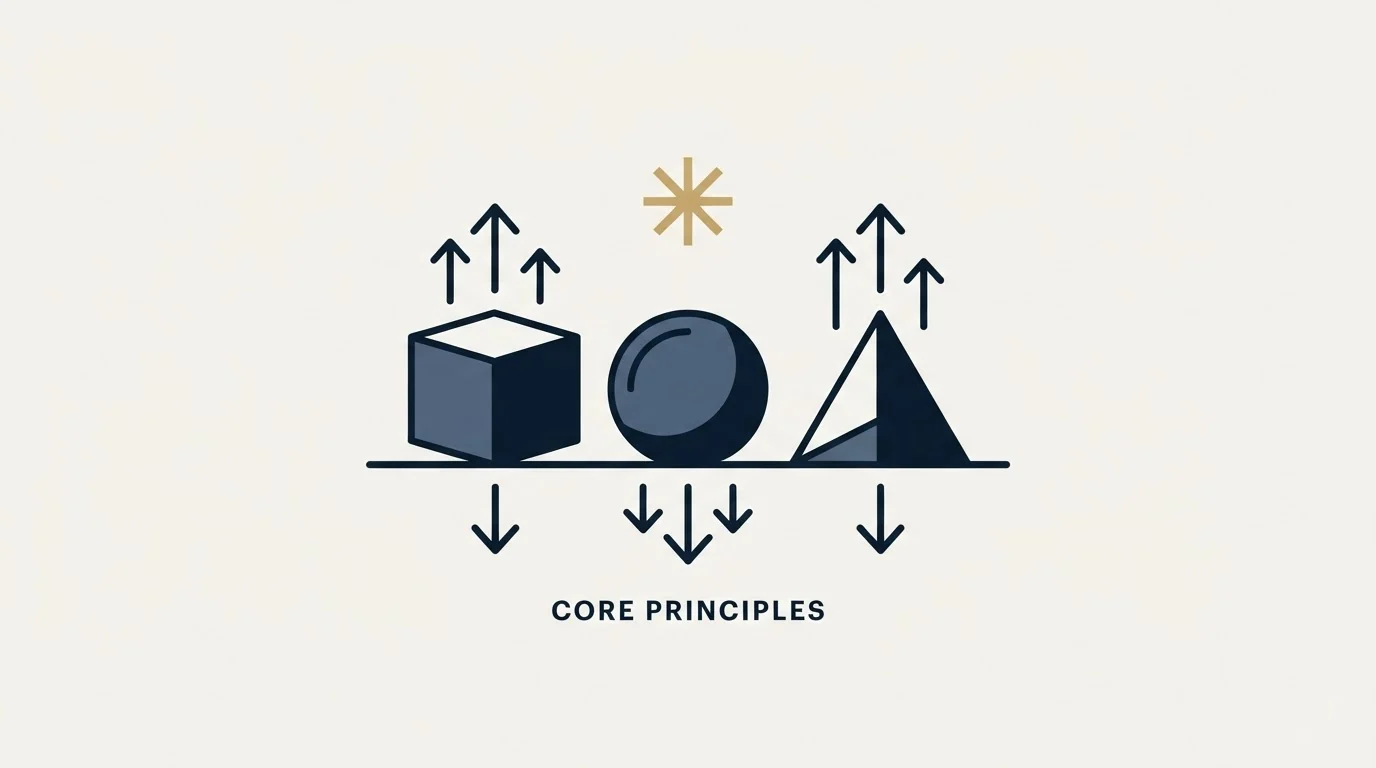
Three things are identical under either name, and mistaking any of them for a difference is the most common way the distinction wastes money.
The list. Both models start from a named set of accounts chosen before anything is spent. The work of building that set, sizing it against capacity and getting a named person in sales to sign it off is the same work either way, and it is the step that decides whether the programme functions. Building a target list you can actually work covers the sizing arithmetic.
The channels. Neither model is defined by where the message is delivered. Email and LinkedIn carry both, advertising carries both, events carry both. A team told it must buy new channels to run the newer version is being sold a product rather than a motion.
The tiers. One to one, one to few and one to many describe how many accounts share a piece of work, and the cost per account falls sharply from left to right under either name. If your list is four hundred companies, you are running one to few or one to many whatever the programme is called. The rest of that reasoning is in what ABM actually is.
The precondition both models skip
Coverage decides whether either programme functions, and neither acronym contains it.
For each account on the list, do you hold usable contact data for the people who matter? A programme aimed at two hundred accounts where buyers are reachable at sixty of them is a sixty-account programme carrying a two-hundred-account budget. That figure is computable from your own CRM before anything is spent, and it is almost never computed first.
The related number is buying-group depth. One engaged contact at fifty accounts is a weaker position than four engaged contacts at fifteen, and depth moving up is the earliest honest sign that a programme is working, well before pipeline appears. Neither number requires a platform, and both are the ones a lifecycle framing makes more important rather than less, because a programme that runs past the close needs the account relationship to be more than one person.
- Step 1Selection
The account enters a named list, chosen against criteria somebody in sales signed off
- Step 2Engagement
Coordinated marketing and sales contact against the buying group, on a calendar or on a signal
- Step 3Opportunity
A buying cycle opens. Both models are fully present here and report the same things
- Step 4Close
The contract signs. The marketing-and-sales framing has reached the end of its scope
- Step 5Adoption and renewal
The same account data and plays run for onboarding, expansion and renewal. This is the span the experience framing adds
Is the distinction worth adopting
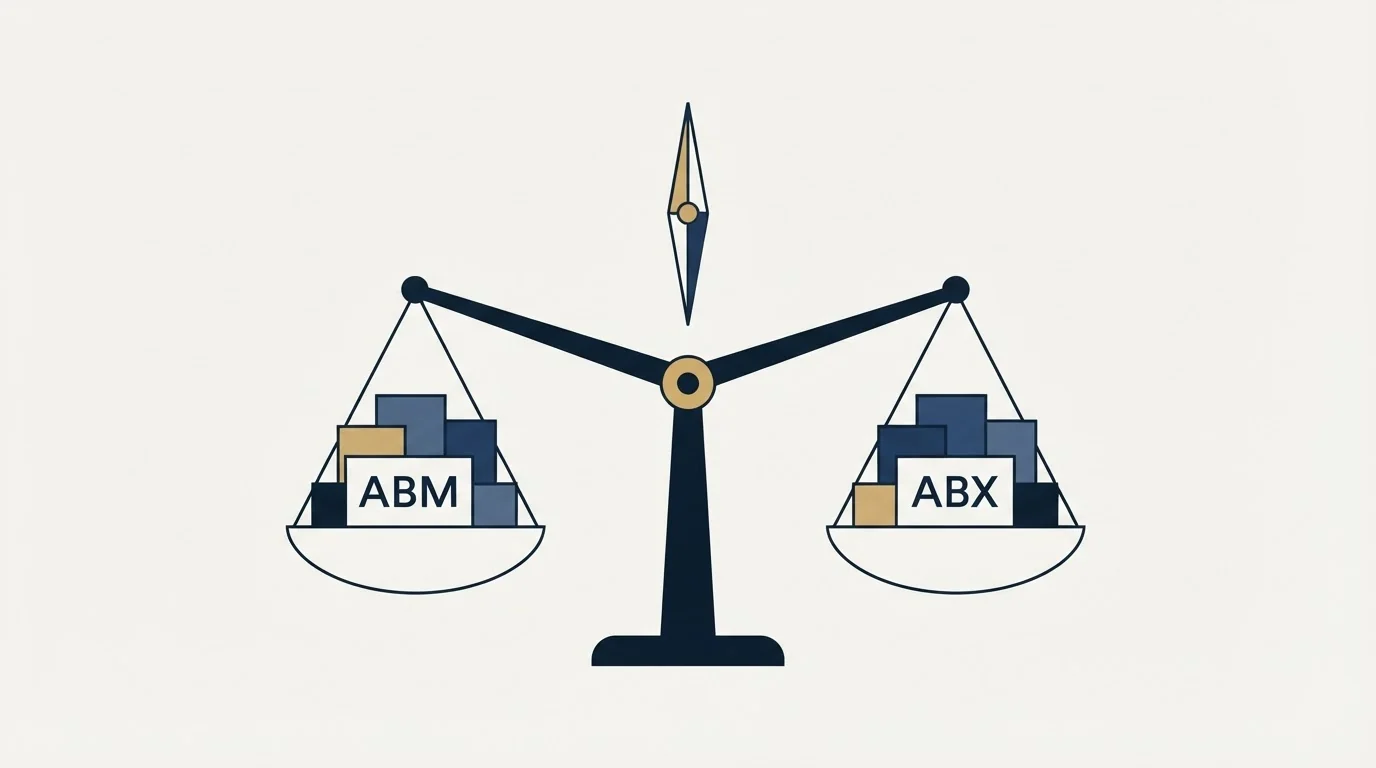
A vocabulary change earns its cost when it changes a decision. Four questions decide it, and a mostly negative answer means the honest move is to keep one word and fix the underlying programme.
- Depends: Customer success has account priorities that could be set from the same list
- Depends: The customer record and the marketing record already join at account level
- Depends: You hold signals specific enough to change which accounts get contacted this month
- Depends: Expansion revenue is large enough to be worth a named owner
- Depends: Contact coverage across the target list has been measured
- No: The programme is being renamed while the seam between two functions stays unowned
- No: A new channel is being bought because the acronym changed
The unchecked rows are the two failure modes. A renaming that leaves an unowned handoff in place produces the same argument in new vocabulary, and the four disagreements that actually generate that argument are set out in GTM misalignment. A channel purchase driven by an acronym is the more expensive version of the same mistake.
Where outbound sits in either one
Direct contact is cheap per account and fast to answer, which makes it useful in both models for the same reason: it tells you within weeks which accounts are reachable, which titles answer and which framing lands. That is real signal on a list where third-party evidence is thin, and it costs a fraction of what per-account creative costs.
Under the signal-first framing that role becomes larger rather than smaller. A programme waiting for third-party evidence of intent has a coverage problem on every account that never generates any, and cheap contact is the instrument that produces first-party evidence instead of waiting for somebody else's.
We run that half as one message per campaign, with no bumps and no thread replies. On an account-based list that constraint bites in a specific way: a premise is written for a defined population, so a list blending two populations produces a message that fits neither. The four plays that make the direct half work against a named list are in B2B account-based marketing.
The short version
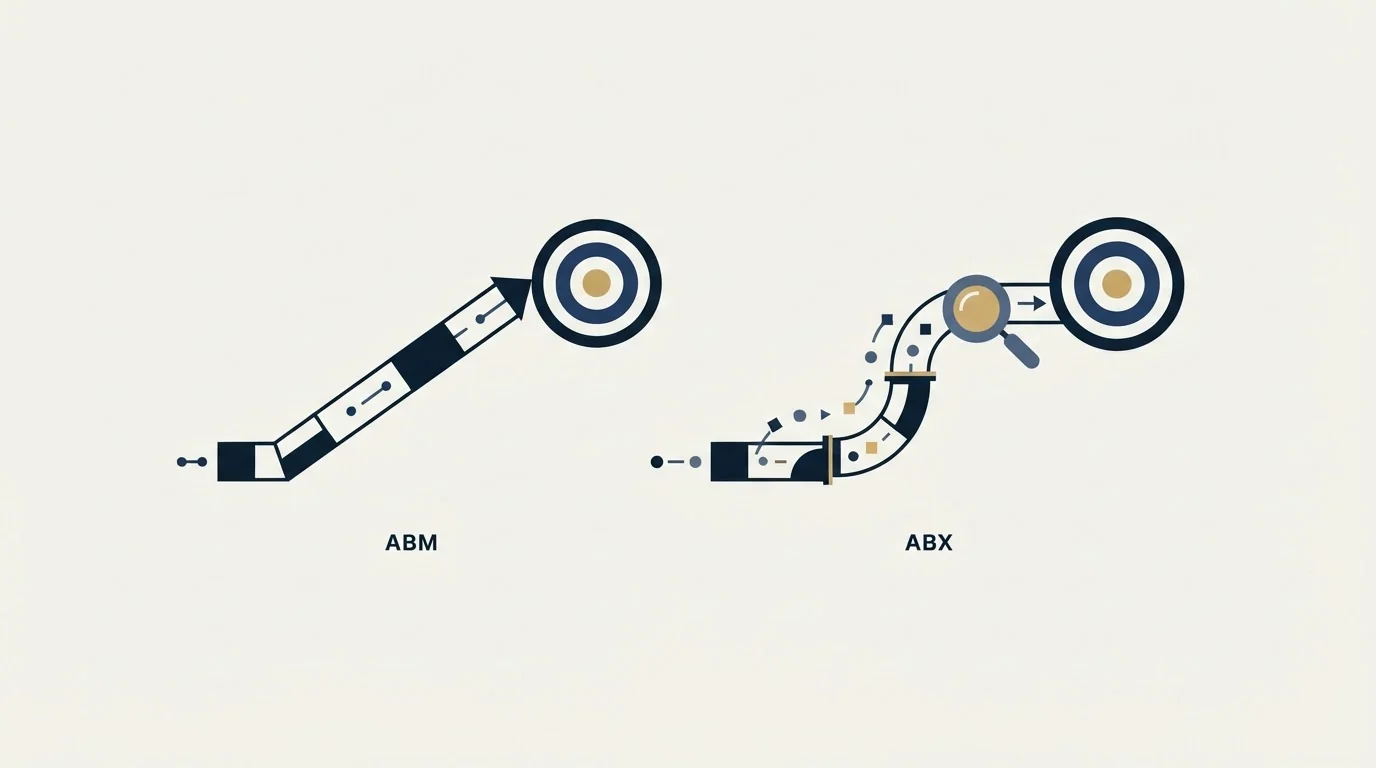
Account-based marketing is an industry category. Account-based experience is Demandbase's own extension of it, and Demandbase describes it on its own pages as an evolution rather than a rival, defining it as a strategy that orchestrates marketing and sales actions across the whole B2B customer journey.
Three things genuinely differ: customer success joins the programme and it runs past the close, engagement is triggered by evidence that the account is in motion rather than by the programme calendar, and the reporting unit extends to retention and expansion. Three things do not: the list, the channels and the tiers.
Adopt the second word only where those three changes would change a decision. Measure contact coverage and buying-group depth first, because both models are silent about them and both fail without them.
If the useful next step is finding out which accounts on the list are reachable at all, that is answerable in weeks rather than quarters. See what one campaign against your named list produces.
Definitions above are quoted from Demandbase's own ABM vs ABX FAQ page, fetched 2 September 2026 and carrying an answered date of 28 August 2026. Verify current wording with the vendor before relying on it.
Frequently asked questions.
Frequently asked questions- What is the difference between ABM and ABX?
- Account-based marketing selects named accounts and aims coordinated marketing and sales effort at them. Account-based experience, as Demandbase defines it, extends that across the whole customer journey: customer success joins the programme, engagement waits for evidence the account is in motion, and reporting covers retention and expansion rather than stopping at the close.
- Is ABX a real category or vendor vocabulary?
- It is vendor vocabulary describing a real extension. Demandbase states on its own FAQ page that it expanded on account-based marketing to take account of the customer experience and sales and marketing alignment, and calls the result account-based experience. Other publishers use the term, but the authorship is disclosed by the vendor rather than inferred.
- Do I need different channels to run ABX?
- No. Neither model is defined by where the message is delivered. Email, LinkedIn, advertising and events carry both. What changes is upstream and downstream of the channel: how the list was chosen, how many people inside each account are approached and by whom, and whether the reporting unit is the lead or the account.
- How do I know whether the distinction changes anything for us?
- Check four conditions. Whether customer success has account priorities that could be set from the same list, whether the customer and marketing records already join at account level, whether you hold signals specific enough to change which accounts get contacted this month, and whether expansion revenue is large enough to justify a named owner.
About the author.

Ben Carden is CRO at RevenueFlow, which builds and operates outbound revenue engines for B2B companies. Previously at Gartner Enterprise. Studied at London School of Economics.
Ben Carden · CRO
Connect on LinkedIn →Explore more.
Ready to scale your outreach?
We build GTM engines that book real meetings. See the receipts.
Related articles.
ABM Metrics: Coverage Decides Every Other Number
Every published ABM metric is a ratio whose denominator somebody chose. Six numbers, the denominator each one needs, and the comparison that settles it.
5 ABM Campaign Examples and How Each One Is Built
Five worked account-based campaign examples, each built on the same five fields: account set, tier, plays in order, owner and handoff, and the exit condition.
B2B Account-Based Marketing: The Four Plays
Four account-based plays that produce pipeline, in the order to run them, with the LinkedIn audience floor and the buying-group work most teams skip.
ABM Reporting: Three Readers, Three Cadences
ABM reporting built around who reads it: a weekly operating page, a monthly allocation page and a one-page quarterly board report, each computed from CRM fields.
Goldcast Belongs to Cvent Now: The Buying Question
Cvent announced its Goldcast acquisition in December 2025 and completed its ON24 acquisition in April 2026. Two shortlist names, one owner, one live contract question.
Define Content Syndication: Two Purchases Behind One Word
One budget line, two different purchases. Republication buys reach; lead syndication buys contact records produced by a download. The deliverable tells you which.