BrightTALK Pricing: What the Vendor Does Not Publish
Six BrightTALK surfaces carry no price at all. The $500 figure filling that gap is a 2022 scrape on a listing the vendor says it does not manage.
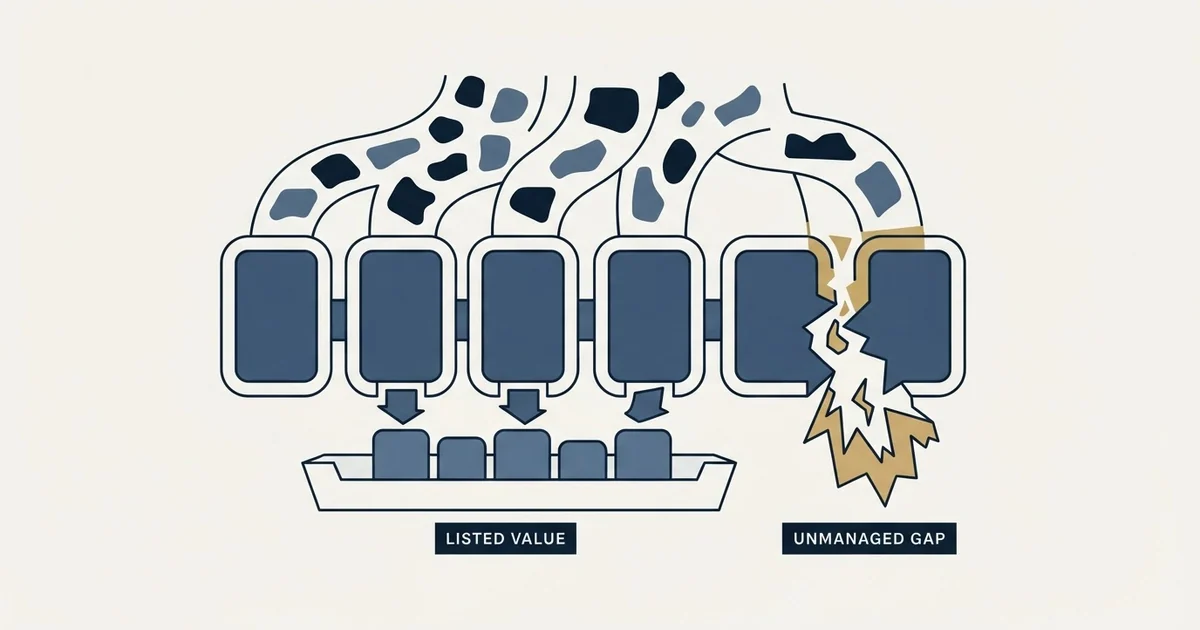
BrightTALK pricing is not published: none of its own pages or its Informa TechTarget product page shows a price, and every call to action is Request a Demo or Contact Sales. The $500 and $1,000 monthly tiers in search results come from a SaaSworthy listing that dates them to May 2022.
Key takeaways
- No BrightTALK or Informa TechTarget product page shows a price; every call to action is Request a Demo or Contact Sales.
- The $500 and $1,000 a month tiers in circulation come from a SaaSworthy listing that dates its prices to 05/05/2022 and says the vendor does not manage it.
- BrightTALK sells two things, a channel subscription and a guaranteed lead volume, and only the first is priced like software.
- Price the lead product per delivered lead against your other sources, and get the lead definition in writing before the term starts.
Reviewed and updated September 21, 2026
BrightTALK pricing is not published anywhere the vendor controls. Five BrightTALK surfaces read in full carry no currency figure: the homepage, the channel product page, the lead generation product page, the why-BrightTALK page and the BrightTALK product page on informatechtarget.com. The sixth, the viewer join page, renders only a cookie-consent prompt to a fresh browser. Every call to action on the product pages is Request a Demo or Contact Sales.
The number that fills that gap in search results is $500 a month, and the page printing it dates its own figures in a line reading "last updated on 05/05/2022 from the vendor website and may be different from actual", beside a banner explaining that "the official vendor does not yet manage it".
That is the honest position on BrightTALK pricing, and once you know it the useful question changes from what it costs to what you are actually buying, because the answer to the second one is on the vendor's own pages in plain language.
BrightTALK pricing on the vendor's own pages
The public brighttalk.com homepage is the viewer portal: a topics directory for the audience, not a sales page, returning under eight hundred characters of visible text to a plain fetch. The business pages sit under a /business path, and those now serve Informa TechTarget pages; the why-BrightTALK address serves the Informa TechTarget product page itself. That matters for a reason we will come back to.
Across those surfaces there is no rate card, no plan ladder, no seat price and no minimum. What there is instead is a product description, and it is unusually specific about what it sells.
Elsewhere in webinar software the opposite holds, and a published ladder that adjusts itself sets the level from how many active webinars an account runs.
The Channel page puts it like this: "The BrightTALK Channel helps you to create and distribute content, making your brand and messaging discoverable to 50M+ professionals." Its capability list is content creation, content syndication, content hosting, sales intel and lead generation, with live question and answer, interactive polls and tracked attachment downloads under audience engagement.
The Lead Generation page is the one that answers the pricing question by implication. Its headline is "More demand capture. More that converts." Under Content Leads it says "Tap into our amazing B2B audience for the guaranteed lead volumes your pipeline depends on." Under Always-On Buying Groups it promises to "Improve GTM efficiency, uncover and influence key buying group members, and build pipeline faster with BrightTALK and Leads with Buying Groups."
Read the noun in the middle of that. Guaranteed lead volumes. Whatever the contract costs, the thing being sold there is leads, not software.
Two products, and only one of them is priced like a tool
The Channel: a place to put content
- Create, host and distribute your own webinars and video
- Registration, embedding, series and engagement tools
- Sales intel and content syndication on top
- Behaves like a platform subscription
Lead Generation: an audience you rent
- Guaranteed lead volume from the network
- Sponsoring sessions the vendor's experts create
- Buying-group identification across target accounts
- Behaves like a demand-generation buy, priced on leads
The product page on informatechtarget.com states the pair directly. It calls BrightTALK "Much, much more than a webinar platform" and says B2B marketers use it for "end-to-end video content creation, delivery and distribution that drives industry-leading brand engagement and pipeline impact". On the lead generation side it describes the two routes as activating your own webinar campaigns or sponsoring the Summits its experts create, either of which is meant to "populate your TAM, feed hungry sales pipelines, and deepen engagement with specific ABM lists of target accounts".
A platform subscription and a guaranteed lead volume are priced on different units and negotiated in different conversations. That alone explains why no single published figure exists, and it is a better explanation than the usual one about enterprise vendors hiding their prices.
There is a second reason, and it is structural. BrightTALK is an Informa TechTarget property, and on that company's product menu the BrightTALK Channel and BrightTALK Lead Generation sit in a Demand group beside Content Syndication, Highly Qualified Leads and Always-On Buying Groups. A quote from that portfolio is very likely to be a bundle across several of those lines rather than a line item for one. Anyone who has bought content syndication before will recognise the shape: the unit is a delivered lead, the negotiation is about volume, topic and filters, and the platform access is thrown in around it.
The numbers that circulate, with their provenance attached

With no first-party figure to point at, the search results for this query are review and listing aggregators, and every one of them prints a number. The most complete is SaaSworthy, whose page, now titled BrightTALK by TechTarget, sets out three tiers.
SaaSworthy lists Talks at $500.00 per month, "Billed annually in advance", with unlimited live webinars and attendees, customer relationship management and marketing automation integrations, embedding on your site, and promotion on the network. The same page lists Pro Talks at $1,000.00 per month on the same billing terms, describing it as "All features from Talks Plus, Upload and replay recorded content" together with email promotion to opt-in users, an audience insights intent research tool and language localisation. Enterprise Talks is custom, adding a dedicated customer success manager, onboarding, integration assistance and advanced training, and the whole listing is marked "Free Trial Not Available".
Now the provenance, which the page itself supplies twice. Its disclaimer reads "The pricing details were last updated on 05/05/2022 from the vendor website and may be different from actual." Beside the product name sits "This product profile is currently unclaimed." with the explanation that "The listing is published on SaaSworthy, but the official vendor does not yet manage it."
So the most repeated BrightTALK price in circulation is a scrape more than four years old, of a page that no longer exists, sitting on a profile the vendor does not maintain, and the aggregator admits both in two places. The listing's header also carries an Updated on stamp matching the day we read it, while the disclaimer beneath still dates the prices to 05/05/2022, so the header date says when the page was built, not when the price was seen. None of that makes the figure a fabrication. It makes it a dated observation, and a dated observation is only usable alongside its date.
An undated vendor price is unreadable. The aggregator carrying the most-quoted one prints its own capture date on the same page.
An unclaimed profile is one the vendor has never corrected. That is stated on the page rather than inferred.
A platform subscription and a guaranteed lead volume are different purchases. A single figure cannot be both.
Use it to decide whether to take the call, then get the quote in the units you will be billed in.
Why the comparison the aggregators draw is the wrong one
SaaSworthy files BrightTALK under Webinar Software and computes a comparison against that category. Its page states that "The Average Cost of a basic Webinar Software plan is $41 per month." and puts the BrightTALK figure 1120% higher than similar services, which is $500 set against that $41 average. The competitor table beside it lists webinar tools at around twenty-five dollars a month.
Both numbers can be accurate and the comparison still tells you nothing, because the two products are not substitutes. A twenty-five dollar webinar tool sells you a room and a recording; you supply the audience. BrightTALK's own lead generation page sells the audience, with a volume guarantee attached. Comparing them on monthly platform cost is like comparing a conference venue hire against a conference sponsorship because both involve a room.
Comparing delivered leads across sources needs the events joined somewhere first, and attribution packaged on the quoted tier is where that work gets priced.
The comparison that would actually decide the purchase is cost per delivered lead against your other sources of the same thing, which is the arithmetic laid out in cost per lead and which has the well-known trap that a cheap lead from a source that never converts is the most expensive one you buy. Against a syndication buy or an account-based platform subscription, a per-lead price is directly comparable. Against a webinar seat licence it is not comparable at all.
The audience number, and where the vendor disagrees with itself

The asset being sold is the audience, so the audience figure is the number worth checking, and BrightTALK's own pages give two.
The Channel product page makes your content "discoverable to 50M+ professionals". The Informa TechTarget product page has the same Channel reaching "58M+ professionals", and calls the network the place where "58M+ permissioned B2B professionals go to learn about the technologies and trends powering success in their space". Both pages were fetched the same day, both are the vendor's own, and they differ by eight million.
That is not a scandal; marketing pages age at different rates and the larger figure is presumably the more recent. It is worth naming because the audience size is the substance of the offer here, and a buyer negotiating on reach should quote the page as well as the number, and should ask which one the contract is written against.
The word doing the most work in the larger figure is permissioned. A network audience that opted in to receive content on named topics is a materially different asset from a scraped list, and it is the reason the lead product can carry a guarantee at all.
What to ask for, since there is nothing to compare against
Settle the unit price
- Platform access, a lead volume, or both in one number
- The written definition of a delivered lead
- The topic and filter targeting the guarantee uses
- What happens if the volume is not delivered
Settle what you keep
- Who owns the subscribers your channel gathers
- What happens to hosted content and embeds at the end
- A per-line breakdown of any bundled Informa TechTarget figure
The definition question is the one that decides whether the rest of the contract means anything. A guaranteed lead volume is guaranteed against a definition, and the definition is where the negotiation actually happens. Our own position on the same problem in a different channel is that qualification criteria are agreed in writing before launch rather than argued about afterwards, and the reasoning transfers exactly: whoever writes the definition sets the bar, and a bar you did not write is a bar somebody else can clear cheaply.
The audience ownership question matters more here than in most software purchases. A channel accumulates subscribers, those subscribers are the compounding part of the asset, and where they sit at the end of a term is a contract question rather than an export.
Where this sits for an outbound team

A network like this and an outbound programme solve different halves of the same problem, and they fail in opposite directions.
The network sells reach into an audience that raised its hand on a topic. That is a real signal, narrower and better specified than most, and it is exactly the signal our own argument about webinar lead generation says teams undervalue when they count attendance instead of registrations. What it cannot tell you is whether the person has a live project, which is the gap intent data exists to fill and only partly does.
Outbound goes the other way. It reaches people who never raised a hand, on a list you chose, with a message you wrote. It carries no guarantee and no audience, and every part of it is a decision you own.
The honest read is that a lead-volume guarantee is worth buying when the constraint is reach into a market that does not know the category exists, and it is a poor purchase when the constraint is conversion, because buying more leads on top of a funnel that leaks produces a more expensive version of the same report. Running the content afterwards as an on-demand library is what makes either purchase keep working past the event date.
The short version
BrightTALK gives no price on any of its own surfaces, and the enumeration behind that is five pages read in full, plus a join page that shows only a consent prompt, with zero currency figures between them. The $500 and $1,000 tiers circulating in search results come from an aggregator listing that the vendor does not manage and that dates its own figures to 5 May 2022, both of them in plain sight on the listing itself. Treat them as a dated reference point rather than a budget. The reason no single figure exists is that BrightTALK sells two different things, a channel subscription and a guaranteed lead volume, and only the first is priced like software. Price the second one per delivered lead against your other sources, get the lead definition in writing before the term starts, settle who owns the subscriber audience at the end, and ask which audience figure the contract is written against, because the vendor's own pages give two.
If the constraint you are actually solving is reaching named accounts that will never register for anything, see what a campaign would look like for your market.
Vendor claims are from BrightTALK's and Informa TechTarget's own pages, and third-party figures from the aggregator page they appear on, with dated snapshots retained. Verify current terms with the vendor before relying on them.
Sources: BrightTALK Channel, BrightTALK Lead Generation, BrightTALK on Informa TechTarget, SaaSworthy BrightTALK pricing
Frequently asked questions.
Frequently asked questions- How much does BrightTALK cost?
- BrightTALK does not publish a price. Its own product pages and its Informa TechTarget product page carry no rate card and route every buyer to Request a Demo or Contact Sales. The $500 a month figure in search results is a SaaSworthy listing that dates its prices to 05/05/2022 and says the vendor does not manage the profile.
- What does BrightTALK sell?
- Two things. The BrightTALK Channel is a platform to create, host and distribute webinars and video, which behaves like a subscription. BrightTALK Lead Generation sells guaranteed lead volumes from its network, including sponsored sessions and buying-group identification, which behaves like a demand-generation buy priced on delivered leads.
- Who owns BrightTALK?
- BrightTALK is an Informa TechTarget property. Its business pages now serve Informa TechTarget pages, and on that company's product menu the BrightTALK Channel and BrightTALK Lead Generation sit in a Demand group beside Content Syndication, Highly Qualified Leads and Always-On Buying Groups, so a quote is likely to bundle several of those lines.
- How should I compare a BrightTALK quote?
- On cost per delivered lead against your other sources of the same thing, not against webinar software seats. Get the unit, the written definition of a delivered lead, the targeting the guarantee uses and the remedy for a shortfall before signing, and settle who owns your channel's subscribers when the term ends.
About the author.

Ben Carden is CRO at RevenueFlow, which builds and operates outbound revenue engines for B2B companies. Previously at Gartner Enterprise. Studied at London School of Economics.
Ben Carden · CRO
Connect on LinkedIn →Explore more.
Ready to scale your outreach?
We build GTM engines that book real meetings. See the receipts.
Related articles.
eWebinar Pricing: Two Meters and a Level That Moves
eWebinar does not ask you to pick a plan. Published webinars set the level and registrants set the overage, and the two directions do not move on the same schedule.
BigMarker Pricing: What the Vendor Publishes
BigMarker prints Request a Quote against all three plans. The structure it does publish, and the meter that caps attendance rather than registration.
On-Demand Webinars: What Changes When You Take the Date Away
A live webinar earns most of its value from the date. Removing it keeps the topic signal and the address, and loses the deadline, the burst and the room.
Typeform Alternatives: Read the Response Meter First
Typeform meters responses with a hard ceiling and counts seats inside the plan. What Tally, Fillout, Formbricks and Jotform count instead, from their own pricing pages.
PartnerStack Pricing: One Published Number
PartnerStack quotes its three platform plans and publishes the whole model for its self-serve product. What each tier gates, and the choice forced at the entry tier.
Foleon Pricing: No Published Price, a 24-Month Term
Foleon publishes no rate on its plans page and publishes the whole commitment behind it. The term, the notice window and what happens to the Docs after.