Discovery Call: What It Decides, and Why a No Is a Good Outcome
A discovery call, in sales, means the first substantive conversation between a seller and a prospect, held to establish whether a real problem exists, whether this company is one you can solve it for, and what would have to happen for them to act. Its output is a fit decision, and a clean disqualification counts as one.
Key takeaways
- The output of a discovery call is a decision about fit, and a clean disqualification is one of the two valid answers.
- The incentive runs against that: a disqualification removes pipeline today in exchange for accuracy later, and only the removal is visible.
- Budget, timing and authority are rarely knowable in a first conversation, so using them as gates disqualifies good opportunities and rewards overstatement.
- A fixed list of disqualification reasons, counted across a quarter, shows whether misses concentrate on seniority, company size, timing or the offer, and each instructs a different change.
A discovery call is the first substantive conversation between a seller and a prospect, held to establish whether there is a real problem, whether this company is one you can solve it for, and what would have to happen for them to act. It sits after initial interest and before any demonstration or proposal, and its output is a decision about fit rather than a step toward a close.
The decision runs both ways, which is the part a short definition tends to leave out. A discovery call that ends in a clean disqualification has done its job exactly as well as one that produces a next step, and often at greater value, because it returns the time a doomed opportunity would have consumed.
What is the meaning of a discovery call?
In sales, a discovery call means the conversation in which a seller learns how a prospect's situation actually works before proposing anything, and decides with the prospect whether there is a problem worth solving together. The word is literal: the seller is there to find things out, so the prospect talks, the seller listens, and the call ends in a decision about fit.
That meaning is why the call is easy to misuse. A meeting labelled discovery that is spent presenting the product has the name and none of the function, and the rest of this entry is about keeping the two together.
What separates it from the meetings either side of it
Three conversations get collapsed into one word, and running them as though they were interchangeable is the most common way the call fails.
A qualification call is shorter and earlier, checks a small number of stated criteria, and frequently belongs to a different person from the one who will run the deal. A discovery call is the working conversation: how things currently run, what is not working, what it costs, who else is involved. A demonstration shows the product, and it depends on information the discovery call was supposed to collect. Moving the demonstration earlier feels efficient and removes the only chance to learn what to demonstrate.
The practical test for which one you are in is what the seller is doing with the airtime. In discovery the prospect is talking about their situation. In a demonstration the seller is talking about the product. A call that started as the first and drifted into the second has usually stopped collecting information about ten minutes in.
The third of those conversations is what most teams call a sales demo, and its quality is bounded entirely by what discovery collected, which is why running it first feels efficient and removes the information it depends on.
Why it matters: the incentive points the wrong way
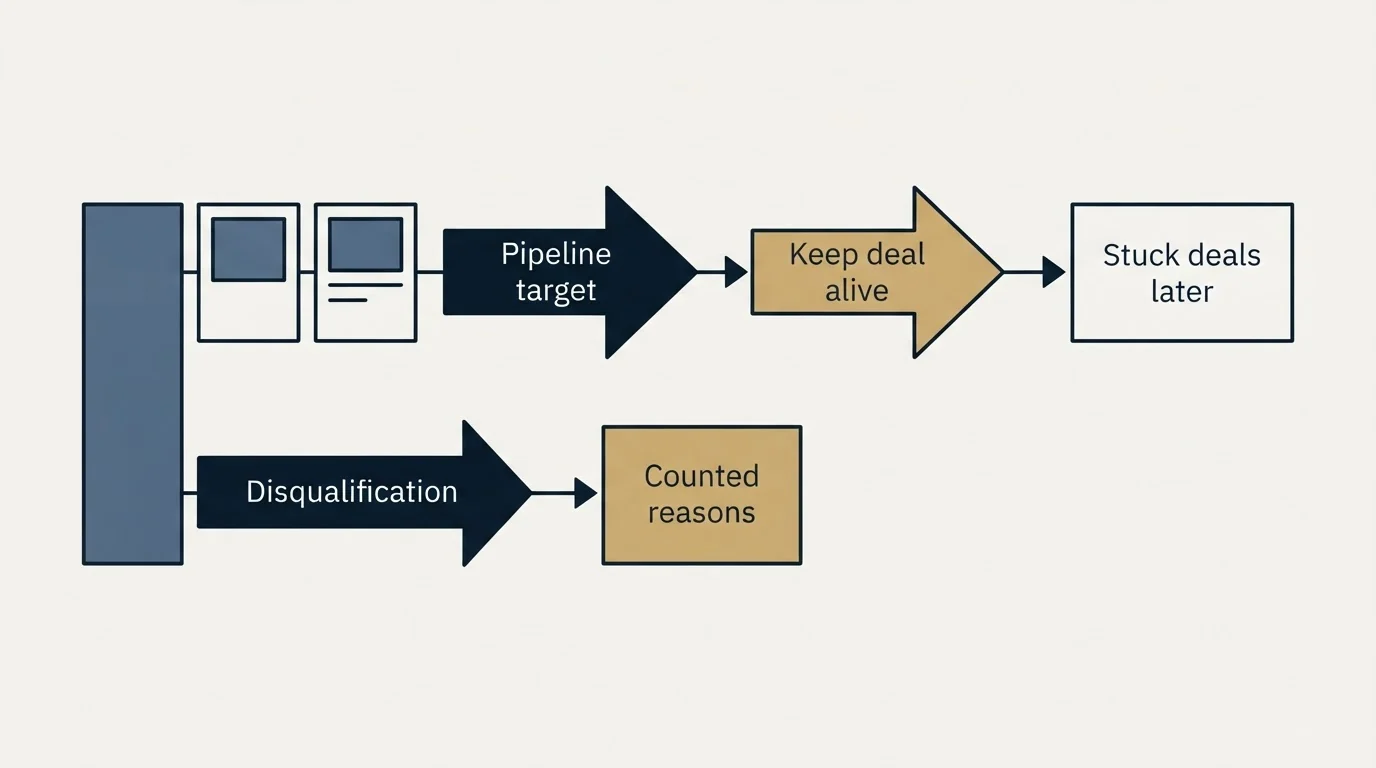
Everything difficult about the discovery call comes from one structural fact. The most valuable outcome is frequently a disqualification, and almost nobody is rewarded for producing one.
A seller carries a pipeline target. A disqualification removes something from the pipeline today in exchange for accuracy later, and the accuracy is invisible while the removal is not. So the default behaviour is to keep the deal alive: to hear a vague answer as a positive one, to accept a next step that commits nobody, and to record an opportunity on the strength of a pleasant conversation.
The cost lands one stage later and is usually misdiagnosed there. Deals that entered a pipeline on the seller's optimism rather than on a buyer's action sit in a stage and never move, and the team describes them as stuck rather than as never having started. That is an entry problem wearing a velocity problem's clothes, and it is addressed at the discovery call or not at all. The diagnostic view of it, once the deals are already in the pipeline, is in pipeline acceleration.
The second cost is quieter. A call that produced no clear disqualification also produced no reason, and the reasons are the most useful targeting data an outbound programme generates. A fixed list of disqualification reasons, counted across a quarter, tells you whether the misses concentrate on seniority, on company size, on timing or on the offer itself, and each of those instructs a different change. Free-text reasons cannot be counted and are the same as no reasons at all.
Each reason instructs a different change. Misses that concentrate on seniority say the list reached the wrong level of the company. Misses on company size say the segment boundary is drawn in the wrong place. Misses on timing say the trigger behind the campaign was weaker than assumed. Misses on the offer say the premise itself needs rewriting before the next campaign goes out.
| Reason on the fixed list | What a concentration of it says to change |
|---|---|
| Seniority | The list reached the wrong level of the company |
| Company size | The segment boundary is drawn in the wrong place |
| Timing | The trigger behind the campaign was weaker than assumed |
| The offer itself | The premise needs rewriting before the next campaign |
Free-text reasons cannot be counted, so they are the same as no reasons at all.
Where the textbook definition misleads
The output is not a next step. It is a decision, and one of the two possible decisions is a clean ending. A call that concludes with an agreement to send some information has produced neither a decision nor a step, and both parties will describe it afterwards as having gone well.
Budget, timing and authority are not the qualification. They are the classic gates and they fail at this stage for a simple reason: they are rarely knowable in a first conversation, so applying them disqualifies good early opportunities while rewarding prospects who confidently overstate their own authority. Our own commercial definition of a qualified meeting deliberately excludes all three, because they change every quarter and a meeting that happened should not become unqualified afterwards. The full test is in qualified appointment.
A deal-qualification framework is the wrong instrument here. MEDDIC and its relatives require an engaged buyer and several conversations, so scoring a first call against them produces six blanks and no information. The instrument for this stage is lead qualification, and the two are not interchangeable.
Preparation has a point of diminishing returns. A seller who arrives with a detailed hypothesis asks leading questions, hears polite agreement, and leaves with a confirmed theory rather than information. The failure is invisible in the moment, because the prospect agreed with everything.
There is a second structural reason the call is hard, and it is about who owns it. In many teams the meeting is booked by one person and run by another, so the person who agreed the premise with the prospect is not in the room when it is tested. What the receiving seller needs is short and specific: the problem in the prospect's words, the trigger, who else is affected, what has already been tried, and what was agreed as the next step. A calendar invitation with a company name on it forces the prospect to repeat the whole conversation, which is the fastest way to spend the goodwill the first one generated.
How it is used in outbound

An outbound discovery call and an inbound one start from different places, and running them identically wastes the first ten minutes of the outbound version.
An inbound prospect has already named a problem to themselves and gone looking, so discovery can go deep quickly. An outbound prospect took the call out of mild interest, on a premise you proposed rather than one they arrived with, so the first job is establishing whether the problem you assumed actually exists. Opening at inbound depth reads as presumptuous, because the premise has not been earned yet.
That difference also changes what a good outcome looks like. On an outbound call, learning that the assumed problem is absent is a successful call, because the premise is what the campaign was built on and the finding instructs the next one. The outbound sales playbook treats that loop as the unit of work: a campaign proposes a premise, the conversations test it, and the next campaign is written against what came back.
The commercial arrangement makes the definition matter more than it otherwise would. Where meetings are bought rather than generated in-house, the criteria a meeting has to satisfy are the invoice, so they are agreed in writing before outreach starts and checked afterwards against evidence both parties can see. What that costs per attended meeting is worked through in B2B appointment setting, and the stage definitions that decide where a qualified conversation enters the pipeline are in sales pipeline stages.
The structure of the call itself, the questions worth carrying into it, and the handoff that stops the prospect repeating themselves are covered separately in the discovery call, which is the practice half of this entry.
Written down, a call that did its job produces six things: a fit decision against criteria written before the call, the problem in the prospect's own words, the trigger that made them take the call, who else inside the account is affected, a next step with a date and a named person or a stated ending, and, when the answer is no, a reason chosen from the fixed list. A product demonstration delivered during the call is not on that list.
Discovery call record · written the same day
Fit decision, against criteria written before the call: yes or no 1
The problem, in the prospect's own words
The trigger that made them take the call
Who else inside the account is affected
Next step with a date and a named person, or a stated ending 2
If no: the reason, chosen from the fixed list 3
- 1Either answer is a valid output; a clean disqualification returns the time a doomed opportunity would have consumed.
- 2An agreement to send some information is neither a decision nor a step.
- 3Named before the call, so it is not reconstructed afterwards to fit what happened.
One habit costs nothing and changes the outcome more than any question technique. Before the call, write down the two findings that would make you disqualify this company. Deciding them in advance, with no emotional investment in the answer, makes them far easier to act on thirty minutes later when the conversation has been enjoyable and the alternative is a shorter pipeline. The same discipline is what makes the reason list usable, because the reasons were named before the call rather than reconstructed afterwards to fit what happened.
Related terms
Lead qualification is the instrument for deciding whether a person is worth a conversation, before a deal exists. MEDDIC is the instrument for the opposite end, qualifying an open deal once several conversations have happened. Qualified appointment is the commercial definition a booked meeting has to satisfy when somebody is paying per meeting. Economic buyer and sales champion are two of the things a good discovery call starts to locate, and sales cycle is what the decision process it uncovers is really measuring.
The short version
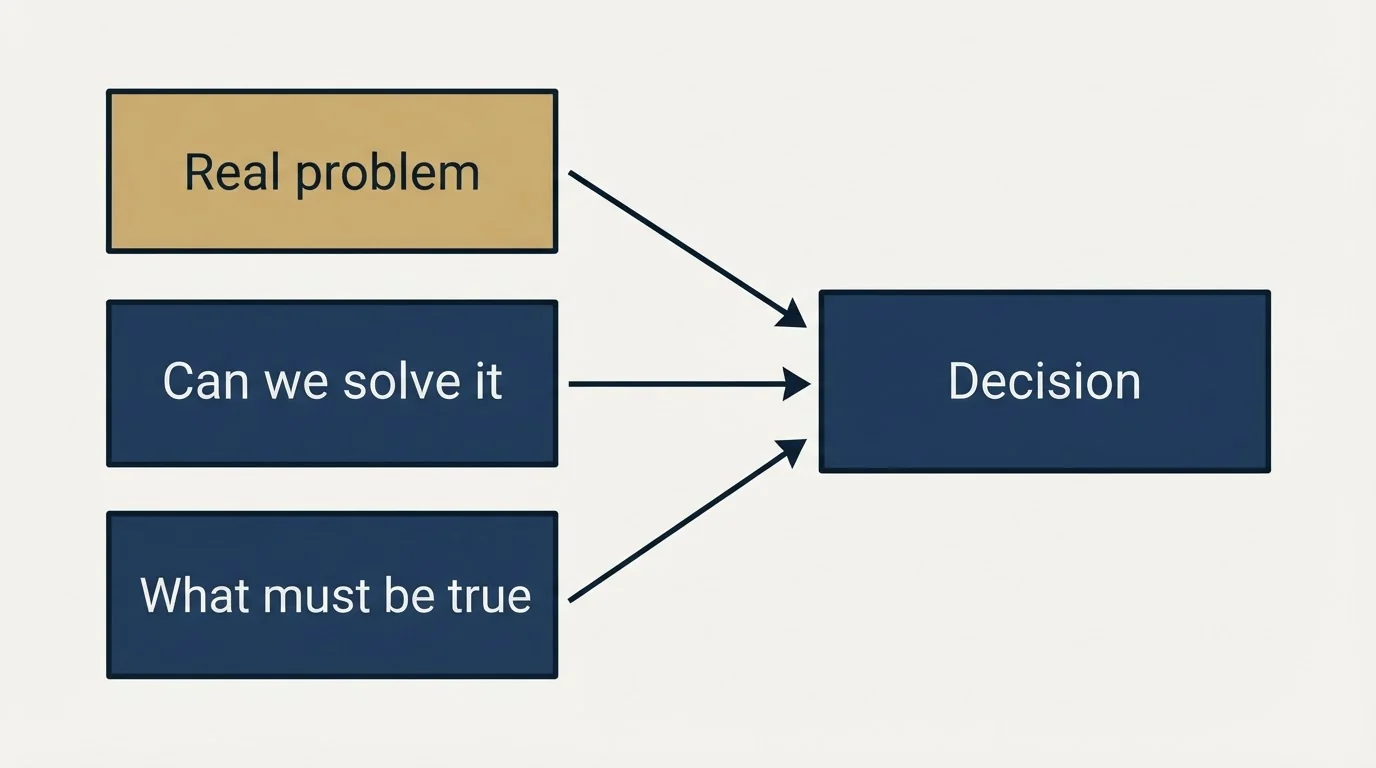
A discovery call establishes whether a real problem exists, whether you can solve it for this company, and what would have to be true for them to act. It is not a demonstration and not a pitch, and its output is a decision rather than a next step. The hard part is structural: the most valuable result is often a disqualification and nobody is rewarded for one, so the defence is criteria written before the call and a fixed list of reasons recorded after it. On outbound, remember the premise was yours rather than theirs, and treat a well-evidenced no as the campaign working.
RevenueFlow books attended qualified meetings against criteria agreed in writing before launch, which is the arrangement this definition has to be precise for. See what a first campaign produces.
Frequently asked questions.
Frequently asked questions- What does discovery call mean?
- In sales, a discovery call means the first working conversation between a seller and a prospect, in which the seller learns how the prospect's situation actually runs before proposing anything. The prospect does most of the talking, and the call ends in a decision about fit, which can be a clean no as well as a next step with a date.
- What is the difference between a discovery call and a demo?
- A discovery call collects information about how the prospect's situation actually works; a demo shows the product against a situation you already understand. The demo depends on what discovery produced, which is why moving it earlier feels efficient and removes the only chance to learn what to demonstrate. The test is who is doing the talking.
- Should you qualify on budget in a discovery call?
- Ask about it, but do not gate on it. Budget, timing and authority are rarely knowable in a first conversation, so treating them as pass or fail criteria removes good early opportunities and rewards prospects who overstate their own authority. Our own qualified meeting definition excludes all three deliberately, because they change quarter to quarter.
- Is an outbound discovery call different from an inbound one?
- Yes, and running them identically wastes the outbound version. An inbound prospect has already named the problem to themselves and gone looking. An outbound prospect took the call on a premise you proposed, so the first job is finding out whether that premise holds. Learning that it does not is a successful call, because the finding instructs the next campaign.