Clearbit Enrichment After HubSpot: What Still Exists
Clearbit's homepage, pricing URL and Reveal URL now serve the same acquisition notice. What survived, what it costs under HubSpot, and what to use instead.
The Clearbit changelog still loads, and its last entry, dated November 24, 2025, announced the Logo API sunset on December 8. Since the routine notes stopped in August 2024 it has carried only sunset notices. Clearbit enrichment is no longer sold standalone; HubSpot's data enrichment, on Starter and higher, is the equivalent.
Key takeaways
- The Clearbit changelog's last entry is dated November 24, 2025; its last routine product note, a set of fixes, is dated August 27, 2024.
- clearbit.com/pricing and clearbit.com/platform/reveal both redirect to a homepage that says Clearbit has joined HubSpot.
- HubSpot's data enrichment help article lists Starter, Professional and Enterprise subscriptions and says data enrichment does not consume HubSpot Credits.
- HubSpot Credits power smart properties and agents; unused credits expire each period and overages bill monthly in arrears in increments of 10.
Reviewed and updated September 21, 2026
Load clearbit.com today and the page says "Clearbit has joined HubSpot!" in a heading, under a logo lockup reading "Clearbit by HubSpot". Load clearbit.com/pricing and it redirects to that same page; clearbit.com/platform/reveal redirects there too. The only account link on it is "Clearbit customer login", and the Clearbit changelog has carried nothing but sunset notices since 2024. There is no sign-up, no pricing table and no contact-sales path.
That is the single most important fact about Clearbit enrichment in 2026, and most of the comparison content still on the web has not caught up with it. This page covers what Clearbit enrichment was, what its changelog says, what survived the acquisition, what it costs now that the pricing question has a different answer, and what to do if you are researching it as a purchase today.
What the Clearbit Changelog Says Now
The Clearbit changelog at clearbit.com/changelog still loads, and its most recent entry is dated November 24, 2025: the Logo API sunset on December 8. Before it sit an October 22, 2025 notice of a planned 24-hour Logo API outage, a June 10, 2025 sunset reminder and the February 13, 2025 notice discontinuing the free tools. The last routine product note, a set of fixes, is dated August 27, 2024.
Before that the page ran almost weekly, with fixes and improvements posted through the first half of 2024. The 2025 entries also disagree with each other on one date: the June notice gives December 1, 2025 for the Logo API sunset and the two later notices give December 8. The February 2025 entry is the one that matters for anyone searching today, because it names the five free tools that ended on April 30, 2025 and points users to Breeze Intelligence, unveiled at INBOUND 2024.
What Clearbit enrichment did
Clearbit's enrichment product answered a narrow question well: given an email address or a company domain, return structured firmographic and person-level attributes. Company size, industry, location, technologies in use, revenue band, role and seniority. Teams wired it into signup forms to shorten them, into CRMs to fill in fields nobody wanted to type, and into routing logic so an inbound lead reached the right owner without a human reading it first.
The category name for this is CRM enrichment, and Clearbit was for several years the reference implementation of it. The clearbit.com/platform/enrichment page is still reachable and still describes the product, and the homepage describes the service in its own words: enrich every single record, score and route every lead in real time, and shorten forms by removing the fields it can enrich from an email address.
What actually happened
HubSpot acquired Clearbit, and Clearbit's own changelog pointed users to Breeze Intelligence as the home of similar features. Today HubSpot's Breeze Intelligence product URL returns a 404, and its help article of that name redirects to one titled "Get started with data enrichment", which does not name Clearbit at all. The acquisition is not a rumour or an integration partnership: the vendor's own homepage announces it, and HubSpot's product page for Clearbit says "We acquired Clearbit earlier this year for their best-in-class B2B data. Our teams are working hard to integrate Clearbit services into the HubSpot platform. Stay tuned!"
That HubSpot page has not been updated in a long while, which is itself informative. The word "earlier this year" on a page carrying a 2026 copyright footer is the sort of detail that tells you an integration is finished rather than in progress.
What Clearbit enrichment costs now
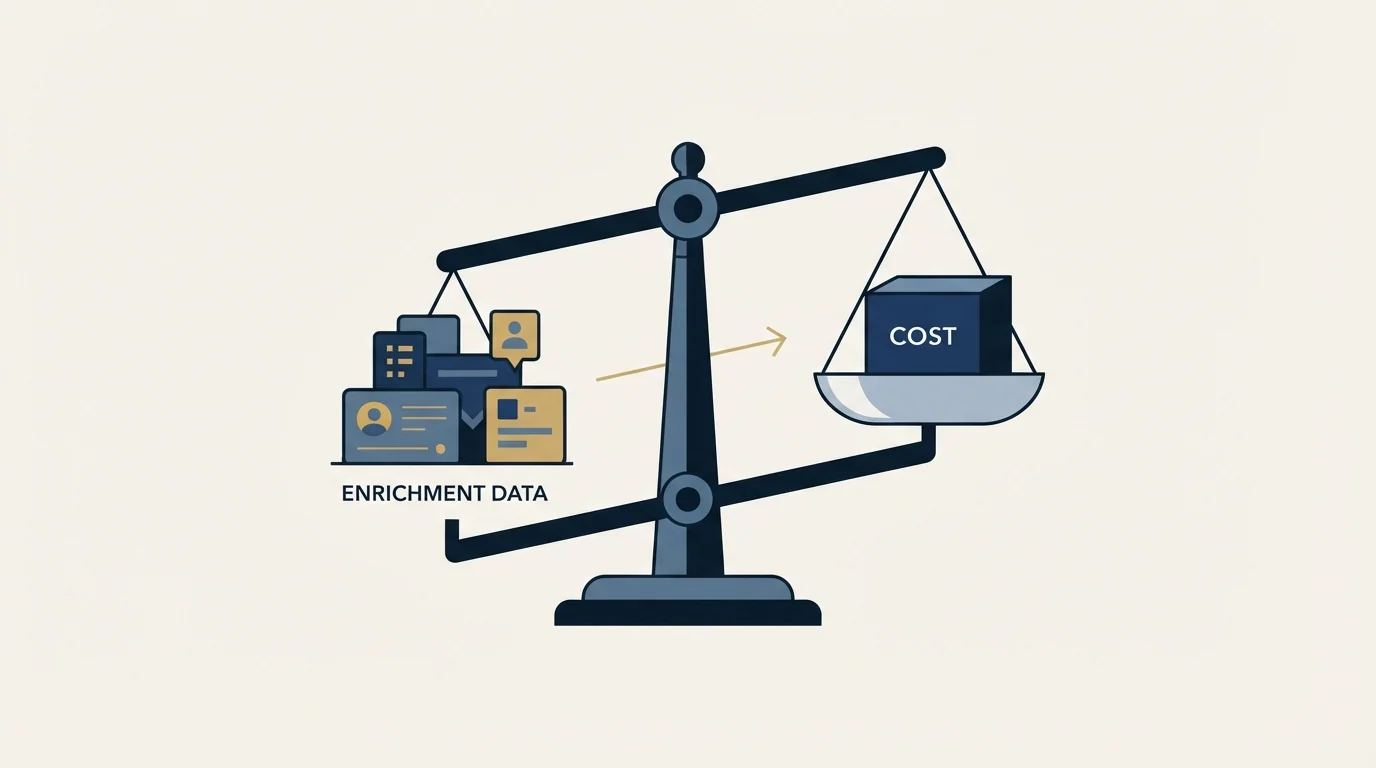
This is the question most searches are really asking, and the honest answer is that the question changed shape. There is no standalone Clearbit price list to quote, because clearbit.com/pricing now redirects to the homepage. What replaced it is HubSpot's own data enrichment, and HubSpot's help article says the two things that decide the bill: enrichment is available with Starter, Professional and Enterprise subscriptions, and "Data enrichment does not consume HubSpot Credits". Smart properties, by contrast, do consume them.
So the entry price is a HubSpot subscription rather than a data plan. HubSpot's CRM product page lists Starter from $15/month per seat, marked with an asterisk as a discount available for new customers only, then Professional from $50 and Enterprise from $75 per seat a month.
Credits still matter for the AI features around enrichment, and HubSpot's credits article sets their terms:
- Credits are required for specific features, named as Customer Agent, Prospecting Agent, Data Agent and Data Studio syncs, rather than being a general-purpose data currency.
- Unused credits expire at the end of each usage period and do not roll over. That is the opposite of how most data credits in this category behave, and it changes how you should pace usage.
- Overages are billed monthly in arrears, in increments of 10 credits, rounding down. Free and view-only seats cannot use credits at all.
The practical answer to "how much does Clearbit cost" is therefore the price of the HubSpot edition you need, not a line item you can buy on its own. If your evaluation started because someone quoted you a Clearbit entry price from a comparison article, that figure is a fossil.
The same credits article adds two terms worth knowing before a purchase: once the included credits are used up and no capacity pack has been bought, usage-based features pause until the next reset date, and an additional capacity pack can only be cancelled or downgraded at the end of the contractual commitment term.
Can you still buy it standalone?
No statement either way appears on the vendor's remaining surfaces, and the absence of any purchase path is the strongest evidence available. Across every Clearbit page still serving content there is no sign-up link, no pricing, no "get started" that leads anywhere other than a lead form, and one login link for existing customers. Where a specific sunset has been announced, Clearbit has said so plainly, which is what makes the silence on the enrichment product itself notable rather than reassuring.
If you are a current customer, your account still logs in. If you are a prospective buyer, the route runs through HubSpot.
The three products people mean by "Clearbit"
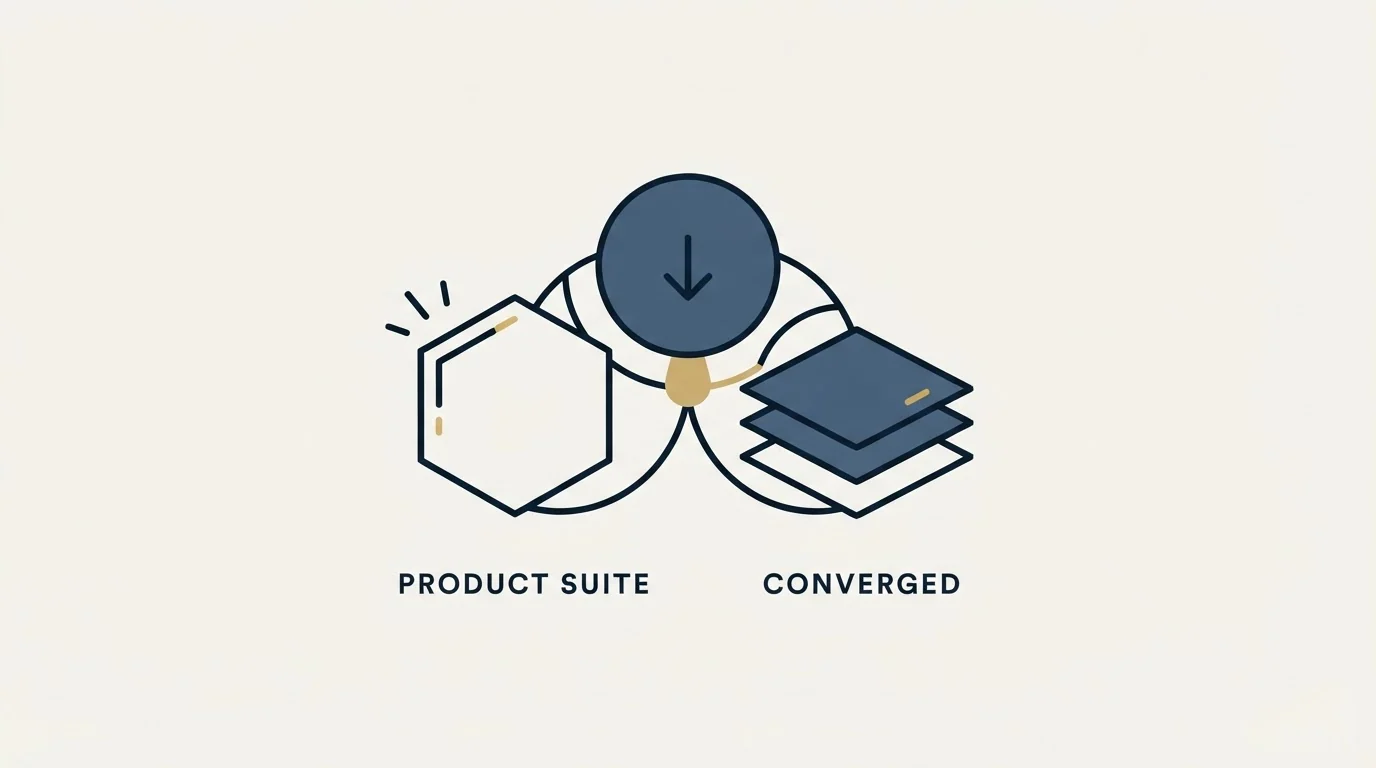
The name covers several genuinely different things, and their fates differ. Each has its own page here.
The enrichment API, the developer-facing product that returns attributes for a domain or an email. Its documentation surface is a client-rendered shell with no content in the HTML, and the wider API story, including the Logo API's published retirement, is covered in our guide to the Clearbit API.
Clearbit Connect, the free Gmail extension that let you look up an address without leaving your inbox. It was named for discontinuation in the February 2025 changelog. Our page on Clearbit Connect covers what that means for anyone still searching for it.
Clearbit Reveal, IP-to-company identification that turned anonymous website traffic into named accounts. Its old product address now redirects to the homepage, which still describes turning anonymous traffic into buying intent signals. It is a different product with a different integration ecosystem, and it is covered in our page on Clearbit Reveal.
Enrichment API
- The platform/enrichment page still loads
- The Logo API was sunset in December 2025
Clearbit Connect
- Named for discontinuation on April 30, 2025
- The store listing no longer resolves
Clearbit Reveal
- Its product address redirects to the homepage
- The homepage still describes IP intelligence
If you are still running it
Existing accounts still log in, so this is not an emergency. It is a planning problem, and there are four things worth doing before the decision is made for you.
Export what you already hold. Enriched attributes sitting in your CRM belong to you; attributes reachable only by calling an API belong to the subscription. The gap between those two positions is the whole risk, and closing it is a data export rather than a project.
Find every integration that calls it. Enrichment tends to be wired into places nobody remembers: a form shortener, a lead-routing rule, a lifecycle-stage automation, a Slack alert. Each of those fails quietly rather than loudly when the data stops arriving, filling fields with nulls while the workflow reports success.
Write down what the enrichment is actually deciding. If a firmographic field routes leads to owners or triggers a scoring threshold, the field is load-bearing and needs a replacement before the source changes. If it decorates a record nobody reads, it does not.
Re-verify rather than re-enrich where you can. Contact data decays because people move jobs, and the cheapest correction for that is usually a verification pass over addresses you already hold rather than a fresh enrichment call on every record. That distinction saves money on any vendor, not just this one.
What to do instead

If the job you were hiring Clearbit for is filling in firmographics on records you already hold, that job is well served by several vendors and the choice depends on your CRM more than on the data. Our Clearbit alternatives roundup covers the field.
Real estate teams weighing those alternatives against industry-specific needs can compare options built for property workflows in the enrichment tools for real estate roundup.
If the job is finding contact addresses for people you have identified, that is a different job and enrichment vendors are usually the wrong shape for it. A waterfall runs providers in order, stops at the first confident result, and only pays the next stage for what the previous stage missed. The order we run today is GetLeads first, then Prospeo, then MillionVerifier brute-force, with every find verified before it is used, and the protocol for testing any provider against your own rows is in our guide to email finder tools.
The general lesson from watching this product wind down is worth keeping. A data vendor acquired by a platform vendor tends to stop being purchasable on its own terms, and the timeline is measured in quarters. Anything load-bearing in your stack deserves a note about what you would do if it were bought, written before it is.
Enrichment and pipeline management often get lumped together, though the Clearbit vs Zoho CRM comparison explains why most teams end up needing both rather than picking one.
The short version
Clearbit no longer sells enrichment as a standalone product. The vendor's homepage announces "Clearbit has joined HubSpot", its pricing and Reveal addresses redirect to that homepage, the only account link is a login for existing customers, and its changelog has carried only sunset notices since the routine notes stopped in August 2024. The nearest current equivalent is HubSpot's own data enrichment, which its help article places on Starter and higher subscriptions without consuming HubSpot Credits. The free tier and Connect were named for discontinuation in 2025, and the Logo API has been retired. Treat any Clearbit price or plan you find on a comparison page as pre-acquisition history unless it explains which HubSpot edition it belongs to.
If you would rather see an outbound motion running on your own ICP without assembling a data stack first, start a free campaign and we will build the list, the copy and the sending infrastructure around it.
Pricing and features are taken from the vendors' own pages. Verify current terms with the vendor before relying on them.
Frequently asked questions.
Frequently asked questions- What does the Clearbit changelog say now?
- It still loads at clearbit.com/changelog, and its most recent entry, dated November 24, 2025, announced the Logo API sunset on December 8. Before that come an October 2025 outage notice, a June 2025 sunset reminder and the February 13, 2025 notice ending the free tools on April 30, 2025. The last routine fixes are dated August 27, 2024.
- How much does Clearbit enrichment cost now?
- There is no standalone price: clearbit.com/pricing redirects to the homepage. The equivalent is HubSpot's data enrichment, which its help article lists on Starter, Professional and Enterprise subscriptions and says does not consume HubSpot Credits. HubSpot's CRM product page lists Starter from $15 a month per seat, marked as a new-customer discount.
- Is Clearbit's real-time enrichment still available?
- Clearbit's homepage still describes scoring and routing every lead in real time and shortening forms, but there is no sign-up or pricing path on the site, only a login for existing customers. For new buyers the route is HubSpot's own data enrichment, which includes automatic and continuous enrichment and form shortening, according to HubSpot's help article.
- Can I still buy Clearbit on its own?
- Nothing on the remaining Clearbit pages offers a purchase: there is no sign-up link, no pricing table and no contact-sales path, and the pricing address redirects to the homepage. Existing accounts still log in. A prospective buyer goes through HubSpot, where the capability is documented as data enrichment rather than under the Clearbit name.
About the author.

B2B cold email experts helping companies generate qualified leads through done-for-you outreach campaigns.
RevenueFlow Team
Explore more.
Ready to scale your outreach?
We build GTM engines that book real meetings. See the receipts.
Related articles.
Is Clay Free? The Free Plan, the Trial and Where Each Stops
Clay's free plan, its 14-day trial and the no-charge-on-a-miss rule are three different things. What each holds and where it stops, from clay.com on 19 September 2026.
Seamless.AI Email Finder: How It Works, What a Credit Buys
How Seamless.AI's email finder resolves a contact in real time, what one Universal Credit buys, the Total AI score on every address, and what the Chrome extension reads.
Autobound Pricing: One-Time Credit Packs, Not Seats
Autobound's pricing page sells one-time credit packs for a signal data API, not seats. The six packs, the per-endpoint meter, and what a company costs.
Snitcher Pricing: The $49 Table Is the Annual Rate
Snitcher's visible price table is the annual-billing ladder. The ten bands at both billing states, the unique-company meter, and the rules on a help page.
Firmographic Data Providers: What Six of Them Publish
Six firmographic data providers read from their own pages: the fields each sells, the coverage each states, how the data is delivered, and who prints a price.
Airscale Pricing: Three Plans, One Credit, Four Rates
Airscale prints a different credit cost on every plan, and its advertised per-email price belongs to the custom one. The dated ladder and the rollover rules.