Employee Advocacy: Sold on Reach, Judged on Pipeline
The published multipliers are reach figures the vendors attribute to third parties. The review will ask about meetings, and the chain between them is unwritten.

Employee advocacy is the promotion of a company by its own employees through their personal networks, usually on LinkedIn and usually supported by a platform supplying a content queue, approvals and reporting. It is a distribution motion measured on reach and engagement rather than on pipeline.
Key takeaways
- The multipliers vendors publish, such as 8x engagement and 200 percent click-through, are reach metrics that the vendors themselves attribute to third parties.
- Advocacy platforms are quoted rather than rate carded, and priced per registered user, so participation rather than licence count decides the economics.
- Distributing one approved post across many overlapping employee networks destroys the personal quality that made the format work.
- An average employee's network is peers and recruiters, so enrolment should be deliberate rather than maximised.
Reviewed and updated September 2, 2026
Employee Advocacy: A Distribution Programme Sold on Reach and Judged on Pipeline
A marketing team launches an advocacy programme, enrols sixty people, and publishes a weekly queue of approved posts. Participation is good for a month. By week ten the same eleven people are sharing, the rest have muted the notifications, and the quarterly review asks how many meetings it produced.
Nobody can answer that, because the programme was instrumented on reach and the question was about pipeline. Both parties are being reasonable. The gap between them is the thing worth understanding before buying anything.
What the term covers
Employee advocacy is the promotion of a company by its own employees through their personal networks. Vendor definitions across the category converge on the same shape: employees share company content, industry perspective and their own commentary from their own accounts, most often on LinkedIn, usually supported by a platform that supplies a content queue, approvals and reporting.
The words programme and program describe the same thing, and the distinction people are usually reaching for is between the behaviour and its formalisation. Employees talk about where they work whether or not anybody organises it. An employee advocacy program puts a content supply, a governance layer and a measurement system around behaviour employees exhibit anyway, which is what a platform is sold to provide. Searches for an employee advocacy programme return the same vendors answering the same question, so the spelling carries no distinction worth acting on.
The social media half is not a separate discipline either: it is where nearly all of the activity happens, because a professional network is the one place where an employee audience and the company buyers overlap. Employee advocacy social media is therefore the default form of the practice rather than one variant of it, and vendor definitions treat it that way.
The published numbers, and what they are numbers about
The multipliers in circulation are large and they are consistent across vendor sites, which makes them easy to repeat and worth reading carefully.
Hootsuite's employee advocacy page carries "200%" beside the words "Higher click-through rate when an employee shares content, compared to when a company shares it", attributed on the page to LinkedIn. The same page carries "8X" beside "More engagement when content is shared by employees compared to businesses", attributed to Social Media Today, and "$839k" in advertising costs saved by its customers over three years to achieve the same reach, attributed to a case study.
Two observations about that set.
The vendors are attributing rather than asserting, which is more honest than the figures' second-hand circulation suggests. When these numbers arrive in a business case they usually arrive stripped of the attribution, presented as though the platform vendor measured them.
And every one of them is a reach or engagement figure. Click-through, engagement, reach, sharing volume, advertising cost avoided. None of them is a meeting, a qualified opportunity or a closed deal. That is not a criticism of the category. Distribution genuinely is what the mechanism does, and the numbers describe it accurately.
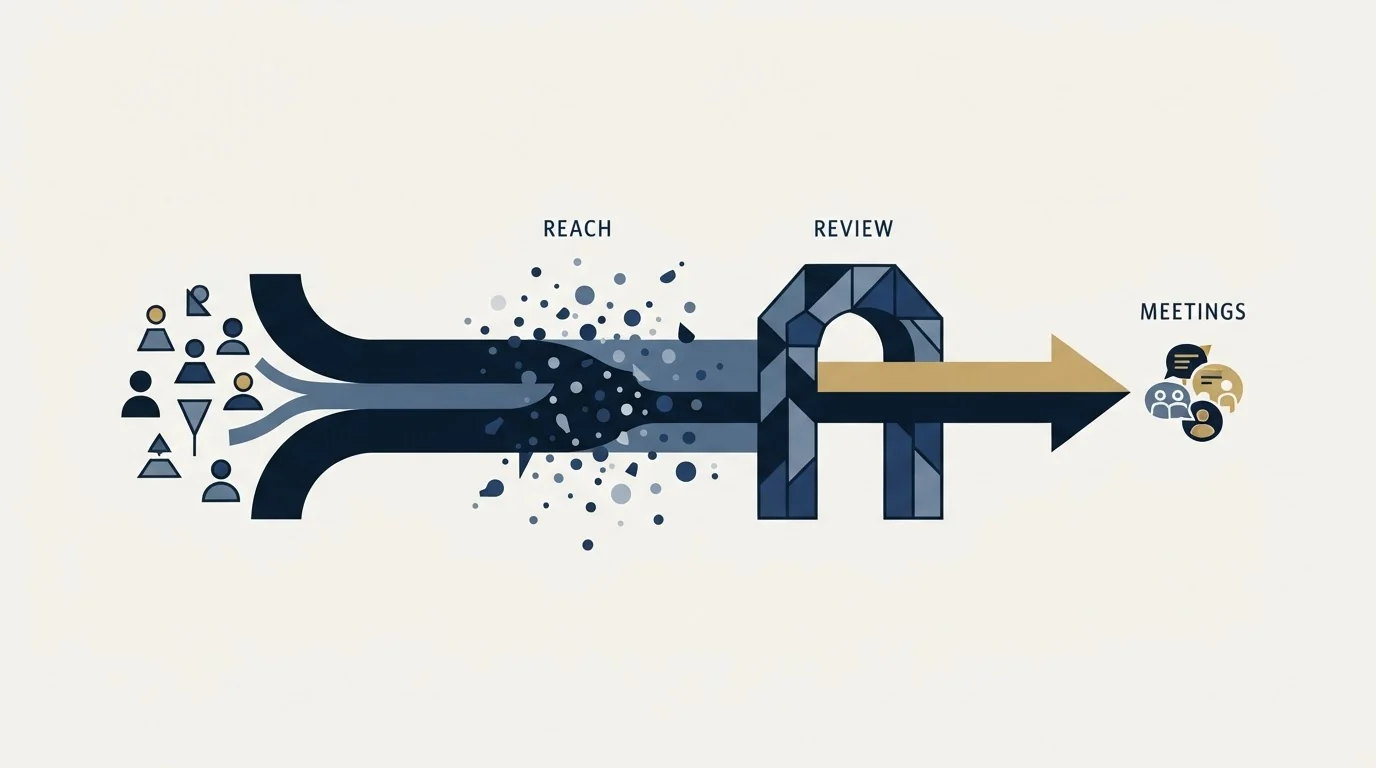
The problem is the substitution that happens next, where a reach multiplier is used to justify a programme whose success will later be assessed on pipeline. The two are connected by a chain of assumptions that nobody writes down.
The only step the platform fully controls
Where the published multipliers stop
Employee networks are mostly peers, not buyers
Requires the reader to act, unprompted
The question the quarterly review asks
The step that breaks is audience composition

An employee's network is built by their career, not by your ideal customer profile. For most staff it is dominated by former colleagues, university contacts, people in the same function at competing companies, and recruiters.
That composition is excellent for the outcomes advocacy vendors also claim, which are employer brand and hiring. It is weaker for demand, because the overlap between an average employee's network and your buying committee is thin.
The exception is the group where the two genuinely coincide. A salesperson's network is customers and prospects. A founder's network is the market. A subject matter expert's network is practitioners who face the problem you solve. Those people are worth the effort and the rest of the roster is worth honesty.
That points at a design decision the pricing model pushes the wrong way. Enrolment is usually maximised, because the platform's reporting rewards participation rate and because the pricing model rewards it too. The version that produces conversations is small and deliberate, built around the people whose networks contain buyers.
The mechanism works against the thing that makes it work
Here is the tension at the centre of the category, and it is structural rather than a vendor failing.
The reason employee posts outperform company posts is that they read as a person speaking. The reason a platform can scale a programme is that it distributes one approved item to many accounts.
Run that at volume and the same paragraph appears under thirty profile photos in one week, inside a network where those thirty people share connections. The recipient sees the repetition, and the thing that made the format work is exactly what is lost. Governance features make this worse before they make it better, because an approval queue optimises for identical safe copy.
The platforms are aware of this and the better ones respond by prompting employees to add their own commentary rather than sharing bare. That is the right instinct, and it puts the burden back on the individual, which is where it belongs and where programmes stall.
- Yes: Enrolment is deliberate, chosen for whose network holds buyers
- Yes: Employees add their own commentary rather than sharing bare
- Yes: The same item is not scheduled across many accounts in one week
- Yes: Somebody owns replying to comments the posts attract
- No: Participation rate is the headline metric in the review
- No: The business case used a reach multiplier to promise pipeline
- Depends: Enrolment was set to everybody because the licence covers everybody
The pricing model is per registered user, and it is quoted
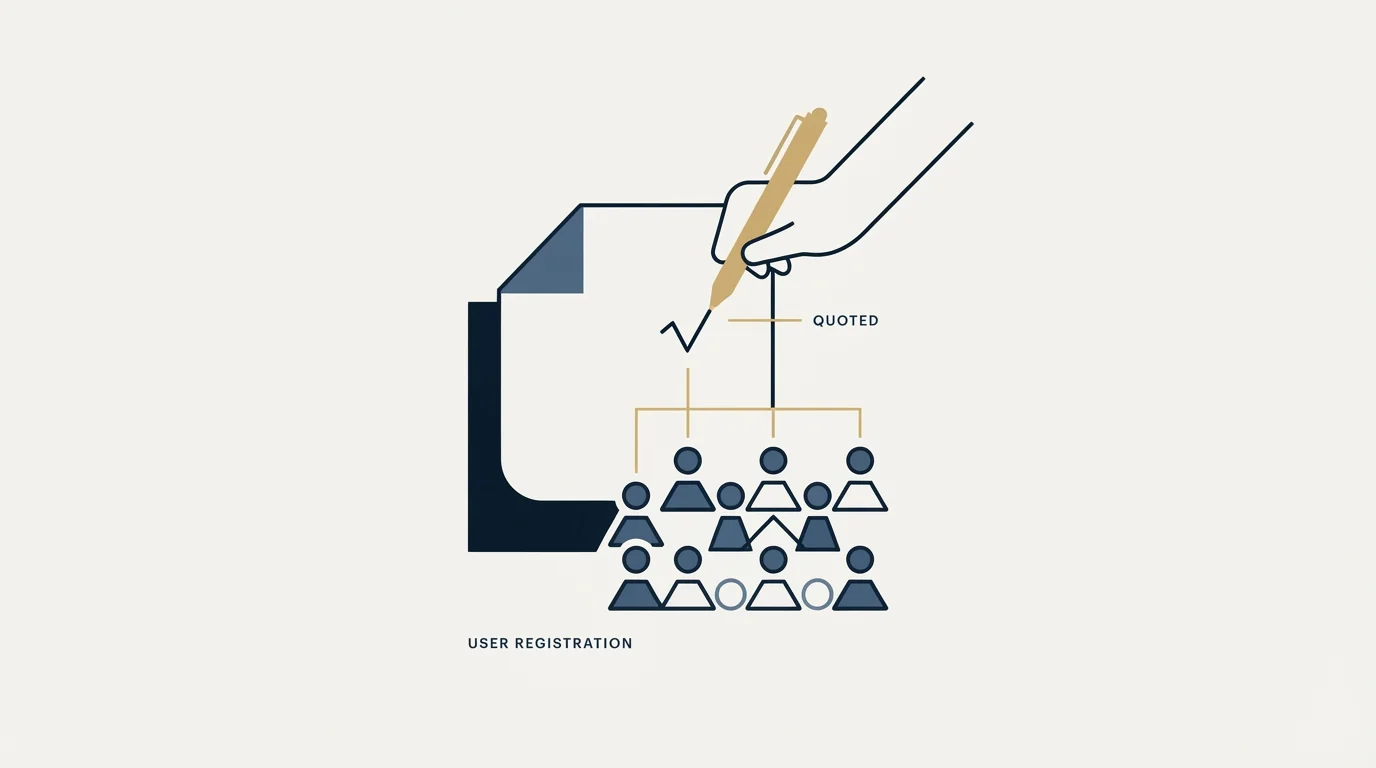
The commercial shape is consistent across the category and it matters for the design above. EveryoneSocial's pricing page reads "priced by users" and prepares sample quotes against a stated number of registered users, noting "most quotes returned same business day" and multi-year discounts. GaggleAMP's pricing page offers one program at one price built around company size, behind a quote request. Hootsuite routes its advocacy product through a demo request rather than a rate card.
So a buyer cannot compare these products on published price, which is the same condition the account-based marketing platform market operates under. What can be compared is the unit, and the unit is a registered user.
That has a direct consequence. You pay for enrolled employees whether or not they post, so the economics are decided by participation rather than by licence count, and a programme that enrols everybody in order to look committed is buying the denominator of its own worst metric. Enrolling thirty people who will post beats enrolling three hundred where forty do.
Several vendors publish an ROI calculator alongside the quote request. Those calculators compute avoided advertising cost from projected reach, which is a defensible way to value distribution and is not the same as pipeline. Use one to size the media value, and keep its output out of a revenue forecast.
Where it sits next to the things it is confused with
Employee advocacy is a content distribution programme. Three neighbouring motions get folded into it and each behaves differently.
Social selling is an individual practice: a seller building visibility and relationships in a market they cover. LinkedIn scores an approximation of it, and what that score measures and ignores is set out in social selling index, including LinkedIn's own position that the score may not correlate with sales outcomes.
Outreach is a different motion again, with its own limits and its own risks to the account doing it. The three routes into a prospect and what each costs are in linkedin prospecting. An advocacy programme does not reach anybody who has not chosen to follow one of your employees, which is the whole distinction between publishing and outreach.
And the wider social channel splits into an audience motion that compounds and an outreach motion that costs the same every month, an argument made in social media lead generation. Advocacy belongs firmly in the first, and counting it inside one blended social number is how neither ends up managed.
For our own part, we run email and LinkedIn, and on LinkedIn we send one message per campaign with no bumps and no second message under an unanswered one. Advocacy sits outside that entirely, because publishing to an audience that opted in is a different act from messaging somebody who did not.
Measuring it in a way that survives a review
Three numbers make the programme defensible without overclaiming.
Active sharer count, not enrolment. The share of enrolled people who posted in the last thirty days is the health metric, and it is the one the licence cost should be divided by.
Reach delivered against reach bought. The vendors' own ROI calculators do this, and it is the honest media value of the programme. State it as advertising cost avoided rather than as revenue.
Conversations attributable to a named post. Small, countable, and the only figure that speaks to the question the review will ask. Attribution here is genuinely hard and the useful version is unglamorous: ask, at the point somebody books, where they first came across you.
Where the content itself has to reach a buying group rather than a follower count, the distribution problem is a different one and is covered in account-based content marketing. And where the asset is being asked to carry a stage of the funnel it cannot, the stage boundaries are in b2b content marketing funnel.
The short version
Employee advocacy is a distribution programme. The published multipliers are reach and engagement figures, the vendors attribute most of them to third parties, and none of them is a pipeline number. The mechanism that makes employee posts work is that they read as a person, and the mechanism that makes a programme scale is distributing one approved post to many accounts, so scale and effectiveness pull against each other.
Pricing is quoted and priced per registered user, so participation rather than licence count decides the economics. Enrol deliberately, prompt for commentary rather than bare shares, measure active sharers and conversations rather than enrolment, and keep the reach case and the revenue case separate.
When the requirement is a predictable supply of qualified conversations rather than distribution, see what a first campaign produces against your own market.
Vendor figures and pricing models above were read from Hootsuite, EveryoneSocial and GaggleAMP's own pages in August 2026 and re-read on 2 September 2026, and the attributions beside them are the ones printed on those pages. Verify current terms with the vendor before relying on them.
Sources: Hootsuite Amplify, EveryoneSocial pricing, GaggleAMP pricing
Frequently asked questions.
Frequently asked questions- What is employee advocacy?
- It is the promotion of a company by its own employees through their personal networks, most often on LinkedIn. Employees share company content, industry perspective and their own commentary from their own accounts. A formal programme adds a content supply, an approvals layer and reporting, which is what an advocacy platform provides.
- How do you build an employee advocacy program?
- Choose participants for whose network contains buyers rather than enrolling everybody, supply content people would plausibly post themselves, prompt for personal commentary instead of bare resharing, and stagger scheduling so one item does not appear under thirty profiles in a week. Assign somebody to reply to the comments the posts attract.
- What does an employee advocacy platform cost?
- The category quotes rather than publishing rate cards. EveryoneSocial describes quote-based pricing on one plan priced by users, GaggleAMP offers one program at one price built around company size, and Hootsuite routes through a demo request. The unit is a registered user, so you pay for enrolled employees whether or not they post.
- Does employee advocacy generate leads?
- It generates distribution, and whether that becomes pipeline depends on whether the employees enrolled have buyers in their networks. For sellers, founders and subject matter experts the overlap is real. For most staff the network is peers and recruiters, which serves employer brand and hiring well and demand generation weakly.
About the author.

B2B cold email experts helping companies generate qualified leads through done-for-you outreach campaigns.
RevenueFlow Team
Explore more.
Ready to scale your outreach?
We build GTM engines that book real meetings. See the receipts.
Related articles.
Employee Advocacy Platforms: Four Product Shapes, One Label
Nobody in the category publishes a rate card, so the comparable dimensions are the shape of the product and the shape of the bill. Both are checkable.
Social Selling Tools by Job, and the Account-Risk Line
Fourteen social selling tools sorted into six jobs, split by whether each acts through your LinkedIn account or beside it, from the vendors' own pages.
Dark Funnel: A Measurement Gap, Not a Channel
The dark funnel names buyer conversations that carry no identifier to join on. Why better tooling cannot close it, and what the three sold remedies buy.
Demand Generation: Creating the Interest That Outbound Later Harvests
Demand generation builds interest among people who are not yet shopping. Lead generation captures interest that already exists, and confusing them costs a quarter.
Instapage Pricing: Plan Costs and Where Testing Starts
Instapage shows its annual rate by default and puts A/B testing on the middle plan. The published ladder, both billing states, and the meter.
Landingi Pricing: Two Meters, Four Plans
Landingi meters monthly visits and AI credits separately, so two teams on one plan can disagree about whether it is enough. The published ladder.