B2B Content Marketing Funnel: Where the Asset Map Runs Out
Two of the three funnel stages name a job content can do. The middle names a waiting period, and the standard asset map fills it with a schedule.
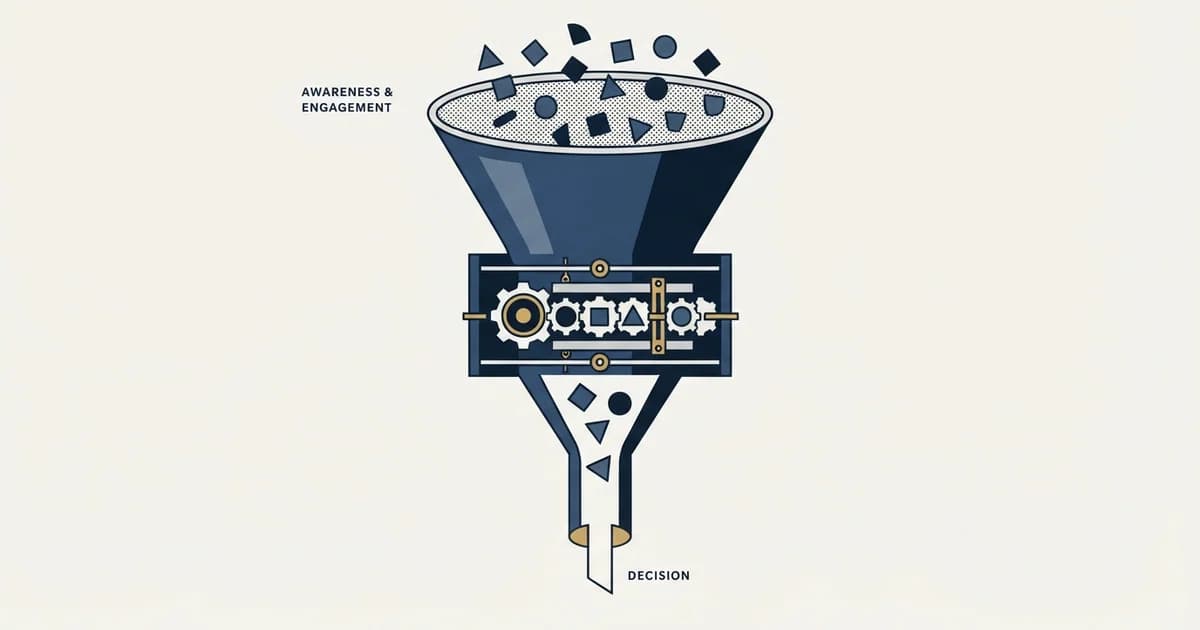
A B2B content marketing funnel maps content to three buyer stages: symptom with no vocabulary at the top, category with no shortlist in the middle, and one sceptic to convince at the bottom. Two of those stages name a job content can do. The middle names a waiting period, which is why most calendars fill it with a schedule.
Key takeaways
- Top-of-funnel content has to be findable through the symptom, because a reader who has not named the category will never search for it.
- The middle stage is the one with no natural asset, and a timed email series fills the calendar slot without supplying a reason to read the next thing.
- A bottom-of-funnel asset gets forwarded to somebody who was not on the call, so it has to state the problem before the answer and name the commitment plainly.
- Read counts cannot distinguish fifty readers at fifty companies from fifty at eight, which are opposite commercial positions and identical dashboards.
Reviewed and updated September 2, 2026
A content calendar built on this model looks organised right up until somebody reads the middle column. The top row lists blog posts and a podcast. The bottom row lists a comparison page, a pricing explainer and two case studies. Between them sits a row containing the word nurture, sometimes expanded into a webinar and a five-part email series. That middle row is the one worth arguing about.
The stage map itself is sound. A B2B buyer genuinely does move from not knowing they have a problem, through working out what a solution looks like, to deciding which supplier to call, and different content serves each of those. What the map hides is that only two of the three stages name a job a piece of content can actually do. The third names a waiting period, and filling a waiting period with assets is a different exercise from answering a question.
The three stages name three different questions
Strip the labels back to what the reader is doing and the model becomes usable.
At the top, the person has a symptom and no vocabulary. Pipeline is thin, or the team is busy and the forecast is not moving, and they have not yet decided what kind of thing would fix it. They are not searching for your category because they cannot name it. Content works here by being findable through the symptom rather than through the solution.
In the middle, the person has named the category and is building a shortlist of approaches rather than of vendors. They are asking what this kind of thing costs, what it takes to run, what goes wrong, and whether their situation is the one it works for. This is the stage everyone calls consideration, and it is the stage where the reader is comparing your approach against doing nothing and against the person on their own team who could probably absorb the job.
At the bottom, the person has an approach in mind and a colleague to convince. Their questions are specific and mostly about risk. What does the commitment look like, what happens if it does not work, who else in a similar position has done this.
Answered by content findable through the symptom
Answered by content that survives being checked
Answered by content that can be forwarded
Top of funnel, where the job is to be findable before the problem has a name
Most B2B content aimed at this stage is written for the category rather than for the symptom, which is why it gets read by competitors and by people already in the market. A page titled for the solution reaches somebody who already knows the solution exists.
The practical test is whether the piece would be found by a person who has never typed your category name. That usually means writing about the symptom, the arithmetic behind it, or the decision that produced it. It also means accepting that the reader will not identify themselves, and that measuring this stage in people rather than in sessions is a category error the reporting makes on your behalf.
One format deserves naming here because it is routinely misfiled. Syndicated content sits at the top of the funnel by intent and gets counted as though it sat in the middle, since it returns contact records. What that purchase actually buys, and what the records mean, is worked through in define content syndication.
The middle is where the asset map turns into a schedule
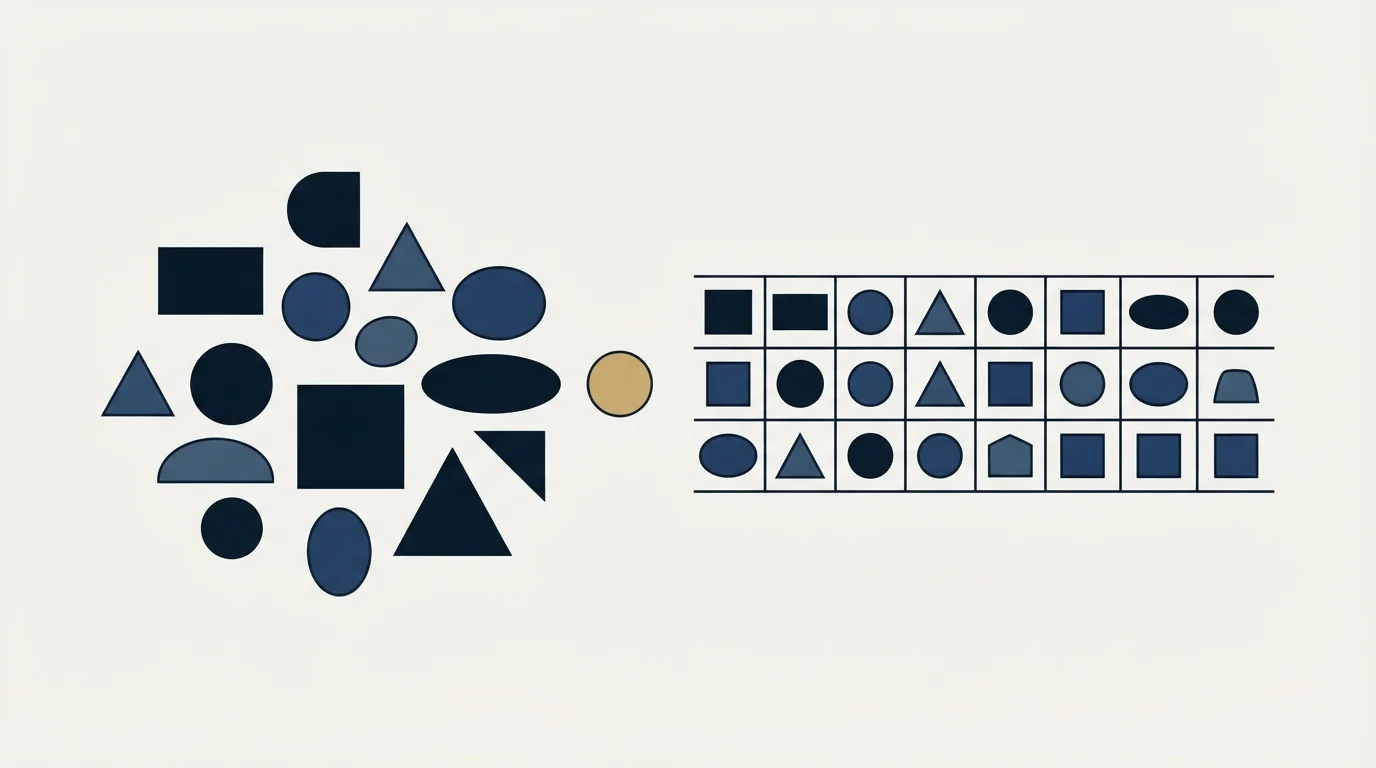
Here is the stage the calendar cannot fill honestly. The reader has named the category and is not ready to talk to anybody. Something is meant to happen over the following weeks that makes them ready.
The standard answer is a sequence of educational emails on a timer, usually drawn as numbered assets with day counts beside them, and it is the single most common recommendation in published versions of this funnel. It is popular because it is schedulable, and a schedulable thing can be put on a calendar and reported against.
The reason it underperforms is structural. A timer cannot discover what a silent person needed, and it cannot supply a reason to read the next thing. What it produces is a series of arrivals that the reader did not ask for, each one slightly less welcome than the last, which is an odd way to spend the goodwill the first piece earned. The fuller argument about which funnel transitions have a mechanism behind them and which do not is in the inbound marketing sales funnel.
Where we differ from standard practice
We do not run scheduled sequences on our own outbound or on our clients'. One message per campaign, built on one premise, sent once, with no reminder afterwards. When something changes at a company that makes the case newly relevant, that is a new campaign with a new argument rather than the next item on a timer.
That policy is about outbound, and it applies to the middle of this funnel for the same reason. A person who has read one thing and gone quiet has told you something. The honest reading is that what you offered was not what they needed that week, and adding four more scheduled arrivals does not change the fact or discover what would.
Reaching those readers directly depends on the list rather than the calendar, and testing a contact database on your own segment settles that purchase in an afternoon.
What actually moves somebody through the middle
The middle does have mechanisms. Each of them is harder to commission than a timed series, which is the reason a timed series keeps getting commissioned.
Something worth returning to on their own initiative. A benchmark that updates, a calculator they will need again next quarter, a reference page that answers a question they keep having. The return visit is a real signal, generated by the reader rather than by your automation.
A surface they can try. A sandbox, a limited tier, a sample of the actual work. Ten minutes of somebody using the thing teaches you more than six months of opens, and it moves them through the stage under their own power.
Content that answers the two alternatives nobody writes for. The reader's shortlist at this stage usually holds three things and only one of them is a supplier: carrying on as they are, giving the job to somebody internal, and buying. Almost every middle-funnel asset argues against a competitor and leaves the other two unaddressed.
One piece written for the sceptic. Somebody in security, finance, procurement or legal will ask the awkward question, and the answer to it is a short, specific page rather than a paragraph inside a long guide.
- A five-part educational email series on a timer
- A webinar recorded once and promoted repeatedly
- A long guide covering the category in general
- An ebook behind a form for people already on the list
- Measured in opens, downloads and registrations
- A reference or benchmark page worth returning to unprompted
- A trial surface or a sample of the real work
- A page arguing against doing nothing and against building it internally
- One short page for the sceptic in procurement, security or finance
- Measured in return visits and in conversations started
Bottom of funnel, where the asset has to survive being forwarded
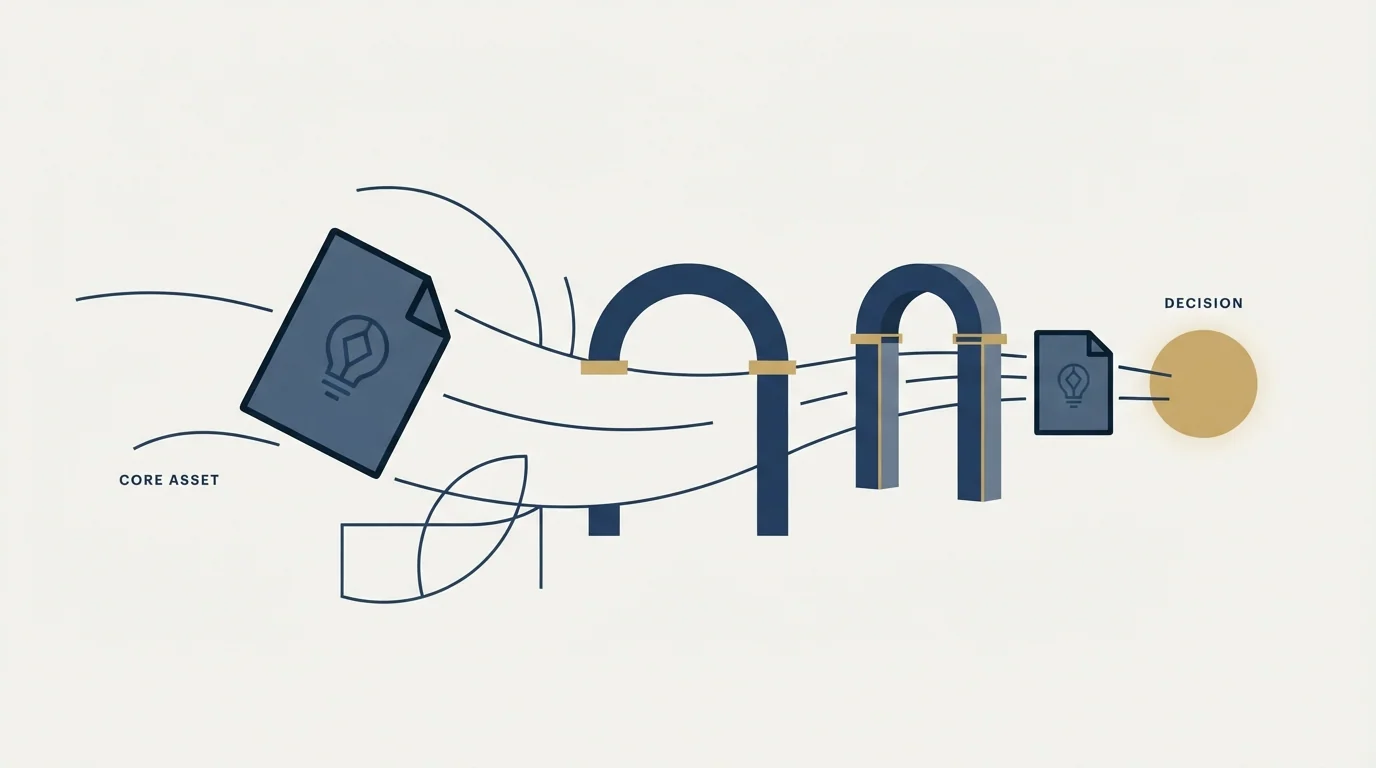
The bottom stage has a constraint the other two do not. Whatever you publish here will be read by somebody who never met you, because the person you convinced is going to forward it to a colleague who was not on the call.
The bottom of the funnel is the stage where a buyer has already identified the problem and narrowed the options, so the job of an asset here is to remove the last objection rather than to explain the category.
That changes what the asset has to contain. It has to state the problem before it states the answer, because the forwarded reader has none of the context. It has to be short enough to be read in a meeting. And it has to name the commitment plainly, since the question the colleague is holding is about risk rather than about capability.
Case studies work here when they carry the situation as well as the outcome, and comparison pages work when they are honest about who the approach is wrong for. Both fail in the same way, which is by being written for the champion who already agrees.
Where the buying group is large enough that no single asset reaches it, the distribution problem overtakes the production problem, and that is a different discipline with its own metric. It is covered in account-based content marketing, and the question of which assets are worth building for a named list at all is in ABM content strategy.
Count coverage, not reads
The reporting attached to this funnel is usually asset-centric, and asset-centric reporting cannot answer the question the funnel exists to answer.
Reads tell you a piece was consumed. They do not tell you whether the accounts you care about are progressing, because the same read count can mean fifty individuals at fifty companies or fifty individuals at eight. Those are opposite commercial positions and they produce identical dashboards.
Three numbers are worth more than the whole standard report. Stage-to-stage conversion tracked separately, so you know which seam leaks rather than that the funnel is inefficient. Time in stage, which is the number that exposes a middle stage with no mechanism long before anyone will admit to it. And where eventual customers first arrived, recorded separately from where they converted, because standard attribution hands the credit to the second page and the first one does the harder work.
One habit goes with them: count the people who left. A rate computed over survivors will always look reasonable.
- Yes: The stage it serves is named, and so is the question the reader holds there
- Yes: A named route gets it in front of people, beyond publishing it
- Yes: It reads correctly for somebody it was forwarded to
- Yes: There is a number you will read in six weeks that could show it failed
- No: Its job in the middle stage is to arrive on a schedule
- No: It argues against a competitor and ignores doing nothing
Where this funnel does not reach
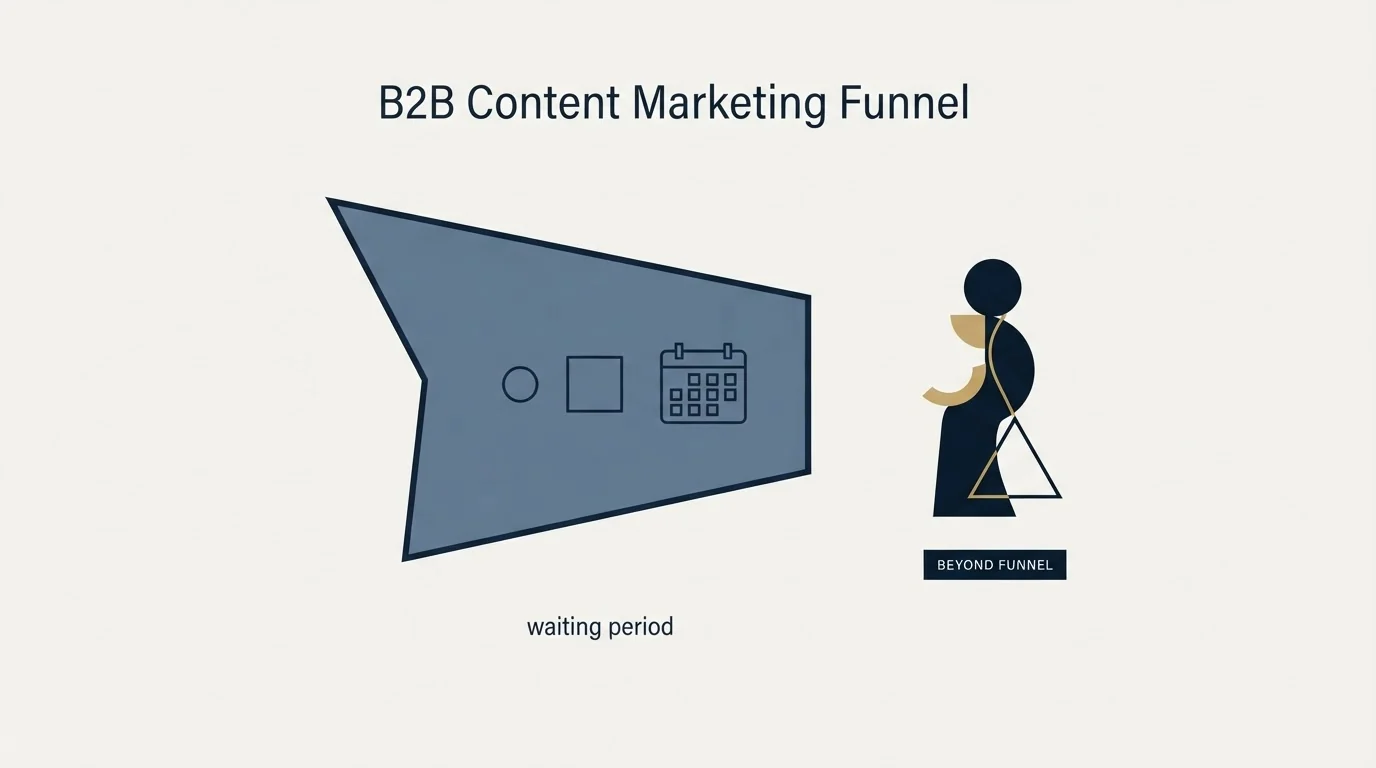
Every stage of this model assumes the reader arrived. An account that has never searched for anything in your category does not enter at the top, and no amount of work on the three stages will find them.
That is not an argument against content. It is a boundary worth drawing before the plan is written, because the accounts most worth having are often the ones least likely to arrive on their own. The honest comparison between the two instruments is in inbound marketing vs outbound, and the argument that each state of demand needs a different play, rather than one play run at all of them, is in demand creation, capture and conversion.
The short version
The stage map is a fair description of how a B2B buyer moves, and two of its three stages name a job content can do. The top is about being findable through the symptom rather than through the category. The bottom is about writing something that survives being forwarded to a sceptic who was not on the call.
The middle names a waiting period, and the conventional filler for it is a schedule. Replace the timer with reasons: something worth returning to, a surface they can try, a page that argues against doing nothing and against building it internally, and one short answer for the person who will ask the awkward question.
Then count coverage rather than reads, track the seams separately, and count the people who left.
If the accounts you most want will never enter this funnel on their own, that is a targeting problem rather than a content one. Meetings are qualified against criteria agreed in writing before launch, so the segment and the argument get named before anything sends. You can see what one researched message into that segment looks like.
Frequently asked questions.
Frequently asked questions- What are the stages of a B2B content marketing funnel?
- Three, and each names a different question the reader is holding. At the top they have a symptom and no vocabulary for it. In the middle they have named the category and are comparing approaches rather than suppliers. At the bottom they have an approach in mind and a colleague to convince, so their questions are about risk and commitment.
- What content works in the middle of a B2B funnel?
- Content the reader chooses to return to. A benchmark or calculator they will need again, a trial surface or sample of the real work, a page that argues against doing nothing and against building it internally, and one short answer for the sceptic in procurement, security or finance. Each supplies a reason to come back rather than a scheduled arrival.
- Why do content funnels leak in the middle?
- Because that stage names a waiting period rather than a job. The top and bottom both have mechanisms you can point at: being findable, and answering a specific risk. The middle is filled by a timer in most published versions of the model, and a timer cannot discover what a silent reader needed or supply a reason to open the next thing.
- How should a B2B content funnel be measured?
- By coverage rather than reads, and by three numbers. Stage-to-stage conversion tracked separately, so you know which seam leaks. Time in stage, which exposes a stage with no mechanism. And where eventual customers first arrived, recorded separately from where they converted, since standard attribution credits the second page while the first does the harder work.
About the author.

Ben Carden is CRO at RevenueFlow, which builds and operates outbound revenue engines for B2B companies. Previously at Gartner Enterprise. Studied at London School of Economics.
Ben Carden · CRO
Connect on LinkedIn →Explore more.
Ready to scale your outreach?
We build GTM engines that book real meetings. See the receipts.
Related articles.
eWebinar Pricing: Two Meters and a Level That Moves
eWebinar does not ask you to pick a plan. Published webinars set the level and registrants set the overage, and the two directions do not move on the same schedule.
BrightTALK Pricing: What the Vendor Does Not Publish
Six BrightTALK surfaces carry no price at all. The $500 figure filling that gap is a 2022 scrape on a listing the vendor says it does not manage.
Foleon Pricing: No Published Price, a 24-Month Term
Foleon publishes no rate on its plans page and publishes the whole commitment behind it. The term, the notice window and what happens to the Docs after.
Goldcast Belongs to Cvent Now: The Buying Question
Cvent announced its Goldcast acquisition in December 2025 and completed its ON24 acquisition in April 2026. Two shortlist names, one owner, one live contract question.
On-Demand Webinars: What Changes When You Take the Date Away
A live webinar earns most of its value from the date. Removing it keeps the topic signal and the address, and loses the deadline, the burst and the room.
Define Content Syndication: Two Purchases Behind One Word
One budget line, two different purchases. Republication buys reach; lead syndication buys contact records produced by a download. The deliverable tells you which.