Lifecycle Marketing Assumes You Already Have the Contact
The model was built where stage changes are purchases inside a short cycle. In considered B2B the transitions happen where you cannot see them.
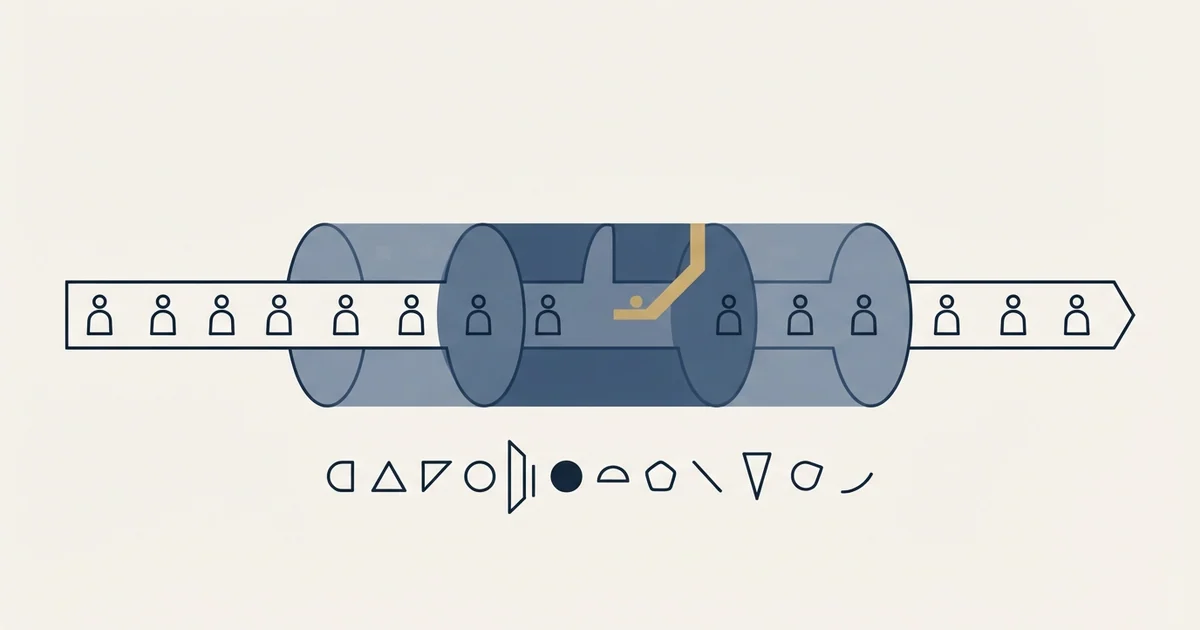
Lifecycle marketing organises communication around the stage a person occupies rather than around campaigns. It works where stage changes are observable events in a short cycle. In considered B2B most transitions happen off your properties, a group decides rather than a person, and the loop closes in quarters.
Key takeaways
- A lifecycle stage in B2B is usually an inference from a page view or a download, presented downstream as a fact about the buyer.
- The post-sale half of the model transfers cleanly, because onboarding, expansion and renewal have real events and real dates.
- Marketing automation platforms are ranked on channel breadth across email, SMS, advertising and social, so an email-only team pays for unused surface.
- Importing cold contacts into an awareness stage joins two systems with different permission bases and different sending reputations.
Reviewed and updated October 1, 2026
Lifecycle Marketing Assumes You Already Have the Contact
A B2B marketing team adopts a lifecycle model, maps four stages onto the customer journey, and builds a programme for each one. Six months later the awareness and engagement stages are full of contacts who downloaded something once, the conversion stage is nearly empty, and the retention stage was never built because nobody owned it.
The model was applied faithfully. What broke is the assumption underneath it, which is that a person is somewhere on a journey you can observe. In considered B2B purchases, for most of the accounts you care about, you cannot.
What the term means, and where it comes from
Lifecycle marketing organises communication around the stage a person occupies in their relationship with a company rather than around campaigns or calendars. The stage set varies by publisher and usually reduces to awareness, engagement, conversion and retention, with advocacy sometimes added at the end. The promise is a relevant message at each stage, delivered across whichever channels the customer uses.
The customer lifecycle is that stage set considered on its own, and every published version of it describes the same arc from first awareness through purchase to retention or lapse.
Read who publishes the definitive versions of it and the origin is clear. In the search pull behind this article, the category's most confident material came from email and customer engagement platforms serving ecommerce and consumer subscription businesses, such as Klaviyo, Braze and Mailchimp, alongside the large marketing clouds, Salesforce and HubSpot among them, and one advertising network, Amazon Ads.
That is not a criticism. It is the reason the model is unusually well specified in those businesses and unusually slippery outside them. A retailer can see a lifecycle: a first purchase, a second purchase, a lapse, a win back. Every stage transition is an observable event that happens on a surface the retailer controls, in a cycle short enough to measure inside a quarter.
The three things a B2B purchase does not supply
Observable stage transitions. In a considered purchase the buying group moves off your properties. A buying group reads analyst material, asks peers, watches a competitor's demo, and takes an internal decision none of which you can see. The stage the model wants to assign is a fact about their process, and the only evidence you hold is a proxy: a page view, an email open, a download. Assigning a stage from that proxy and then acting on it as though it were the stage is the error the whole model is prone to.
A single person to hold the stage against. Lifecycle models track an individual. B2B purchases are made by groups, and the person who downloaded the report may be a researcher acting for somebody who has never touched your website. Treating that person as a buyer who failed to convert wastes them, and treating them as a route into an account is the useful reading.
A cycle short enough to feed back. With a purchase cycle measured in quarters, a change to the engagement stage produces evidence about conversion much later, by which point several other things have changed too. The model works best where the loop closes in weeks.
- Stage changes are purchases and lapses
- One person is the buyer
- Behaviour happens on your own properties
- Cycle closes in days or weeks
- Stage changes are internal decisions
- A group decides, one person browses
- Most research happens elsewhere
- Cycle closes in quarters
- Post-sale onboarding and expansion
- Renewal and churn risk
- Segmentation on firmographics you can verify
- Suppression and preference handling
The half that transfers, and it is the half nobody staffs
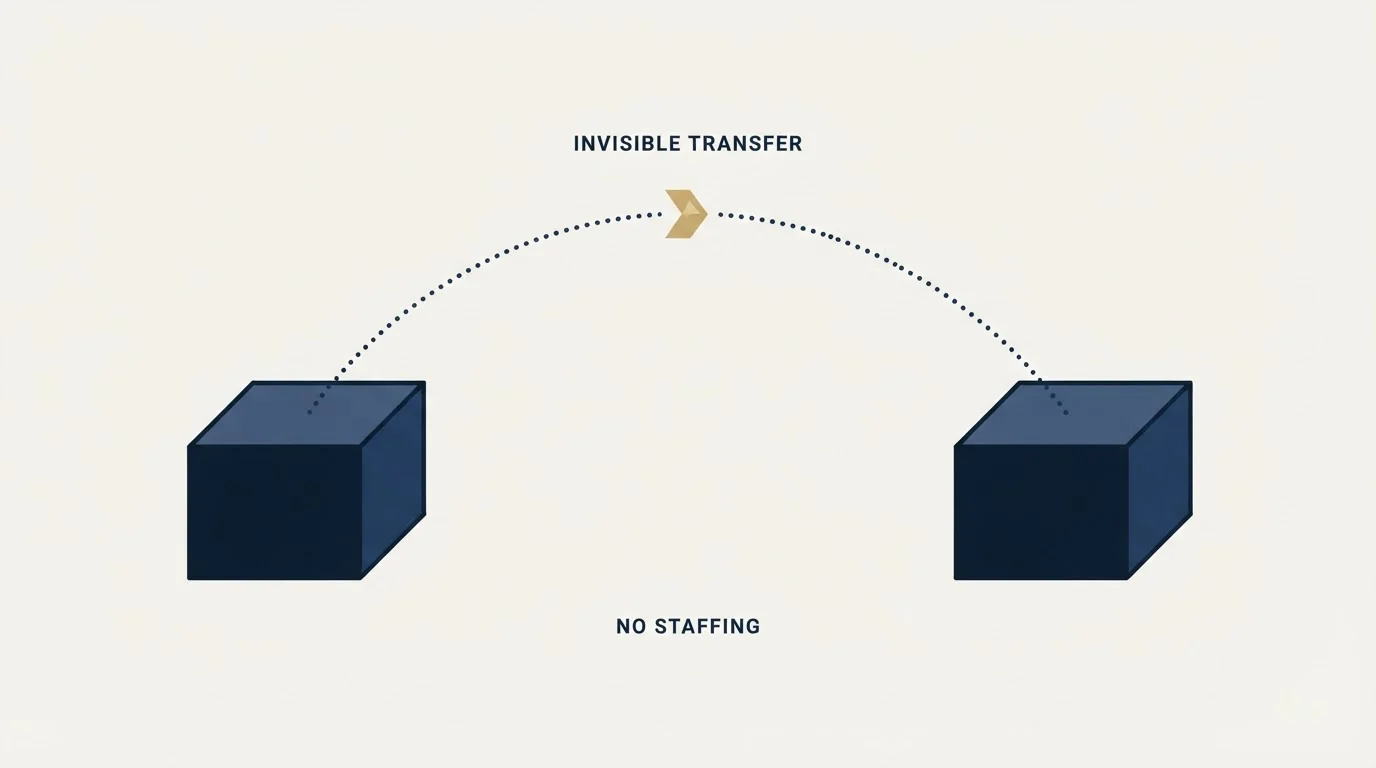
The strongest version of lifecycle marketing in B2B sits after the contract is signed, and it is routinely the least resourced.
Onboarding has observable stages, because activation events happen inside a product or a service you run. Expansion has real triggers: usage crossing a threshold, a new team adopting the tool, a role change at the account. Renewal has a date, which is the cleanest trigger in the entire discipline. Churn risk has leading indicators you can actually see.
Everything the model promises is available there. The transitions are events rather than inferences, the person is a customer you already have a relationship with, and the loop closes fast enough to learn from.
The pre-purchase half is where the model overreaches, and it overreaches most in the middle, where the asset map turns into a schedule and content gets produced against stages rather than against questions. That failure is the subject of b2b content marketing funnel, and it names the same shape from the content side.
What the automation platform is, and what it commits you to
Two questions separate marketing automation platforms once the channel question above is settled, and neither of them appears on a feature grid. The first is whether a CRM is built in or assumed, because a platform that assumes one inherits whatever contact model you already run and a platform that ships one competes with it. The second is whether pricing scales on contacts stored rather than contacts mailed, which on a B2B database full of records nobody is currently emailing decides the size of the bill more than any feature does.
Lifecycle marketing is executed by a marketing automation platform, and that category is worth reading plainly because the label covers a wide surface.
Read across those guides and a working definition emerges: a platform automates across at least two of email, SMS, digital advertising and social, and the guides treat wider channel coverage as the mark of a fuller product. The market has an enterprise tier, a mid-market layer, and a long tail of tools built around a single channel.
For a B2B outbound team that channel list is the important part. Two of the four channels in the standard definition are ones we do not run, and a third is a different budget entirely. Buying a platform whose ranking logic rewards channel breadth, in order to run lifecycle email, means paying for a surface area you will not use and inheriting a data model built around it.
The narrower version of the same question, where AI is the differentiator being sold, is unpicked in AI GTM platforms: the label covers six different products, and reading which one you are being shown is where that evaluation starts.
- Yes: The stage was set by an event the person caused, not by elapsed time
- Yes: You can name what the person did that moved them
- Yes: The account rather than the individual is the unit you are tracking
- Yes: The post-sale stages are built and owned before the pre-sale ones
- No: A contact advances a stage because a timer expired
- No: Cold contacts were assigned an awareness stage on import
The collision with outbound, stated plainly
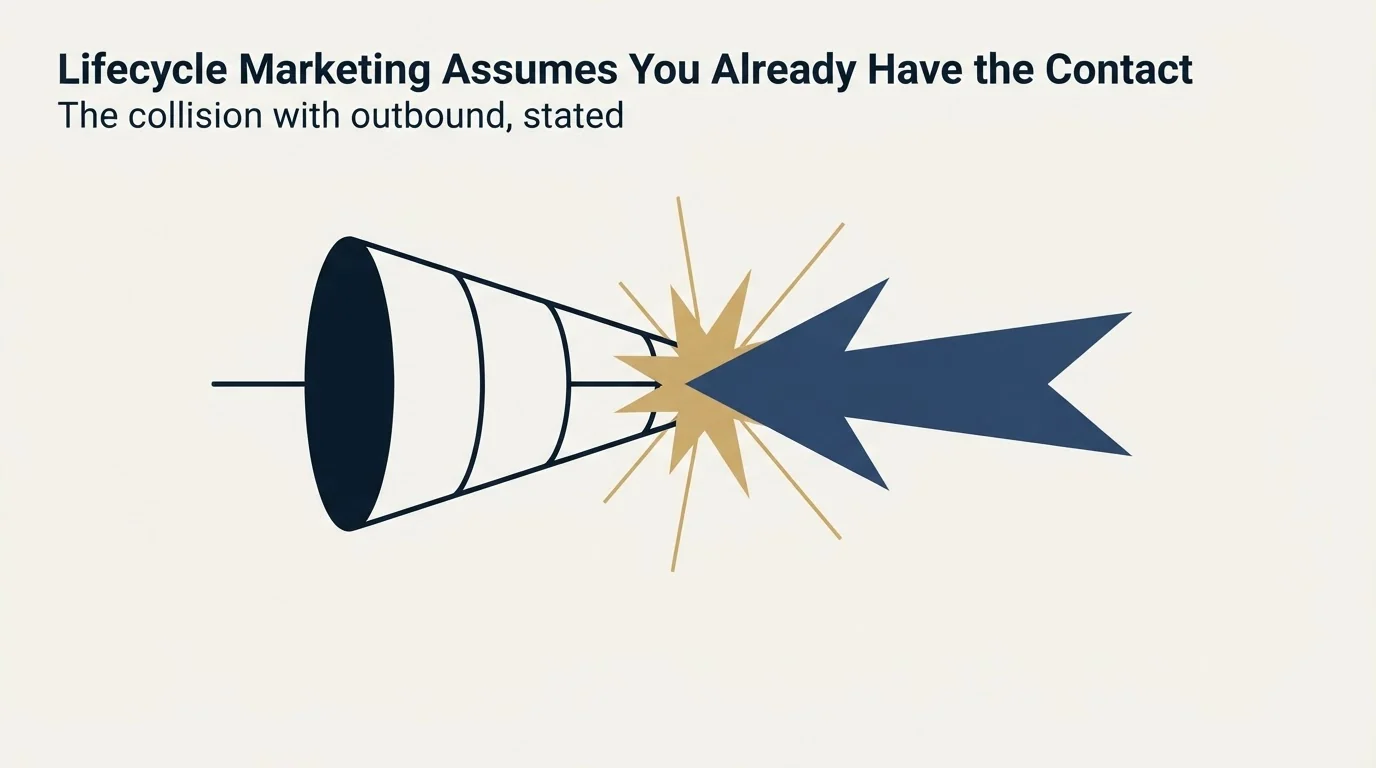
Outbound creates contacts who have no lifecycle stage, because they have no relationship with you yet. Dropping them into an awareness stage on import is the most common way the two systems are joined, and it is a category error with a practical cost: those contacts then receive lifecycle communications built for people who arrived voluntarily.
Two things follow.
The permission bases are different, and so are the sending reputations. Permission-based marketing email and cold outbound share a channel and very little else, and running both through one domain damages both. That argument, and where the boundary belongs, is in email marketing lead generation, with the version at organisational scale in enterprise email marketing.
And the cadence assumption is different. The lifecycle spine is a nurture sequence: a series of scheduled messages that continues until the recipient acts. Our own practice runs the other way. We send one message per campaign, built on one premise, with no bumps and no thread replies.
The reasoning is mechanical rather than aesthetic. A follow-up is delivered to the population that already saw the message and chose not to answer, which is the population most likely to complain, and the reputation cost lands on the sending domain across everything else it carries. What we give up is frequency, which pushes the work into targeting and into the single message. The assumption a nurture sequence makes about silence, and what silence usually means instead, is examined in lead nurturing.
A version that works in B2B
Keep the frame and change what drives it.
Drive on events rather than on stages. A person returning to a pricing page, a new role at a target account, a company announcement, a product usage threshold: these are things somebody did, and each one supports a message with a reason to exist. A stage assignment supports a message whose reason is the calendar.
Hold the account as the unit, with people attached to it. That matches how the purchase is actually made, and it stops a researcher being scored as a stalled buyer.
Build the post-sale half first, because that is where the model's assumptions hold and where the revenue per unit of effort is highest. The sequencing argument is not only about rigour. An expansion or renewal programme acts on customers who already pay you, so the value of a message landing correctly is known rather than projected, and the same effort spent on a pre-purchase nurture track is spent against a conversion whose probability nobody can price.
Keep the stage vocabulary small enough that two people would assign the same person to the same stage. A model with nine stages and no written criteria produces disagreement rather than precision, and the disagreement surfaces as a reporting argument months later. Three or four stages with an event named against each one carries more information than a finer grid built on inference.
And keep the acquisition motion separate, on its own domain and its own logic, feeding accounts into the lifecycle system at the point where a relationship actually begins rather than at the point of first contact.
- Step 1Outbound
Creates contact with accounts that have no relationship yet, on its own domain, one message per campaign
- Step 2Handover
A reply, a booking or an inbound action starts the relationship and the record enters the lifecycle system
- Step 3Lifecycle, pre-sale
Event driven rather than stage driven, held at account level, kept short
- Step 4Lifecycle, post-sale
Onboarding, expansion, renewal and churn risk, where the stages are real events
The short version
Lifecycle marketing organises communication around the stage a person occupies, and it was built in businesses where those stages are observable purchases inside a short cycle. In considered B2B the transitions happen off your properties, the buyer is a group rather than a person, and the loop closes in quarters, so a stage assignment is usually an inference presented as a fact.
The post-sale side of the model transfers cleanly, and teams tend to build it last. The pre-sale half works when it is driven by events somebody caused rather than by elapsed time. And the platform that executes it is sold on channel breadth, so a team running email and LinkedIn should expect to pay for surface it will not use.
Keep the acquisition motion separate from the lifecycle system, on its own domain and its own cadence logic. When the constraint is the supply of accounts entering the model at all, see what a first campaign produces against your own market.
Frequently asked questions.
Frequently asked questions- What is lifecycle marketing?
- It organises communication around the stage a person occupies in their relationship with a company rather than around campaigns or a calendar. Stage sets vary and usually reduce to awareness, engagement, conversion and retention. The promise is a relevant message at each stage delivered through whichever channels that person uses.
- Does lifecycle marketing work for B2B?
- The post-sale half does, because onboarding milestones, usage thresholds and renewal dates are real events on surfaces you control. The pre-sale half struggles, because most of a considered purchase happens where you cannot observe it, the buyer is a group rather than an individual, and the feedback loop runs in quarters rather than weeks.
- How is lifecycle marketing different from lead nurturing?
- Nurturing is one component, usually the scheduled sequence that runs between first contact and a sales conversation. Lifecycle marketing is the wider frame covering acquisition through to retention and advocacy. Both rest on the same assumption about what silence means, which is the assumption worth examining before either is built.
- Can outbound contacts go into a lifecycle programme?
- Not on import, and not into an awareness stage. A cold contact has no relationship and no stage, so lifecycle communications built for people who arrived voluntarily reach the wrong audience. The clean join is at the point a person replies, books or acts, which is where a relationship actually begins.
About the author.

B2B cold email experts helping companies generate qualified leads through done-for-you outreach campaigns.
RevenueFlow Team
Explore more.
Ready to scale your outreach?
We build GTM engines that book real meetings. See the receipts.
Related articles.
SDR Outsourcing for Business Brokers: The Fee Timing
Whether a success-fee brokerage should rent sales development at all: the fee timing, the texts that limit what an outside person may say about value, and who signs.
SDR Outsourcing for Logistics Companies: The Brokerage Line
What an outside sales development team may do in a freight company's name, the calling and email rules it inherits, and which arrangement survives a bid-shaped market.
Appointment Setting for Business Brokers: The Seller Meeting
What a bought meeting with a business owner has to be for a brokerage: the three-part qualification, the confidentiality rules, the licence line and the owner's reasons.
3x3 Research: Three Facts in Three Minutes Before Outreach
3x3 research as Funnel Clarity publishes it: three unique facts in three minutes that the prospect would be surprised you know, the variants, and where it fits.
Sales Prospecting for Utilities: Read the Filings First
Prospecting utilities from the proceedings that announce their spend: rate cases, resource plans and procurement decisions, who owns each, and the supplier gate.
SDR Outsourcing for Commercial Insurance Agencies
What an outsourced sales development team may legally say for a commercial insurance agency, how it may be paid, and the expiration-date calendar it has to work.