Low-Touch Sales: Where the Human Actually Enters
A low-touch motion is not a motion without sellers. It is one with a written rule about which accounts earn one, and three properties decide the setting before preference gets a vote.
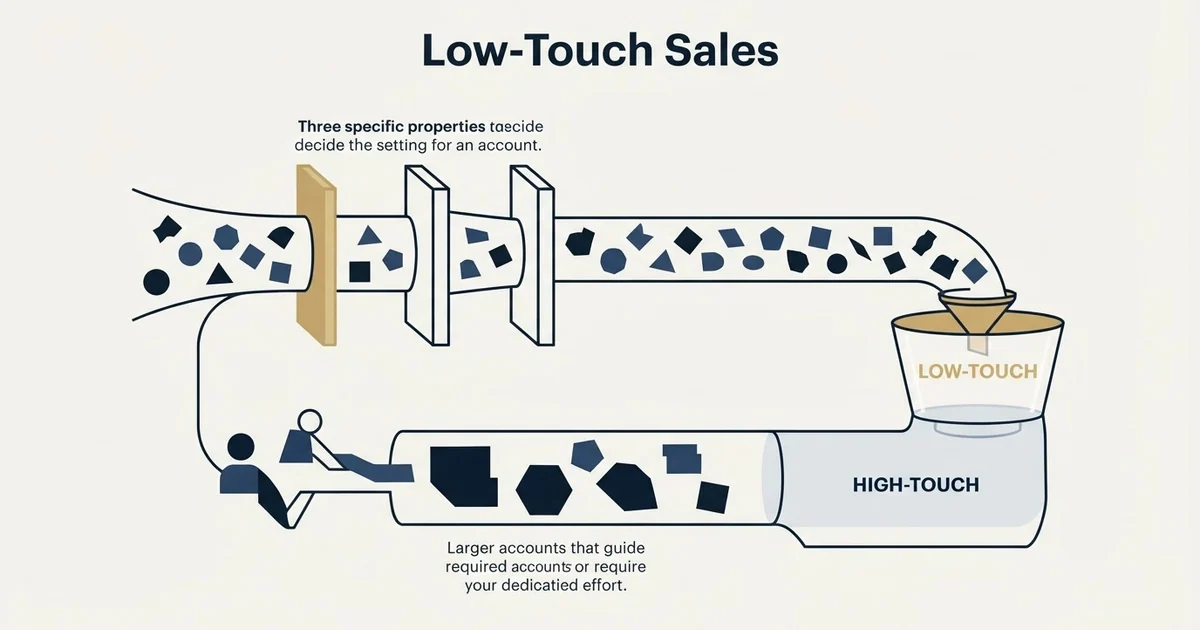
Low-touch sales is a go-to-market setting in which the default path from interest to a paid account is self-serve and a person enters only at named moments, such as declared purchasing intent, several people from one company signing up separately, or usage crossing a plan boundary. It sits between no-touch, where nobody speaks to the buyer before payment, and high-touch, where a person is in the path from the first conversation. Contract value, whether the product succeeds without a conversation, and how many people have to agree are what decide which setting a company can run.
Key takeaways
- A touch model describes how much human contact sits in the DEFAULT purchase path, not the maximum. Every model has exceptions; the model is what happens when nobody makes one.
- Three properties decide the setting: what a customer is worth, whether the product succeeds without a conversation, and how many people have to agree.
- A published pricing page reads the setting for you. The ladder usually ends where the published numbers stop and a contact-sales tier begins.
- A low-touch motion still has sellers. What makes it low-touch is a written threshold that says which accounts earn one, and what does not qualify.
- Work declared intent first, account shape second, trajectory third. Raw activity scores tell you an account is busy and nothing else.
- Treat the result as demand capture rather than as coverage: accounts that cannot start alone, and accounts using the product where the buyer has never heard of you, are a separate motion.
Reviewed and updated October 1, 2026
A founder prices a product at a few hundred dollars a month, watches signups arrive without anybody speaking to a buyer, and hires two account executives anyway because that is what growing companies do. Six months later the pipeline looks reasonable and the unit economics do not, because a human-led cycle costs more to run than the contract returns in its first two years.
Nothing obviously stupid happened. The price was set by looking at competitors and the motion was chosen by looking at admired companies, and nobody made the two agree. Low-touch sales is the name for the setting the arithmetic was pointing at, and knowing the vocabulary is what lets a team argue about the right thing.
What the touch model actually names
A touch model describes how much human contact sits in the default path from first interest to a paid account. It is a statement about the default rather than about the maximum: every model has exceptions, and the model is what happens when nobody makes one.
Three settings are in common use, and the boundaries between them are soft.
No-touch. Nobody from the company speaks to the buyer before payment. Signup, trial and purchase all happen in the product, and support exists but is not a step in the purchase. Consumer software mostly lives here and so does the bottom tier of a great deal of business software.
Low-touch. The default path is self-serve, and a person enters at named moments rather than by default: a buyer who asks about invoicing, a team that outgrows a plan limit, an account where several people signed up separately. The seat exists, and most accounts never meet it.
High-touch. A person is in the path from the first conversation. Discovery, demonstration, technical validation and negotiation are all human steps, and the purchase does not complete without them.
- Signup, trial and purchase all happen in the product
- Support is available and is not a purchase step
- Pricing is published in full
- Scales with traffic rather than headcount
- Fails silently when nobody logs in
- Self-serve is the default and most accounts stay there
- A seat exists for declared intent and account-level signals
- Published pricing with a contact-sales tier above it
- Scales until the qualifying signal outruns the seat
- Fails when every signup gets contacted
- Discovery and demonstration are human steps
- Technical validation and negotiation are expected
- Price is quoted rather than published
- Scales with headcount, one seat at a time
- Fails on qualification rather than on effort
A published pricing page is the cheapest way to read which setting a company runs. The ladder usually ends at the point where the numbers stop. Zapier's pricing page, fetched on 2 September 2026, publishes a team plan at "Starting from $69 /month" and then describes the tier above it as "Contact for pricing", which is the exact boundary where the motion changes from low-touch to high-touch. Slack's pricing page, fetched the same day, opens by inviting the reader to "start with the basics for free, and upgrade at any time" and reaches the same wall at its top tier, which it lists as "Contact sales for pricing".
What decides the setting, and it is not preference

Three properties settle this, and a team that argues about them in this order stops arguing about the model.
What a customer is worth. Annual contract value caps acquisition cost, acquisition cost caps how much human attention a deal can absorb, and human attention per deal is what a touch model is. Below a certain contract value a person touching every deal cannot be paid for out of the deals, which removes the option rather than making it unattractive. The band arithmetic and where the threshold sits is worked through in B2B SaaS lead generation below and above thirty thousand ACV, and the wider version in letting contract value pick the motion.
Whether the product succeeds without a conversation. A low-touch model assumes a stranger can reach value alone. Where the product needs configuration, data loading, permissions or an integration before it does anything useful, the buyer cannot start on their own, and self-serve signup produces a queue of accounts that never activated rather than a funnel. This is a product property, and no amount of onboarding copy converts it into a different one.
How many people have to agree. A purchase one person can authorise can complete in a checkout. A purchase that needs security review, procurement and a budget holder cannot, whatever the price, because the obstacle is agreement rather than payment. That is why a low-priced product sold into regulated buyers often runs a higher touch model than its price band predicts.
The property that is not on the list is how much the team enjoys talking to customers. Preference is what fills the gap when the three above have not been written down.
Where the human enters in a low-touch motion
This is the part the published treatments skip, and it is the whole operating question. A low-touch model is not a model with no sellers. It is a model with a rule about which accounts earn one.
Three signal classes behave differently and are worth separating before any of them is wired to a person.
- Step 1Declared intent
Somebody asked about plans, invoicing, procurement, seats or a paid-only capability. The buyer has already said what they want and the work is removing an obstacle.
- Step 2Account shape
Several people from one company signed up separately and none of them knows about the others. A support queue cannot see this, because a ticket belongs to a person and the opportunity belongs to an account.
- Step 3Trajectory
Usage crossing a boundary that predicts a plan limit, or falling away after a strong start. The second is the one most teams ignore and it is recoverable for a short window.
- Step 4Raw activity
Nothing. A high click count says the account is busy. Wiring it to a person converts the seat into a support queue with a quota.
The threshold has to be written down clearly enough that somebody can apply it on a Monday without asking, and clearly enough that they can say what does not qualify. Set it at signup and the team becomes a support queue with a quota. Set it at a genuine account-level signal and the same headcount works a much smaller number of much better conversations. The seat and its two boundaries are covered in sales assist, and the motion it belongs to in product-led sales.
The two ways it goes wrong
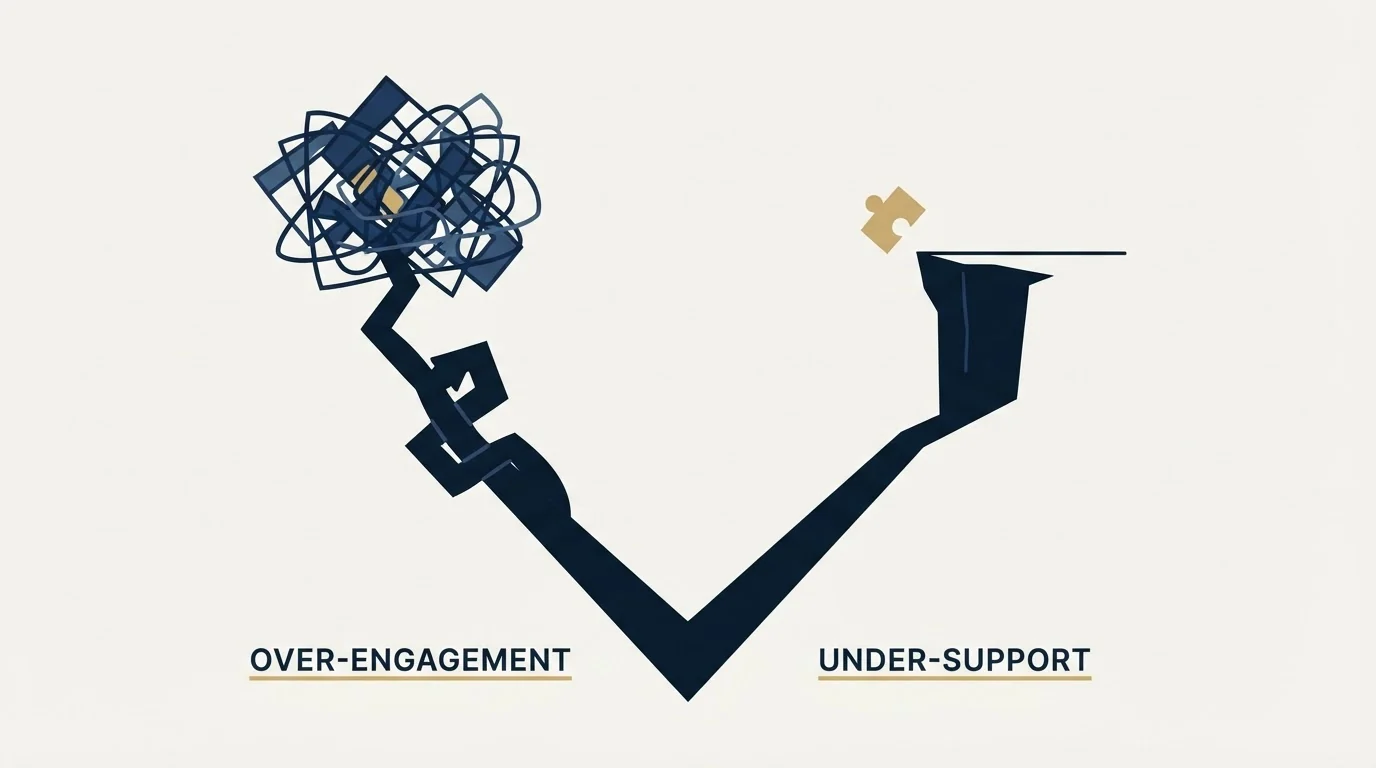
The threshold decays and nothing announces it. A signal that predicted a purchase last year predicts it less well after a pricing change, a packaging change or a shift in who the product is marketed to. The first symptom is a slow decline in conversion, and it gets attributed to the people rather than to the rule.
The model gets treated as complete coverage. Usage signals are demand capture. They exist only inside accounts that already found the product, which is a privileged position and a bounded one. Two populations sit permanently outside it: the segment where nobody can start alone because the product needs permission or configuration to be useful, and the accounts where the product is already in use and the person who could buy it properly has never heard of it. A team that has staffed the low-touch motion well is the team most likely to assume it has covered the ground.
Where outbound sits beside it
Those two populations are the outbound motion, and the second one has an unusually strong premise: something checkable about the account's own organisation is already true, and the first message can say so without making a claim about the product's merits.
Three boundaries keep that working. The reason an account is on the list has to travel with the row, or the message reverts to a generic pitch and the advantage is thrown away. Whether an internal user who already uses the product counts as a qualified conversation, or whether the named budget holder is required, has to be agreed in writing before anything sends. And the observation has to be stated at the level of the organisation rather than naming individual colleagues and their usage to their manager, which reads as surveillance whatever the intent.
Our own practice is one message per campaign, with no bumps and no thread replies.
The short version
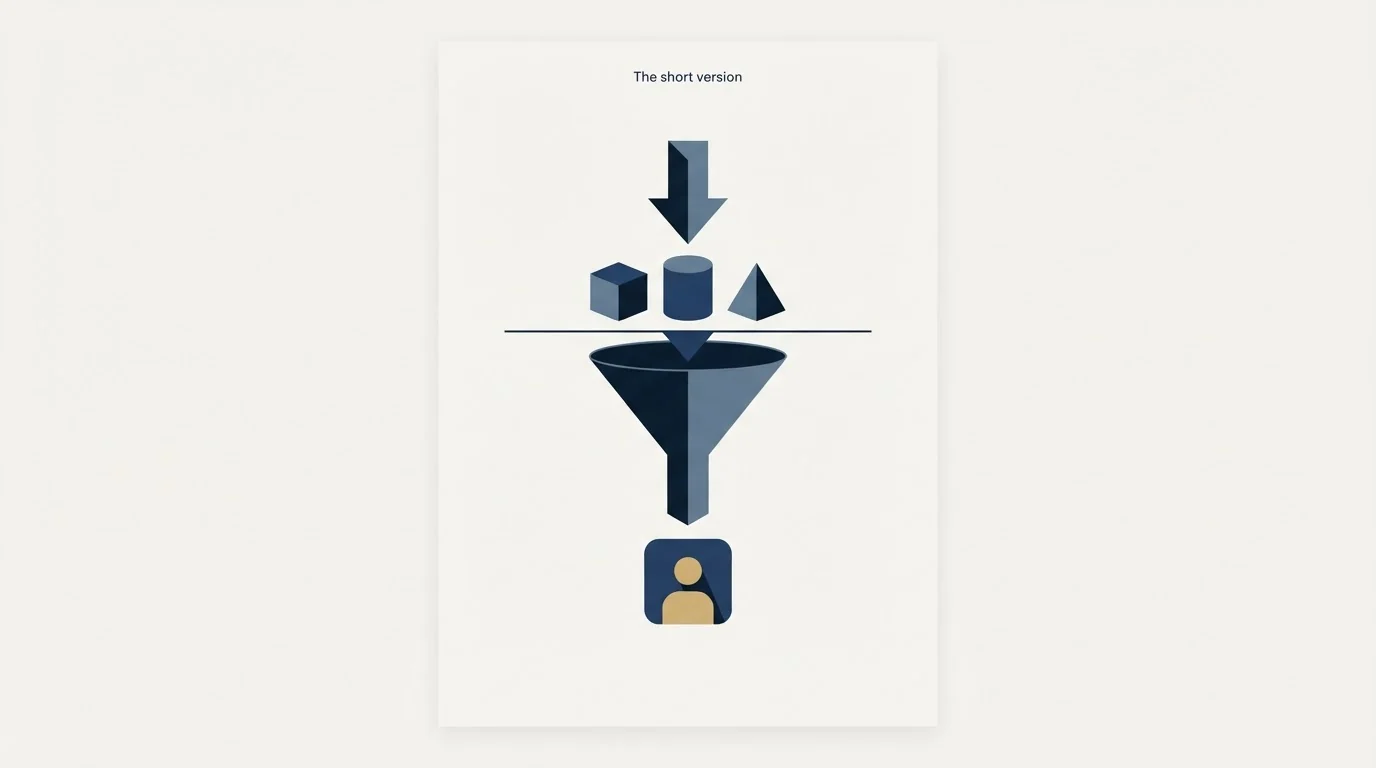
A touch model describes how much human contact sits in the default purchase path, and the three settings are no-touch, low-touch and high-touch. Contract value, whether the product succeeds without a conversation, and how many people have to agree are what decide the setting. Preference is what decides it when those three have not been written down.
A low-touch motion is not a motion without sellers. It is one with a written threshold: declared intent first, account shape second, trajectory third, and raw activity scores never. Treat the result as demand capture rather than as coverage, because the accounts that cannot start alone and the accounts where the buyer has never heard of you are a separate motion.
If that separate motion is the constraint, it is the half we run, with the qualification criteria agreed in writing before launch. See what a first campaign produces against that population. For the wider question of picking one motion and funding it to the point where its numbers mean anything, go-to-market motion is the page.
Pricing tier structures verified against Zapier's and Slack's own pricing pages as fetched on 2 September 2026. Publishers revise these pages; confirm the current tiers before relying on them.
Frequently asked questions.
Frequently asked questions- What is the difference between low-touch and no-touch sales?
- In a no-touch model nobody from the company speaks to the buyer before payment: signup, trial and purchase all happen in the product. In a low-touch model self-serve is still the default and most accounts stay there, but a seat exists and a person enters at named moments such as a question about invoicing, several colleagues signing up separately, or usage crossing a plan limit.
- What decides whether a company can run a low-touch sales model?
- Three properties. What a customer is worth, because contract value caps how much human attention a deal can absorb. Whether the product delivers value to a stranger without a conversation, because a product needing configuration or permissions produces unactivated signups rather than a funnel. And how many people have to agree, because a purchase needing security review and procurement cannot complete in a checkout whatever it costs.
- Does a low-touch model mean you do not need sales people?
- No. It means the default path does not include one and a written threshold decides which accounts do. Set that threshold at signup and the team becomes a support queue with a quota. Set it at an account-level signal and the same headcount works fewer, better conversations.
- Where does outbound fit with a low-touch sales model?
- Usage signals only exist inside accounts that already found the product, so they are demand capture rather than coverage. Two populations sit outside them: segments where nobody can start alone because the product needs configuration to be useful, and accounts already using the product where the person who could buy it properly has never heard of it. Both are outbound, and the second has an unusually strong premise.
About the author.

B2B cold email experts helping companies generate qualified leads through done-for-you outreach campaigns.
RevenueFlow Team
Explore more.
Ready to scale your outreach?
We build GTM engines that book real meetings. See the receipts.
Related articles.
Sales Prospecting for SEO Agencies: Four Public Signals
How an SEO agency builds its own prospect list from signals Google documents: the index check, position, core update dates and site moves, under the warning owners read.
LinkedIn Outreach for Banks: A Regulated Message
How a bank's relationship managers use LinkedIn to reach business owners: what the FFIEC guidance, FINRA's notices and LinkedIn's own rules require, and where to stop.
SDR Outsourcing for Business Brokers: The Fee Timing
Whether a success-fee brokerage should rent sales development at all: the fee timing, the texts that limit what an outside person may say about value, and who signs.
Cold Calling for Telecom Companies: A Carrier's Own Rules
What only a telecom company meets on the phone: the FTC exemption that stops at its contractor, the verified carrier change, and the CPNI limit on lists.
SDR Outsourcing for Logistics Companies: The Brokerage Line
What an outside sales development team may do in a freight company's name, the calling and email rules it inherits, and which arrangement survives a bid-shaped market.
LinkedIn Outreach for Utilities: Selling to the Sector
How a vendor selling to utilities uses LinkedIn next to a published sourcing process: the three ownership models, the registration gate and what a message may ask.