Outbound for Heads of Marketing: Owning a Pipeline Number
Content compounds slowly and paid reaches people already looking. Why outbound keeps returning to the plan, and how to decide who runs it.
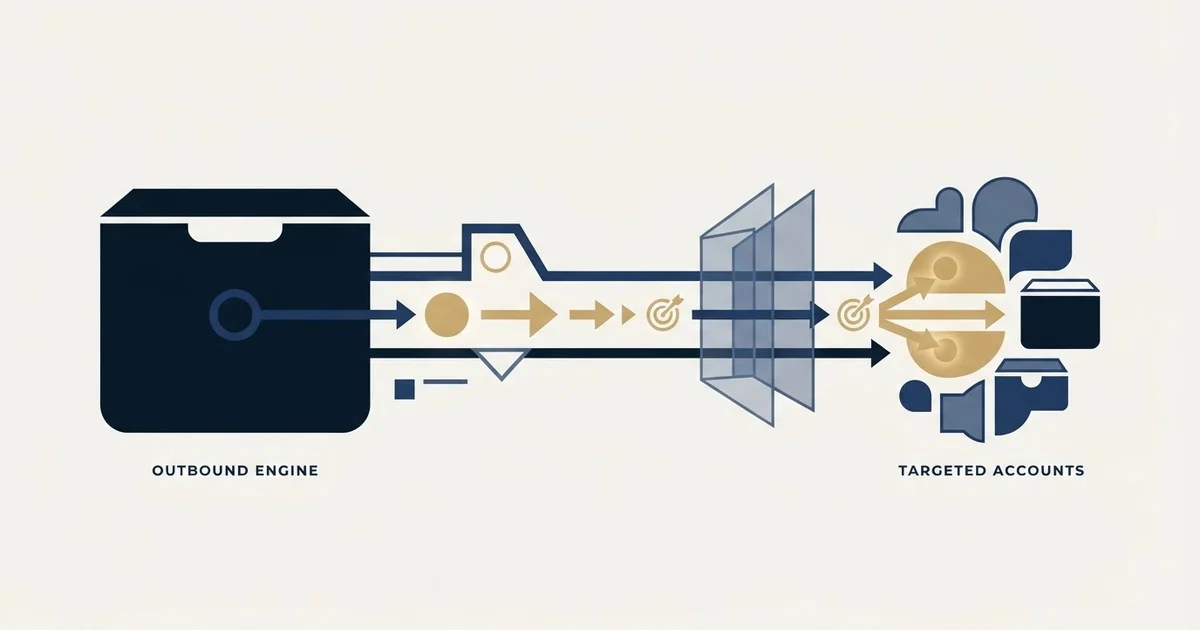
Diagnose the constraint before funding outbound, since a demand problem, a message problem and a sales problem need different spending. The build versus buy call is often really a headcount requisition against a program line. Write the qualified-meeting definition first and have sales sign it before launch.
Key takeaways
- Outbound is the only channel that can name the accounts it will approach before it starts, which is why it keeps returning to the plan.
- An SDR hired for outbound usually ends up reporting into sales, so the marketing leader keeps the number and loses the person.
- The qualified-meeting definition has to be signed by the team attending the meetings, because every later dispute resolves against that document.
- Outbound-sourced pipeline is systematically under-credited by inbound attribution models, so agree the judging measures before launch.
Reviewed and updated September 1, 2026
Outbound for Heads of Marketing: Owning a Pipeline Number You Do Not Fully Control
A head of marketing carries a pipeline number into every quarterly review and controls perhaps half of what produces it. Content compounds slowly and cannot be accelerated by spending more in November. Paid media buys attention from people already looking, which is a smaller pool than the target list. Events produce a spike and a lull. Meanwhile the number is annual, the review is quarterly, and the gap between what marketing sources and what the board expects tends to be discovered in month eight.
Outbound is the one channel that can name the accounts it will approach before it starts. That is why it keeps coming back onto the plan, and it is also why it is the hardest one for a marketing leader to own cleanly.
The problem is usually a diagnosis problem first
Before deciding how to run outbound, it is worth being sure outbound is the constraint. A pipeline shortfall has a small number of possible causes, and they call for different spending. Not enough people know the category is a demand problem. Enough know but they do not convert is a message or offer problem. Enough convert but the deals do not close is a sales problem wearing a marketing costume. Funding all three evenly is what happens when the diagnosis is skipped, and it is the most expensive thing a marketing budget can do. The three constraints and a way to tell which one you have are in demand gen strategy.
Outbound is the right answer when the category is established, the competitors are named, and the buyer would recognise the problem if somebody described it. It is the wrong answer when nobody has language for the problem yet, and the sequencing question between the two is the subject of demand generation agency.
The decision is rarely build versus buy on the merits
In most companies this decision is decided by which resource is easier to obtain. A headcount requisition and a program line are approved by different people on different cycles with different scrutiny, and the honest version of the internal conversation is often about which one can be got through the process this quarter.
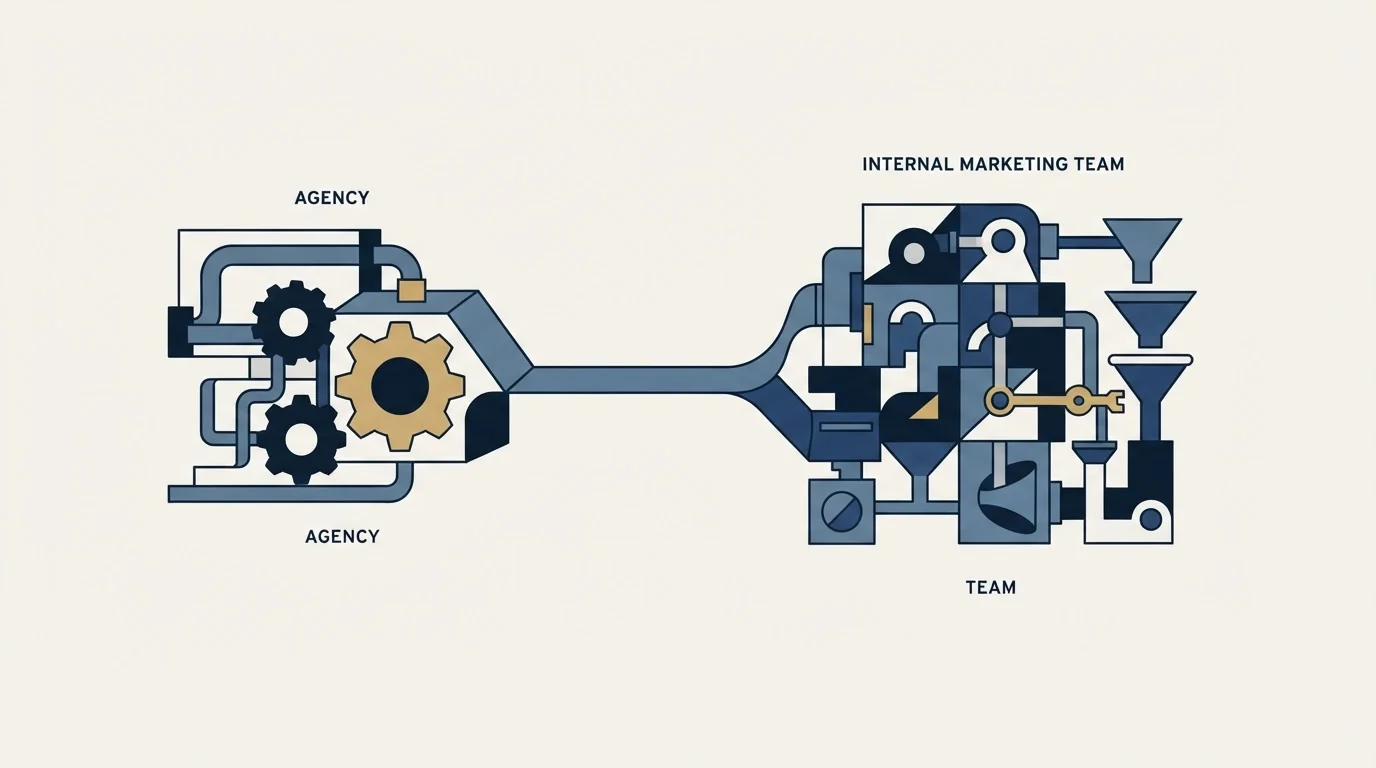
There is a second, quieter factor. An SDR hired to do outbound usually ends up reporting into sales, because that is where the career path and the coaching sit. The marketing leader who fought for the requisition then owns the number and not the person. A bought program stays under marketing's control, with the trade that the learning sits partly outside the company.
- Approved on the hiring cycle, often annual
- Frequently ends up reporting into sales
- Ramp before signal, measured in months
- Capability and learning stay in the company
- Fixed cost that is slow to reverse
- Approved on the budget cycle, often quarterly
- Stays under marketing's control
- Infrastructure and first learning cycle already paid for
- Learning has to be deliberately transferred in
- Easier to stop, which cuts both ways
Neither column is the right answer generally. What decides it is whether outbound is a permanent capability the company will still want in three years, in which case building it is the compounding choice, or a way to prove a motion works before committing a role to it, in which case buying is the cheaper experiment.
The cost comparison itself should be built fully loaded on both sides and divided by meetings that actually happened rather than meetings booked. The method is in outsourced SDR vs in-house. A separate comparison worth running is program cost against the tooling stack a team would need to run it internally, since the stack is often where the in-house budget quietly goes; the cost of an SDR team against an automation stack lays that version out.
The qualification definition is a treaty, not a formality
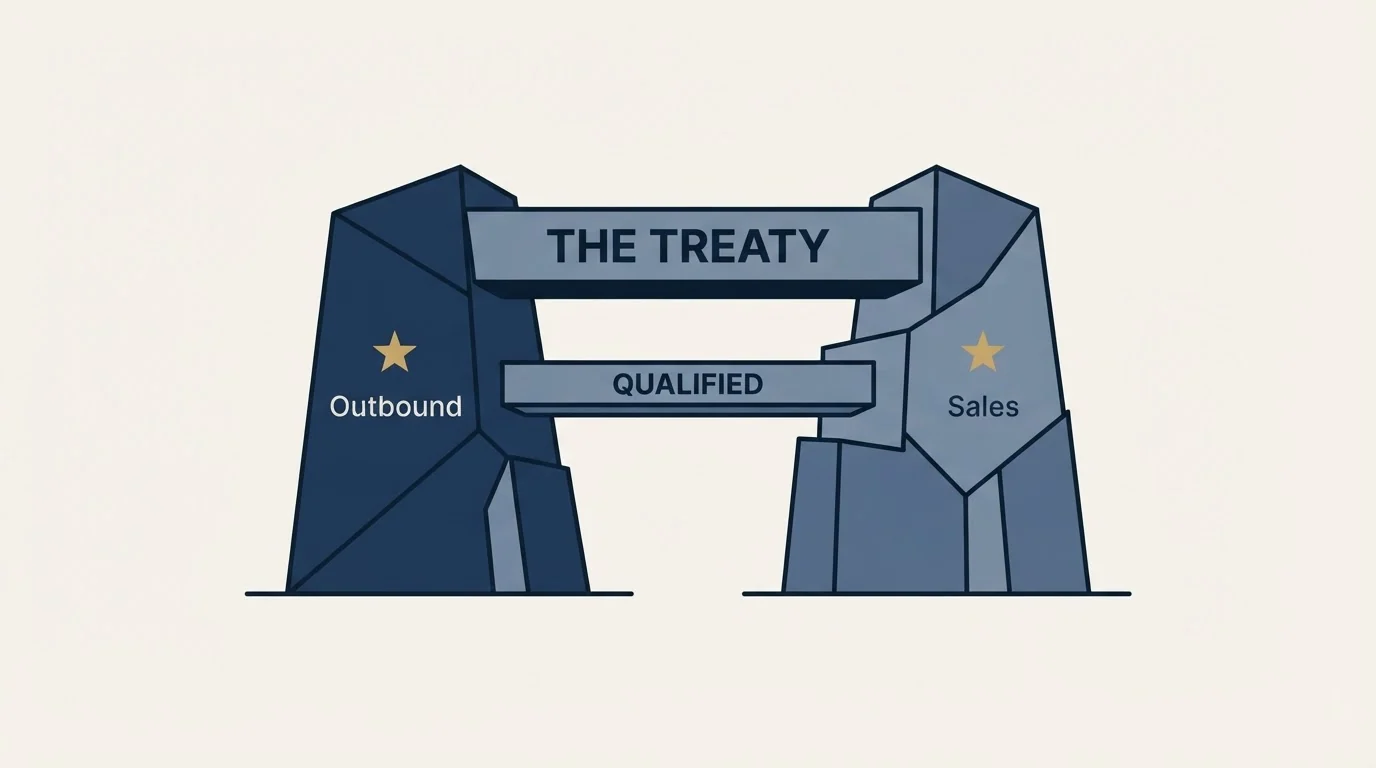
The failure mode of marketing-run outbound is familiar enough to be a cliché. Marketing books meetings, sales says the meetings are bad, marketing says sales did not work them, and nobody can settle it because nobody wrote down what a good meeting was before the program started.
Writing that definition is the single highest-leverage hour in the whole setup, and it has to be signed by the person whose team attends the meetings, not only by the person paying for them.
- Step 1Draft the criteria
Company profile, role, situation and what makes a conversation useful
- Step 2Sales signs it
The team attending the meetings agrees the definition in writing
- Step 3Agree the exclusions
Open opportunities, current customers, partners and named accounts
- Step 4Fix the dispute process
How a contested meeting is judged, and by whom
- Step 5Launch against the document
Every later argument is settled by the criteria, not by memory
Our own policy is that qualification criteria are agreed in writing before launch, and that budget, timing and authority are never billing conditions. That last point matters to a marketing leader more than it first appears. A prospect who says the budget is next year is often the most valuable name in the pipeline, and a definition that disqualifies them teaches the program to avoid exactly the conversations that produce next year's number.
Attribution, honestly
Outbound-sourced pipeline arrives in a system built to attribute inbound. The account was approached in March, visited the site in May from a branded search, filled in a form in June, and the model credits organic. This is not a reporting bug to be fixed with better tracking. It is what happens when a channel creates awareness that later expresses itself through other channels.
The practical response is to agree, before launch, on a small number of measures that will be used to judge the program, and to accept that they will be coarser than the dashboard suggests. Meetings attended with organisations matching the written criteria is the primary one. Opportunities created from those meetings within a stated window is the second. Anything more sophisticated tends to be an argument about the model rather than about the program.
It is also worth agreeing what month one is for. Infrastructure warmup and the first learning cycle mean the first month is a cost rather than a result, and a program judged on it will be cancelled before it has said anything.
How a done-for-you motion maps to a marketing organisation
Stated as documented policy rather than as a performance claim.
One message per campaign. Each campaign carries one premise and sends once. No bump sequences and no thread replies. For a marketing leader this changes what a test is: variants are separate campaigns to separate segments rather than steps in a sequence, which makes the comparison cleaner than a multi-touch cadence ever allows.
Copy sign-off. Marketing approves every message before it sends, which keeps brand voice and claim discipline where they belong. Prospect lists do not come back for line-by-line review, because exclusions are handled structurally with a suppression list built from the customer records and open opportunities.
Email and LinkedIn, not phone. Written channels only, which also means everything sent is reviewable after the fact, and a claim made in a message can be traced.
Outbound AI calling agents pricing breaks down the four commercial models vendors charge under, useful context if a marketing leader ever weighs phone-based outbound against the written channels described here.
Qualification agreed in writing before launch, as above, with the sales team a signatory.
Where outbound sits beside the channels you already run
Outbound does not replace anything on the plan, and a marketing leader who presents it as a substitute for content or paid invites an argument that has no good ending. It occupies a different position: it reaches named accounts that are not searching, on a timetable you set, which is exactly what the other channels cannot do.
The most useful interaction is the one nobody budgets for. Accounts approached by outbound become more responsive to everything else, because the name is no longer unfamiliar when it appears in a feed or a search result. Running outbound into the same account list that paid media targets is cheaper than treating them as separate programs, and it makes the branded search that follows easier to interpret.
The interaction that causes problems is volume against brand. A message sent to a large list under the company name is a brand impression whether or not anybody intended it that way, and it reaches people who will never buy as well as people who might. That is an argument for a narrower list and a more specific message rather than for not sending, and it is a decision a marketing leader is better placed to make than anybody else in the business.
What to evaluate in any provider

- Yes: Who signs the qualified-meeting definition, and is sales included
- Yes: What triggers payment, and what is the billing unit once normalised
- Yes: How are open opportunities and current customers suppressed before the first send
- Yes: Does marketing approve copy before anything sends
- Yes: Whose domains send, and what happens to your primary domain reputation
- Yes: What is reported weekly, and does it include rendered messages rather than templates
- Depends: What transfers back to the team if the arrangement ends
The domain question deserves particular attention from a marketing owner, because it is the one where a bad answer damages an asset marketing is responsible for. Sending volume from the company's primary domain can affect the deliverability of everything else that domain sends, including lifecycle email and product notifications. Ask which domains are used, who owns them, and what the separation is.
A useful calibration exercise costs nothing: read what lands in your own inbox. How to cold email CMOs is written from the sender's side, and reading it as the recipient is a fast way to judge whether a provider's proposed approach would survive contact with somebody in your seat.
Where to start
Diagnose the constraint before funding anything, and be willing to conclude that outbound is not it. If it is, write the qualification definition first and get sales to sign it, because every later disagreement resolves against that document. Decide what month one is expected to produce and say it out loud in the review where the budget is approved. Then compare two providers on the definition and the billing unit rather than the headline number, since those are the terms that decide who absorbs a bad month.
If the plan is to keep the team on the channels that compound and have the outbound motion run alongside, RevenueFlow is paid on attended meetings that meet criteria agreed in writing before launch. You can see what a campaign would look like for your market.
Frequently asked questions.
Frequently asked questions- Should I hire an SDR or buy an outbound program?
- Ask whether outbound is a capability the company will still want in three years. If yes, building it compounds and the hire is right. If the goal is to prove the motion works before committing a role, buying is the cheaper experiment. Also be honest that a requisition and a program line move through different approval cycles at different speeds.
- How do I stop sales rejecting the meetings we book?
- Write the qualification criteria before launch and have the sales leader sign them, not just the budget holder. Include the company profile, the role, the situation that makes a conversation useful, and how a contested meeting gets judged. Without that document the argument is unresolvable, because nobody defined the standard either side is claiming.
- How will outbound show up in our attribution model?
- Usually not as itself. An account approached in March often converts later through branded search or a form, and the model credits that channel. Rather than fixing the model, agree two coarse measures before launch: meetings attended with organisations matching the written criteria, and opportunities created from them within a stated window.
- Will cold sending damage our domain reputation?
- It can, if volume runs from the primary domain that also sends lifecycle and product email. Ask any provider which domains send, who owns them, and what separates them from the corporate domain. This is the question where a bad answer damages an asset marketing is accountable for, so settle it before the commercial terms.
About the author.

Ben Carden is CRO at RevenueFlow, which builds and operates outbound revenue engines for B2B companies. Previously at Gartner Enterprise. Studied at London School of Economics.
Ben Carden · CRO
Connect on LinkedIn →Explore more.
Ready to scale your outreach?
We build GTM engines that book real meetings. See the receipts.
Related articles.
Allbound: Merging Inbound and Outbound
Allbound runs inbound and outbound as one motion. Merging them creates two decisions: what a signal may trigger, and who is credited when both touched the deal.
5 ABM Campaign Examples and How Each One Is Built
Five worked account-based campaign examples, each built on the same five fields: account set, tier, plays in order, owner and handoff, and the exit condition.
Two Agencies, One Target List: Who Owns Which Accounts
Two outbound suppliers on one market will contact the same companies unless the buyer splits it first. How to cut the list, run the exclusion feed and check the overlap.
Define Content Syndication: Two Purchases Behind One Word
One budget line, two different purchases. Republication buys reach; lead syndication buys contact records produced by a download. The deliverable tells you which.
Last Outbound Agency Did Not Deliver: Locating the Failure
The leads were bad names a symptom and no stage. Four places an outbound engagement fails, the counts that separate them, and what to change in the next purchase.
HR Lead Generation: The Renewal Clock and Who Signs
An HR buyer who agrees with every word still cannot act outside their own renewal window. Which triggers are observable, and who signs.