Sales Email Subject Lines: The Metric That Stopped Working
A subject line has one job, which is to get the first line read. The metric everyone optimises it on is now a mixture of human readers and machine fetches.
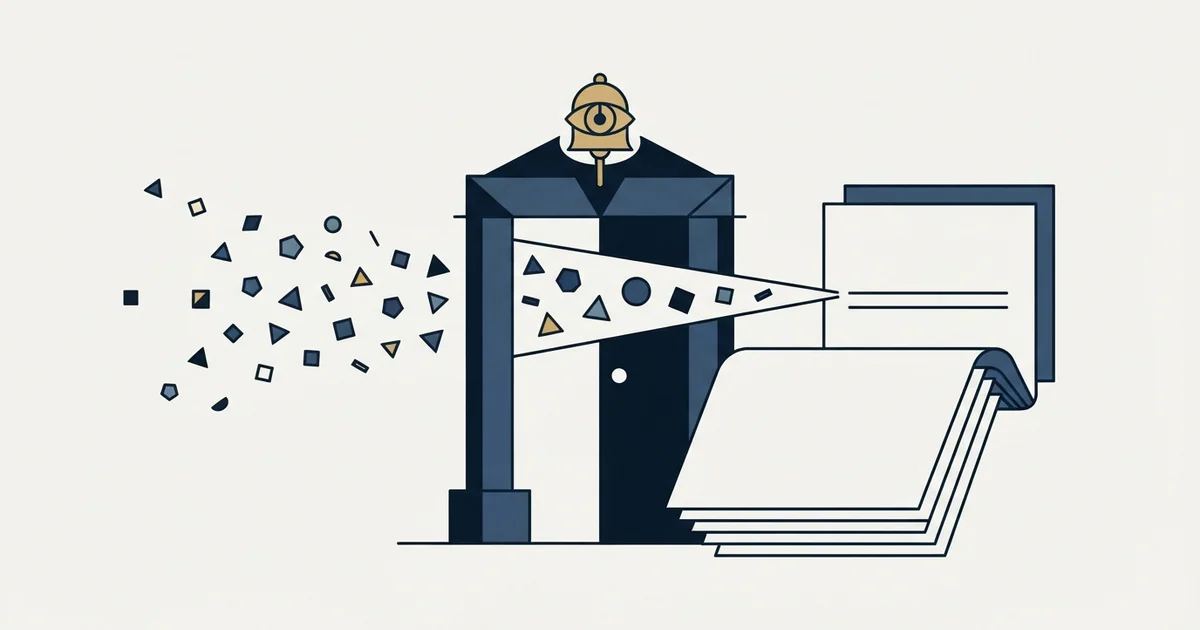
A sales email subject line exists to get the first line of the body read, and it is read alongside the sender name and the preview text rather than on its own. Optimise it on replies rather than opens, because mail providers now load or block tracking images on the reader behalf, mixing human reads with machine fetches.
Key takeaways
- The inbox row has three parts competing for the same half-second: sender name, subject and preview text pulled from the opening of the body, and the preview is the one most senders spend on a greeting by default.
- Open rate is produced by a tracking pixel, and Apple's own support documentation describes turning on Protect Mail Activity so images stop loading automatically, which is the same instrument from the reader side.
- Curiosity gaps and fake thread markers such as Re: or following up on a first message lift opens and cost replies, which is why they survive in advice graded on the wrong metric.
- Swipe files transfer structure rather than lines: each line worked for one offer, one audience and one moment, and the most-copied formulas decay fastest through familiarity.
Reviewed and updated August 28, 2026
A sales email subject line has one job, and it is smaller than the advice around it suggests. It has to get the first line of the body read. Not opened, not admired, not remembered. Read the next sentence, which is where the actual decision happens.
Almost every rule people argue about follows from that, and the arguing has outlasted the measurement that used to settle it. The subject line is the most-optimised element in outbound and the one whose success metric quietly stopped working.
The same rules hold for a subject line on a cold call follow-up email, where the only advantage is that you can name the call: a subject that says what the message is about beats one that says who you are, whether or not you have spoken.
What the reader is actually looking at
Nobody sees a subject line on its own. They see an inbox row, and the row has three parts competing for the same half-second: the sender name, the subject, and the preview text lifted from the top of the body.
The sender name is read first and it is doing more work than the subject. An unfamiliar name at an unfamiliar company sets the frame before a single word of the subject registers, which is why a clever subject on an unrecognised sender reads as a trick rather than as intrigue.
The preview text is the part most people forget they are writing. Mail clients pull it straight from the opening of the message, so a first line that begins with a greeting spends the preview on the word "Hi". The subject and the preview are read as one phrase, and they can be written as one phrase.
- Sets recognised or not recognised before the subject registers
- Cannot be fixed by the subject line
- A mismatch between name and subject reads as a trick
- Truncates hard on mobile
- Has to survive being read as a fragment
- Its only job is to earn the first line
- Pulled from the opening words of the body
- Wasted on a greeting by default
- Written deliberately, it doubles the subject's length
The measurement problem underneath the whole debate
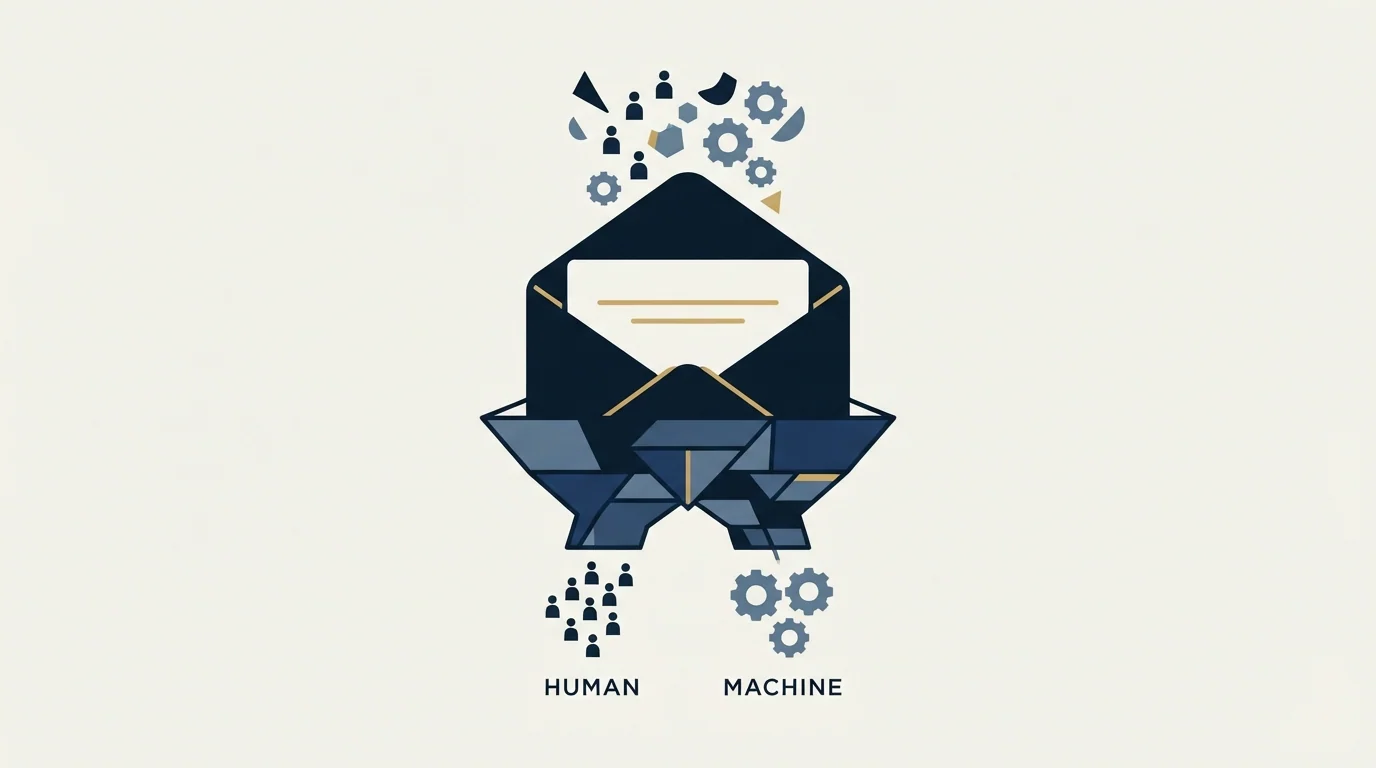
Subject lines have always been optimised on open rate, and open rate is measured by a tracking pixel: an invisible image the sender embeds, which records a load when the reader's client fetches it.
Apple's own support documentation describes the mechanism from the other side. Its page on reducing junk mail tells readers that spammers use the email image-loading feature to determine whether an account is active, and instructs them to turn on Protect Mail Activity so images stop loading automatically. Apple is describing, accurately, the exact instrument that produces an open rate. When a mail provider preloads or blocks those images on the reader's behalf, the sender's counter fires without a human involved, or does not fire when one was.
The consequence is not that open rate became slightly noisier. It became a mixture of two different populations, human readers and machine prefetches, in a ratio the sender cannot see and which varies with the mail clients on the list. Comparing this month's open rate to last year's compares two different instruments.
Which leaves a straightforward question about what to optimise instead, and only one answer that survives it: the reply. A reply is a human decision, it is what the campaign exists to produce, and no privacy feature generates one by accident. The published open-rate literature is still worth reading for its measurement caveats rather than its targets, and the cold email open rate benchmarks page collects both.
Two practical consequences follow. Any subject-line test decided on opens alone is decided on a corrupted instrument. And a subject line that lifts opens while depressing replies has done damage, which is the exact failure mode of curiosity-gap and fake-familiarity lines.
The rules that survive contact with a reply rate
The subject must be honest about what the body contains. A line that promises something the message does not deliver buys an open and spends the reply. This is the rule that curiosity-gap advice violates by design, and the reason it survives is that it looks like it works when you are grading on opens.
Length matters because of truncation, not because short is virtuous. A subject is read as whatever survives the cut on a phone. Write the line so that its first few words carry the meaning, then check what remains when it is truncated.
Specificity beats cleverness, and the specific thing must be true. A subject naming something real about the recipient's company works because it could not have been sent to anyone else. That property is the whole of it, and it disappears the moment the specific detail is a merge field with a generic sentence around it.
Fake familiarity is the most expensive shortcut in the category. "Re:" on a first message, "following up" when nothing preceded, "as discussed" when nothing was. These lift the open, produce a distinct kind of irritated non-reply, and cost the sender the one thing outbound cannot buy back.
The subject is written last. You cannot title a message before you know its premise, and the ordering matters more than any individual rule: our own process piece, how to write a cold email, puts the subject at the end for exactly this reason.
Lower case, no punctuation and other house superstitions are worth testing and not worth believing. They are cheap to try, they occasionally matter, and none of them will rescue a message whose premise is weak. Treat them as the last percent rather than the first.
- Yes: The subject is true about what the body actually says
- Yes: The meaning survives truncation on a phone
- Yes: The preview text was written deliberately rather than inherited from a greeting
- Yes: Any specific detail in the line is verified rather than generated
- No: Fake thread markers such as Re: or following up on a first message
- No: A curiosity gap the body does not close
- No: Deciding the test on opens alone
Why the swipe files do not transfer
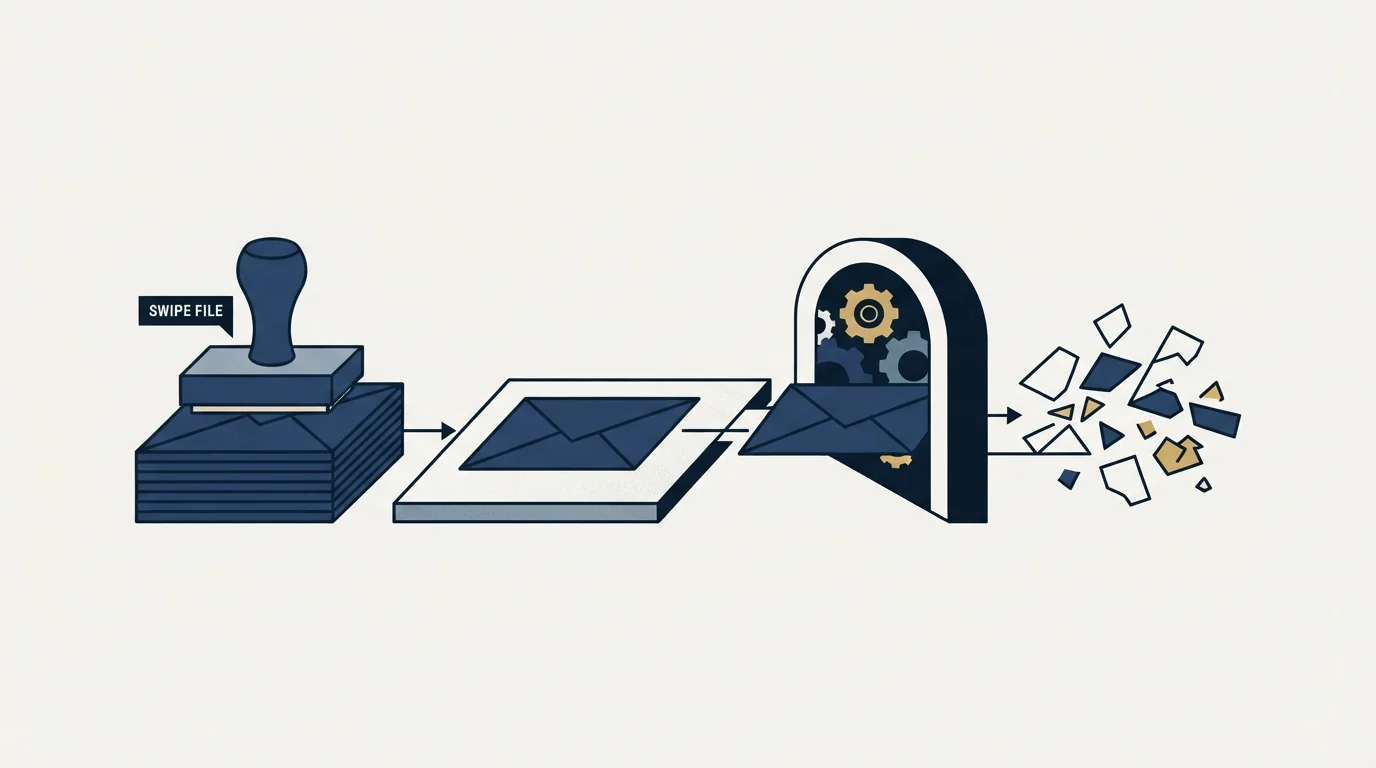
Every list of the best sales email subject lines is a list of outputs. Each line worked once, for one offer, sent to one audience, by one sender, at one moment. What made it work was the fit between those things, and the fit is the part the list cannot carry.
A subject line is also the shortest element in the message and the one most exposed to repetition. A formula that circulates widely enough stops working through familiarity alone, and the most-copied lines are by definition the most familiar to the people receiving them. The half-life of a good template is set by how many people copy it.
The transferable part of a swipe file is the structural observation: which lines are statements, which are questions, which name a specific thing, which reference a time. Reading a list for its structure and writing your own line inside the structure that fits your premise is a different exercise from pasting the line.
A referral email subject line is the clearest case, because the collected examples split across three unrelated askers, a job applicant naming a mutual contact, a consumer programme rewarding a friend and a seller asking a happy client for an introduction, and only the structure survives the move between them.
Choosing between writing a script from scratch and leaning on a generated draft comes down to knowing which parts still need judgment, an issue what AI script generators still leave to you covers in depth.
Where our position changes the advice
We run one message per campaign, with no bumps and no thread replies, and re-entry is a new campaign built on a new premise rather than a reminder of the old one.
That has a direct effect on the subject line, and it is the reason a lot of standard advice does not apply here. Where a sequence exists, the first subject line can afford to be a probe, because a later message can recover from it. With one message, the subject carries the entire campaign. There is no second line to correct a misfire and no thread for a follow-up to sit under, so the subject and the first sentence have to do all of the work, once.
The second consequence is about what a subject line can honestly say. One message per campaign means the thread-reply device and the follow-up device are not available to us at all, because we do not send those messages. That removes an entire category of high-performing-on-opens subject lines from the toolkit, and it is a cost of the position rather than a free win.
The same position answers a search for resend email subject line examples: we do not resend an unopened message under a new subject, and a contact who stayed silent is written to again only in a later campaign whose subject line names a new premise.
The third is that testing gets simpler and slower. One message per campaign means a subject-line comparison is a comparison between campaigns rather than between steps, and the honest read needs volume before it means anything.
Here is illustrative arithmetic showing why, invented for the purpose and not a measurement of any campaign. The figures below are invented illustrations. Suppose two subject lines are tested across 400 recipients each, and one produces 8 replies while the other produces 12. That looks like a 50% improvement. At those counts, a difference of four replies is well inside the range that ordinary variation produces, and running the same test again could reverse it. Subject-line differences are usually small, and small differences need larger populations than most campaigns have.
Which is the honest summary of the whole topic. The subject line is worth getting right and it is rarely the reason a campaign works or fails. The list and the premise decide that, and the line on top can only fail to get them read. What a usable target definition contains is in ideal customer profile.
The short version
The subject line's only job is to get the first line read, and it is read alongside the sender name and the preview text rather than on its own. Write the preview deliberately and you have doubled the space.
Optimise on replies rather than opens. Open rate is produced by a tracking pixel, and mail providers now load or block those images on the reader's behalf, so the metric mixes human readers with machine fetches in a proportion nobody can see.
Keep the line honest, specific and short enough to survive truncation, and refuse the fake-familiarity devices that trade a reply for an open.
The RFI response sample explains how the same discipline, answering the issuer's exact question first, decides whether a document earns a shortlist spot.
Read swipe files for structure rather than for lines, since the fit between offer, audience and moment is what made any given line work and is the part a list cannot transfer. If you would rather see the whole motion built against your own market than assemble it line by line, we will build a campaign and show the reasoning.
Platform behaviour above was verified against Apple's own support documentation as fetched on 16 August 2026. Verify current terms with the vendor before relying on them.
Sources: Apple Support, Report and reduce spam in iCloud Mail
Frequently asked questions.
Frequently asked questions- What makes a good sales email subject line?
- It has to be true about what the body says, specific enough that it could not have been sent to anyone else, and short enough that the meaning survives truncation on a phone. Write it last, once the premise of the message exists, and write the preview text deliberately so the subject and the first words are read as one phrase.
- Why should I stop optimising subject lines on open rate?
- Because the measurement changed underneath the metric. Opens are counted by an embedded tracking image, and mail providers now preload or block those images on the reader behalf. The resulting number mixes human readers with machine fetches in a ratio the sender cannot see, so a subject-line test decided on opens alone is decided on a corrupted instrument.
- Do subject line swipe files work?
- They transfer structure, not lines. Each entry worked because of the fit between a specific offer, audience, sender and moment, and the fit is the part a list cannot carry. Read a swipe file to see which lines are statements, which name a specific thing and which reference a time, then write your own inside the structure that matches your premise.
- How many recipients does a subject line test need?
- More than most campaigns have. Subject-line differences are usually small, and a small difference measured on a few hundred recipients sits inside the range ordinary variation produces, so the same test can reverse on a re-run. Decide the test on replies rather than opens, and treat a result from a few hundred sends as a hint rather than a finding.
About the author.

B2B cold email experts helping companies generate qualified leads through done-for-you outreach campaigns.
RevenueFlow Team
Explore more.
Ready to scale your outreach?
We build GTM engines that book real meetings. See the receipts.
Related articles.
9 Bump Email Templates and When to Send Each
Nine bump email templates for threads where the other side owes you something, the three checks that make a bump correspondence, and what never to send.
SmartReach Pricing: Two Ladders and a Struck Pro Rate
SmartReach prints an email ladder and a multichannel ladder on one page, loads monthly, and ships a machine-readable copy. Both ladders, both states, every add-on.
Drip Campaign Examples: The Permission Behind Each One
Every drip campaign example is one template filled in. The six fields it needs, five examples that hold up, and the one we replace with a single message.
Email Marketing Lead Generation: Two Motions, Two Domains
Permission-based email and cold outbound share a channel and almost nothing else. Running both through one domain is how teams quietly damage both at once.
Meeting Reminder Emails: Six Templates
A reminder to someone who accepted a meeting is administration of an agreement, not a bump. Six complete messages, what each has to carry, and how many is too many.
Sample Cold Emails: Six Written to Be the Only One You Send
Most sample cold emails are step one of five, so they underperform alone. Six complete messages, what to change in each, and why the middle is the part to cut.