Drip Campaign Examples: The Permission Behind Each One
Every drip campaign example is one template filled in. The six fields it needs, five examples that hold up, and the one we replace with a single message.
A drip campaign is an entry trigger, an ordered series of messages with delays, and an exit condition. Every example on those lists is that form filled in. The field they leave out is the permission basis, meaning what the recipient did that makes a series expected rather than intrusive.
Key takeaways
- A drip campaign template has six fields: entry trigger, permission basis, audience definition, message plan, exit conditions and a review date.
- The permission basis is the field published examples omit, and it is the one that decides whether repetition reads as service or as pestering.
- The strength of the permission should set the length of the series, so a win-back drip to a former customer gets fewer messages than a trial onboarding drip.
- The cold outbound follow-up chain listed beside these examples has no permission basis, and one message carrying a single premise replaces it here.
Reviewed and updated October 1, 2026
Lists of drip campaign examples put a trial onboarding series and a cold outbound follow-up chain on the same page, under the same heading, illustrated with the same box-and-arrow diagram. The two have almost nothing in common. One goes to a person who typed their email address into your product last Tuesday and is waiting to hear what to do next. The other goes to a stranger who received one message and chose not to answer it.
Copying the first one is straightforward. Copying the second one is how a sending domain gets quietly worse at reaching inboxes while a dashboard shows a clean lift.
This page gives you the template a drip campaign is actually made of, then fills it in for the examples that hold up, and says plainly which example we decline to run and what we put in its place.
What a drip campaign is, stripped of the pitch
A drip campaign is a set of messages released to a contact on a schedule that starts when the contact does something, and stops when the contact does something else. That is the whole mechanism. Every vendor name for it describes the same three parts: an entry trigger, an ordered series with delays between the items, and an exit condition.
The word drip is doing marketing work rather than technical work. It suggests patience and low pressure. What the machinery actually does is repeat, and whether repetition reads as service or as pestering is decided entirely by one thing that lives outside the tool.
That thing is permission. Not permission in the legal sense, although that matters too, but the ordinary human sense: did this person do something that makes a second and a third message the expected outcome rather than a surprise? The lead nurturing entry sets out the same split in definitional terms, because the standard definition covers two practices at once.
The six fields every drip example is an instance of
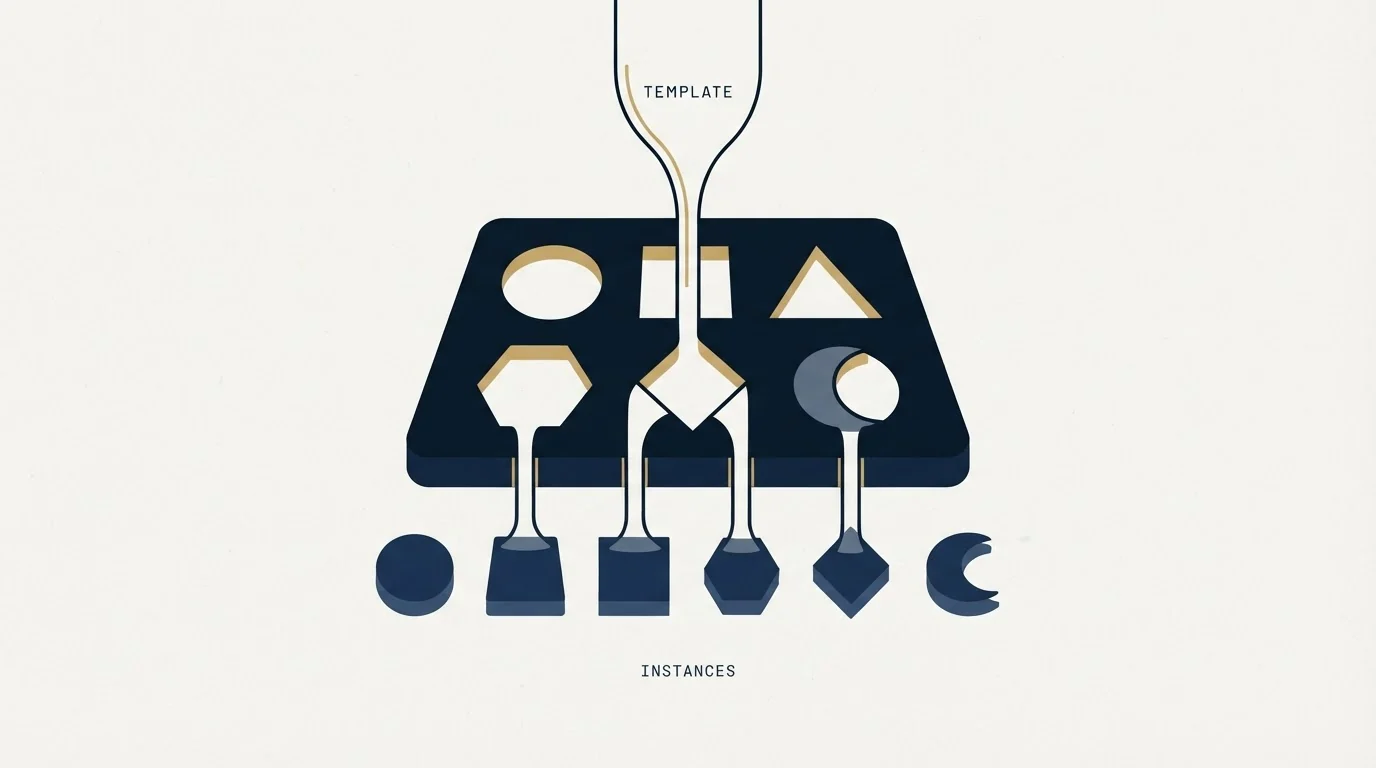
Before any of the examples below are useful, you need the form they fill in. Write these six lines down before you build anything, in this order, because each one constrains the next.
The entry trigger. The specific recorded event that puts somebody in. Not a segment, an event: signed up for the trial, downloaded the file, attended the session, renewal date is thirty days out. If you cannot name the row in the database that changes, you do not have a trigger, you have a list.
The permission basis. Write, in one sentence, what the person did that makes a series reasonable. This is the field that separates the examples that work from the ones that damage you, and it is the field that no drip template on the internet includes.
The audience definition. Who is in scope and who is excluded. Existing customers usually need excluding from acquisition drips. Anyone who already replied needs excluding from everything.
The message plan. How many messages, what each one is for, and what the delay is between them. Each message needs a job that is not the job of the previous one. A message whose only content is that a previous message exists is not a message, it is a reminder that you want something.
Giving each message a distinct job is the same demand a spoken format makes, and seven pitch formats fill three slots in the same order every time.
The exit conditions. Plural. A reply is the obvious one. The others are the ones people forget: booked a meeting, unsubscribed, bounced, became a customer, entered a different campaign. Every exit you fail to write down is a person who receives an onboarding email the week after they cancelled.
The review date. Content assembled once keeps sending for years. Put a date on the campaign at which somebody reads all of it again, because nothing in the tooling will tell you that message four now describes a feature you removed.
- Step 1Entry trigger
The recorded event that puts a contact in, named as an event rather than a segment
- Step 2Permission basis
One sentence saying what the person did that makes a series expected
- Step 3Audience definition
Who is in scope, and every group excluded by policy
- Step 4Message plan
How many, what each one is for, how long between them
- Step 5Exit conditions
Reply, booking, unsubscribe, bounce, conversion, and entry to another campaign
- Step 6Review date
When a person reads the whole series again against the current product
The examples that hold up
Each of these fills in the six fields. The day offsets are invented for illustration and are not benchmarks; derive yours from your own trial length, event calendar and renewal cycle.
The same discipline shapes account programmes, where five fields define an ABM campaign, from the account set and its admission rule to the exit condition and review date.
The trial onboarding drip
Entry trigger: a trial account is created. Permission basis: the person signed up and is actively expecting instruction. Audience: trial accounts only, excluding anyone whose account already converted. Message plan: four messages across the trial, each tied to a step rather than a date, opening with the single action that makes the product make sense, then the second most common use, then a worked case, then a plain note before the trial ends. Exit conditions: converts, cancels, replies, or unsubscribes. Review date: whenever the onboarding flow in the product changes.
This is the example the category was built for, and it is the one most worth doing well. The person is in the middle of an evaluation and silence from you is a gap in their week rather than a boundary.
The lead magnet nurture drip
Entry trigger: a specific asset is downloaded. Permission basis: they asked for material on a named topic. Audience: that asset's downloaders, excluding customers and anyone in an active sales conversation. Message plan: deliver the asset immediately, then two or three items that extend the same topic, then one clear offer of a conversation. Exit conditions: replies, books, unsubscribes, or reaches the end.
The failure mode here is scope creep. Somebody who downloaded a guide about one narrow problem has given you permission on that problem, and a series that drifts into unrelated product news is spending a permission it was never given.
The event follow-up drip
Entry trigger: attended, or registered and did not attend. Those are two different triggers and they deserve two different series. Permission basis: they signed up for your event. Audience: attendees, with the no-show branch separated. Message plan: the recording and the promised materials first, then one item that answers the question the session raised most often, then an offer. Exit conditions: replies, books, unsubscribes, or the series ends.
The renewal and usage drip
Entry trigger: renewal date crosses a threshold, or usage crosses one. Permission basis: there is a contract. Audience: current customers on that plan. Message plan: what changed since they signed, what they are not using that they pay for, and the renewal mechanics. Exit conditions: renews, cancels, replies, or opens a support conversation.
This is the least glamorous example on any list and usually the highest-value one, because the contact is already paying and the message has an unambiguous reason to exist.
The win-back drip
Entry trigger: cancelled, more than a stated interval ago. Permission basis: a real prior relationship, which is weaker than a contract and stronger than nothing. Audience: former customers, excluding anyone who left after a complaint. Message plan: two messages at most. What is genuinely different now, and a straightforward door back in. Exit conditions: everything, and quickly.
Win-back is the example where the permission basis is thinnest, so it gets the shortest series on the list. That relationship is the general rule: the weaker the permission, the fewer the messages.
- The person performed a recorded action that invites contact
- Silence is ambiguous, so a second message resolves it
- Each message has a job the previous one did not do
- Unsubscribes are low and complaints are rare
- The series can be measured against a conversion the reader wanted
- The recipient did nothing except receive one unrequested message
- Silence is the answer, and the series is built to overrule it
- Later messages often carry only the fact of the earlier ones
- Complaint risk concentrates on the least receptive people
- The lift is measured per campaign while reputation is shared across the domain
The example we do not run
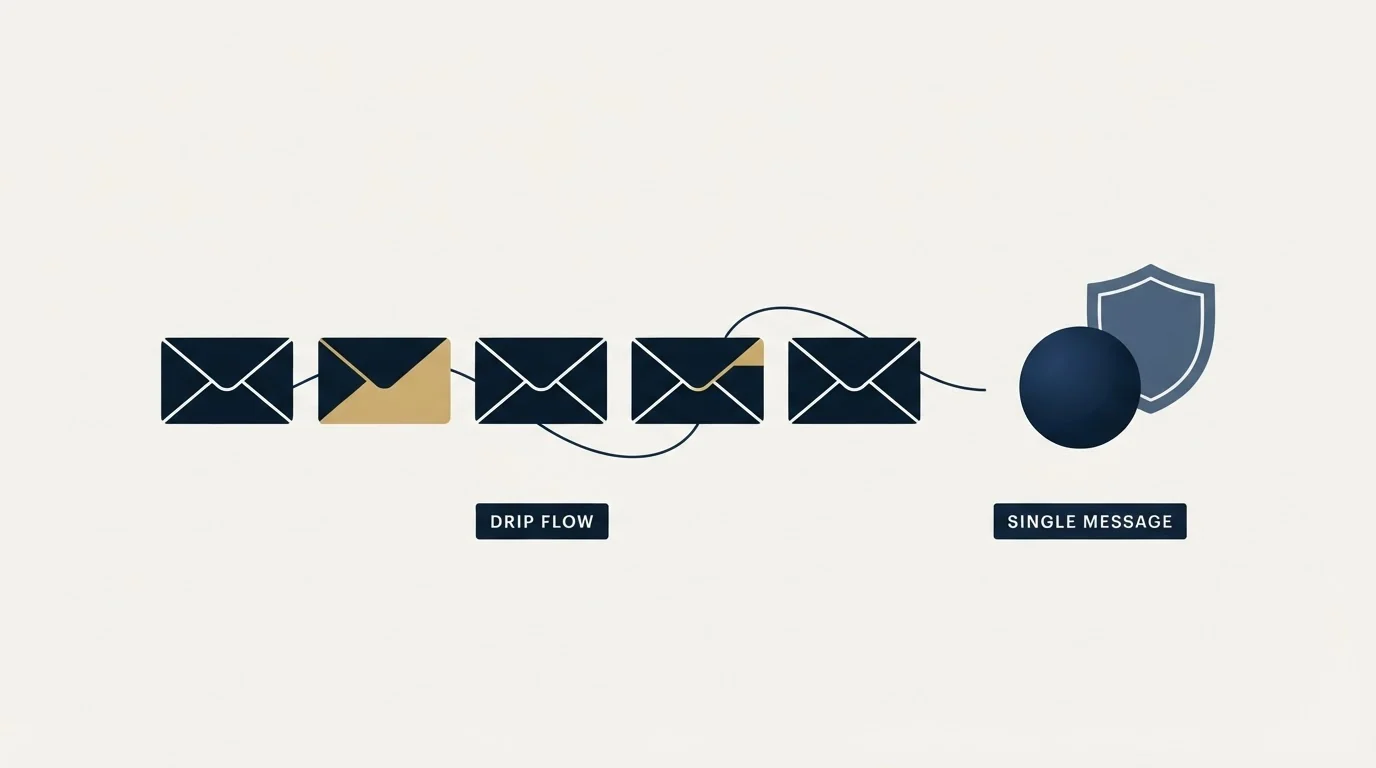
Search for these examples and a cold outbound follow-up chain appears beside them: message one, then a bump a few days later, then a message on another topic, then a note announcing that this is the last one. It is presented as the same category as trial onboarding because it uses the same software.
We do not run it, for clients or for ourselves. One message per campaign, no thread replies, no bumps. The structural case is set out in full in email sequence software, and the short version is that every message after the first is delivered exclusively to people who received the previous one and declined to answer, which is the worst available audience to spend complaint budget on, while the reply lift is measured inside the campaign and the deliverability cost is paid across the whole sending domain. What that costs us in reply rate, and what the published sequence numbers actually say when you read the per-step column rather than the cumulative one, is in cold email sequence benchmarks.
The named frameworks in this space are worth reading rather than dismissing, and the Agoge sequence is the clearest of them, because it was published with its own copy attached and shows exactly where the effort sits.
What goes in that slot instead
The replacement is a template too, and it has the same six fields.
Entry trigger: a list is built for one premise. Permission basis: none, and the design admits it, which is why the series is one message long. Audience: the segment the premise is actually true of, with everyone who has replied, bounced, unsubscribed or landed on a blocklist permanently excluded, and nobody enrolled in two active campaigns at once. Message plan: one message, carrying the entire premise. Exit conditions: any reply at all, and a negative reply suppresses that person across the workspace rather than the campaign. Review date: when the campaign finishes, because the result is a readable answer about that premise.
A later approach to the same person, if there is one, is a retarget: the same email, unchanged, in a new single-message campaign, and only once no fresh prospects remain. That is the part that makes the position workable rather than merely principled, and the reasoning behind it was written up in why we stopped using follow-ups.
Copying one of these safely
The examples above are structures rather than copy. Before you build one from a template you found anywhere, including this page, run it through the same short check.
- Yes: You can write the permission basis in one sentence without straining
- Yes: Every message has a job that is not restating the previous message
- Yes: The exit list includes bounced, unsubscribed, converted and enrolled elsewhere
- Yes: Somebody owns a date to reread the whole series against the live product
- No: The recipient's only relationship with you is one message they ignored
- Depends: The example came from a business selling to consumers and yours does not
That last item deserves a note. A large share of published drip examples are ecommerce lifecycle campaigns: abandoned cart, browse abandonment, post-purchase. The mechanics transfer cleanly and the assumptions do not, because a shopper who left items in a basket has told you something far more specific than a business buyer who read a page.
If you want to see what a single-message campaign produces against your own market before deciding how many messages you need, we can put one in front of it and you can read the replies yourself.
The short version
A drip campaign is an entry trigger, an ordered series with delays, and an exit condition. Every example on those lists is that form filled in, and the field they leave blank is the permission basis: the one sentence saying what the recipient did that makes a series expected rather than intrusive.
Trial onboarding, lead magnet nurture, event follow-up, renewal and usage, and win-back all have a permission basis, and the strength of it should decide the length of the series. The cold outbound follow-up chain that gets listed beside them does not have one, and we replace it with a single message carrying one premise; if it goes unanswered and no fresh prospects remain, the same message is re-sent as a separate campaign.
Frequently asked questions.
Frequently asked questions- What is a drip campaign, in plain terms?
- It is a set of messages released to a contact on a schedule that starts when the contact does something and stops when the contact does something else. Every vendor describes the same three parts: an entry trigger, an ordered series with delays between the items, and an exit condition. The word drip suggests patience, while the machinery simply repeats.
- What are the best drip campaign examples for B2B?
- The ones with a permission basis. Trial onboarding, where the person signed up and expects instruction. Lead magnet nurture, where they asked for material on a named topic. Event follow-up, where they registered. Renewal and usage, where a contract exists. Win-back to a former customer, kept to two messages because that permission is the thinnest of the five.
- How many emails should a drip campaign have?
- Let the permission decide rather than a rule of thumb. A trial onboarding series can carry four messages because the recipient is mid-evaluation and waiting. A win-back series to somebody who cancelled should carry two. If you cannot write the permission basis in one sentence without straining, the answer is one message, sent once.
- Is a cold outbound follow-up chain a drip campaign?
- It uses the same software and appears on the same example lists, so people call it one. The difference is that the recipient did nothing except receive an unrequested message. We run one message per campaign with no bumps and no thread replies.
About the author.

B2B cold email experts helping companies generate qualified leads through done-for-you outreach campaigns.
RevenueFlow Team
Explore more.
Ready to scale your outreach?
We build GTM engines that book real meetings. See the receipts.
Related articles.
Email Marketing Lead Generation: Two Motions, Two Domains
Permission-based email and cold outbound share a channel and almost nothing else. Running both through one domain is how teams quietly damage both at once.
Meeting Reminder Emails: Six Templates
A reminder to someone who accepted a meeting is administration of an agreement, not a bump. Six complete messages, what each has to carry, and how many is too many.
Bad Email Examples: Six Shapes That Lose the Reader
A bad cold email is rarely bad throughout. It holds together for a line or two, then loses the reader at a specific word. Six failure shapes, and where each breaks.
SmartReach Pricing: Two Ladders and a Struck Pro Rate
SmartReach prints an email ladder and a multichannel ladder on one page, loads monthly, and ships a machine-readable copy. Both ladders, both states, every add-on.
RFP Response Executive Summary Sample: One Page, Read First
The executive summary decides how carefully the rest of a response gets read, and is usually written last by whoever has least time. A worked sample and what to cut.
Sales Email Subject Lines: The Metric That Stopped Working
A subject line has one job, which is to get the first line read. The metric everyone optimises it on is now a mixture of human readers and machine fetches.