Bad Email Examples: Six Shapes That Lose the Reader
A bad cold email is rarely bad throughout. It holds together for a line or two, then loses the reader at a specific word. Six failure shapes, and where each breaks.
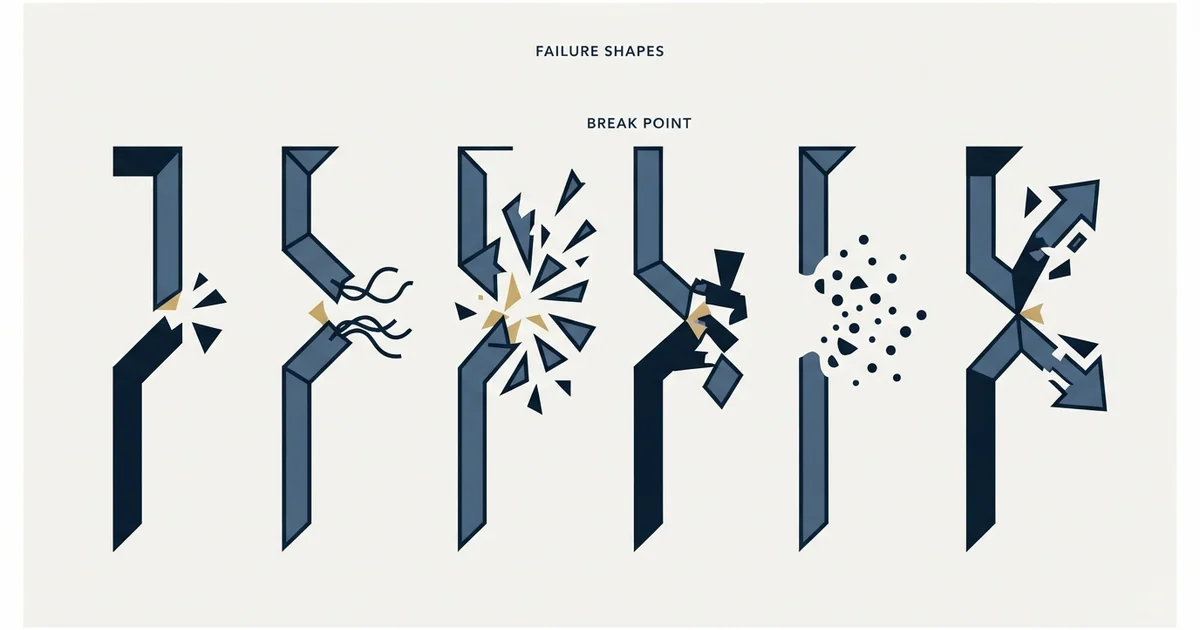
Bad email examples usually fail at one identifiable line. The six common shapes are a self-introduction about the sender, a compliment that names nothing, a wall of text, an ask nobody can say yes to, a pain the reader does not have, and a well-written message that never reaches the inbox.
Key takeaways
- Two of the six example failures break in the subject line and three have lost the reader by the end of the opening line.
- Fake personalisation performs worse than none, because a compliment that names nothing specific tells the reader the sender is willing to fake a small thing.
- An ask phrased as a quick chat to explore a fit asks the recipient to agree to a conversation whose subject is undefined.
- Google's sender guidelines require SPF or DKIM from every sender to Gmail accounts, and SPF, DKIM and DMARC above 5,000 messages a day, so rule out delivery before rewriting copy.
Reviewed and updated September 19, 2026
A bad cold email is rarely bad all the way through. It usually holds together for one or two lines and then loses the reader at a specific word, and the sender never finds out which one, because nothing about a non-reply says where the person stopped.
That is what makes bad email examples more useful than lists of rules. A rule tells you what to avoid in the abstract. An example lets you find the exact line where the message stopped being about the recipient, which is almost always earlier than the writer thinks.
The same caution applies to good examples, since the permission behind each drip campaign is what decides whether copying one is safe.
What follows is six failure shapes, each with the line that does the damage and the reason it does it. They are written as composites rather than as anything received from a named company, and none of them is a real message from a real sender.
Bad email examples: where each one breaks
The six bad email examples on this page each fail at an identifiable point: a self-introduction about the sender, a compliment that names nothing, a wall of text nobody starts on a phone, an ask nobody can say yes to, a pain the reader does not have, and a well-written message that never reaches the inbox. Five are written from the sender's side of the table. The sixth is a delivery problem.
Laid over the parts of a message, the breaks cluster early. Two of the six fail in the subject line, three have lost the reader by the end of the opening line, one fails in the body, one at the ask, and one before the message is ever seen.
One: the email that is about the sender
The subject line reads "Introduction". The body reads "Hi Sarah, I hope this email finds you well. My name is James and I am the founder of a company that helps businesses like yours scale their revenue operations through cutting-edge solutions. We work with clients across a range of industries and have a proven track record of delivering results. I would love to jump on a quick 15-minute call to learn more about your business and see if there is a fit."
The failure is in the second sentence and it never recovers. Everything after "My name is" is about the sender: who he is, what his company does, who else it works with, what he would love to do next. The recipient appears twice, once as "businesses like yours" and once as an object to learn about.
The specific tell is "businesses like yours". It signals that the sender does not know what kind of business this is, which means the research either did not happen or did not survive into the writing. A message that cannot name what the recipient does has no argument for why the recipient should care.
The subject line does its own damage. "Introduction" describes the sender's intent rather than the reader's benefit, and it is the subject line of a message that could have been sent to anyone.
Subject: Introduction 1
"Hi Sarah, I hope this email finds you well."
"My name is James and I am the founder of a company 2
that helps businesses like yours scale their revenue operations through cutting-edge solutions." 3
"We work with clients across a range of industries and have a proven track record of delivering results."
"I would love to jump on a quick 15-minute call to learn more about your business and see if there is a fit." 4
- 1The subject describes the sender's intent rather than the reader's benefit, and could have been sent to anyone.
- 2The failure starts at "My name is". Everything after it is about the sender.
- 3"Businesses like yours" signals that the sender does not know what kind of business this is.
- 4The recipient appears only as an object to learn about.
Two: the fake personalisation
The subject line reads "Loved your post on LinkedIn". The body reads "Hi Sarah, I came across your profile and was really impressed by what you are doing at Meridian. Your recent post really resonated with me. I noticed you are hiring, which suggests you are growing fast."
This one is worse than no personalisation, and the reason is worth being precise about. Every specific in it is generic. "Your recent post" names no post. "Really impressed by what you are doing" names nothing being done. "I noticed you are hiring" is drawn from a job board and could be true of a large share of the market.
A reader who has received ten of these can tell within a line that the compliment was assembled by a template, and the discovery does not produce a neutral reaction. It produces the conclusion that the sender is willing to fake a small thing, which is a poor opening argument for trusting them with a large one.
The fix is personalisation that could only have been written about this company, or none at all. A message that says nothing personal and gets straight to a relevant observation outperforms a message that pretends to a familiarity it does not have.
Three: the wall

Some bad emails have no single bad line. They have eleven good ones stacked into a block that no reader on a phone will start.
Length is a proxy for a different problem. A long cold email is usually long because the writer has not decided what the message is for. Every additional paragraph is a hedge: a second use case in case the first misses, a credential or a client list in case the reader is unconvinced, a softening clause in case the ask seems large, a P.S. as a second chance. The reader experiences the accumulation as work.
The test that catches this before sending is mechanical. Read the message on a phone. If it needs a scroll before the reader learns what you want, it is too long regardless of how good the sentences are.
| What the sender thinks | What the reader experiences |
|---|---|
| The intro: it establishes credibility | "Three lines about a stranger before anything about me" |
| A second use case: it widens the appeal | "Two vague offers instead of one specific one" |
| The client list: it proves we are safe to talk to | "Names I do not recognise, in industries unlike mine" |
| The soft ask: it lowers the pressure | "An ask I cannot answer without a meeting to define it" |
| The P.S.: a second chance to convert | "A longer message with no clearer point" |
Four: the ask nobody can say yes to
The line is "Would you be open to a quick chat to explore how we might be able to help?"
This sentence appears in an enormous number of cold emails, and it fails for a structural reason rather than a stylistic one. It asks the recipient to agree to a conversation whose subject is undefined, at a time unspecified, about a benefit unnamed. Saying yes commits them to finding out what they just agreed to.
"Quick" makes it worse by trying to reduce the perceived cost rather than raise the value. Fifteen minutes is rarely the objection. Fifteen minutes about nothing in particular is.
An ask that works names the thing. It says what would be discussed, why now, and what the recipient gets from the conversation whether or not they buy. That is a harder sentence to write, which is exactly why the vague version is so common.
In contrast to these failed asks, the Tim Ferriss cold email template shows a message that earned a reply through brevity, homework and a clear ask.
Five: the message that gets the reader wrong
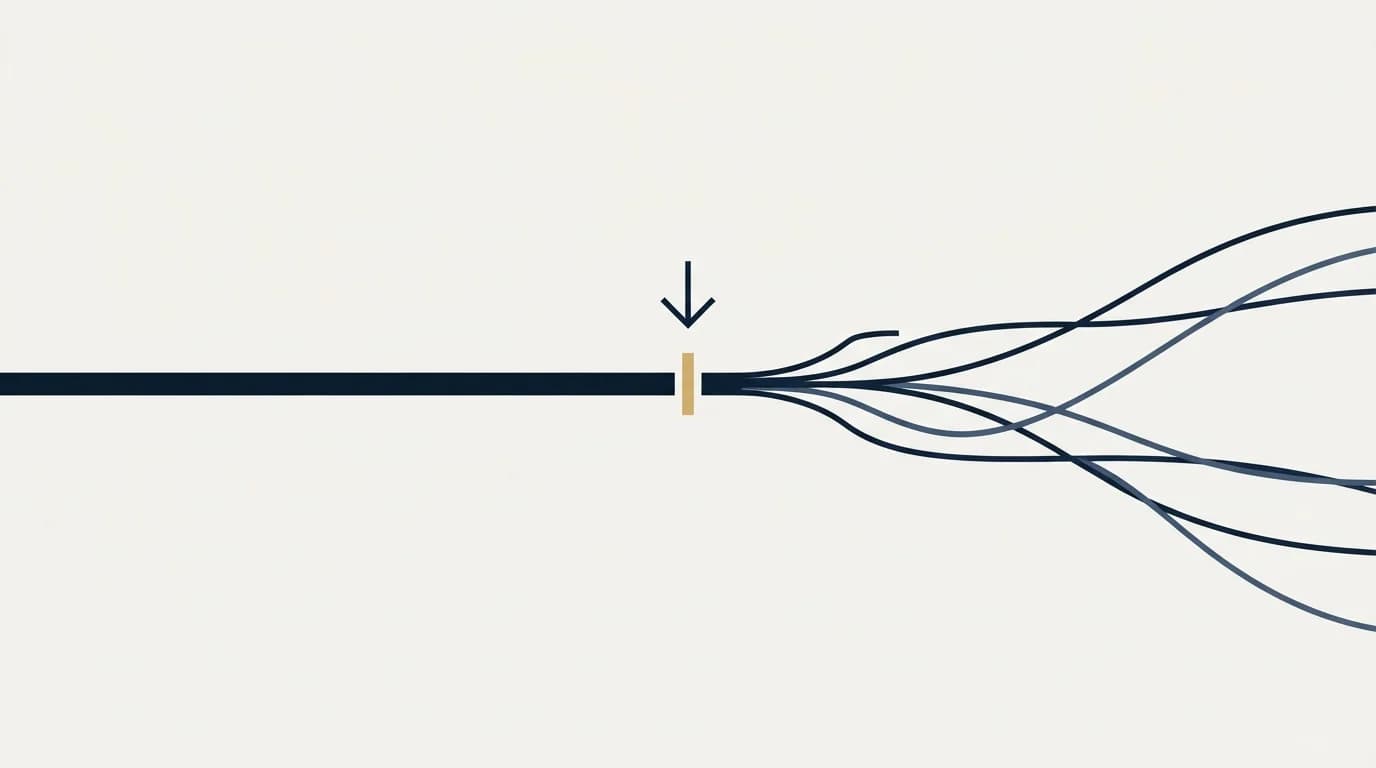
The line is "Hi Sarah, as Head of Operations you are probably struggling to keep your sales team motivated and hitting quota."
If Sarah does not own the sales team, the message is finished at "you are probably". Presuming a pain the reader does not have reads as evidence that the sender is working from a persona document rather than from anything about her.
This is the most common failure in the highest-effort emails, and the reason is that persona-driven writing feels like research while it happens. You look up a title, retrieve the pains associated with it, and write to those. The output is a message addressed to a category of person rather than to a person, and the recipient can tell the difference immediately because they know which of those pains are actually theirs.
The safer construction states an observation and lets the reader supply the pain. Naming something true about their company and asking whether a consequence follows leaves them room to say no to the premise without the message having insulted them.
Six: the one that was never going to arrive
The worst-performing email is often well written. It is sent from a domain with no authentication records, or from a mailbox that went from zero to four hundred sends in a day, or to an address that bounced two campaigns ago and stayed on the list.
Google's own sender guidelines make the floor explicit. Every sender to Gmail accounts must set up SPF or DKIM authentication for its sending domains, keep valid forward and reverse DNS records, and keep the spam rate reported in Postmaster Tools below 0.3%. A sender of more than 5,000 messages a day to Gmail accounts must set up SPF and DKIM both, plus DMARC.
Copy quality is invisible to a spam filter. A message that lands in a junk folder has no reply rate to diagnose, and teams spend weeks rewriting subject lines when the problem sits in DNS records and sending volume. Before treating a flat campaign as a copy problem, rule out the delivery problem, which is covered properly in our cold email deliverability guide and in email warmup services.
Why these survive review
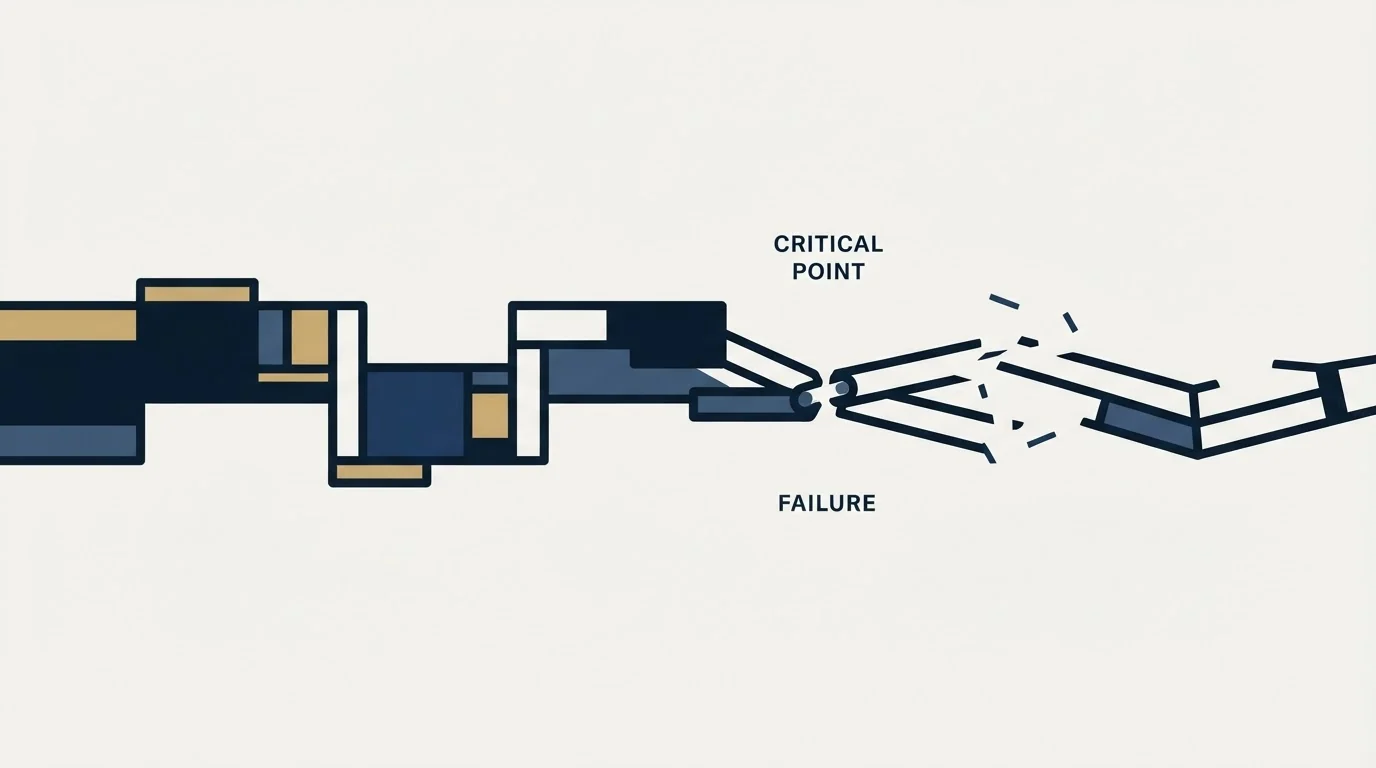
Teams do review their outbound copy, and these shapes get through the review anyway. The reason is that most copy review is done by people who share the sender's context.
A colleague reading a draft already knows what the company sells, why the offer is good, and which of the claims are true. They read the message with all of that supplied, so a line that would be meaningless to a stranger reads as merely brief. The review catches typos, tone and length, and it systematically cannot catch the failure that matters, which is the message assuming knowledge the reader does not have.
The cheap correction is to change who reviews. Give the draft to someone in the business who has never worked on the campaign, tell them nothing, and ask two questions afterwards: what does this company do, and what is being asked of you. If either answer is wrong or missing, the problem is in the message rather than in the reader. If both come back right, the message carries its own context, the part the writer took for granted.
The second correction is to read the message against the reply you want. Most cold emails are written toward a send. Writing toward a specific reply, an actual sentence you would be pleased to receive, exposes the ask problem immediately, because a vague ask has no reply that is pleasing to receive.
The pattern underneath all six
Five of these six failures are the same failure wearing different clothes. The message was written from the sender's side of the table.
The self-introduction, the fake compliment, the wall, the undefined ask and the presumed pain all come from a writer thinking about what they need to convey rather than about what the reader needs to be true before responding. The sixth, the undelivered message, is a different category, and it is the one most likely to be diagnosed as a copy problem when it is not.
That is also why bad emails survive so long inside teams. Each of these reads acceptably to the person who wrote it, because the writer already knows the context that the message fails to supply. The only reliable check is to read it as someone who has never heard of you and has forty other messages waiting.
One structural decision removes a whole class of these. If a campaign is a single message rather than a sequence, the message has to carry its own weight, and the temptation to leave the specifics for the follow-up disappears. Our practice is one message per campaign, with a new campaign on a new angle when we want to reach a non-replier again. What that changed for us is written up in why we stopped using follow-ups, and the construction of a message built to be the only one is in how to write a cold email.
Deciding whether a message is a fresh pitch or routine correspondence matters for meeting reminders too, and treating them as correspondence rather than follow-up keeps the details a recipient needs in the body.
If you would rather have the list, the copy and the sending set up by someone who has read a great many of these, see what a first campaign looks like.
Frequently asked questions.
Frequently asked questions- What is an example of a bad email?
- A classic example opens with the subject Introduction, then spends its first lines on the sender's name, company and track record, calls the reader one of the businesses like yours, and closes by asking for a quick call to learn more about their business. Every line is about the sender, and the recipient appears only as an object to learn about.
- What makes a cold email bad?
- Almost always that it was written from the sender's side of the table. The self-introduction, the generic compliment, the wall of text, the vague ask and the presumed pain all come from thinking about what you need to convey rather than what the reader needs to be true before replying. Each reads fine to the person who wrote it.
- Is personalisation always better than no personalisation?
- No. Personalisation that could have been written about any company is worse than none, because the reader recognises the template and draws a conclusion about the sender rather than about the offer. A message with no personal line that moves straight to a relevant observation beats one that pretends to a familiarity it does not have.
- My emails look fine but nobody replies. What now?
- Rule out delivery before rewriting anything. Google's sender guidelines require SPF or DKIM authentication from every sender to Gmail accounts and a spam rate below 0.3% in Postmaster Tools. A message in a junk folder produces no reply rate to diagnose, and teams routinely spend weeks on subject lines when the cause sits in DNS records or sending volume.
About the author.

B2B cold email experts helping companies generate qualified leads through done-for-you outreach campaigns.
RevenueFlow Team
Explore more.
Ready to scale your outreach?
We build GTM engines that book real meetings. See the receipts.
Related articles.
Drip Campaign Examples: The Permission Behind Each One
Every drip campaign example is one template filled in. The six fields it needs, five examples that hold up, and the one we replace with a single message.
Email Marketing Lead Generation: Two Motions, Two Domains
Permission-based email and cold outbound share a channel and almost nothing else. Running both through one domain is how teams quietly damage both at once.
Meeting Reminder Emails: Six Templates
A reminder to someone who accepted a meeting is administration of an agreement, not a bump. Six complete messages, what each has to carry, and how many is too many.
Sample Cold Emails: Six Written to Be the Only One You Send
Most sample cold emails are step one of five, so they underperform alone. Six complete messages, what to change in each, and why the middle is the part to cut.
The Tim Ferriss Cold Email Template: What the Original Says
The template is one email published on tim.blog in 2008 with five notes under it. What the five tenets say, which transfer to cold outbound, and which cannot.
SmartReach Pricing: Two Ladders and a Struck Pro Rate
SmartReach prints an email ladder and a multichannel ladder on one page, loads monthly, and ships a machine-readable copy. Both ladders, both states, every add-on.