Meeting Reminder Emails: Six Templates
A reminder to someone who accepted a meeting is administration of an agreement, not a bump. Six complete messages, what each has to carry, and how many is too many.
A meeting reminder is correspondence rather than a follow-up, because the recipient already accepted a time. An effective one carries the date and time in their zone, the join link in the body, who is attending, what it covers, and a frictionless reschedule route. One reminder the day before covers most meetings.
Key takeaways
- The test for whether a second message is legitimate: would it still make sense to send if the answer were already yes? A reminder passes that test, and a check-in bump does not.
- Write the time in the recipient time zone every time. A booking tool renders both calendars correctly and then a human writes "see you at 10" in an email and undoes it.
- One reminder the day before covers most meetings, plus a confirmation at booking when the meeting is more than a week out. Count whatever the scheduling tool already sends automatically.
- Reminders protect a well-booked meeting and cannot rescue a badly-booked one. A third reminder usually signals a qualification problem upstream rather than a communication gap.
Reviewed and updated September 2, 2026
A meeting reminder is one of the very few messages in outbound where sending a second email to the same person is unambiguously correct. The prospect agreed to a time. They put it in a calendar, or your tool did it for them, and between that moment and the meeting itself sit somewhere between two days and three weeks of other people's priorities. Writing to confirm is not chasing them. It is the ordinary courtesy of a booked appointment, and skipping it is how meetings quietly evaporate.
That distinction is worth stating plainly, because it is the line that decides what a reminder should say. A reminder written as though it were another attempt to win attention reads as pestering, and it performs like pestering. A reminder written as correspondence between two people with a shared commitment reads as competence.
It is also the line that splits what a search for a polite reminder email returns, because the templates written for somebody who never replied are bumps and those are the ones we do not send.
Where a thread already exists and the other side owes something, a bump is correspondence too, and bump email templates covers those cases.
Teams looking for a meeting reminder text message sample are asking the same question in a different channel, and the six messages above carry over almost unchanged; what changes is the consent position and the delivery mechanics of SMS, which sit outside the reminder itself and are the reason our own campaigns stay on email and LinkedIn.
Why this is not a follow-up, and why that matters
Our own operating position is that a campaign carries one message. We do not bump, we do not send thread replies to people who did not answer, and where a contact goes quiet the answer is a new campaign on a fresh angle rather than a second message underneath the first.
The same position rules out one of the standard sequences, and the drip examples that hold up separate those built on permission from the cold chain replaced by a single message.
None of that governs the situation here, because the person is not silent and there is nothing to chase. They accepted. The relationship changed state the moment the booking was made, and everything after it is administration of an agreement rather than persuasion. The same reasoning applies on the other side of a missed call, which is why writing to a no-show is correspondence too: the no-show email works through that case in full.
The practical test is simple. If the message would still make sense to send when the answer is already yes, it is correspondence. If it only makes sense as another attempt to get a yes, it is a bump, and it does not belong in anyone's process.
- The prospect accepted a specific time
- The message carries logistics they need
- It would still make sense if they replied enthusiastically
- Reminder, confirmation, agenda, rescheduling link
- The prospect never replied
- The message carries no new information
- It exists to get attention rather than to deliver something
- Checking in, circling back, bringing this to the top of your inbox
- Would this message still make sense to send if the answer were already yes?
- If yes, it is administration of an agreement
- If no, it is a second attempt wearing a helpful hat
What a reminder has to carry
Most reminder templates in circulation are polite and useless, because they carry a sentiment rather than information. The recipient already knows they have a meeting. What they frequently do not have to hand is everything needed to actually attend it.
Unlike a reminder that simply delivers logistics, a first cold outreach message must earn a reply through brevity and evident homework, a standard set out in the original cold email template.
- Yes: The date and start time written in the recipient's time zone, not yours, and named explicitly.
- Yes: The join link, in the body, not only in the calendar invitation they may not have accepted.
- Yes: Who is attending from your side, with roles, so they know whether to bring a colleague.
- Yes: What the meeting will cover, in one line, so they can tell whether the right person is coming.
- Yes: A one-click way to move it, offered without friction or a request for an explanation.
- Depends: Anything you need them to bring or have open, stated as a request rather than assumed.
- No: Guilt, urgency, or any language implying the meeting is a favour they owe you.
The time zone line is worth dwelling on because it causes more missed meetings than forgetfulness does. A booking tool renders the time correctly in both parties' calendars, and then somebody writes "see you at 10" in an email and undoes it. Write the zone, every time, or write nothing about the time and rely on the calendar entry.
Six reminders, each a complete message
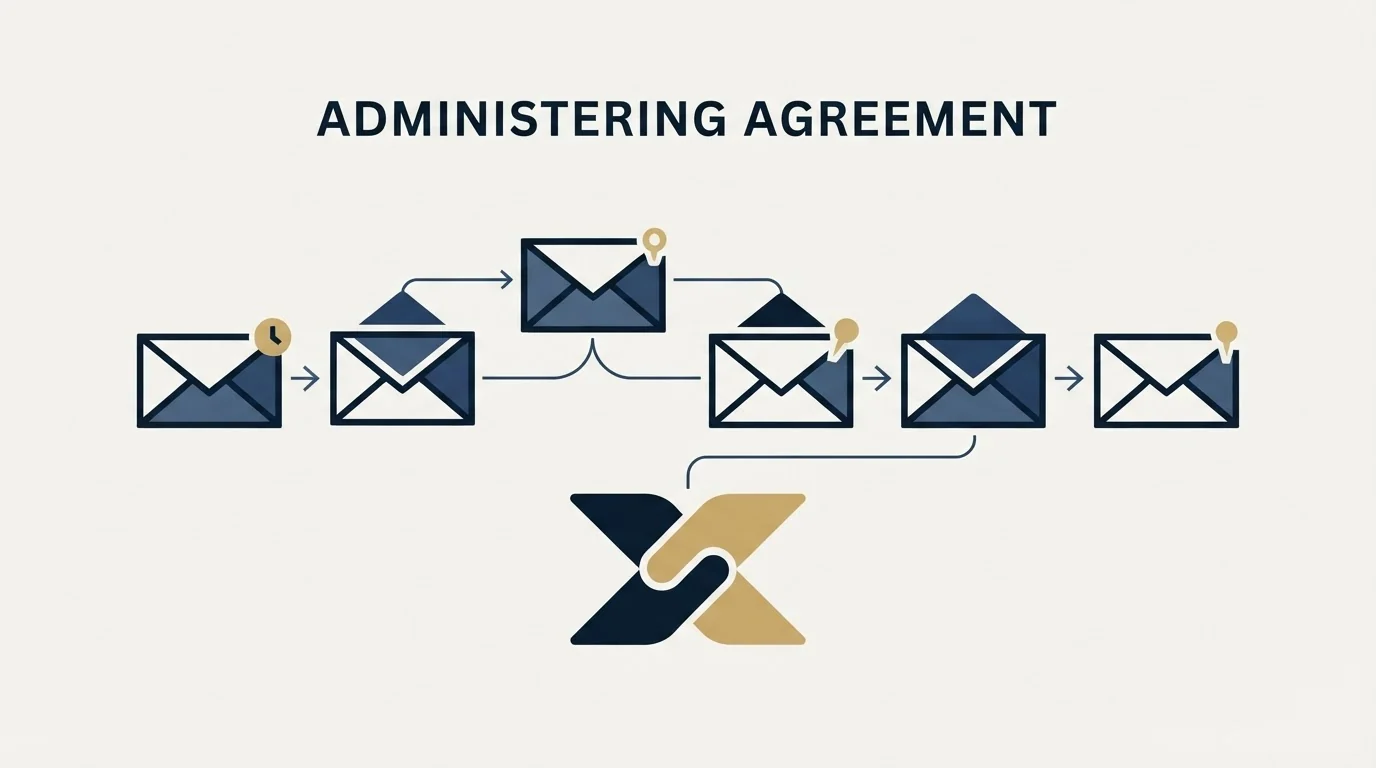
Each of these is one message, sent once, for a specific situation. They are not stages of anything, and the right number to send before a given meeting is usually one.
The standard reminder, sent the day before.
Subject: Tomorrow, 10:00 ET, joining link inside

Hi [First name],

Confirming our call tomorrow, [day] [date], at 10:00 ET.

Join here: [link]

Attending from our side: [your name] and [colleague, role]. We will
cover [the one thing the call is about], and we will send anything
useful afterwards.

If tomorrow no longer works, you can move it here: [reschedule link]

[Your name]
The long-lead reminder, for a meeting booked more than a week out. Booking-to-meeting distance is the single largest predictor of a no-show, and a meeting agreed three weeks ago was agreed by a version of the prospect with different priorities.
Subject: Still good for [day] [date]?

Hi [First name],

We booked this a few weeks back, so a quick confirmation: we are on
for [day] [date] at [time, zone].

Join here: [link]

Since we spoke, is [the thing they said they were working on] still
the priority you want to spend the time on? Happy to point the
conversation somewhere more useful if things have moved.

Move it here if you need to: [reschedule link]

[Your name]
The same-day reminder, for a call later that day. Short, factual, no new asks.
Subject: Today at 15:00 GMT

Hi [First name],

We are on for 15:00 GMT today. Join here: [link]

If something has come up, this moves it in one click: [reschedule link]

[Your name]
The reminder that carries an agenda, for a meeting with more than two people.
Subject: [Day] agenda, and the joining link

Hi [First name],

Confirming [day] [date], [time, zone]. Join here: [link]

Rough shape, so nobody's time is wasted:
- [First item, and who it is for]
- [Second item]
- [What we would like to agree by the end]

If [colleague's name] should be on it too, forward this along and they
can join on the same link.

[Your name]
The reminder that needs something in advance. Ask once, make it optional, and never make the meeting conditional on it.
Subject: [Day] [date], [time, zone], plus one small thing

Hi [First name],

We are confirmed for [day] [date] at [time, zone]. Join here: [link]

If it is easy, having [the specific thing] to hand would let us get
into specifics rather than generalities. Not a problem at all if not,
we will work from what we have.

[Your name]
The reschedule confirmation, sent when they moved it themselves. This one exists because a rebooked meeting is more fragile than the original, and a silent reschedule leaves both parties slightly unsure.
The messages for moving a booked meeting before it happens, from either side, are in meeting reschedule email templates.
Subject: Moved to [new day] [new date], all confirmed

Hi [First name],

Thanks for moving it. We are now on for [new day] [new date] at
[new time, zone].

Join here: [link]

No need to reply, this is just so the new time is in writing somewhere
other than a calendar entry.

[Your name]
Timing, and how much is too much
One reminder, sent the day before, covers the majority of meetings. A meeting booked more than roughly a week ahead earns a second point of contact, and the natural one is a confirmation shortly after booking, which is the message that turns a calendar entry into an agreement in the first place.
Beyond that the returns go negative quickly. Three reminders for a thirty-minute call signals that you expect to be stood up, and people tend to meet the expectation you set. If the honest reason for wanting a third reminder is that this particular meeting feels unlikely to happen, the problem is upstream in how it was booked, and no reminder will fix it.
Because a meeting that keeps needing reminders often signals an upstream booking problem, the stage-by-stage exit criteria show where the qualification broke down.
Where a booking tool sends automated reminders already, count those. A tool-generated reminder plus two human ones is three reminders whatever the org chart says, and the recipient is not distinguishing between them.
That counting problem is the practical reason to settle who sends the reminder when a vendor booked the meeting. Where an agency books on your behalf, three parties can each send one in good faith: the booking tool automatically, the agency as the party who arranged it, and your own team as the party who will attend. Agree at kickoff which one owns it and turn the other two off, and confirm that reminders are inside the scope you are buying rather than assuming it, since the rung that covers confirmation and rebooking is frequently the one a cheaper quote leaves out.
Subject lines, and the one thing they have to do
A reminder subject line has a single job, which is to be recognisable in a crowded inbox at a glance, from the preview pane, without being opened. That points at specificity rather than warmth. "Tomorrow, 10:00 ET, joining link inside" does the job. "Looking forward to speaking" does not, because it survives no scanning at all and reads like the twentieth pleasantry of the morning.
Put the time in the subject where the meeting is inside twenty-four hours, and the date where it is further out. Avoid anything that could be mistaken for a sales email, since that is precisely the filter, human and automated, that a reminder needs to clear. A recipient who marks a reminder as promotional has quietly removed the join link from their own inbox.
What the reminder cannot fix
Reminders reduce no-shows at the margin. They do not rescue a meeting that was booked badly, and it is worth being honest about which problem you have.
A meeting agreed by someone who cannot buy, or who agreed mainly to end a conversation, will not be saved by a well-written email. Neither will a meeting whose purpose was never stated clearly enough for the prospect to explain it to a colleague. The defence against both is a definition of what counts as a real meeting, agreed in writing before anything is booked. Where a vendor is doing the booking, the terms each one publishes about that definition vary widely, and what appointment setting companies publish about price and terms is the place to compare them.
If someone else is booking meetings on your behalf, ask to see the confirmation and reminder copy going out under your name before launch, with the same care you would apply to campaign copy. What that review should cover sits in outsourced appointment setting, and the wider economics of the function are in B2B appointment setting.
The short version

Treat a reminder as administration of an agreement rather than another attempt to win attention, and the wording writes itself. Carry the time in their zone, the join link in the body, who is coming and what it covers, plus a frictionless way to move it. Send one the day before, add a confirmation at the moment of booking when the meeting is more than a week out, and count whatever your scheduling tool is already sending. Then accept the limit: a reminder protects a well-booked meeting and cannot save a badly-booked one.
Want meetings that hold, booked against criteria agreed in writing before anything sends? Get a free campaign plan and we will walk through how the standard is set.
Frequently asked questions.
Frequently asked questions- How do you write a meeting reminder email?
- Lead with the date and start time in the recipient time zone, put the join link in the body rather than only in the calendar invitation, name who is attending from your side and what the meeting covers in one line, and offer a one-click way to move it. Keep it short, and leave out anything that implies the meeting is a favour.
- How many reminders should you send before a meeting?
- Usually one, sent the day before. A meeting booked more than about a week ahead earns a second point of contact, best placed as a confirmation at the moment of booking. Count automated reminders from your scheduling tool as reminders, because the recipient does not distinguish them from the ones a person wrote.
- Is a meeting reminder the same as a follow-up email?
- No, and the difference decides the wording. A follow-up chases someone who has not replied. A reminder is sent to someone who already accepted a specific time, so it is administration of an agreement. That is why a reminder can be sent without violating a one-message-per-campaign rule, while a bump cannot.
- Do reminder emails actually reduce no-shows?
- They help at the margin, mostly by removing practical obstacles: a missing link, a time zone confusion, an unaccepted calendar invitation. What they cannot do is rescue a meeting booked with someone who cannot buy or who agreed to end a conversation. That failure is upstream, in how the meeting was qualified.
About the author.

B2B cold email experts helping companies generate qualified leads through done-for-you outreach campaigns.
RevenueFlow Team
Explore more.
Ready to scale your outreach?
We build GTM engines that book real meetings. See the receipts.
Related articles.
Email Marketing Lead Generation: Two Motions, Two Domains
Permission-based email and cold outbound share a channel and almost nothing else. Running both through one domain is how teams quietly damage both at once.
Drip Campaign Examples: The Permission Behind Each One
Every drip campaign example is one template filled in. The six fields it needs, five examples that hold up, and the one we replace with a single message.
RFP Response Executive Summary Sample: One Page, Read First
The executive summary decides how carefully the rest of a response gets read, and is usually written last by whoever has least time. A worked sample and what to cut.
RFI Response Sample: The Document Only Has to Shortlist You
An RFI decides whether you make a list, not whether you win. A worked sample, and the three answers that get a response cut before the real competition starts.
Bad Email Examples: Six Shapes That Lose the Reader
A bad cold email is rarely bad throughout. It holds together for a line or two, then loses the reader at a specific word. Six failure shapes, and where each breaks.
SmartReach Pricing: Two Ladders and a Struck Pro Rate
SmartReach prints an email ladder and a multichannel ladder on one page, loads monthly, and ships a machine-readable copy. Both ladders, both states, every add-on.