SDR Outsourcing Companies: What Each One Publishes
Three of eleven SDR outsourcing companies publish a price per head. None publishes a price per meeting. What each puts on its own pricing page, and why the unit matters.
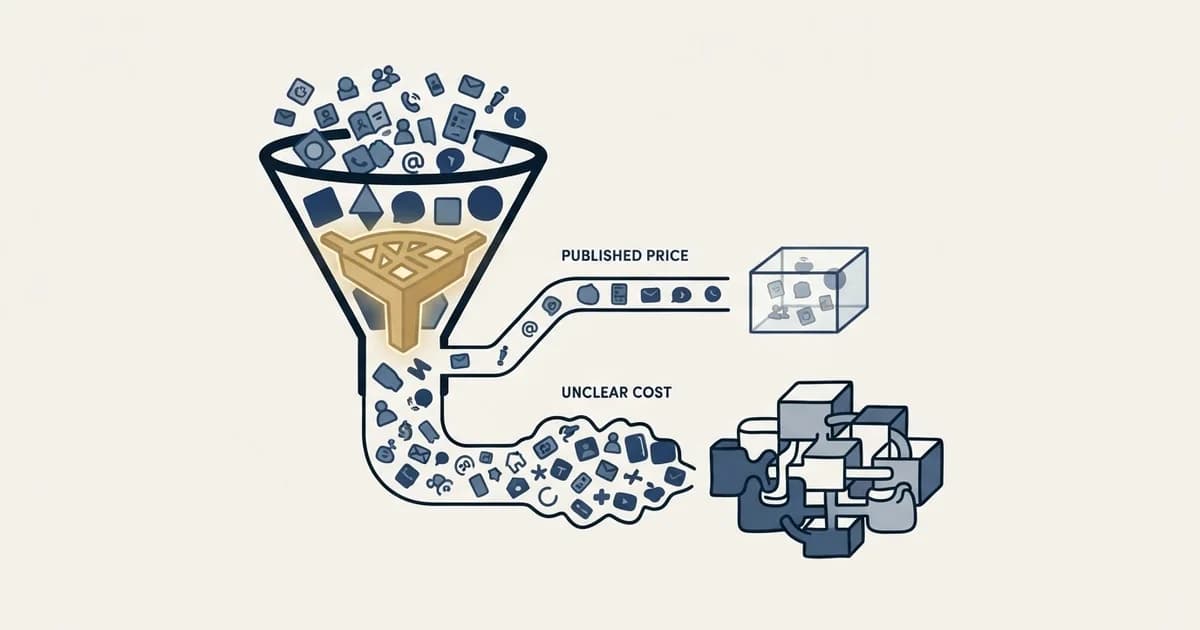
Three of eleven SDR outsourcing companies publish a per-seat rate: EBQ per employee, CIENCE per SDR by level and region, SalesRoads per four-week engagement. Four publish a program price, and four publish no figure. None publishes a per-meeting rate, so outcome pricing in this category is negotiated rather than listed.
Key takeaways
- Three of eleven publish a per-seat number: EBQ at $5,000 half-time and $10,000 full-time per month, CIENCE at $1,500 to $6,500 per SDR by level and region, SalesRoads at $8,375 cost per rep on a two-SDR package.
- None of the eleven publishes a per-meeting rate, so outcome pricing in this category is negotiated rather than listed on a pricing page.
- Callbox prices a Campaign Pod that its own page says includes one dedicated SDR, at $15,000 to $30,000 estimated monthly, while separately stating it does not charge per lead.
- SalesRoads quotes per four weeks, which is thirteen billing periods a year rather than twelve, so a per-rep figure needs converting before it sits beside a monthly one.
Reviewed and updated September 21, 2026
Three of the eleven SDR outsourcing companies below publish a number attached to a head: a price per rep, per month, on their own site. None of the eleven publishes a price per meeting. That second finding is the more useful one, because per-meeting pricing is the thing buyers ask for most often in this category and it is not on offer anywhere in the published set.
The eleven here all sell sales development as a staffed function, whether they call it outsourced SDR, SDR as a service, sales development or a dedicated outreach team. Everything below was read on each company's own pages in mid-2026 and is attributed to the page it appeared on, because several of these companies publish more than one figure across their own site.
A rate attached to a named half-time, full-time or per-rep unit.
No company in this set prices by the meeting on any page read.
Cleverly names a pay-per-lead tier for cold email, which is a different unit again.
The three that publish a per-seat number
EBQ prices the head directly and does not dress it as anything else. Its pricing page lists a "Half-Time Employee" at $5,000 per month and a "Full-Time Employee" at $10,000 per month, each footnoted "*price reflects annual commitment", with terms stated as "We offer annual contracts that can be paid monthly." The same page runs its own build-versus-buy table against an internal team, arriving at $189,500 for the in-house column and $120,000 for theirs.
CIENCE publishes the most granular seat table in the category, on its pricing page. SDR capacity is priced monthly per rep by seniority and region, from $1,500 for an offshore Level 1 up to $6,500 for a US Level 3, with "SDR onboarding and recruitment" charged at "$1,000 one-time per SDR". That table sits beside a separate program price: $5,000 one-time GTM setup, $2,000 a month for a strategic team, $499 a month for the platform, and $7,499 for the first month all in. The seat is optional and, in the page's own words, can be added "without a long-term contract".
SalesRoads publishes a per-rep figure as a derived line rather than a rate card. Its pricing page carries a slider that defaults to two SDRs, displaying $16,750 per 4-week engagement with "Cost per rep" of $8,375 and "Savings per rep 30%" beside it, with a single SDR at $11,950 for the same four weeks. Four weeks is thirteen periods a year rather than twelve, so a per-rep figure taken from this page needs converting before it sits in a spreadsheet next to a monthly one.
- Half-Time Employee $5,000 per month
- Full-Time Employee $10,000 per month
- Both marked *price reflects annual commitment
- Annual contracts payable monthly
- Level 1 from $1,500 offshore to $4,500 US
- Level 3 from $3,500 offshore to $6,500 US
- $1,000 one-time per SDR for onboarding and recruitment
- Seat capacity is optional on top of the program fee
- Two SDRs at $16,750 per 4-week engagement
- Cost per rep shown as $8,375
- One SDR at $11,950 for 4 weeks
- Thirteen billing periods a year, not twelve
Notice what the three have in common besides the unit. Every one of them tells you what you are buying in headcount terms, which means you can compare it against the cost of hiring, and it means the delivery risk is explicitly yours. A seat produces what a seat produces.
A fourth that prices a head without calling it one
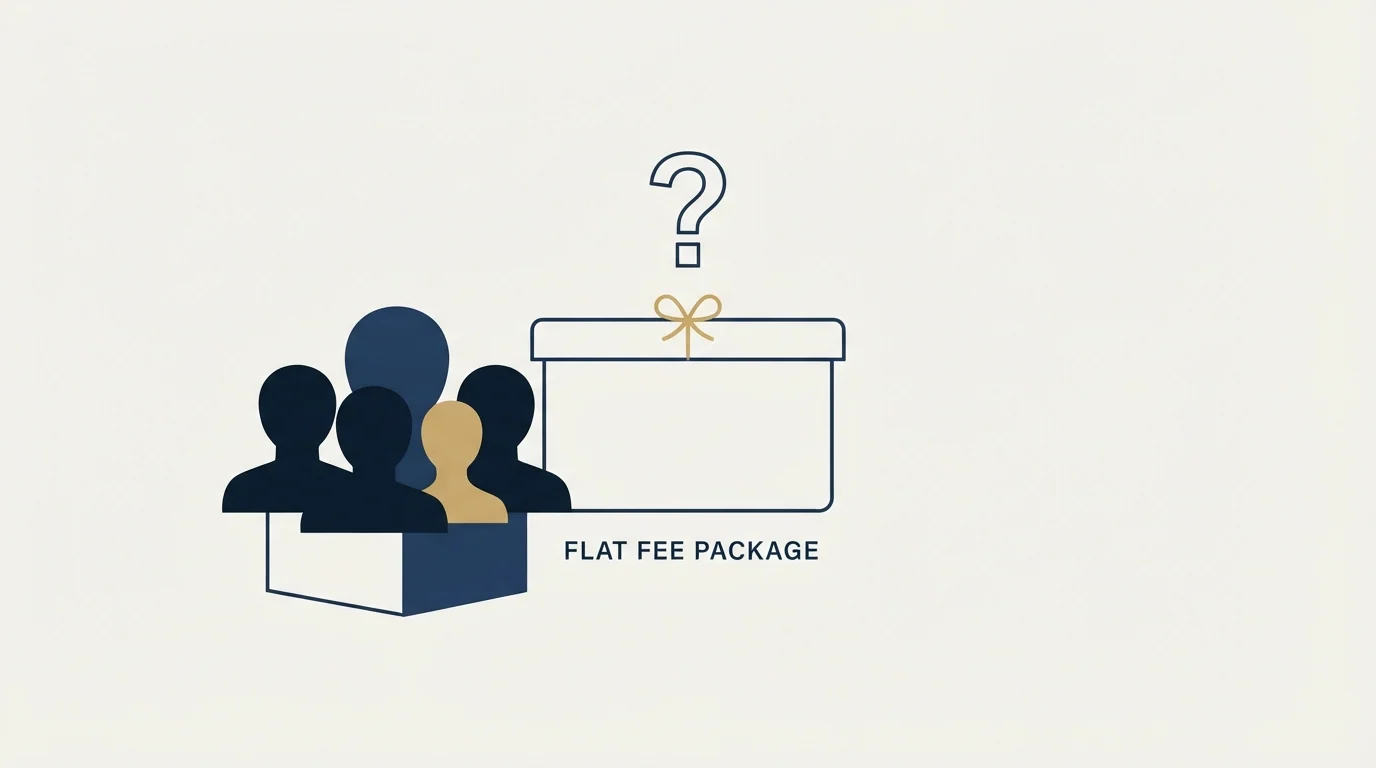
Callbox publishes a program price whose unit turns out to contain exactly one rep. Its pricing page prices in Campaign Pods, each described as "a dedicated outreach unit targeting a specific market segment or persona", and the inclusion list reads "Each pod includes 1 dedicated SDR", "Multi-channel outreach cadence", "AI-enriched contact data", "Campaign manager oversight" and "Weekly performance reporting", in those words. One pod shows an "Estimated Monthly Investment" of $15,000 to $30,000, with "Exact pricing provided after consultation".
So the pod is a per-head unit with a program wrapper around it, and the same company draws a hard line against the other end of the spectrum. Its FAQ on charging per lead states: "We don't charge per lead. Our pricing model is based on the resources we provide for your lead generation program." A published refusal is worth as much as a published rate when you are trying to work out what a category actually sells.
Callbox's pricing FAQ separately states "Our clients spend between US$20,000 and US$40,000 quarterly on their Callbox program", which is an observed spend on a quarterly basis and should not be set against the monthly pod estimate as though they were the same number.
The rest of the program prices
LevelUp Leads sells Full Service SDR and Fractional SDR as named service lines and publishes a floor rather than a tier table: "pricing starting at $5,000" on its packages page, with services "prepaid, with upfront monthly payments" and "an initial 3-month commitment" that then rolls to month-to-month. The named tiers carry no individual prices, so the floor is all there is.
Cleverly publishes a flat figure for the SDR product specifically: its outsourced SDR page states the solution is "priced at $3,000/month on a retainer model". That is the lowest published SDR figure in this set by a wide margin, and it sits alongside three other Cleverly prices for three other services, so it is a price for that page's product rather than for the company.
Superhuman Prospecting publishes "Starting at: $4995" monthly for its Premium SDR bundle on its pricing page, under "No Long-Term Commitments". A different page on the same site, B2B appointment setting, says "We start as low as $1125 per month", so this company has two live entry points and neither is wrong.
The four that publish no figure

SalesHive publishes the specification and not the rate. Its pricing page states everything arrives "in one flat monthly fee. No setup fees. No long-term contracts. Cancel anytime with written notice", and names the three inputs that set a quote.
Two of the three are activity levels, and SalesHive's pricing page names both: a channel mix of "Phone only or phone plus email", and a daily volume of "150+, 250+, or 500+ touches".
The third is a staffing choice, and it is the one that makes this a seat specification with the seat price left out. The page offers a team model of either US-based or offshore SDRs, which is the same lever CIENCE prices explicitly in its regional table above.
Martal Group publishes tier structure, staffing and commitment with no number anywhere. Its pricing page states "Pricing: flat fee per month" on the entry tier and "flat fee per month + sales commission" above it, then "Inquire about pricing". Commitment is a "3 Month Pilot Campaign" or "4 Month Pilot Campaign", then a monthly subscription. That commission element is the only performance-linked component published by any of the eleven, and it is worth asking what it is a commission on.
MarketJoy answers the pricing question in its FAQ by declining it: "different packages" priced "based on your needs and stage", followed by an invitation to book a demo.
Operatix is the most direct refusal of the eleven. Its FAQ states that because the services are tailored, "there is no set pricing."
Why the per-meeting gap matters
Buyers ask for per-meeting pricing because it moves delivery risk onto the vendor, and because it makes two quotes comparable in a way that seats and programs never are. The published market does not offer it. The nearest published thing in this set is Cleverly's named "Pay Per Meeting-Ready Lead" model for cold email, restated on its cold email page as a "Scale" tier billed "Pay per lead" against a "Growth" tier billed as a "Flat Monthly Retainer". A lead and a meeting are different units, and treating the first as the second is how a per-lead invoice ends up looking like an expensive meeting.
Two things follow for anyone shopping this category. A per-meeting arrangement is available in the market, but it is negotiated rather than published, so it will not appear in a search of vendor pricing pages. And whichever unit you end up buying, the unit only means something once the definition behind it is written down: a per-seat quote needs a stated output expectation, and a per-meeting or per-lead quote needs criteria you can check yourself.
- Yes: Convert every rate to an annual figure first, counting four-week periods as thirteen
- Yes: Add any one-time setup, recruitment or onboarding fee into year one
- Yes: Multiply by the minimum term, including a pilot period, to get total committed spend
- Yes: Ask each vendor for a written output expectation per seat, and get it in the contract
- Depends: Divide by expected meetings to compare a seat quote with an outcome quote
- No: A monthly rate is comparable across seat, pod and program pricing
That fifth item is marked uncertain on purpose. Dividing a seat price by an expected meeting count produces a cost per meeting, and it is only as good as the expectation, which almost nobody in this set publishes and nobody contractually guarantees. Where a vendor gives you no output figure, leaving the cell blank is more honest than filling it, and the blank is itself informative: it identifies which vendors are asking you to carry the delivery risk.
SDR compensation plan breakdown explains why the counting unit behind a quota decides whether reps get paid for calendar entries or for meetings a seller actually keeps.
The short version

Three of eleven publish a per-seat number and their units differ: per employee, per SDR by level and region, and per four-week engagement. A fourth, Callbox, prices a pod that contains one dedicated SDR, and publishes a refusal to charge per lead. Four publish no figure at all, two of them stating outright that pricing is quoted rather than listed. Nobody publishes a per-meeting rate. The comparison that works is total committed spend over the minimum term, with a written output expectation attached to every seat.
RevenueFlow runs done-for-you cold email and LinkedIn outreach, and the free campaign engagement is priced per qualified meeting, against a definition agreed in writing before anything sends. Retainer engagements exist where the scope is broader than meeting generation, and the SDR outsourcing page sets out which is which and what the qualified-meeting standard contains.
Pricing and terms verified against each company's own pages in mid-2026. Verify current terms with the vendor before relying on them.
Related reading: what the three pricing units actually do to risk, the cost math against hiring in house, all fifteen vendors grouped by pricing model, and the same census over appointment setting companies.
Frequently asked questions.
Frequently asked questions- How much does it cost to outsource an SDR?
- Published per-seat rates in mid-2026 run from $1,500 a month for an offshore CIENCE Level 1 rep to $10,000 a month for an EBQ full-time employee. SalesRoads publishes $8,375 cost per rep within a two-SDR package priced per four weeks. Four of the eleven companies checked publish no figure at all.
- Can you pay per meeting for outsourced SDR work?
- Not from any published price in this set. The nearest published model is Cleverly's Pay Per Meeting-Ready Lead tier for cold email, which bills per lead rather than per meeting. Callbox states directly that it does not charge per lead. Per-meeting arrangements do exist in the market, but they are negotiated rather than listed.
- Is per-seat or program pricing better for SDR outsourcing?
- They answer different questions. A per-seat rate compares directly against the loaded cost of hiring, and it tells you delivery risk stays with you, because a seat produces what a seat produces. A program price bundles data, tooling and management, which is harder to benchmark but easier to buy when you have no SDR function to compare against.
- What should I ask an SDR outsourcing company that will not publish a price?
- Ask for total committed spend over the minimum term, including any pilot, rather than a monthly rate. Then ask for a written output expectation per seat, in the contract rather than on a call. SalesHive publishes its three quote inputs, which is a useful template: team model, channel mix and daily volume.
About the author.

B2B cold email experts helping companies generate qualified leads through done-for-you outreach campaigns.
RevenueFlow Team
Explore more.
Ready to scale your outreach?
We build GTM engines that book real meetings. See the receipts.
Related articles.
SDR Outsourcing: The Four Models and What Each Costs
Dedicated team, fractional SDR, offshore staffing or outcome-based agency. What you control in each, how ramp works, and what happens when the person leaves.
Readymode Pricing: The Seat Is Dear for What Is Inside It
Readymode publishes $199 and $249 per licence per month, near the top of the dialer range. What the seat includes that others bill separately, and when that pays.
Outsourced SDR Pricing by Seat, Meeting or Qualified Meeting
Three pricing units, three different distributions of risk. How to normalise quotes onto one number, and why per-qualified-meeting is not per-meeting.
LinkedIn Lead Generation Services: What Is Safe to Outsource
LinkedIn prohibits third-party automation and the enforcement risk lands on the account owner. What can be outsourced with no exposure, and what to ask before agreeing.
Inbound vs Outbound Sales: How the Two Motions Differ
Inbound and outbound sales compared as motions: what the rep knows at first touch, what each costs, the team each needs, and the metrics that belong to each.
PhoneBurner Pricing: What the Seat Price Covers
PhoneBurner publishes all three seat prices in both billing states. The metered resource is contact imports, not minutes, and the spam layer is an add-on at every tier.