B2B Lead Generation Companies by Pricing Model: 15 Vendors
Nine of fifteen B2B lead generation vendors publish a dollar figure and six publish none. The five pricing models behind the numbers, each figure cited to its page.
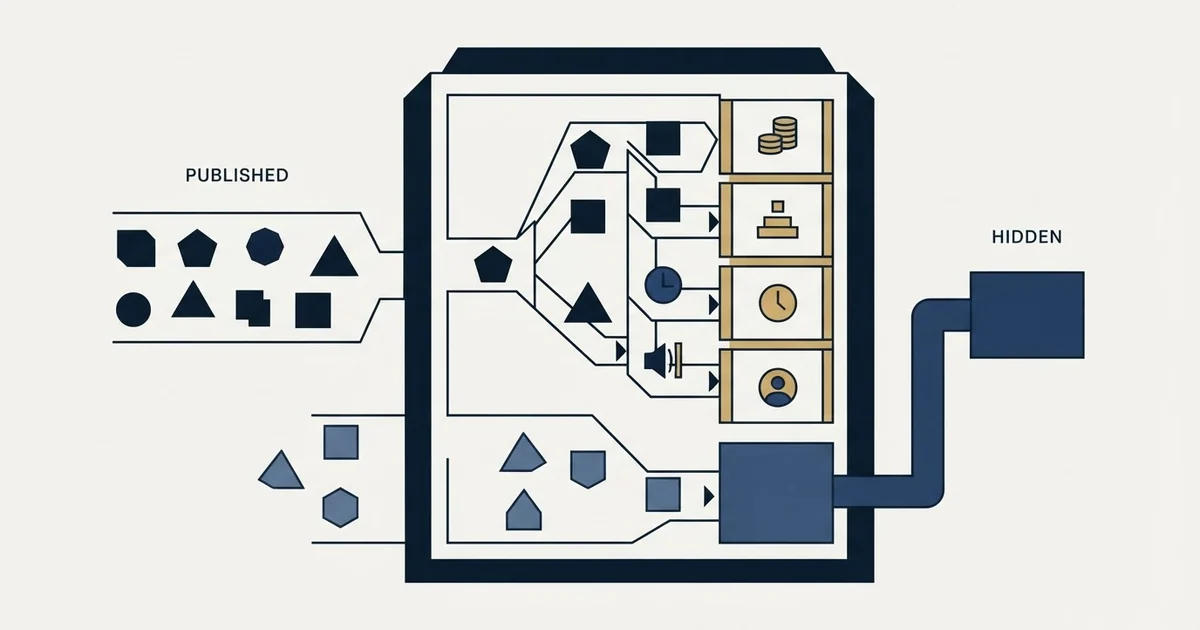
B2B lead generation firms offer five published pricing models for booked demos: a flat monthly retainer, per seat, hybrid, custom quote only, or no published model. Guarantees are rare: Belkins lists 100 guaranteed appointments a year, Martal adds a sales commission, and none of the fifteen vendors here publishes a rate per booked meeting.
Key takeaways
- Nine of the fifteen vendors publish a price in dollars on their own site and six publish none, a split that tracks commercial choice rather than price level.
- Nine charge a flat monthly fee in whole or in part, two price per seat, two quote only, and two publish no pricing model at all.
- SalesRoads prices a 4-week engagement per SDR, $11,950 for one and $16,750 for two, so a year is thirteen billing periods: 13 x $11,950 = $155,350 for one SDR.
- None of the fifteen publishes a rate per meeting; the closest is Cleverly's cold email Scale tier billed pay per lead, and Leadium's dollar bands are a buyer budget picker rather than its prices.
Reviewed and updated September 19, 2026
Nine of the fifteen B2B lead generation companies read on their own sites for this census publish a price in dollars somewhere. Six publish none. That ratio is the first useful thing to know about the category, and it is more informative than any individual number, because the six who publish nothing are not cheaper or dearer. They have made a different commercial choice about when the price enters the conversation. Ask what pricing or guarantee models B2B lead generation firms offer for booked demos, and these fifteen answer with five pricing models and very few guarantees.
What follows groups those fifteen by the pricing model each one states on its own pages, with the figure attributed to the exact page it appears on. Vendors contradict themselves across their own surfaces often enough that "the vendor publishes X" is usually the wrong sentence, and "this page publishes X" is the right one.
What pricing or guarantee models do B2B lead generation firms offer for booked demos?
Five pricing models, read from the vendors' own pages: a flat monthly retainer, a per-seat rate, a hybrid of setup fees and components, a custom quote, or no published model at all. Guarantees are rare. Belkins lists 100 guaranteed appointments a year in its starter package, Martal adds a sales commission to two tiers, and none of the fifteen publishes a rate per booked meeting.
The census is of general B2B lead generation firms rather than a healthcare-only list, and a healthcare buyer pricing booked demos meets the same five models.
| Model | Vendors | Price published |
|---|---|---|
| Flat monthly retainer | Belkins, Callbox, SalesHive, LevelUp Leads, SalesBread | 4 of 5 |
| Per seat | EBQ, SalesRoads | 2 of 2 |
| Hybrid | CIENCE, Superhuman Prospecting, Cleverly, Martal Group | 3 of 4 |
| Custom quote only | MarketJoy, Operatix | 0 of 2 |
| No published model | UnboundB2B, Leadium | 0 of 2 |
| All five models | 15 vendors | 9 of 15 |
Group one: flat monthly retainer, five vendors
The default shape. You buy a program, the vendor staffs it, and the invoice does not move with output.
Belkins publishes "The average starter price: from $5,000" on its appointment setting page, bundled with 1,500 leads a month, 3 outreach channels and 100 guaranteed appointments a year, the only guarantee any of the fifteen puts beside a price. Its pricing page carries no price, only a claim that its bundled tools save up to $10,000 annually, and ends by inviting you to talk to an expert. Worth knowing before you cite anything: the appointment-setting page's structured data declares a price of 8000 while the visible copy says $5,000. The number a reader sees is the one that counts.
Callbox publishes two figures on two different bases, and they are not interchangeable. Its pricing page shows an "Estimated Monthly Investment" of $15,000 to $30,000 for one Campaign Pod, with "Exact pricing provided after consultation" beside it. Its pricing FAQ says something different in kind: "Our clients spend between US$20,000 and US$40,000 quarterly on their Callbox program." One is a monthly estimate, the other an observed quarterly spend.
SalesHive's pricing page publishes no price, only a $0 setup fee. Its pricing page states the structure instead: everything "in one flat monthly fee. No setup fees. No long-term contracts. Cancel anytime with written notice", against a "$0 Setup fees, ever" tile. Three named inputs set the quote, in the page's own words: team model, channel mix, and daily volume of 150+, 250+, or 500+ touches. The same page adds that annual plans run at a lower monthly rate than month to month.
LevelUp Leads publishes a floor and a term on its packages page: "pricing starting at $5,000", services "prepaid, with upfront monthly payments", and "an initial 3-month commitment" that then rolls to month-to-month. Its named tiers carry no individual prices.
SalesBread publishes its price in body copy rather than on a pricing page, because it has no pricing page. Its done-for-you page reads "3k/month plus a one time set up fee", with the setup amount left unstated.
Group two: per seat, two vendors
EBQ attaches its published price to a headcount rather than to a program. Its pricing page lists a Half-Time Employee at $5,000 per month and a Full-Time Employee at $10,000 per month, both footnoted "*price reflects annual commitment", with contract terms stated as "We offer annual contracts that can be paid monthly."
Where EBQ prices by headcount, Avoma's per-seat pricing breakdown shows a different vendor charging by recorder seat while leaving viewers free.
Both labels fit. The unit is a seat, and the commitment is an annual retainer paid in monthly instalments. That combination is worth noticing rather than resolving, because it decides two different things: the seat decides what you receive, and the annual term decides what you owe if it stops working in month three.
Unlike that seat-and-retainer mix, a per-seat vendor spells out exact floors and overage costs, as shown in the breakdown of seat pricing tiers and overage rates.
SalesRoads attaches its price to headcount too, at the other end on commitment. Its pricing page prices a 4-week engagement with a slider of 1 to 12 dedicated SDRs: $11,950 for one, $16,750 for the default two at $8,375 per rep, and $23,500 for three at $7,833 per rep, under "No long-term commitment. Cancel anytime." Four weeks is thirteen billing periods a year rather than twelve, which is an easy arithmetic error to make against this vendor: one SDR for a year is 13 x $11,950 = $155,350, where a monthly reading gives $143,400, and two SDRs are $217,750 against $201,000.
Group three: hybrid, four vendors

Several components, priced separately, which is the hardest group to compare against anything.
CIENCE publishes the most itemised numbers in the set, all on its pricing page: a one-time GTM setup at $5,000, a strategic team at $2,000 a month, the graph8 platform at $499 a month, and $7,499 for the first month all in, with SDR capacity optional and quoted separately. That capacity has its own published table by seniority and region, running from $1,500 to $6,500 per SDR per month, plus $1,000 one-time per SDR for onboarding and recruitment. The page states SDR capacity can be added "without a long-term contract".
Superhuman Prospecting publishes three units on one pricing page: calls-only subscriptions "Starting at: $1998" monthly, Premium SDR bundles "Starting at: $4995" monthly, and list building at "$3.00" per contact, under "No Long-Term Commitments". A different page, B2B appointment setting, says "as low as $1125 per month". Both pages carry their figure, so a single "starts at" figure for this vendor does not exist.
Cleverly publishes four prices across four of its own pages, each attached to a different service. The FAQ says lead generation plans "range from $397/mo to $997/mo". Appointment setting is quoted at "$697" to "$2,997/month". Outsourced SDR is "priced at $3,000/month on a retainer model". And its cold email page prices by tier name only, with Growth billed as a "Flat Monthly Retainer" and Scale billed "Pay per lead".
Martal Group publishes the fee structure without the fee. Its pricing page states "Pricing: flat fee per month" for its entry tier and "flat fee per month + sales commission" for the two above it, each ending in "Inquire about pricing". Commitment is published as a "3 Month Pilot Campaign" or "4 Month Pilot Campaign", then "Monthly Subscription after the Pilot Campaign". The sales-commission element is the only component tied to closed sales published by any of the fifteen.
Group four: custom quote only, two vendors
MarketJoy answers the question directly in its FAQ and declines to give a number: it has "different packages" priced "based on your needs and stage", and invites a demo.
Operatix is the most explicit refusal in the set. Its FAQ states that because services are tailored, "there is no set pricing."
Both are honest, and both mean the same thing operationally: the price arrives after a call, and you cannot shortlist on it.
The same instinct reads a pricing page correctly elsewhere, where eWebinar sets the level for you and adjusts a subscription up or down automatically.
Group five: no published pricing model at all, two vendors

This is a different state from a custom quote, and the difference is worth keeping.
UnboundB2B publishes nothing about how it charges. Its page sitemap lists 44 pages and none of them is a pricing page, and its homepage carries no rate. There is no commercial posture published to compare.
Leadium has a page at /pricing that publishes no rate. What sits there is a budget picker in a contact form, offering bands from "$2,500 to $3,500" up to "Above $10,000". Those are questions about the buyer's budget rather than statements of Leadium's price, and reading them as rates is the most likely way to misquote this vendor. The page does publish a term, "month-to-month", and an unusually loose qualification bar: "if a prospect agrees to connect on a sales call, we consider it qualified."
Which B2B lead generation agencies charge based on qualified meetings booked?
None of the fifteen publishes a rate per qualified meeting booked. The nearest thing in the set is Cleverly's cold email Scale tier, billed "Pay per lead", which moves the unit to a lead rather than a meeting, and Callbox's FAQ ties its price to inputs instead: it "varies depending on the number of allocated resources, services provided, and supported languages."
Buyers regularly ask to tie agency payment to closed deals rather than to leads, and this is the gap that answers them: only one of the fifteen publishes any commission component at all, which says less about willingness than about attribution and cash flow across a full sales cycle.
That gap is where RevenueFlow sits, and it belongs in this list as a sixteenth entry rather than as a conclusion drawn from the other fifteen. We run done-for-you cold email and LinkedIn outreach, and the free campaign engagement is priced per qualified meeting, against a definition agreed in writing before anything sends. Retainer engagements exist too, where the scope is broader than meeting generation, and the outbound sales agency page sets out which is which. One thing that genuinely distinguishes how we run a campaign rather than how we bill it: we send one message per campaign and no bumps, so a flat result gets a new angle rather than another attempt at the same person.
What the grouping is actually for
The groups are not a ranking. They are a filter for which comparison is even possible.
Two retainer quotes compare directly on total committed spend once the billing unit is normalised, and SalesRoads is the case that proves four weeks and one month are different units. A retainer and a per-seat quote do not compare at all until you decide whether you are buying capacity or output, because those fail in different ways: capacity underperforming means more activity, output underperforming means the vendor owns the problem. And a quote you do not have cannot be compared with anything, which is why the four vendors publishing no number should be evaluated on terms, commitment length and the written definition of what they deliver instead. Before comparing two quotes, establish five things: the written definition of what counts as delivered, the billing period in weeks, total committed spend including any pilot or annual term, whether a published figure is a floor or a configuration you would buy, and which page the number came from.
The last one is the trap this whole grouping exists to avoid. A spreadsheet with fifteen vendors and one price column looks like a comparison and is not one, because the column mixes a four-week engagement, an annual seat, a per-contact rate and a per-lead tier. Sorting that column ranks the billing units, and the billing unit is a choice about who carries the risk rather than a measure of value.
The short version
Nine of fifteen publish a figure and six do not, and the split does not track quality or size. Nine charge a flat monthly fee in whole or in part, two price per seat, two will only quote, and two publish no pricing model at all. Cleverly and Superhuman Prospecting each publish several different prices on their own pages, so the page matters as much as the number. None of the fifteen publishes a per-meeting rate. The comparison worth running is not on price, and starts with the written definition of what a vendor owes you.
If a campaign priced on attended qualified meetings is the shape you want to compare against those retainers, you can see what one would look like for your market.
Pricing and features are taken from the vendors' own pages. Verify current terms with the vendor before relying on them.
Related reading: the diligence questions to run against any of these vendors, the payment schedule hiding behind a monthly rate, why a per-lead price means nothing without the definition, and the same census run over appointment setting companies.
Frequently asked questions.
Frequently asked questions- What pricing or guarantee models do B2B lead generation firms offer for booked demos?
- The fifteen vendors checked publish five models: a flat monthly retainer, a per-seat rate, a hybrid of setup fees and components, a custom quote, or no published model. Guarantees are rare. Belkins lists 100 guaranteed appointments a year in its starter package and Martal adds a sales commission to two tiers. None publishes a rate per booked meeting.
- Which B2B lead generation agencies charge based on qualified meetings booked?
- None of the fifteen vendors in this census publishes a rate per qualified meeting. Cleverly's cold email Scale tier is billed pay per lead, which prices a lead rather than a meeting. RevenueFlow prices its free campaign engagement per qualified meeting, against a definition agreed in writing before anything sends, which is house policy rather than a published market rate.
- How much do B2B lead generation companies charge?
- Published figures run from $397 a month at Cleverly's lead generation entry tier to $15,000 to $30,000 a month for one Callbox Campaign Pod, with SalesRoads at $11,950 per 4-week engagement for one SDR. Six of the fifteen vendors publish no figure at all. Those figures are not comparable directly, because they cover different scopes, billing periods and units.
- Why do so many lead generation agencies hide their pricing?
- Six of fifteen publish nothing, and two say why in their own words. Operatix states that because services are tailored, there is no set pricing. MarketJoy says packages depend on your needs and stage. The practical effect is that price enters after a discovery call, so those vendors have to be shortlisted on published terms and commitment length instead.
About the author.

Ben Carden is CRO at RevenueFlow, which builds and operates outbound revenue engines for B2B companies. Previously at Gartner Enterprise. Studied at London School of Economics.
Ben Carden · CRO
Connect on LinkedIn →Explore more.
Ready to scale your outreach?
We build GTM engines that book real meetings. See the receipts.
Related articles.
Lead Generation as a Service: What the Service Part Changes
Most vendors selling lead generation as a service have productised the scope and kept the price bespoke. What that trade buys you, and how to tell which half is fixed.
How Much Do Lead Generation Companies Charge: The Structure
A rate is one payment. The structure decides how many there are, when the first lands, what you owe if you leave early, and what you have to re-buy afterwards.
Typeform Alternatives: Read the Response Meter First
Typeform meters responses with a hard ceiling and counts seats inside the plan. What Tally, Fillout, Formbricks and Jotform count instead, from their own pricing pages.
Lead Verification: What Each Check Actually Proves
Lead verification covers two different jobs. One asks whether a mailbox will accept mail, the other asks whether the person behind the row is real and lawful to contact.
Webflow Pricing: The Four Lines on a Real Bill
Webflow bills a site plan, a workspace plan, seats and metered add-ons. What each line pays for, read from the vendor's own pricing page in September 2026.
Foleon Pricing: No Published Price, a 24-Month Term
Foleon publishes no rate on its plans page and publishes the whole commitment behind it. The term, the notice window and what happens to the Docs after.