Avoma Pricing: Recorder Seats, Free Viewers, and the Add-Ons
Avoma charges only for people whose meetings get recorded and makes viewers free, so the seat count to price is smaller than the team and the add-ons are larger.
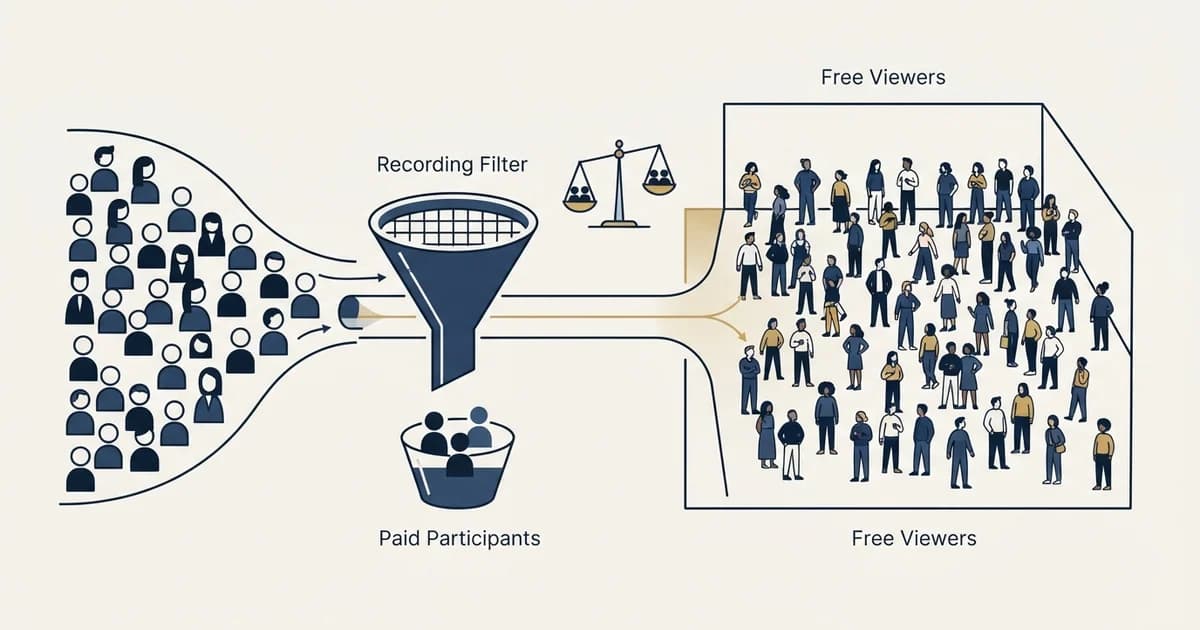
Avoma bills per recorder seat and makes viewers and collaborators free. Its page publishes Startup at $19 per recorder seat monthly billed annually, Organization at $29, and Enterprise at $39 billed annually only. Three add-ons, priced from $19 to $29 per seat annually, are assignable to individuals.
Key takeaways
- Avoma's pricing page states that you pay only for meeting recorder users and that viewers and collaborators are always free, so the seat count is the number of people running calls.
- Published plans are Startup at $19 annually and $29 monthly, Organization at $29 annually and $39 monthly, and Enterprise at $39 billed annually only, per recorder seat.
- The three add-ons rival the plans: the pricing page publishes Conversation Intelligence and Revenue Intelligence at $29 annually and $35 monthly per seat, and Lead Router at $19 and $25, each assignable per person.
- Seat rules decide the plan before features do, with Startup capped at 25 recorder seats, Organization at 100, and Enterprise carrying a minimum of 10 paid seats.
Reviewed and updated September 2, 2026
Avoma prices its meeting assistant on a unit most of its category does not use. You do not pay for everyone with an account. You pay for the people whose meetings get recorded, and everybody else sits on the platform for nothing. That single design choice is why a headline seat price of $19 can describe a bill that lands anywhere, and it is the part worth understanding before comparing anything.
Here is what the vendor publishes, where the page contradicts itself, and the arithmetic that decides what a team actually pays.
Reading Avoma reviews and reading the price list turn out to be the same exercise, because the recurring complaint in the review sites is not about the number on the plan but about which capabilities sit outside it, and the add-on structure below is what turns a low entry figure into the real per-seat cost a review is reacting to.
The unit is a recorder seat
Avoma's pricing page, fetched on 16 August 2026, states the model in its own words at the top of the plan table: you only pay for meeting recorder users, and viewers and collaborators are always free. The plan cards price each tier "per recorder seat per month".
That is the whole model, and it is unusual enough to change how a team should be sized. In a conversation-intelligence tool priced per user, adding a sales manager who never runs a call but reads every transcript is a full seat. Here that person is free. So is the marketer who watches two recordings a quarter, and the new starter working through last month's demos.
The page defines those free roles specifically: view-only users are free to watch recordings, view notes and transcripts, comment and share. What they cannot do is have their own meetings recorded, which is exactly the boundary you would expect and exactly the one to check against your team list before pricing anything.
The practical consequence is that the seat count is not your headcount. It is the number of people who run calls, and for most sales organisations that is a much smaller number than the org chart suggests.
The question of how a CRM like Salesforce actually receives that synced call data, rather than pushing it out, is examined in Salesforce's event subscription model.
What the plans cost
The pricing page carries a monthly and annual toggle with both states rendered into the same document, so the figures below name the state each one belongs to. The page also advertises savings of up to 33 percent for annual billing.
Startup is $19 per recorder seat per month billed annually, and $29 billed monthly. It carries the AI meeting assistant and a one-to-one scheduler, and the plan comparison lists it as allowing up to 25 recorder seats.
Once scheduling links start filling those calendars, the settings that actually decide whether a meeting happens deserve equal scrutiny, as explained in the Calendly settings that decide bookings.
Organization is $29 per recorder seat per month billed annually, and $39 billed monthly. It adds custom AI topics and templates, a group and round-robin scheduler, and the comparison lists it as allowing up to 100 recorder seats.
Enterprise is where the page argues with itself, and the honest thing is to report the disagreement rather than pick a winner. The plan card states $39 per recorder seat per month, billed annually only, with a minimum of 10 paid seats and features covering team-specific access controls, mutually signed DPAs, single sign-on via SAML or OIDC, data retention policies and HIPAA compliance. A separate comparison block on the same page shows Enterprise as "Let's Talk", billed annually only, with no figure. Both are on the page the vendor serves today. Treat $39 as the published number and expect a conversation.
- $19 per recorder seat per month, billed annually
- $29 per recorder seat per month, billed monthly
- AI meeting assistant
- One-to-one scheduler
- Viewers free
- $29 per recorder seat per month, billed annually
- $39 per recorder seat per month, billed monthly
- Custom AI topics and templates
- Group and round-robin scheduler
- Viewers free
- $39 per recorder seat per month, billed annually only
- Also shown as Let's Talk elsewhere on the same page
- Single sign-on via SAML or OIDC
- Data retention policies
- Team-specific access controls
The add-ons are what move the bill

The plan price is the smaller half of the story. Avoma sells three capabilities as separate per-seat add-ons on top of whichever plan you are on, and they are priced close to the plans themselves.
The same split shows up in calling tools, where Ringover's add-ons outweigh the seat before a single minute is billed.
Conversation Intelligence is $29 per seat per month billed annually and $35 billed monthly, covering AI coaching recommendations, call scoring, smart trackers and organisation-wide querying. Revenue Intelligence is the same $29 annually and $35 monthly, covering deal risks, a sales methodology tracker, win-loss analysis and forecasting. Lead Router is $19 annually and $25 monthly, covering advanced routing rules, inbound form qualification and outbound lead handoff.
Those figures appear twice on surfaces the vendor controls: on the pricing page itself, and in a help-centre article on how Avoma pricing works across recorder seats, free users and optional add-ons, which lists Conversation Intelligence and Revenue Intelligence at $29 annual and $35 monthly per seat. Two independent surfaces agreeing is worth more than one, and it is the reason these numbers are quotable at all.
The page also notes that add-ons can be assigned to specific team members rather than the whole account, which is the detail that makes the model workable. Coaching insights can go to the people being coached without buying them for everyone.
Take an illustrative and entirely invented example, using round numbers to show the shape of the arithmetic rather than a result to expect. Eight recorder seats on the Organization plan at the published $29 annual price is $232 a month. Add Conversation Intelligence at the published $29 for the four reps whose calls are being coached and that is another $116, taking the bill to $348, or roughly one and a half times the plan cost. The lesson is not the total, which will not be yours. It is that the add-on line can rival the plan line, so a quote built from the headline tier alone will be wrong in a predictable direction.
Coaching, call scoring, trackers
Deal risks, forecasting, win-loss
Routing rules, form qualification
One-time, listed on the pricing page
The seat floors and caps decide which plan you can even buy
Three constraints on that page do more to select a plan than the feature lists do.
Startup allows up to 25 recorder seats. Organization allows up to 100. Enterprise carries a minimum of 10 paid seats. So a team of six people who all run calls has Startup and Organization available and Enterprise closed to it, regardless of budget or of which security features it wants. A team of forty is off Startup entirely.
That last case is the one to plan for, because the features a security review asks for, single sign-on, data retention policies and mutually signed DPAs, sit on Enterprise. A ten-person team that needs SAML is at the exact floor, and a six-person team that needs it has a problem the pricing page will not solve.
Onboarding with an Avoma expert is listed on the page as optional at $1,000 one time.
Trial terms, and the figures to leave alone
The page states an unrestricted trial of the Organization plan with all add-ons enabled, that no credit card is required up front, and that you are only charged when you decide to proceed.
One block on that page should be read and left alone. Avoma publishes a comparison table putting competitors including Gong, Chorus, Clari, Otter, Fireflies and Fathom against itself, with per-seat costs and minimum terms attached to them. Those are one vendor's characterisation of its rivals' commercial terms, not those vendors' own published figures, and repeating them as fact is exactly the error that gets a comparison article corrected later. The same page carries outcome claims about win rates and pipeline that are marketing assertions rather than verifiable measurements. Where Avoma sits against the wider field on capability rather than on a rival's own scoreboard is covered in Gong alternatives. The CRM its notes are written back into is a separate purchase, and the shortlist for outbound teams is in best CRM tools for SDR teams.
- Yes: Count only the people whose meetings get recorded, not the headcount
- Yes: List everyone who only needs to watch or comment, since those seats are free
- Yes: Decide which specific people need Conversation or Revenue Intelligence, since add-ons assign per person
- Yes: Check your recorder count against the plan caps of 25 and 100 and the Enterprise floor of 10
- Yes: Confirm the billing state, since the annual and monthly figures differ by up to a third
- Depends: Ask directly about Enterprise, which the page prices at $39 in one place and Let's Talk in another
What this tool does not decide
A meeting assistant records, transcribes and analyses conversations that already happened. It improves what a team learns from its calls and it does nothing about how many calls there are.
That distinction matters when the budget conversation starts, because coaching software is often bought at the moment a team is missing a number, and a missed number is more often a supply problem than an execution one. The upstream arithmetic, what a meeting costs to create and how many a motion produces, is worked through in B2B appointment setting, and what a bought meeting service includes at each price point is in B2B appointment setting services.
The short version
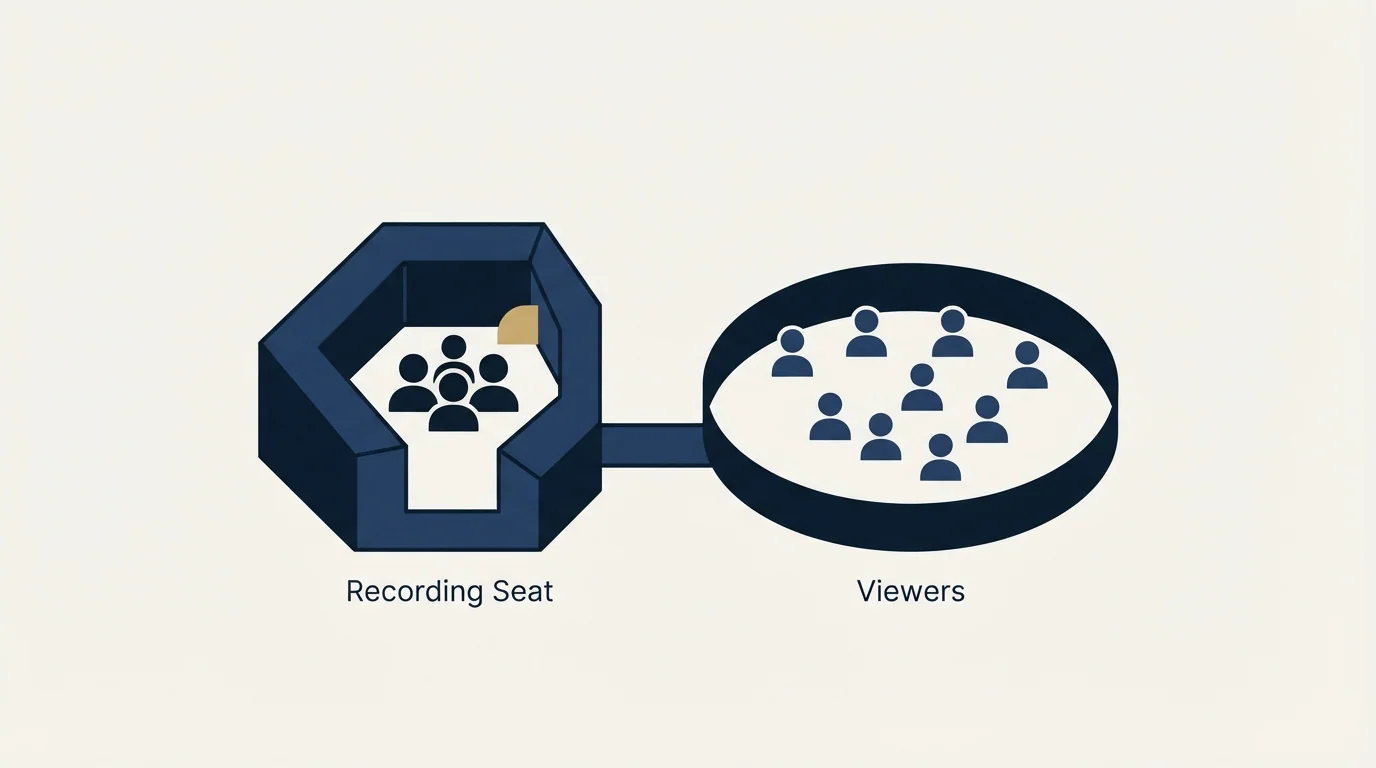
Avoma charges per recorder seat and makes viewers free, which means the seat count to price is the number of people running calls rather than the size of the team. Published plans are Startup at $19 annually and $29 monthly, Organization at $29 annually and $39 monthly, and Enterprise at $39 billed annually only, with the same page also showing Enterprise as "Let's Talk".
The add-ons are the number to watch: Conversation Intelligence and Revenue Intelligence at $29 annually and $35 monthly per seat, and Lead Router at $19 and $25, each assignable to individuals. Seat caps of 25 on Startup and 100 on Organization, and a 10-seat floor on Enterprise, will often decide the plan before the features do.
If what you are really pricing is meeting volume rather than meeting analysis, that is a different purchase. See what a campaign built on your ICP would produce.
Pricing verified against avoma.com/pricing and Avoma's help centre as of mid-2026. The pricing page renders both billing states into one document and states two different things about Enterprise. Verify current terms with the vendor before relying on them.
Frequently asked questions.
Frequently asked questions- How much does Avoma cost per user?
- It depends who counts as a user. Avoma bills per recorder seat, meaning only people whose meetings get recorded, and its page states viewers and collaborators are always free. Published recorder-seat prices are $19 on Startup, $29 on Organization and $39 on Enterprise per month when billed annually, with monthly billing higher on the first two.
- What is a recorder seat?
- A person whose own meetings Avoma records. Everyone else can hold a view-only account at no cost, and the pricing page defines that role as being free to watch recordings, view notes and transcripts, comment and share. The practical effect is that managers and colleagues who only read transcripts do not consume a paid seat.
- Do the add-ons apply to the whole account?
- No, and this is the detail that makes the pricing workable. Avoma's page states add-ons can be assigned to specific team members based on their roles, so coaching insights can go to the four reps being coached rather than to everyone. Conversation Intelligence and Revenue Intelligence are each $29 per seat per month billed annually.
- What does Avoma Enterprise cost?
- The vendor's own page says two different things on the same day. The plan card states $39 per recorder seat per month billed annually only, with a minimum of 10 paid seats, while a comparison block on the same page shows Enterprise as a conversation with no figure. Treat $39 as the published number and expect to negotiate.
About the author.

B2B cold email experts helping companies generate qualified leads through done-for-you outreach campaigns.
RevenueFlow Team
Explore more.
Ready to scale your outreach?
We build GTM engines that book real meetings. See the receipts.
Related articles.
Sales Automation Software for Small Business: Four Buys
One search returns four unrelated products, and on at least one vendor's published plan list the automation is gated above the tier a small team buys.
Sybill: The Credit Meter Is the Number to Model
Sybill meters by credits per week rather than by seat, and its pricing page carries three different figures for the same two plans. Both facts change the model.
Circleback: The Automations Are the Product, Not the Notes
Circleback publishes real prices and an unusually wide automation surface. What the notes contain matters less than where they land and who maintains the rules.
Fathom AI Note Taker: What It Records and Where Notes Land
Fathom records, transcribes and summarises calls, and hides a conversation intelligence product on its upper tier. What it publishes, and the decisions to make first.
Calendly Pricing: Every Plan and What Changes With Seats
Calendly's published rates read as annual by default. What each tier unlocks, why the same page shows three currencies, and where the non-profit discount lives.
Conversation Intelligence: What the Recording Layer Misses
Talk ratio is arithmetic. Sentiment is a guess about words. And the biggest blind spot is the calls that never happened, which no recorder can see.