TheirStack Pricing: Two Credit Types, One-Time or Monthly
TheirStack prices company credits in one-time packs and API credits by the month, with datasets sold by conversation. Both ladders, the credit rules and the free plan.
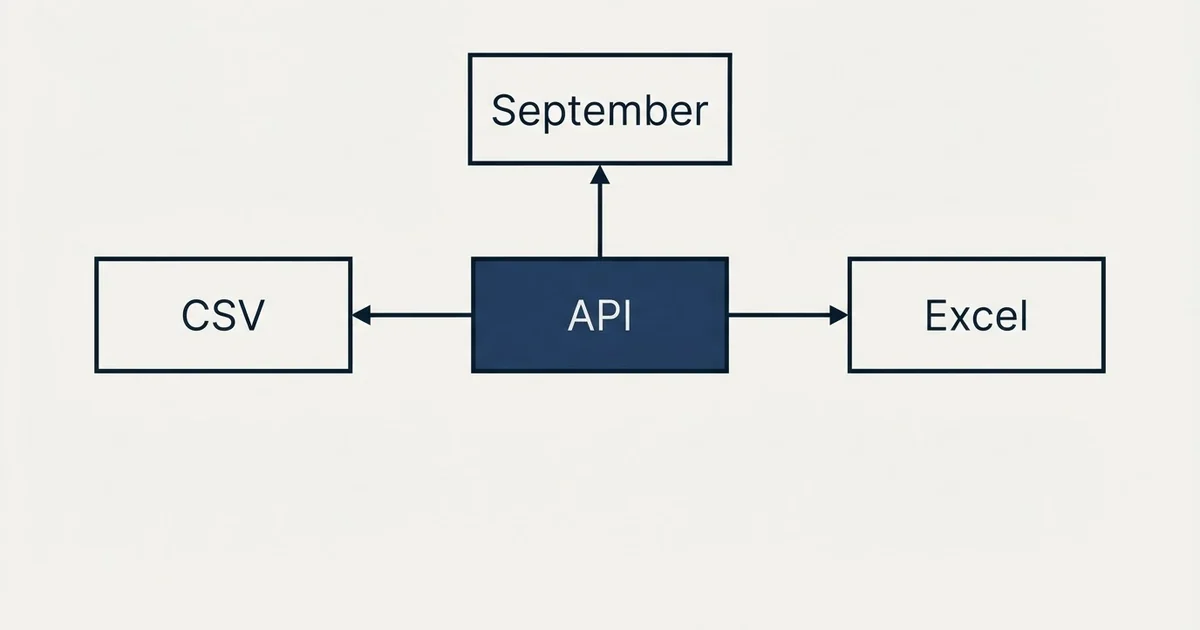
As published on TheirStack's pricing page on 4 September 2026, company credits are one-time packs from $109 for 1,000 to $999 for 200,000, and API credits are monthly plans from $49 for 1,500 to $5,500 for 5,000,000. A company credit reveals one company for ninety days; an API credit is one job. Both roll over for twelve months.
Key takeaways
- The page sells two different credits on two clocks: company credits are bought once and open a company for ninety days, API credits are bought monthly and spent per record returned.
- A company credit exports at most 200 jobs from any one employer, and the full history is routed to the API at one credit a job, so a bulk pull of one large company is an API job rather than an app job.
- API calls are billed independently and a repeated request consumes credits again, while the app side grants ninety days of free re-access, so a polling pipeline pays very differently from a browsing analyst.
- The free plan holds 50 company credits and 200 API credits a month with 25 results a page over five pages, and the datasets tab carries no price at all.
Reviewed and updated September 4, 2026
TheirStack sells two different credits and prices them on two different clocks. A company credit is bought once, in packs from 1,000 to 200,000, and reveals one company inside the app for ninety days. An API credit is bought monthly, in plans from 1,500 to 5,000,000, and is spent per record the API or a webhook returns. Both roll over for twelve months. A buyer who reads the page as one ladder will price the wrong product, because the two tabs answer two different questions: how many companies a team wants to look at, and how many records it wants a machine to pull.
This page walks both ladders as published, the third tab where the vendor sells whole datasets without a price, the credit rules that decide what each unit buys, and the free plan's limits from the vendor's own documentation. Every figure is as published on TheirStack's pricing page and docs on 4 September 2026, read from the pages' own bytes. The page served US dollars to this read, and its structured data carries a euro ladder beside the dollar one, so the currency a visitor sees may differ from the one below.
The app tab: company credits bought once
The default tab is the app, and its control is a slider of credit packs. Each pack is a one-time purchase.
| Company credits | One-time price | Per credit, on the published figures |
|---|---|---|
| 1,000 | $109 | $0.109 |
| 5,000 | $199 | just under 4 cents |
| 10,000 | $299 | about 3 cents |
| 20,000 | $399 | about 2 cents |
| 50,000 | $549 | about 1.1 cents |
| 100,000 | $749 | about 0.75 cents |
| 200,000 | $999 | about half a cent |
The page states the per-credit rate at the first stop itself, $0.109 per credit for 1,000 credits, and the other rates in that column are division on the published prices rather than figures the page prints. The curve is steep: the 200,000 pack costs a little over nine times the 1,000 pack for two hundred times the credits.
A line beneath the slider offers a monthly subscription for buyers who need credits every month, at what the page states as ten percent off the one-time figure. The visible page prints only the offer. The page's structured data carries the resulting monthly prices, from $98.10 a month for the 1,000 pack to $899.10 for the 200,000 pack, each exactly ninety percent of the one-time figure beside it. That is a subscription that renews a credit pack rather than a separate ladder, and a buyer who wants the subscription rate should confirm it in checkout, since it is in the page's markup rather than its visible text.
Every app pack includes the same product surface as the page lists it: job search across career sites, applicant tracking systems and job boards; company search by the technologies a company uses and what it hires for; company lookup by domain; enrichment of an uploaded list with technologies and buying intent; exports to CSV or Excel or into a connected tool; saved-search email alerts; and no page limits, with 500 results a page, unlimited pages and unlimited team members.
What a company credit buys

The vendor's credits documentation defines the unit precisely, and the definition changes how a pack should be sized.
Revealing or exporting a company consumes one credit. That company, and any of its job postings, can then be viewed or exported an unlimited number of times for ninety days. Unused paid credits roll over and stay in the account for up to twelve months after purchase.
One cap sits inside that definition. Each export is limited to 200 jobs per company. The documentation explains the reasoning in its own words: a company credit is meant for accessing a company's postings rather than for bulk-extracting its entire job history for a single credit, and without the cap one credit could pull tens of thousands of jobs from one employer. The cap applies per company per export, so an export spanning many companies takes up to 200 from each, keeps the most recent 200 where a company has more, and says so in the export dialog. A company's full job history is routed to the API, webhooks or the MCP server instead, billed in API credits at one per job.
- Step 1Reveal or export a company
One company credit is consumed the first time
- Step 2Ninety days of access
That company and its postings can be viewed or exported again without a further credit
- Step 3Export cap per company
Each export carries at most the two hundred most recent jobs from any one employer
- Step 4Full history goes to the API
Every posting for a company is pulled through the API, webhooks or the MCP server and billed in API credits
The API tab: credits bought monthly
The second tab prices programmatic access as a monthly subscription with its own slider.
| API credits a month | Monthly price |
|---|---|
| 1,500 | $49 |
| 5,000 | $100 |
| 10,000 | $169 |
| 20,000 | $240 |
| 50,000 | $400 |
| 100,000 | $600 |
| 200,000 | $900 |
| 500,000 | $1,200 |
| 1,000,000 | $1,500 |
| 2,000,000 | $2,300 |
| 5,000,000 | $5,500 |
A final slider position reads 5M+ and carries no price. The page prints the per-thousand rate at the first stop, $32.67 per 1,000 credits, and translates the 1,500-credit plan as 1,500 jobs, or 500 companies, their tech stacks or their buying intents, or any mix.
That translation comes from the API credit rules. The documentation charges one credit per job returned by the job search endpoint or sent in a job webhook event, three per company returned by the company search endpoint or sent in a company webhook event, and three per company's full set of technologies in the technographics endpoint. Credits are consumed only when the API returns data or a webhook fires. Each call is processed independently, so repeating a request for the same data consumes credits again, which is the opposite of the ninety-day re-access rule on the app side and worth knowing before a pipeline is written to poll.
Every API plan includes the job search, company search, technographics and buying-intents endpoints, webhooks for new jobs, closed jobs and new companies, an MCP server for AI assistants, a rate limit of four requests a second, 500 results a page with unlimited pages, and unlimited team members sharing one credit balance. Unused credits roll over for twelve months here too.
The datasets tab: a price the page does not print
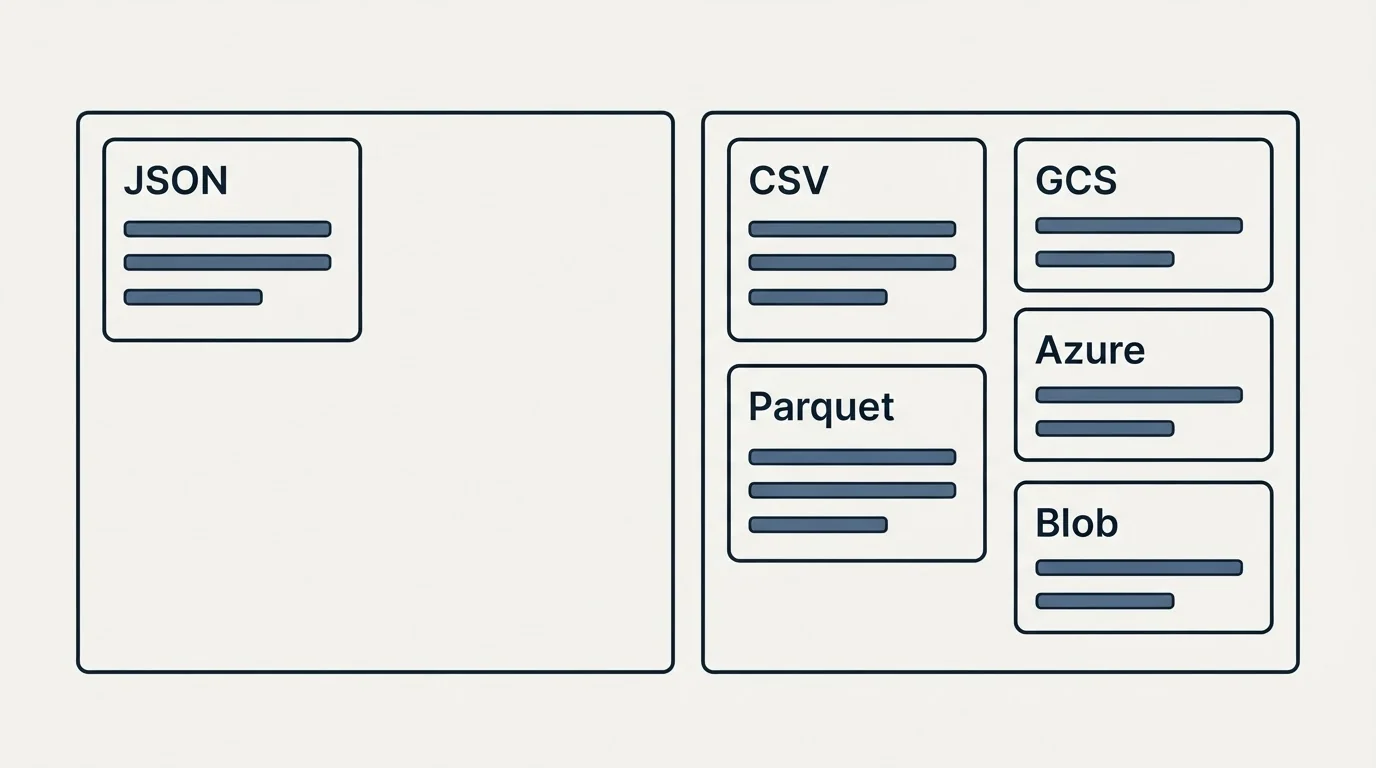
The third tab sells the underlying data as a delivered feed rather than as credits, and it is the only part of the page with no figure on it. Every dataset option routes to a talk-to-sales button.
The page publishes the scale instead. The jobs dataset is described as 225 million records with 305 thousand new a day, the technographics dataset as 51 million records with about 69 thousand new a day, and the buying-intents dataset as 388 million records with about 526 thousand new a day. A buyer chooses history plus updates, history only, or updates only from a chosen start date. The jobs dataset lists forty or more fields per posting including salary, seniority and location plus the hiring company's domain, industry and size, history back to 2021 across 195 countries and 352 thousand sources, closed jobs with the date each went offline, JSON, CSV or Parquet delivery, hourly to monthly refresh, and delivery to S3, GCS, Azure Blob, Snowflake or an HTTPS endpoint, with unlimited seats and no per-record fee.
Those counts are the vendor's own figures about its own data, presented here as the page presents them and not audited. The pricing fact is the absence: a dataset buyer gets a conversation, and the two credit ladders are the only published prices on the page.
- Bought once in packs, or monthly at a discount
- One credit reveals one company for ninety days
- Exports capped per company
- Twelve-month rollover
- Bought monthly on a slider
- One credit per job, three per company or technographic lookup
- Every call billed independently
- Twelve-month rollover
- No price printed
- History, updates or both from a chosen start date
- Delivered to cloud storage or a warehouse
- A sales conversation is the checkout
The free plan, from the documentation
The pricing page marks a free position on both sliders. The vendor's plans documentation states what it holds: 50 company credits and 200 API credits every month, free indefinitely, for users who have never paid for credits. Once a first payment is made the account becomes a paid plan member from that moment.
The free plan's limits sit in a comparison table on that page. Search results are capped at 25 a page and five pages, against 500 a page and unlimited pages on a paid plan. Workspace invitations are capped at ten in total against unlimited. The rate limit is two requests a second against four. Technographics results are unlimited on both. Paid plans keep the monthly 50 company credits and 200 API credits on top of whatever was purchased.
That table answers the question a trial is for. Five pages of 25 results is 125 rows a search, which is enough to see whether the filters produce the companies you want and too few to build a list from, which is presumably the point.
- Yes: Unused paid credits of both types roll over for twelve months
- Yes: A revealed company stays open for ninety days without a further company credit
- Yes: Team members are unlimited on paid plans and share one balance
- Yes: Cancel any time, no commitment, stated at the top of the page
- No: A repeated API request for the same record is free the second time
- No: One company credit exports a company's entire job history
Sizing the two ladders against a real motion
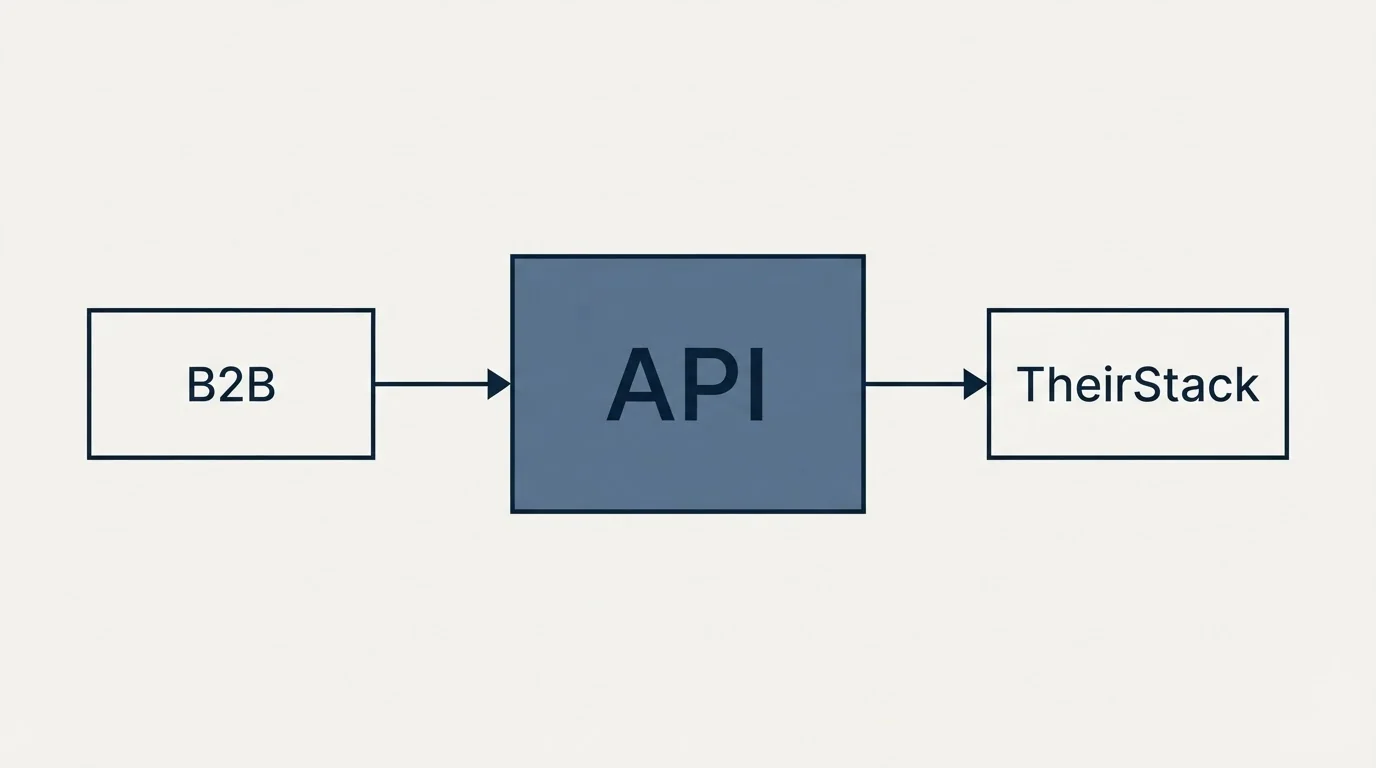
The two credit types map onto two different jobs, and most teams need one of them far more than the other.
A team that works signals by hand, opening a company that just posted a relevant role, reading its stack and deciding whether to approach, spends company credits at the rate it reads companies. A pack of 1,000 covers a thousand companies over as long as it takes to read them, since the credits roll over for a year, and the monthly subscription only earns the ten percent discount the page states if a thousand new companies a month are actually being opened.
A team that pipes signals into a system spends API credits at the rate the system pulls records, and the three-to-one ratio between a company and a job decides the bill. Pulling every new job matching a filter costs one credit a posting. Pulling the company behind each costs three more. A pipeline that asks for the company on every job triples its consumption, so the cheaper design pulls jobs, deduplicates by employer, and looks the company up once. The vendor's own sizing hint on the page is to run the filter in job search for the last thirty days and read the result count as an approximation of monthly volume.
The wider argument for treating a hiring or technology signal as a filter rather than a message is in this site's B2B prospecting guide, and TheirStack sits in the hiring and tech signal category of this site's sixty-tool stack sheet, which says on the page itself that it publishes no per-unit prices because they move. This page is the dated exception to that rule, and the date is the point.
What the page does not answer
Three things a buyer would reasonably want are not on the pricing page or in the two documentation pages read for this article.
There is no published figure for the datasets. There is no published statement of what happens to app-side rollover credits at the twelve-month mark beyond their expiry, such as a notice period. And the monthly subscription for company credits is described in prose and priced only in the page's structured data, so a buyer should confirm the renewal terms at checkout rather than infer them from the ten percent line.
For the competitive set, the generated TheirStack alternatives page carries the comparison table, and this page does not repeat it. Where a data purchase scales per record rather than per seat, this site's cold email tool stack guide sets out which categories of a stack behave that way and why they get under-priced at planning time.
The short version

TheirStack publishes two credit ladders and one unpriced tab. Company credits are bought once, from $109 for 1,000 to $999 for 200,000, with a monthly subscription at ten percent off carried in the page's structured data; one credit reveals a company for ninety days and exports at most 200 of its jobs. API credits are bought monthly, from $49 for 1,500 to $5,500 for 5,000,000, at one credit a job and three a company or technographic lookup, with every call billed independently. Both roll over for twelve months. Datasets are sold by conversation. The free plan, per the docs, is 50 company credits and 200 API credits a month with 25 results a page over five pages.
If you would rather have the signal read and the list built for you, start a free campaign and we will build the targeting, the copy and the sending infrastructure around your market.
Pricing and features verified as of September 2026. Verify current terms with the vendor before relying on them.
Frequently asked questions.
Frequently asked questions- How much does TheirStack cost?
- As published on its own pricing page on 4 September 2026, company credits are one-time packs at $109 for 1,000, $199 for 5,000, $299 for 10,000, $399 for 20,000, $549 for 50,000, $749 for 100,000 and $999 for 200,000, with a monthly subscription at ten percent off. API plans run from $49 a month for 1,500 credits to $5,500 for 5,000,000. Datasets are priced by conversation.
- What is the difference between a TheirStack company credit and an API credit?
- The vendor's credits documentation defines a company credit as one reveal or export of a company in the app, with unlimited re-access to that company and its jobs for ninety days and an export cap of 200 jobs per company. An API credit is spent per record the API returns or a webhook dispatches: one per job, three per company, and three per company's technologies in the technographics endpoint.
- Do TheirStack credits expire?
- The pricing page and the credits documentation both state that unused paid credits roll over and remain in the account for up to twelve months after purchase, on both the app and the API side. The free plan's monthly allowance of 50 company credits and 200 API credits is granted every month rather than banked, per the plans documentation.
- What does the TheirStack free plan include?
- The plans documentation states 50 company credits and 200 API credits every month, free indefinitely, for users who have never paid for credits. Free accounts see up to 25 results a page over five pages, can invite ten people in total and are rate limited to two requests a second, against 500 results a page, unlimited pages, unlimited invitations and four requests a second on any paid plan.
About the author.

B2B cold email experts helping companies generate qualified leads through done-for-you outreach campaigns.
RevenueFlow Team
Explore more.
Ready to scale your outreach?
We build GTM engines that book real meetings. See the receipts.
Related articles.
Zeliq Pricing: One Seat Rate and a Credit Meter
Zeliq prices one self-serve seat in dollars with a credit meter that never expires. Both billing states, the three credit rates, the top-up ladder and the Custom floor.
GetProspect Pricing: Three Plans and Two Annual Figures
GetProspect prices Free, Starter and a three-position Growth plan, plus verification credits that never expire. Every figure, and the annual price the page gives twice.
Salesgear Pricing: Two Ladders Under One Plan Title
Salesgear's page is titled as one plan and carries a Data ladder and an Outreach ladder. Both at both billing states, what each meters, and the two vendor-side conflicts.
Bookyourdata Pricing: 25 Packs, Priced Per Contact
Bookyourdata sells credits in twenty-five packs with no subscription. The dated ladder, the per-contact rates rendered in the browser, the guarantee rule and BeSpoke.
Airscale Pricing: Three Plans, One Credit, Four Rates
Airscale prints a different credit cost on every plan, and its advertised per-email price belongs to the custom one. The dated ladder and the rollover rules.
Firmographic Data Providers: What Six of Them Publish
Six firmographic data providers read from their own pages: the fields each sells, the coverage each states, how the data is delivered, and who prints a price.