What RudderStack Is: A Customer Data Platform
RudderStack is warehouse-native, which its own docs define as storing and persisting nothing. What that changes about ownership, attribution and the exit cost.

RudderStack is a warehouse-native customer data platform: its documentation says it does not store or persist any data, so loads and modelling run in your own warehouse or lake. It collects events, resolves identity into a customer 360, activates data back to business tools by Reverse ETL and governs the flow.
Key takeaways
- RudderStack's docs call it an agentic, warehouse-native customer data platform that does not store or persist any data.
- It works in four stages, collect, unify, activate and govern, with 16+ SDK sources and 15+ cloud event sources on its pricing table.
- It bills on events rather than monthly tracked users: the docs read "No event cap per MTU" and fully pay-as-you-use.
- An open-source edition runs event streaming on your own data plane and suits highly technical teams with platform engineers.
Reviewed and updated September 21, 2026
A revenue operations lead is told the company is buying a customer data platform and pictures another system to sync into, another copy of the contact record, another place for the numbers to disagree. That is a reasonable picture of the category as it was, and it is the specific thing this product is built not to be.
RudderStack describes itself on its own documentation as "an agentic, warehouse-native customer data platform", and the load-bearing word is the middle one. The docs state the consequence plainly: "RudderStack is warehouse-native, meaning it does not store or persist any data. All the data loads and modeling happen with full transparency in your data warehouse or data lake."
That single architectural choice is what a GTM team actually needs to understand about it, because it decides who owns the customer record, where the attribution maths runs, and what happens to the data if the contract ends.
What RudderStack does: four stages
The documentation organises the platform into four stages, and the product pages use the same four words.
Collect. Event data from websites, apps and backend systems, through what the comparison table lists as "16+ SDK Sources" and "15+ Cloud Event Sources", with custom sources buildable through webhooks. Data can be reshaped in flight through a Transformations framework that runs custom logic in JavaScript or Python, which is where cleaning, enrichment and PII masking happen.
Unify. Identity resolution across sources into an identity graph, and a customer 360 table built in the warehouse. The Profiles product builds pre-computed features on top of it, with the marketing pages naming lifetime value and propensity as examples.
Activate. Sending that enriched warehouse data back out to business tools, of which the home page lists 200+, using Reverse ETL. The docs list Attribution, Propensity Scores and Real-time Personalization as data applications built on the same customer 360.
Govern. Tracking plans, a data catalogue, violation management, and a health dashboard with alerting.
Events from web, mobile and server sources, reshaped in flight by Transformations.
Identity resolution into a graph, and a customer 360 built in the warehouse.
Reverse ETL back out to business tools, plus attribution and propensity apps.
Tracking plans, a data catalogue, violation management and alerting.
Why warehouse-native is the whole argument
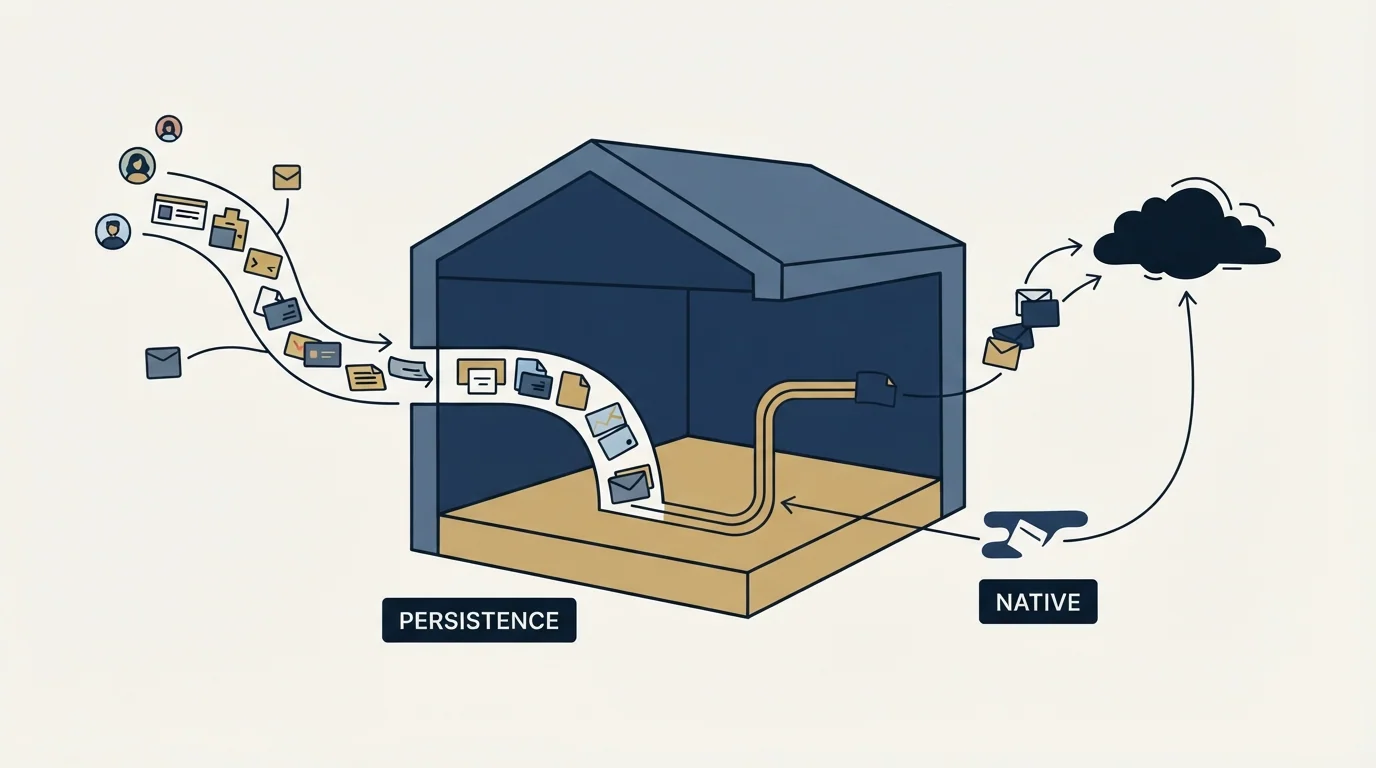
A conventional customer data platform ingests your events, stores them in the vendor's own infrastructure, resolves identity there, and lets you query and activate from that copy. That works, and it has three well-known costs. The vendor holds a second system of record that can drift from your warehouse. The transformation logic lives somewhere your data team cannot read or version. And leaving means extracting your history from somebody else's schema.
Warehouse-native inverts all three. The warehouse or lake is the canonical store, the modelling runs there where a data team can read the SQL, and the platform is a set of pipelines and a control plane rather than a repository.
For a GTM team the practical consequences are worth stating in plain terms.
Your attribution maths runs on data you own. Whichever model you have settled on, and the tradeoffs between them are set out in last-touch attribution, position-based attribution and time decay attribution, the touchpoint data sits in your warehouse rather than inside a vendor's black box. That means the model is auditable and arguable, which matters far more than which model you picked.
There is one customer record rather than two. The identity graph is built in the same place your finance and product tables live, so a disagreement between marketing's count and the warehouse's count becomes a query rather than a support ticket.
The exit cost is different in kind. If the platform goes away, the data does not, because it was never anywhere else.
The cost side is equally plain and should be stated rather than skipped. This model assumes you have a warehouse and somebody who can operate it. A team without either is buying infrastructure it has no way to use, and a hosted platform that owns the storage is genuinely the better answer for them.
Two ways to run it, and one line about billing that matters
The documentation sets out two flavours. The RudderStack app is the managed platform with APIs and a UI. "RudderStack Open Source" runs event streaming on a data plane you set up yourself, and is described as "ideal for highly technical data teams with platform engineering resources", which does not include everything the managed platform does.
| RudderStack app | RudderStack Open Source | |
|---|---|---|
| What it is | The managed platform, with APIs and a UI | Event streaming on a data plane you set up |
| What it includes | The full platform | Not everything the app does |
| Described as ideal for | Not stated | Highly technical data teams with platform engineering resources |
| Billing | Pay as you use, no event cap per MTU | Not stated |
One line in the documentation is worth reading twice by anyone who has been billed by a customer data platform before: "No event cap per MTU: RudderStack is fully pay-as-you-use with no cap on events per MTU."
Monthly tracked user billing is a model much of this category grew up on, and its failure mode is familiar. A product that fires many events per user pays for the same person many times over, and instrumenting more of the journey makes the bill grow in a way nobody forecast. Metering events instead moves that risk without removing it: the bill then tracks how chatty your instrumentation is, which is at least a number the data team controls directly. The ladder and what the event meter costs in practice are in RudderStack pricing.
Compatibility with the incumbent is asserted directly too, under a heading reading "Segment-compatible", with a migration guide linked beside it. That is a positioning statement as much as a technical one, and it names the product this one is most often replacing.
What you gain
- One system of record, not two
- Modelling your data team can read
- History that survives leaving
What it assumes
- A warehouse or lake in place
- Someone who can operate it
- Modelling, not configuring
What it does not solve
- What to instrument
- What a qualified record means
- Whether anyone acts on it
The agentic layer, described carefully

The current positioning leads on autonomous agents, and it is worth reading precisely because the vocabulary is doing a lot of work.
What the documentation actually describes is tooling that gives agents access to the platform: a CLI for infrastructure-as-code workflows, an MCP server so an AI assistant or IDE can connect to a workspace, and a Slack assistant for operations like monitoring pipeline health and debugging. The product pages add natural-language interfaces for building audiences and exploring customer data.
That is a real and useful set of capabilities, and it is narrower than the word "agentic" implies on first reading. It is access and interface rather than autonomy over your customer data. Read it as a way for a data team to work faster and for business users to self-serve without becoming a bottleneck, which is what the vendor's own case-study quotations describe, rather than as a system that decides anything on its own.
Where this sits for a B2B outbound team
Much of this platform is built for teams with product telemetry: a signed-in application producing behavioural events at volume, of the order the homepage advertises as "300B+ events delivered per month". A B2B outbound programme frequently has no such thing. The events that matter are a sent message, a reply, a site visit and a booked meeting, and there are hundreds of them a month rather than hundreds of millions.
Attribution tools sitting on top of that data band their pricing differently, and tiers set by annual ad spend qualify the buyer before any feature does.
That does not make the platform irrelevant, and it does change what it is for. At outbound scale the value is not the streaming infrastructure. It is the unify stage: one identity graph that reconciles the person who replied to an email with the account in the CRM and the visitor on the site, so that the counts stop disagreeing. Whether that is worth a platform depends entirely on how many systems currently hold a partial answer.
The honest test is upstream of the tooling, and it is the same test that governs every layer of the stack. Which bottleneck is actually binding, and can this class of tool reach it? The layer map for that question is sales process optimization tools. A data platform cannot fix an offer, and an identity graph cannot manufacture demand. When the flow of qualified conversations is what is short, the constraint is upstream of every system named here, which is the argument in landing page lead generation applied one layer out.
The short version
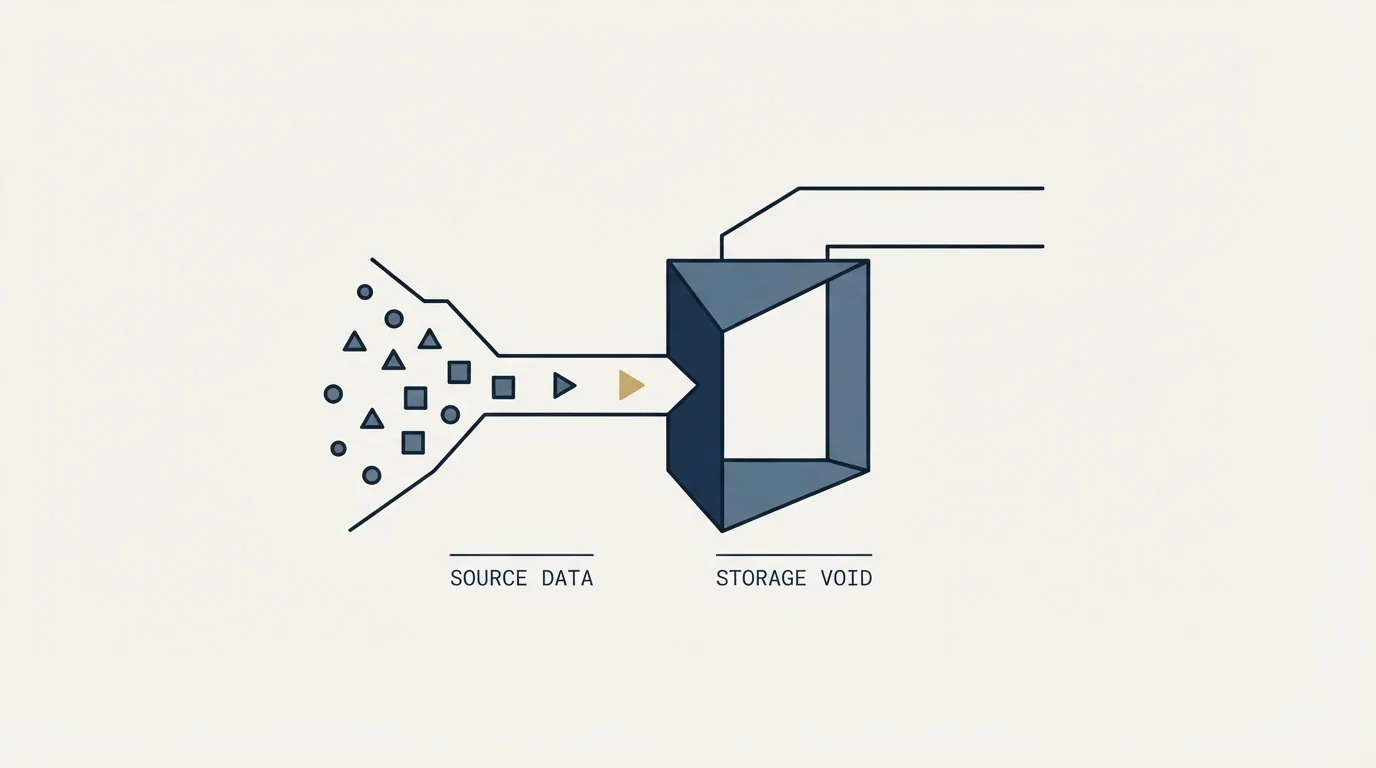
RudderStack is a customer data platform that stores nothing. Its documentation says so directly: it is warehouse-native and "does not store or persist any data", so the loads and modelling happen in your own warehouse or lake. It collects events through SDKs and cloud sources, resolves identity into a graph and a customer 360 table, activates back out to the 200+ business tools its home page lists by Reverse ETL, and governs the whole flow with tracking plans and a data catalogue.
It comes as a managed app and as an open-source event-streaming distribution for teams that will run their own data plane. It bills on events rather than monthly tracked users, under a line reading "No event cap per MTU", and offers a migration path from the incumbent explicitly.
It assumes a warehouse and somebody who can operate one. When the missing piece is the supply of qualified conversations rather than the infrastructure to measure them, see what a first campaign produces against your own market.
Architecture, stage names, source and destination counts and the billing and compatibility lines above were read from rudderstack.com and rudderstack.com/docs. Customer quotations on those pages are the vendor's own testimonials and are not repeated here as outcomes. Verify current capabilities with the vendor before relying on them.
Frequently asked questions.
Frequently asked questions- What does RudderStack do?
- It collects event data from websites, apps and backend systems, reshapes it in flight with Transformations, resolves identities into a graph and a customer 360 in your warehouse, and sends that data back out to business tools through Reverse ETL. Tracking plans and a data catalogue govern the flow. The data itself stays in your warehouse or lake.
- Is RudderStack a customer data platform?
- Yes, a warehouse-native one. Its documentation describes it as an agentic, warehouse-native customer data platform and says it does not store or persist any data: loads and modelling happen in your own warehouse or data lake. That is the difference from a conventional platform that keeps its own copy of the customer record.
- Is RudderStack open source?
- Partly. The documentation sets out RudderStack Open Source, which runs event streaming on a data plane you set up yourself and is described as ideal for highly technical data teams with platform engineering resources. It does not include everything the managed RudderStack app does, which comes with APIs and a user interface.
- Is RudderStack compatible with Segment?
- Its documentation says so under a Segment-compatible heading, describing RudderStack as fully compatible with Segment, and it links a migration guide. That is a positioning statement as much as a technical one: it names the product RudderStack sets itself against, and compatibility lowers the cost of moving instrumentation across.
About the author.

Ben Carden is CRO at RevenueFlow, which builds and operates outbound revenue engines for B2B companies. Previously at Gartner Enterprise. Studied at London School of Economics.
Ben Carden · CRO
Connect on LinkedIn →Explore more.
Ready to scale your outreach?
We build GTM engines that book real meetings. See the receipts.
Related articles.
RudderStack Pricing: The Event Count Is the Cheap Axis
Free at 250,000 events a month, and for a B2B programme the volume is never what binds. Sync latency, connection counts and the Enterprise-only apps decide the tier.
Northbeam Pricing: Banded by Your Ad Spend
Four tiers banded by your own ad spend, all four asking you to contact sales. Two print a figure anyway, and only one of those states a period.
ABM Reporting: Three Readers, Three Cadences
ABM reporting built around who reads it: a weekly operating page, a monthly allocation page and a one-page quarterly board report, each computed from CRM fields.
Drift Competitors: What Replaced It and What Each Costs
Drift is retired and drift.com now serves a Salesloft page. What the successors publish about price, who owns them now, and which one fits which job.
Unbounce Alternatives: Two Boundaries, Four Meters
Teams leave Unbounce at two published boundaries: the 500 visitor entry ceiling and testing starting on the third tier. Each alternative moves one, both or neither.
Lead Verification: What Each Check Actually Proves
Lead verification covers two different jobs. One asks whether a mailbox will accept mail, the other asks whether the person behind the row is real and lawful to contact.