Outsourced Sales: The Four Layers, and Which One You Are Actually Buying
Outsourced sales is paying an external company to perform part or all of a sales function that would otherwise sit with your own employees. In B2B it covers four layers: building the target list, opening conversations, booking qualified meetings, and closing. A contract can buy any one of them, or the whole stack.
Key takeaways
- The term covers four separate layers, and the phrase alone does not say which one a contract includes.
- Targeting and opening transfer well; closing transfers badly, because product knowledge decays outside your building.
- You outsource an activity and keep the outcome, so a weak offer produces the same silence faster.
- Judge the arrangement at ninety days on replies and meetings, not on revenue, which arrives one sales cycle later.
Outsourced Sales: The Four Layers, and Which One You Are Actually Buying
Outsourced sales is the practice of paying an external company to perform part or all of a sales function that would otherwise sit with your own employees. In B2B it covers four distinct layers of work: building the target list, opening conversations with people on it, booking qualified meetings, and running the closing conversation itself. A contract can buy any one layer, any combination, or the whole stack. That breadth is the single most useful thing to know about the term, because two companies both saying "we outsource sales" are frequently describing arrangements with nothing in common.
The word that does the damage is "sales", singular, as though it were one job. It is at least four, they need different people, and they fail for different reasons.
Outsourcing inside sales usually means buying layers two and three together, a team that both books and runs the conversation, which is why it is priced differently from an SDR-only arrangement.
Outsourced business development is the same purchase under a different label, and it usually names the first three of those layers rather than the fourth: research, opening conversations and booking meetings, with the closing conversation kept in house. Providers use the two phrases interchangeably on their own sites, so read the layer list in a proposal rather than the name at the top of it.
Outsourced sales and marketing is the paired label, and the pairing is a contract shape rather than a package: the two functions are separable, so a company can outsource the marketing and keep the selling in house, or the reverse.
The four layers
Targeting. Deciding which companies and which named people are worth contacting, and assembling that list with usable contact data. This is research work. It is the layer most often bundled in silently and the one that most determines whether anything downstream works, because every later layer inherits the list.
Opening. Getting a first response from a stranger. Cold email, LinkedIn, calling. This is a writing and volume problem before it is a persuasion problem, and it is the layer with the clearest unit of output: replies from named people at named companies.
Booking. Turning a reply into a held meeting with the right person on the calendar. Handling scheduling, qualification against agreed criteria, and the reschedules. Small, unglamorous, and the layer where a surprising share of opened conversations quietly evaporate.
Closing. Running discovery, scoping, pricing, negotiation and the paperwork. This is the layer buyers most often mean when they say outsourced sales, and the one that transfers worst, for reasons in the next section.
- Output is countable: lists built, replies received
- Judgment needed is about a market, not about your product
- A provider gets better at it across many clients
- Mistakes are cheap and visible within weeks
- Needs agreed criteria for what counts as qualified
- Depends on fast, human handling of a reply
- Breaks when the definition lives in someone's head
- Cheap to audit if the criteria are written down
- Needs deep product knowledge that decays outside your building
- Feedback loop is months, not weeks
- Errors are expensive and invisible until the quarter ends
- Usually the layer a founder should keep longest
What you are actually buying
Every outsourced sales arrangement is a trade of one thing for another, and the honest version of the trade is rarely in the pitch deck.
You are buying time. A team that already has the sending infrastructure, the data sources and the writing process can be running in weeks where hiring, training and ramping the same capability takes quarters. That is real and it is the strongest reason to buy.
You are buying variable cost. A provider can be stopped. An employee cannot, not quickly and not cheaply, which is why the arithmetic favours outsourcing when you are still unsure whether the motion works at all. The full comparison against a salaried seat is in outsourced SDR vs in-house.
You are giving up learning. This is the cost nobody prices. The person who reads two hundred replies a week learns what your market actually objects to, and if that person works for someone else, the knowledge leaves when the contract does. Whether that matters depends on which layer you outsourced, and the decision is worked through in outbound sales outsourcing.
How the arrangements are priced

Pricing shape is the fastest way to work out which layer a provider believes it is selling.
Per seat or retainer. A fixed monthly fee for a named amount of capacity. You carry the risk that the capacity produces nothing. Common for targeting and opening work, and the model under which a provider will happily test angles that might not work.
Per meeting. A price for each booked meeting. The risk sits with the provider, and the definition of a meeting becomes the entire commercial agreement. Where that definition is loose, the count goes up and the quality goes down.
Per qualified meeting. The same, with written criteria and a rejection window. More work to set up and considerably harder to argue about afterwards.
Commission on closed revenue. Rare in B2B outsourcing and usually a warning sign at small deal sizes, because the provider needs volume to make it pay and your deal cycle probably will not supply it. The published rate cards behind each of these shapes are compared in outsourced SDR pricing.
Where the textbook definition breaks
The standard definition says you outsource a function. In practice you outsource an activity and keep the outcome, and conflating those two is the most common way one of these arrangements goes wrong.
A provider can send a thousand well-researched messages a month. It cannot make your offer compelling, cannot fix a price nobody will pay, and cannot decide that your ideal customer is actually a different segment. When those things are wrong, an outsourced team produces exactly the same silence an in-house team would, six weeks faster and with a monthly invoice attached. The diagnostic is uncomfortable and simple: if you already know, from your own conversations, that the offer lands when the right person hears it, outsourcing the reach is a good bet. If you do not know that yet, you are buying execution for a strategy you have not tested, and the arrangement will read as a vendor failure when it is a positioning gap. That is a job for a positioning statement before it is a job for a provider.
The second break is geographic. "Outsourced" is often read as "offshore", and the two are separate decisions. A provider in a nearby timezone that shares working hours with your buyers is solving a different problem from one chosen purely on hourly rate, and the trade is set out in nearshore sales outsourcing.
The third break is the org chart. Outsourced sales does not remove the need for someone internal to own the relationship, read the replies and make the calls about direction. Every arrangement that failed quietly had the same feature: nobody inside the company was reading the actual conversations.
- Depends: You can name which of the four layers the contract covers
- Depends: The definition of a qualified meeting is written down and agreed by both sides
- Depends: Someone inside your company is named as the reader of inbound replies
- Depends: You have evidence the offer converts when the right person hears it
- Depends: You know what happens to the target list and the message history when the contract ends
What the term does not include
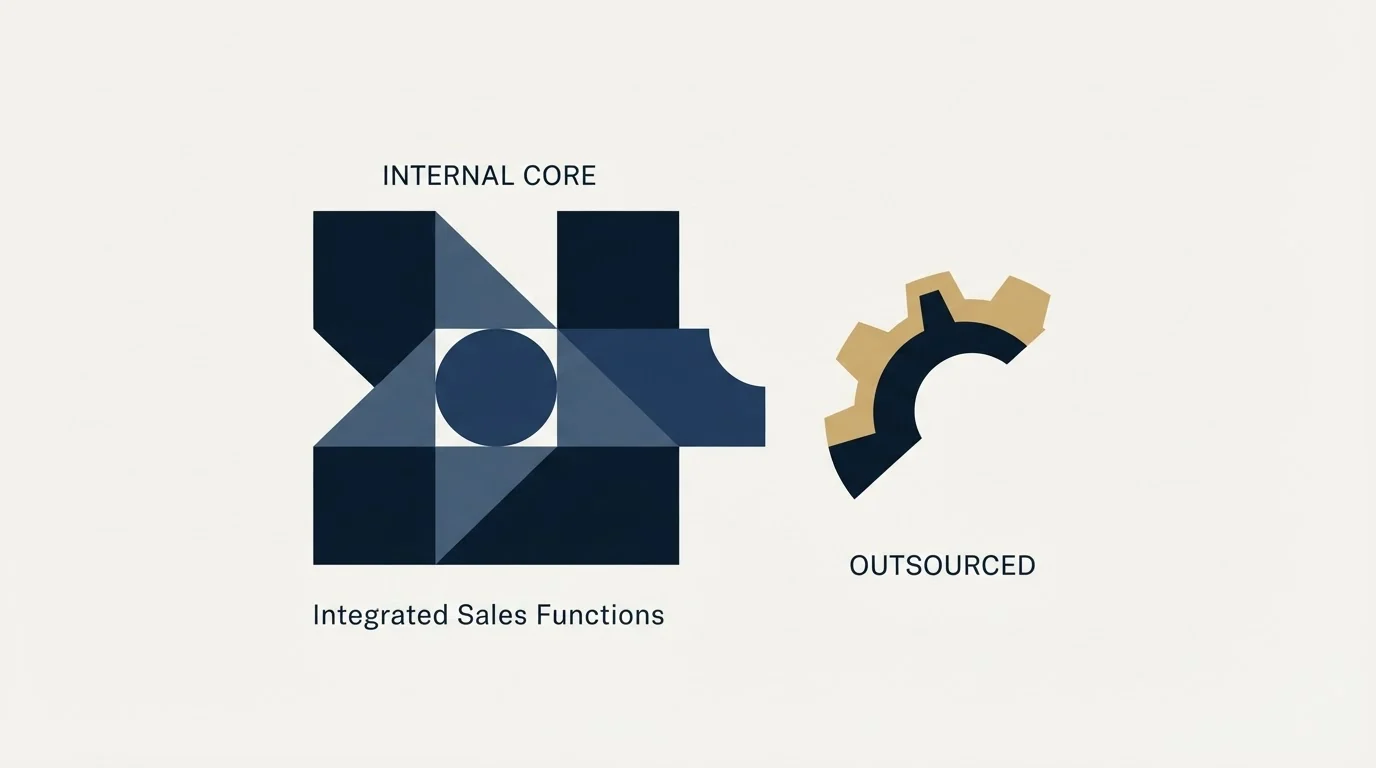
Three things get filed under outsourced sales and are better thought about separately. A fractional sales leader is buying management judgment rather than execution capacity, and the deliverables look nothing alike; the distinction is drawn in fractional sales leadership. Sales support is administrative offload, taking CRM hygiene and proposal assembly away from people who should be selling. And a channel or reseller agreement transfers the customer relationship itself, which no outsourcing arrangement does. The five provider shapes and the gap each one fills are catalogued in outsourced sales companies.
The first ninety days, and what they should produce
Most of these arrangements are judged too early or too late, and both errors come from not agreeing in advance what each month is for.
Month one is setup and it produces no meetings. Infrastructure, list construction, message drafting, approvals and whatever access the provider needs. A provider promising results in the first month is either counting something other than meetings or has skipped the list work, and the second is the more expensive of the two.
Month two produces the first real signal, and it is a message signal rather than a revenue one. Replies from named people at named companies, including the negative ones. This is the month where you learn whether the premise lands, and the negative replies are worth reading personally rather than in a summary, because they say why.
Month three is where the arrangement becomes judgeable. Enough volume has gone out for reply rate to mean something, and the first meetings have been held and assessed. What cannot be judged yet is revenue, because that arrives one sales cycle later, which for most B2B businesses is well beyond ninety days.
Two things are worth writing into the agreement at the start because they are awkward to raise afterwards. Who owns the assets when it ends: the target list, the message history, the reply data, and any sending domains bought for the work. And what the reporting actually contains: activity counts alone are a poor basis for a decision, and the useful minimum is replies by category, meetings held, and the reasons any meeting was rejected.
The reason to fix all of this in advance is that an outsourced arrangement removes the daily contact that makes problems visible in an internal team. Nobody walks past the provider's desk. If the only artifact you see is a monthly summary, the first three months can pass before anyone notices that the list was wrong, and that is the failure mode this whole layer of agreement exists to prevent.
Related terms
A sales cycle sets how long an outsourced arrangement needs to run before it can be judged. Lead qualification is the layer that decides what a provider is allowed to count. And the serviceable addressable market sets the ceiling on what any provider, however good, can produce.
The short version
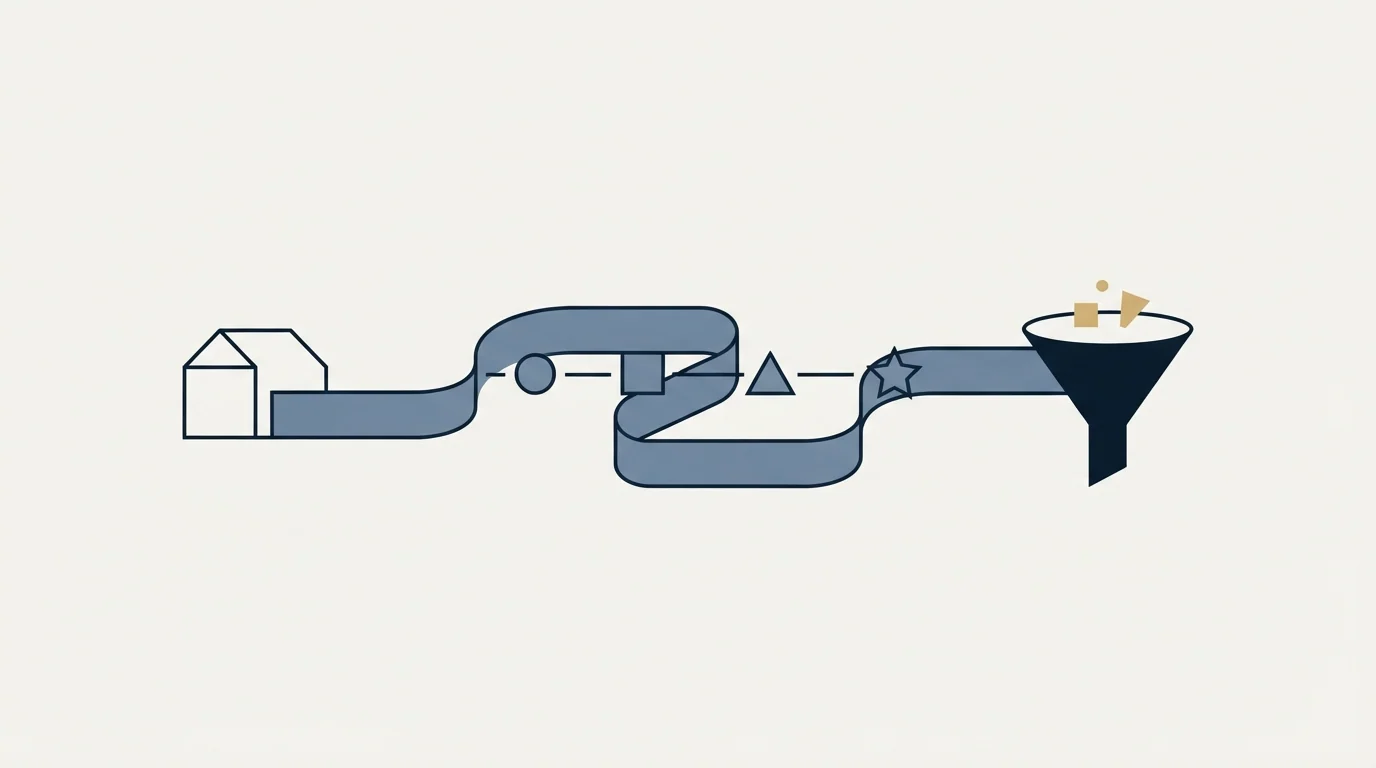
Outsourced sales means paying someone else to do part of your selling, and the useful question is never whether to do it. It is which of the four layers you are handing over, what the unit of output is, who reads the replies, and whether the thing you are asking a stranger to say is something your own buyers have already responded to.
We run the outbound half of that stack, cold email and LinkedIn, and we price it against qualified meetings rather than activity: see how a first campaign works. If you are weighing that against a salaried seat, the model comparison is in SDR outsourcing.
Frequently asked questions.
Frequently asked questions- What does outsourced sales actually include?
- Four distinct layers: building the target list, opening conversations with people on it, booking qualified meetings, and running the closing conversation. A contract can cover any one, any combination, or all four. The single most useful question to ask a provider is which of the four they are quoting for, because the phrase alone does not say.
- Is outsourced sales the same as offshoring?
- No. Outsourcing is about who employs the people, and offshoring is about where they sit. They are separate decisions that often get made together. A provider chosen for timezone overlap with your buyers is solving a different problem from one chosen purely on hourly rate, and the two choices produce different results.
- How long before an outsourced sales arrangement can be judged?
- Month one is setup and produces no meetings. Month two produces the first real signal, which is replies rather than revenue. Month three is when reply rates and held meetings become readable. Revenue arrives one full sales cycle after that, which for most B2B businesses is well beyond ninety days.
- What is the most common reason these arrangements fail?
- The offer had not been tested before the reach was bought. A provider can send well-researched messages at volume, and it cannot make a weak offer compelling or fix a targeting decision. The second most common reason is that nobody inside the company was reading the actual replies.