Account-Based Marketing Customer Journey: Stages to Observe
An account journey is only worth building when every stage boundary is an event with a record behind it. Five stages, their entry events, and who owns each one.
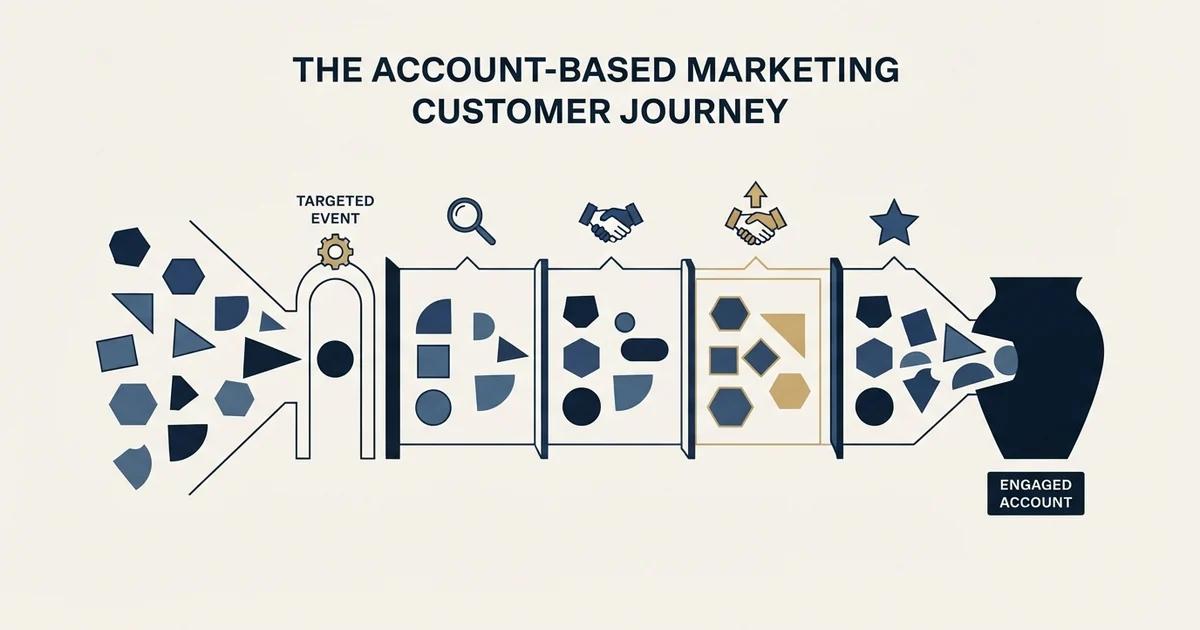
An account-based customer journey works when each stage boundary is an event with a record behind it: targeted, buying group covered, contacted, responsive, in conversation. Make coverage its own stage, separate delivery from response, give each stage one owner, and add a rule that moves stale accounts backwards.
Key takeaways
- An account can sit in two states at once and can move backwards without anything visible happening, so lead-funnel stages do not translate directly.
- A stage definition holds only if someone outside the marketing team could verify it from data, which rules out every stage named after how an account feels.
- Buying-group coverage deserves its own stage, because an account with one junior contact is not comparable to one with the full group mapped.
- Segments promoted on the basis of engagement will always appear to progress well, so compare against the accounts from the same list that were not promoted.
Reviewed and updated September 2, 2026
SAP Concur's published case study reports that accounts which had averaged 137 days in one journey stage were converting to the next in 35 (Demandbase). That is a genuinely useful number, and it comes with a property worth noticing before you copy the approach: the journey stages doing the measuring were defined inside the platform whose value the measurement demonstrates.
None of that makes the number wrong. It makes stage definitions the load-bearing part of an account-based journey, and stage definitions are the part most teams inherit from a tool rather than write themselves. A journey map built on stages you cannot independently observe will report progress, and you will not be able to tell progress from redefinition.
This is about building the other kind: an account journey where every stage boundary is an event somebody outside the marketing team could verify.
The account journey is not the lead funnel with different labels
A lead funnel tracks one person through states of their own interest. An account journey tracks a company through states of collective progress, and the two behave differently in ways that break naive translation.
What gets published as an ABM funnel is this account journey drawn with the lead funnel's shape borrowed, which is why the stage names travel and the stage boundaries do not.
An account can be in two states at once. The champion is deep in evaluation while the economic buyer has never heard of you, and the account's real position is the worse of the two rather than the better one. A single lead cannot do that.
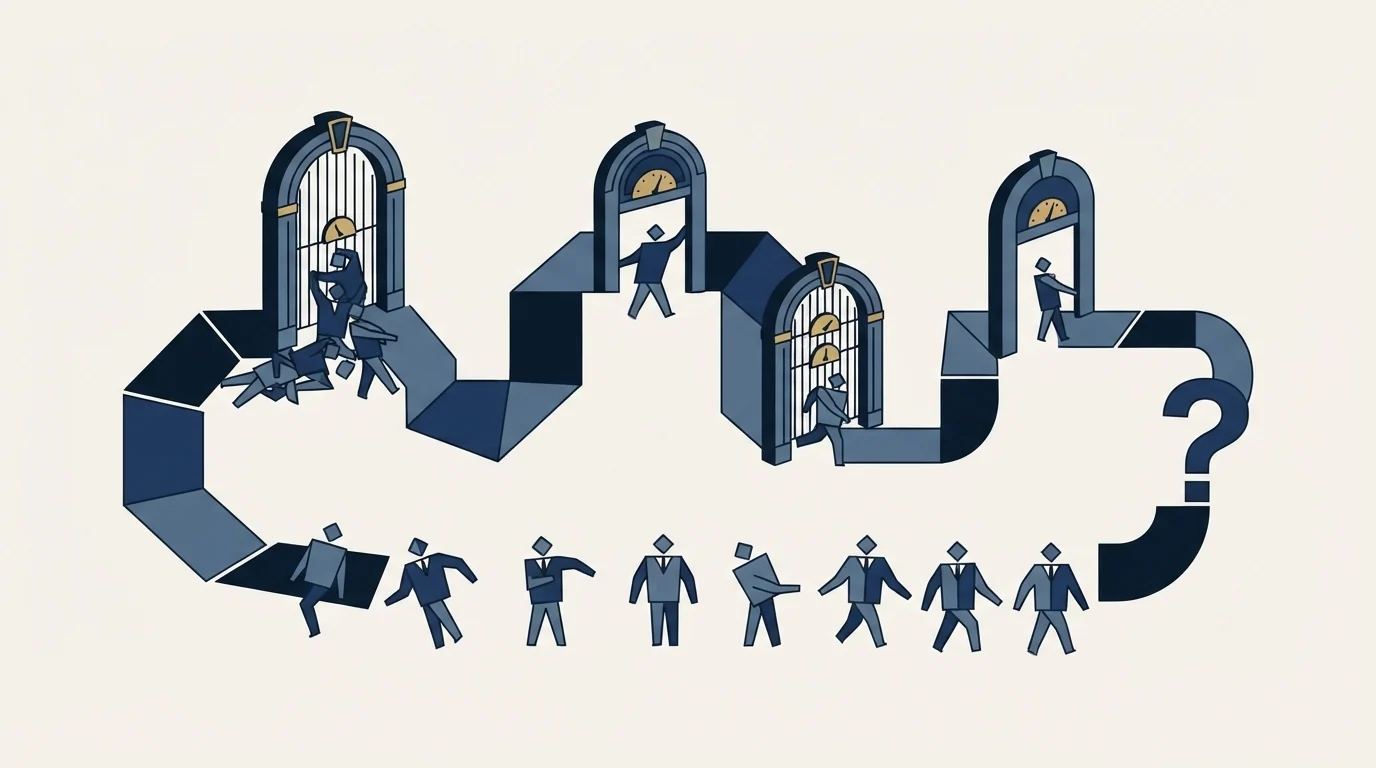
An account can go backwards without anything visible happening. The sponsor leaves, the budget moves, and the account is back where it started while your system still shows it advancing. Leads mostly go quiet; accounts reorganise.
And an account has no single moment of conversion. There is a first meeting, a technical evaluation, a procurement process and a signature, and the useful stage boundaries sit between those rather than at any one of them.
The consequence for measurement is that account stages need to be defined by things that happen, not by things that are felt. What is ABM covers why the account is the right unit in the first place; this is what to do once you have accepted it.
Feelings versus events
- Aware of us
- Showing interest
- Engaged
- Considering a purchase
- Nearly ready
- Named accounts loaded, no contact yet
- At least one buying-group member contacted
- A reply from a named person at the account
- A meeting held with someone in the buying group
- An opportunity record with a stated problem and a date
Everything in the left column requires a judgement call, so the same account can be scored differently by two people and by the same person in two quarters. Everything in the right column is a record you can query. That is the whole test: could somebody in finance verify the stage from data they can see, without asking anyone how the account feels.
Where those records have to be assembled from several systems, a warehouse-native customer data platform keeps the customer record and the modelling inside your own warehouse.
The event-based version has a second advantage that only shows up later. When a programme underperforms, event-defined stages tell you exactly where accounts are stopping. If two hundred accounts are contacted and eleven reply, the problem is the message or the list, and no amount of work further down the journey addresses it. Judgement-based stages hide that, because accounts accumulate in "engaged" without anyone being able to say what engaged required.
A five-stage account journey you can instrument
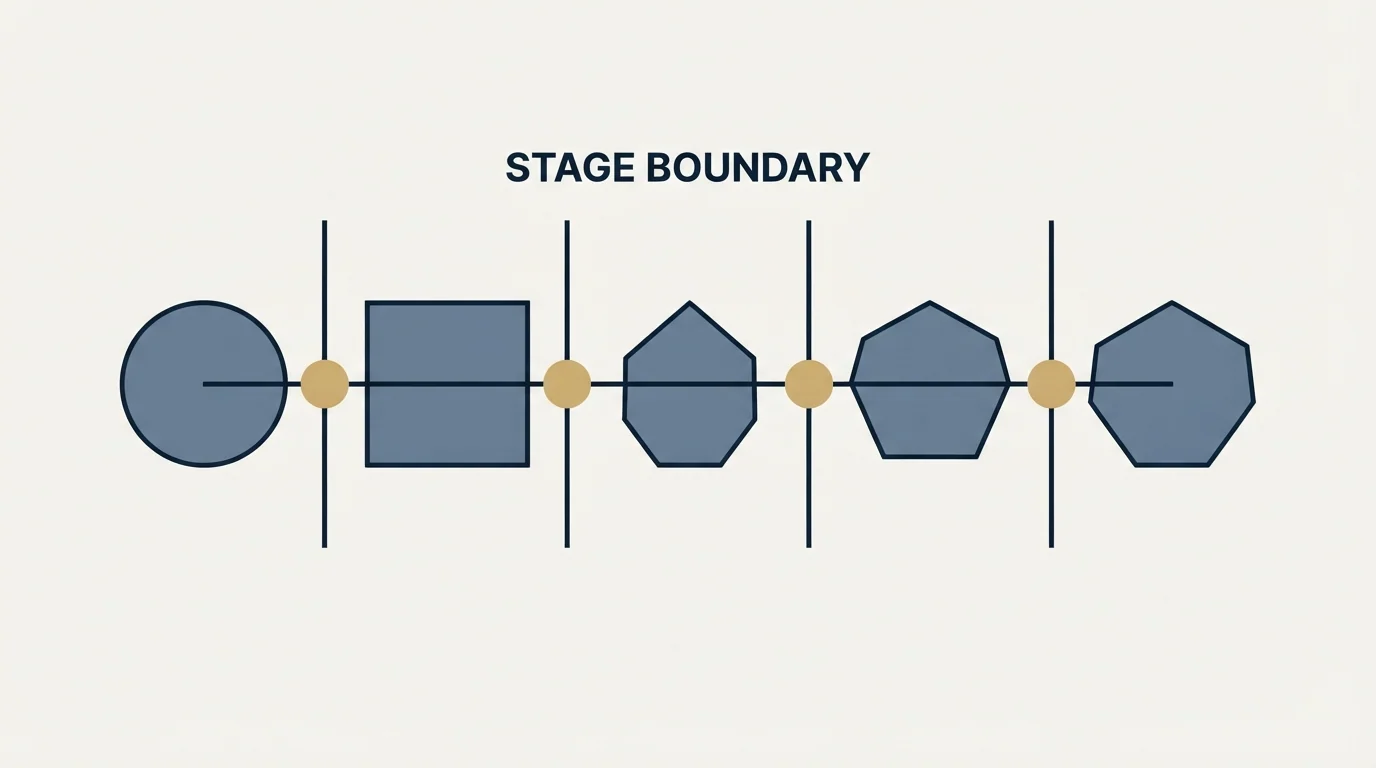
- Step 1Targeted
The account is on the agreed target list with a named owner. Entry event: the row exists in the list.
- Step 2Covered
The buying group is identified with verified contact details. Entry event: at least three named roles resolved.
- Step 3Contacted
A first message has reached at least one buying-group member. Entry event: a delivered send, not an attempt.
- Step 4Responsive
A named person at the account has replied to a human. Entry event: an inbound reply from a real address.
- Step 5In conversation
A meeting has been held. Entry event: an attended meeting with a stated problem written down.
Two details in that structure do most of the work.
Covered is a stage, and most journey maps omit it. An account with one contact identified is not comparable to an account with the whole buying group mapped, and treating them as equivalent is how programmes end up reporting a hundred accounts in play when eighty of them have a single junior contact. Making coverage its own stage forces the question of who is missing while there is still time to find them.
Contacted means delivered, not sent. A bounced address and an inbox that never received the message are indistinguishable from silence in most reporting, and both look like the account chose not to respond. Where deliverability is not separated from response, every downstream conclusion about messaging is contaminated.
What changes hands, and when
The stage boundaries are also handover boundaries, and writing down who owns an account in each stage prevents the two most common ABM arguments before they start.
Targeted and Covered are marketing's, or whoever builds lists. Contacted is shared, and this is where most programmes get vague: if both teams are contacting the same buying group with different arguments, the account experiences noise rather than a programme. One owner per contact, agreed before launch.
Responsive belongs to whoever can hold the conversation, which is usually sales. In conversation is sales outright, with marketing's remaining job being to keep the argument consistent rather than to keep contacting people who are already in a live discussion.
- Yes: Every stage boundary is an event with a record behind it
- Yes: Coverage of the buying group is its own stage
- Yes: Delivery is separated from response
- Yes: Each stage has one named owner
- Yes: Accounts can be moved backwards, and somebody is responsible for doing it
- No: Stage definitions come from a platform's defaults
The backwards rule matters more than it sounds. A journey where accounts only advance turns into a list of everyone you have ever contacted, sorted by how long ago. Agree a rule up front: no qualifying event in ninety days moves the account back a stage. It is arbitrary, it is visible, and it keeps the stage counts honest.
The same rule protects the forecast. Account stage counts get quoted in pipeline reviews, and a stage that only fills is a stage whose number rises every quarter regardless of what happens commercially. Once a leadership team has watched that number rise all year, the number becomes the argument for continuing the work, and by then nobody wants to introduce a rule that makes it fall. Write the decay rule in the same afternoon as the stage definitions, before anyone has a reason to prefer the count to the truth.
The measurement trap in every published journey story
When you read a case study reporting faster stage progression, check how the measured population was selected. In the SAP Concur example, the segment showing the improvement is defined by high-intent behaviour: repeat visits, video views, ungated downloads and paid-search arrivals. Accounts selected because they are already behaving like buyers will progress faster than accounts that are not, so part of the result is the selection rather than the intervention. The page describes the exercise as having proved a hypothesis, which is a fair description of what it did, within that limit.
Your own reporting will have the same property unless you guard against it. If you promote accounts into an active segment on the basis of engagement and then report that the active segment progresses well, you have measured your promotion rule. Compare against the accounts you did not promote, from the same original list, over the same period. That comparison is cheap and it is the one number that tells you whether the programme is working. More on reading published results properly in ABM success stories.
Where the journey lives
Most teams do not need a platform for this. Five stages, an owner per stage and an entry event per stage fit in the CRM you already have, and account-based marketing in Salesforce covers the setup that avoids a new licence. What a platform adds is automated stage assignment from behavioural signals, which is valuable exactly when your account volume is too high to assign by hand and worth very little below that.
Whichever way you build it, the stage definitions have to be yours. A platform's default stages are a reasonable starting shape and a poor finishing one, because your buying process has particular gates and the defaults do not know about them. The vocabulary around all of this is covered in ABM meaning in marketing, and the list-building that feeds stage one is in account-based marketing strategy.
How we run it
Our own account journeys stop at the Responsive boundary, because that is where a campaign ends and a conversation starts. We contact each buying-group member once per campaign and never chase, so the response rate is a clean read on the argument rather than on persistence. Meetings count when they meet criteria agreed in writing before launch, and budget, timing and authority are never among those criteria.
The case studies show the stage counts as they actually came out, and a free campaign runs the first four stages against your own target list so you can see where accounts stop before you build a journey map around assumptions.
The short version
An account journey is worth building when each stage boundary is an event with a record behind it, and worth very little otherwise. Make buying-group coverage its own stage, separate delivery from response, give every stage one owner, and write a rule that moves stale accounts backwards. Then compare the accounts you advanced against the ones from the same list that you did not, because a segment selected for engagement will always look like a programme that worked.
Vendor claims and figures verified against the vendor's own pages as of mid-2026, from stored snapshots of the served bytes. The SAP Concur figures are Demandbase's published claims about its customer, not an independent measurement. Verify current terms with the vendor before relying on them.
Sources: Demandbase SAP Concur case study, Demandbase journey stages.
Frequently asked questions.
Frequently asked questions- How is an ABM customer journey different from a normal sales funnel?
- A funnel tracks one person's interest; an account journey tracks a company's collective progress. An account can be advanced with its champion and invisible to its economic buyer at the same time, and it can regress silently when a sponsor leaves. Stages therefore describe what has verifiably happened across the buying group rather than one person's intent.
- What stages should an account-based journey have?
- Five work for most programmes: targeted, meaning the account is on the agreed list with an owner; covered, meaning the buying group is identified with verified contacts; contacted, meaning a message was delivered; responsive, meaning a named person replied; and in conversation, meaning a meeting was held with a problem written down.
- Should we use our ABM platform's default journey stages?
- Use them as a starting shape and replace them. Default stages are a reasonable template and a poor finished product, because your buying process has particular gates the defaults cannot know about. The bigger issue is that a platform measuring progress through its own stage definitions cannot show you progress separately from redefinition.
- How do you stop account stage counts from inflating over time?
- Add a decay rule and apply it. A common one is that an account with no qualifying event in ninety days moves back a stage. Without it, a journey becomes a list of everyone ever contacted sorted by recency, the counts rise every quarter regardless of commercial reality, and nobody wants to introduce the rule once the number is being defended.
About the author.

Ben Carden is CRO at RevenueFlow, which builds and operates outbound revenue engines for B2B companies. Previously at Gartner Enterprise. Studied at London School of Economics.
Ben Carden · CRO
Connect on LinkedIn →Explore more.
Ready to scale your outreach?
We build GTM engines that book real meetings. See the receipts.
Related articles.
5 ABM Campaign Examples and How Each One Is Built
Five worked account-based campaign examples, each built on the same five fields: account set, tier, plays in order, owner and handoff, and the exit condition.
ABM Metrics: Coverage Decides Every Other Number
Every published ABM metric is a ratio whose denominator somebody chose. Six numbers, the denominator each one needs, and the comparison that settles it.
Deal Registration: Who Owns a Contested Deal
Deal registration lets a partner claim an opportunity before pursuing it. The policy is tested once, in public, on the first deal your direct team also wants.
ABM vs ABX: What Demandbase Added to the Model
One of these terms belongs to a vendor. What Demandbase says ABX adds, the three things that genuinely change, and the three that stay identical.
Lead Verification: What Each Check Actually Proves
Lead verification covers two different jobs. One asks whether a mailbox will accept mail, the other asks whether the person behind the row is real and lawful to contact.
Unqualified Lead: Which Test It Actually Failed
One flag covers two opposite verdicts. A fit failure is stable and belongs in an exclusion; a readiness failure expires and belongs on a watch list with its trigger.