Best Sales Engagement Tools for Agencies (2026)
The five sales engagement tools worth comparing for Agencies in 2026, with every price attributed to the page it came from and every absence checked.
The best sales engagement software for agencies has a published agency plan with a separate workspace per client: Reply.io's Agency Core starts from $210 a month with unlimited clients and users, Smartlead charges $29 a month per white-labelled client workspace, and Saleshandy's Pro plan covers ten users for $76 a month on annual billing.
Key takeaways
- Reply.io, Smartlead and Saleshandy publish agency features: separate client workspaces under one login, with white-labelling as an option, an add-on or a custom tier.
- Apollo publishes a per-seat ladder from $49 a month on annual billing but no client workspaces; Outreach, Salesloft and Gong publish no price at all.
- Groove by Clari is no longer a separate purchase: its address now serves Salesloft's sales engagement page after the two companies merged.
- Per-seat pricing grows with every login an agency adds, so price the model against next year's roster and test that no client can ever see another's data.
Reviewed and updated September 19, 2026
The best sales engagement software for agencies is the tool whose account model fits a client roster: one login, a separate workspace for each client, reporting that never mixes two brands, and a bill that grows with the roster in a way you can price into a retainer. On that test the market splits in two. Apollo, Outreach, Salesloft and Gong are built for one company's own sales team. Smartlead, Reply.io and Saleshandy publish agency plans with client workspaces and white-labelling, and each prints a price. Every figure below was read from the vendor's own page on 19 September 2026.
Staffing firms hit a neighbouring version of that separation problem, and keeping client and candidate outreach apart is what protects the brand when both run through one platform.
What Is the Best Sales Engagement Software for Agencies?
For an agency running outbound for several clients at once, the short answer is a platform with a published agency plan:
- Reply.io, if you want a plan built for agencies. Its Agency Core plan offers "Multiple client workspaces under one agency umbrella", starts from $210 a month, and lists "Unlimited clients & users" with white-labelling as an option.
- Smartlead, if you want to pay per client workspace. White-labelling is an add-on at $29 a month per client workspace, clients can be added from the Pro plan, and Unlimited Prime, at $379 a month, already includes three client workspaces.
- Saleshandy, if you want many users on a flat plan. Its agency page offers "unlimited mailboxes, clients & teams at No Extra Cost", and white-labelling sits in a custom-priced Enterprise tier.
- Apollo.io, if a client needs prospecting data and sequencing in one product, bought seat by seat from $49 a month on annual billing.
Outreach, Salesloft and Gong belong on an agency's list only when a client's own stack already names them. None of the three publishes a price, and none of their pricing pages mentions agencies, client workspaces or white-labelling.
Managing Multiple Clients From One Login
An agency's structural problem is one the enterprise platforms were not built around: one platform, many senders, many brands, and a requirement that none of them ever appears in another one's reporting. A workspace per client is the mechanism that solves it. Each client's mailboxes, lead lists, do-not-contact entries and reports sit inside its own workspace, and the agency's login and team sit above them.
Reply.io's agency page describes exactly that arrangement: create separate workspaces for each client, assign team members with the permissions they need, and run the roster from one master login. Smartlead's pricing page says its white-labelling lets agencies "manage each client from a separate workspace". An enterprise platform can be made to do the same with one account per client, but then every client is a separate contract, a separate seat count and a separate renewal.
The failure to test for before signing is the leak, not the feature list. Set up two trial clients, send from both, and check that a reply, a report or a do-not-contact entry for one never surfaces in the other. It is a ten-minute test, and it is far cheaper than explaining to a client why a competitor's campaign appeared in their dashboard.
The Agency Plans, Priced

Reply.io
Reply.io sells agencies a separate tab on its pricing page. Agency Core starts from $210 a month and lists a multi-workspace account structure, "Unlimited clients & users", unlimited mailboxes and warm-up, an agency dashboard, role-based access control and "White-label as an option". LinkedIn automation is $69 a month per LinkedIn account. Agency AI SDR starts from $500 a month per client and adds AI-written, multichannel outreach on top of Agency Core. The $210 is a starting point with a "Talk to sales" button beneath it, so treat it as a floor rather than a quote.
Fit for agencies. The most complete published agency offer here. The flat Agency Core price is the one that suits a growing roster, because adding a client does not add to it; the AI SDR plan does, at $500 a client.
Smartlead
Smartlead publishes four plans: Base at $39 a month, Pro at $94, Unlimited Smart at $174 and Unlimited Prime at $379, with annual billing saving 17%. Every plan includes unlimited email accounts. For agencies, its pricing FAQ is specific: "Whitelabeling is available as an add-on at $29/month per client workspace." Clients can be added from the Pro plan upwards, and on Unlimited Prime "you already get 3 clients/workspaces added".
Fit for agencies. The clearest per-client price on the list, which makes it easy to pass through: each white-labelled client carries a known $29 a month. Price the send volume first, because Base allows 6,000 sends a month and Unlimited Prime 500,000.
Saleshandy
Saleshandy publishes three plans: Starter at $34 a month, Pro at $76 and Scale at $149, billed annually, or $41, $99 and $189 paid monthly. Its own summary of seats is the useful part for an agency: "Pro covers a team of ten, and Scale has no seat limit". The plan table carries an Unlimited Clients row ("Run outreach for unlimited clients from one account, built for agencies."), and the Enterprise tier adds "Whitelabel for agencies", priced on your volume and requirements.
Fit for agencies. The lowest published floor for a team, because the price follows the plan rather than the head count. The catch is white-labelling, which is only on the custom Enterprise tier.
Instantly
Instantly's pricing page does sell a bundle named Agency, and it describes it by volume: 500,000 emails and 100,000 uploaded contacts a month. Nothing on that page offers client workspaces or white-labelling, so the name describes the sending volume rather than a multi-client account model.
The Enterprise Platforms: Apollo, Outreach, Salesloft and Gong
These four are built for one company's own team. They matter to an agency in two cases: a client's stack already runs on one of them, or a single client's volume justifies its own contract.
Apollo.io
The only enterprise option here that prints what it charges, and the usual pick when a client wants prospecting data and sequencing from one product. Its homepage claims 240M contacts and 30M companies; treat that as the vendor's own number.
| Plan (Apollo pricing page, 19 September 2026) | Billed annually | Billed monthly | Credits per seat per year |
|---|---|---|---|
| Free | $0 | $0 | 900 |
| Basic | $49 | $65 | 30,000 |
| Professional | $79 | $99 | 48,000 |
| Organization | $119 | $149 | 72,000 |
Every paid rate is per seat per month, Organization needs at least three seats, and the page opens on the annual rates, labelled "Save 24%". Nothing on the pricing page offers client workspaces or white-labelling, so an agency runs Apollo per client or not at all.
Outreach
Now at outreach.ai, Outreach explains its model without printing a number: pricing is "a combination of seat-based pricing and consumption-based pricing powered by AI credits". Four Amplify packages carry 10,000, 25,000, 50,000 and 100,000 AI credits, and every one says "Request pricing".
The consumption component is the risk to model. An agency billing a fixed retainer carries the variance itself unless AI credit usage is passed through, so quote the credits as well as the seats.
Large buyers meet the same variance from the other side, where quoting year two at expected usage is the discipline that stops a first year figure understating steady state.
Salesloft, and What Happened to Groove
Salesloft's pricing page is a "Talk to Sales" form with no figure, no tier list and no pricing model. Groove by Clari, which used to sit fifth on this list, is no longer a separate thing to buy: Clari and Salesloft completed their merger (Salesloft's newsroom post is dated December 3, 2025), and Clari's Groove address now serves Salesloft's own sales engagement page. Existing Groove users still have a "Log in to Groove" link in Salesloft's login menu.
With nothing published, a per-client cost cannot be estimated before a sales process, which makes Salesloft awkward to price into a proposal you are writing this week.
Gong
Bought mainly for conversation intelligence, Gong publishes a model and no number: "Licenses are priced per user", "There is a platform fee based on the number of users supported", and "You can integrate your existing tech stack for free". The platform fee is the line to watch, because it scales with users supported, which is the direction an agency grows in.
Per Seat Versus Flat: What the Roster Does to the Bill
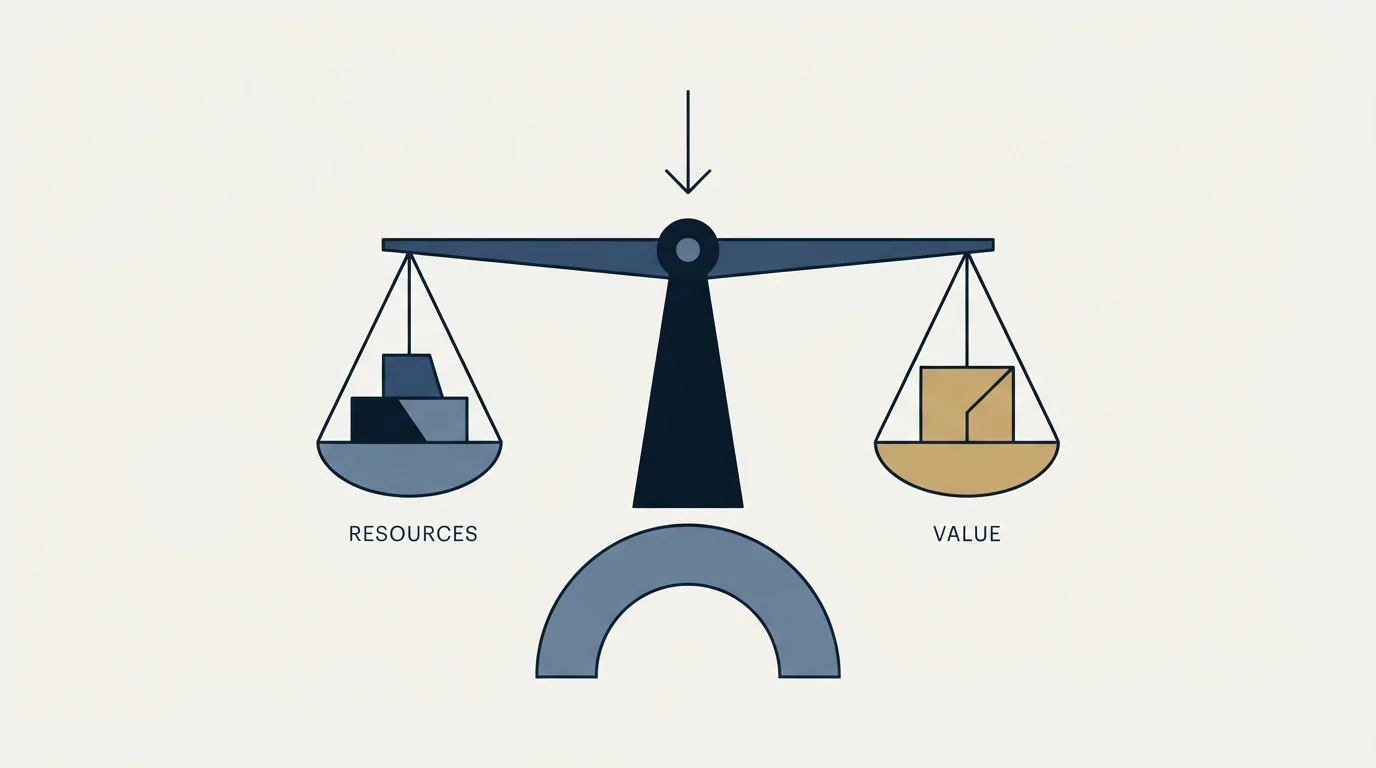
The pricing model matters more to an agency than the entry price, because an agency adds people and clients faster than an in-house team. A per-seat price grows with every account manager who needs a login. A flat plan does not, until you outgrow its volume.
On published floors, Apollo's $49 seat passes Saleshandy Pro's $76 at the second login and Reply.io's $210 agency plan at the fifth. That is not a verdict on the products, which include different data and send allowances, but it is the arithmetic a retainer has to absorb.
How to Choose as an Agency
- Decide whose account it is. Buying in the agency's name is simpler to run and harder to hand over; buying in the client's name is the reverse. Decide before signature, because migrating sequences and history later is a project rather than a setting.
- Price the model against your roster, not your headcount. Count the logins and clients you will have in a year, then read the chart above against that number.
- Test the separation. Two trial clients, one reply each, and confirm neither ever appears in the other's inbox or reports.
- Get the export in writing. Every platform holds the activity history that proves what you did for a client. Confirm the export format at signature.
- Keep sequencing in one system. If a client's CRM also sequences, decide which one owns it. Two systems contacting one prospect is the ordinary route to a duplicate send, and on a client's brand it is their problem before it is yours.
When a Client Leaves
The exit is decided long before the client gives notice. Who owns the sending domains and mailboxes, and whether the reply history leaves with the client, are questions that cost nothing at signature and a great deal at offboarding.
Where This Sits Against Your Sending Setup
A sales engagement platform decides who gets contacted, in what order, and what gets recorded when they reply. It does not protect your ability to land in an inbox, and buying one does not change a client's sending reputation in either direction.
Two rules survive whichever tool wins. Run sequencing from one system, not two. And a platform's willingness to schedule a fourth touch is not an argument for sending one: the house rule is one message per campaign, no bumps and no thread replies, because the reputation a bump spends belongs to the client, not the platform.
Where the Tool Stops Mattering
The platform stops mattering at the point where the client's offer is wrong for the list. An agency can sequence a bad-fit audience flawlessly and produce nothing, and the reporting will show high activity with no meetings, which reads to a client as effort without result. Fix the targeting before buying more seats.
Final Thoughts

For an agency running outbound for a roster, start with a platform that publishes an agency plan: Reply.io for the most complete offer, Smartlead for a clean per-client price, Saleshandy for the lowest floor across a team. Use Apollo where a client needs data and sequencing in one seat, and enter the Outreach, Salesloft or Gong sales process only when a specific client's stack names them.
Related Reading
- Best Apollo.io Alternatives in 2026
- Best Salesforce Alternatives in 2026
- Best Outreach Alternatives in 2026
- Sales Engagement Platforms Explained
If you would rather have this run for you, RevenueFlow books qualified meetings on a pay-per-meeting basis and publishes client results.
Pricing and features are taken from the vendors' own pages. Verify current terms with the vendor before relying on them.
Frequently asked questions.
Frequently asked questions- What is the best sales engagement software for agencies?
- One with a published agency plan and a separate workspace per client. Reply.io's Agency Core starts from $210 a month with unlimited clients and users; Smartlead adds white-labelling at $29 a month per client workspace; Saleshandy's Pro plan covers ten users for $76 a month on annual billing. Apollo suits a single client that needs data and sequencing in one seat.
- How do agencies manage multiple clients in one sales engagement tool?
- With a workspace per client under one agency login. Each client's mailboxes, lead lists, do-not-contact entries and reports stay inside its own workspace, and the agency's team and billing sit above them. Before signing, run two trial clients and check that a reply or report from one never appears in the other.
- Which sales engagement platforms offer white-labelling for agencies?
- Reply.io lists white-labelling as an option on its Agency Core plan and runs a separate white-label program. Smartlead sells it as an add-on at $29 a month per client workspace. Saleshandy includes it only in its custom-priced Enterprise tier. Apollo, Outreach, Salesloft and Gong do not offer it on their pricing pages.
- Is Groove by Clari still available?
- Not as a separate product to buy. Clari and Salesloft completed their merger, dated December 3, 2025 in Salesloft's newsroom, and the old Groove product address now serves Salesloft's sales engagement page. Existing Groove users still have a login link in Salesloft's menu.
About the author.

B2B cold email experts helping companies generate qualified leads through done-for-you outreach campaigns.
RevenueFlow Team
Explore more.
Ready to scale your outreach?
We build GTM engines that book real meetings. See the receipts.
Related articles.
Gong Engage vs Salesloft Cadence: How They Differ
Gong Engage and Salesloft Cadence compared from each vendor's own pages: where each starts, six jobs side by side, and what the pricing pages disclose.
Twain Pricing: Credits per Lead, Three Research Modes
Twain sells credits, not seats, and a lead costs 1 to 14 of them depending on the research mode. The two ladders, the four expiry clocks and the cap.
Lavender Pricing: Two Products, No Pricing Page
Lavender has no pricing page. The Email Coach ladder per seat at both billing states, the free routes, and the separate per-agent price for Ora.
Outbound Lead Generation Tools, Layer by Layer
Outbound tools do six jobs and price on different units: contacts, credits, seats, sends. Thirteen vendors read from their own pages on 18 September 2026, by layer.
Zeliq Pricing: One Seat Rate and a Credit Meter
Zeliq prices one self-serve seat in dollars with a credit meter that never expires. Both billing states, the three credit rates, the top-up ladder and the Custom floor.
Salesgear Pricing: Two Ladders Under One Plan Title
Salesgear's page is titled as one plan and carries a Data ladder and an Outreach ladder. Both at both billing states, what each meters, and the two vendor-side conflicts.