A Demand Generation Strategy Document Useful in Six Months
Most plans are a channel list with a budget column and become unreadable ten weeks later. Nine sections, the question each answers, and what breaks when one is blank.

A demand generation plan is a prediction with a budget attached. The structure that survives review names one constraint, describes accounts by verifiable attributes, states what buyers believe now and what they must believe instead, agrees how long you will wait, concentrates the money, and lists what will be observably true at the end.
Key takeaways
- The test of a plan is whether someone who missed the approval meeting can tell, from the document alone, whether it worked.
- The belief pair, what buyers think now and what they need to think instead, is what turns a channel list into a strategy.
- Write the decision rule for continue, change or stop before the results exist, because one written afterwards is a rationalisation.
- At review, mark each predicted observable true or false before opening any dashboard, or the numbers will supply their own narrative.
Reviewed and updated September 1, 2026
A Demand Generation Strategy Document That Is Still Useful in Six Months
Most demand generation plans are a channel list with a budget column and a set of quarterly targets. They read well in the meeting where they are approved and become unreadable about ten weeks later, when somebody asks whether the thing is working and nobody can answer from the document.
The test that matters for a planning document is not whether it looks thorough. It is whether a person who was not in the approval meeting can pick it up in six months and say, from the document alone, whether the plan worked. Almost no plan passes that test, and the reason is always the same: it records what will be done and not what it is expected to cause.
What follows is the structure that passes it. Nine sections, the question each one answers, and the specific thing that goes wrong when a section is left out. Copy the skeleton at the end and fill it in.
If you are reading this as one of the heads of marketing it is written for, the persona-specific version of this playbook lives in our guide to outbound for heads of marketing.
The nine sections
1. The constraint. One sentence naming the single thing stopping demand from growing, and one sentence on how you know. Not a list. If three things are named, the plan will fund all three thinly. The diagnosis method is in demand gen strategy.
Left blank: the plan becomes a portfolio of reasonable activities and cannot be evaluated, because nothing was predicted.
2. Who the demand is being generated in. The accounts and the people, described by attributes you can verify from outside. Industry, size, structure, the role that owns the problem. Not a persona narrative with a stock photo and a name.
Left blank: every channel decision downstream is untestable, because you cannot say whether a channel reached the right people or merely reached people.
3. What they currently believe. The actual sentence a target buyer would say about this problem today, and the sentence you need them to be saying instead. This is the single most useful section in the document and the one most often missing.
Left blank: the content plan has no theory of what it is changing, so it defaults to explaining your product.
4. The wait. How many months the funder is willing to spend before judging the plan, agreed in writing, by name. This is a commercial decision and not a marketing one.
Left blank: a slow channel gets cancelled at the exact point it would have started working, and everyone involved learns the wrong lesson.
5. Where the budget concentrates. The split, with a stated reason. Concentration is the point. An even split across six channels is the default output of not making a decision.
Left blank: spend distributes itself by whoever asks most persistently.
6. What you expect to be observably true. The heart of the document. Specific, checkable statements about the world at the end of the wait. This many people search our category name monthly. We appear on the shortlist page for these three comparisons. This many customers name this channel unprompted.
Left blank: the plan cannot be marked right or wrong, so the review becomes a discussion of effort.
7. How each channel is measured, and against what. Creation channels on leading indicators. Capture channels on pipeline. Written down per channel, because the mismatch is what kills slow channels early.
Left blank: one blended number gets used, and it always argues for cutting the channel with the longest lag.
8. What you are deliberately not doing. The channels considered and declined, with the reason. Two lines each.
Left blank: the declined channels come back every quarter, and the plan gets relitigated instead of executed.
9. The review date and the decision rule. When this gets read again, who is in the room, and what specific readings would mean continue, change, or stop. Written before the results exist, because a decision rule written afterwards is a rationalisation.
Left blank: the plan runs until somebody loses patience.
- Depends: One named constraint, with the evidence for it
- Depends: Target accounts described by externally verifiable attributes
- Depends: The belief you are trying to change, as a sentence
- Depends: The agreed wait, in months, with a named owner
- Depends: A concentrated budget split with a stated reason
- Depends: Observable statements expected to be true at the end
- Depends: Per-channel measures, split between creation and capture
- Depends: Declined channels, with reasons
- Depends: Review date and a decision rule written in advance
The skeleton
Copy this into a document and fill the right-hand column. It fits on two pages, which is deliberate. A demand generation plan that runs to twenty slides is a plan nobody will re-read, and a plan nobody re-reads cannot be reviewed.
| Section | Fill this in |
|---|---|
| Constraint | The one thing stopping demand from growing, and how we know |
| Target accounts | Attributes, verifiable from outside, no persona narrative |
| Target roles | The roles that own this problem, and who else is in the room |
| Belief today | The sentence a buyer would say about this problem now |
| Belief needed | The sentence we need them saying instead |
| Agreed wait | Months before judgement, agreed by [name] |
| Budget concentration | Where the money goes and why it is not spread evenly |
| Expected observables | Three to five checkable statements, true or false at review |
| Creation channels | Channel, leading indicator, target |
| Capture channels | Channel, pipeline measure, target |
| Declined | Channel, reason, revisit condition |
| Review | Date, attendees, and what continue, change and stop each look like |
Two fields do most of the work. The belief pair in the middle is what turns a channel list into a strategy, because it forces the plan to say what it is trying to change in someone's head. The expected observables are what make the review possible at all.
Filling in the belief pair, which is the hard part

Teams stall here, and the stall is informative. If you cannot write down what a target buyer currently believes about this problem, you do not know your market well enough to plan against it, and the honest next step is twenty conversations rather than a budget.
The useful form is concrete and slightly uncomfortable to write. Something like: they believe this is a cost of doing business that everyone absorbs, and we need them to believe it is a solvable process problem with a known fix. Or: they believe the tool they have is fine, and we need them to believe the workaround they built around it is the actual cost.
Notice that both examples name a belief that is currently reasonable. A plan whose "belief today" is a strawman produces content that talks past everybody.
What does not belong in the document
A channel list at the top. Channels are an output of the constraint and the audience. Putting them first makes everything above them retrospective justification.
Revenue targets as the primary measure. Demand generation influences revenue through several intermediate steps and a lag, and holding it directly to a revenue number in-period causes the programme to reallocate toward capture, which reports faster and creates nothing.
Persona documents. They tend to describe a fictional individual's hobbies rather than the verifiable attributes that decide targeting. Section 2 replaces them.
Anything about a scheduled contact plan. Covered below.
Where we differ from standard practice
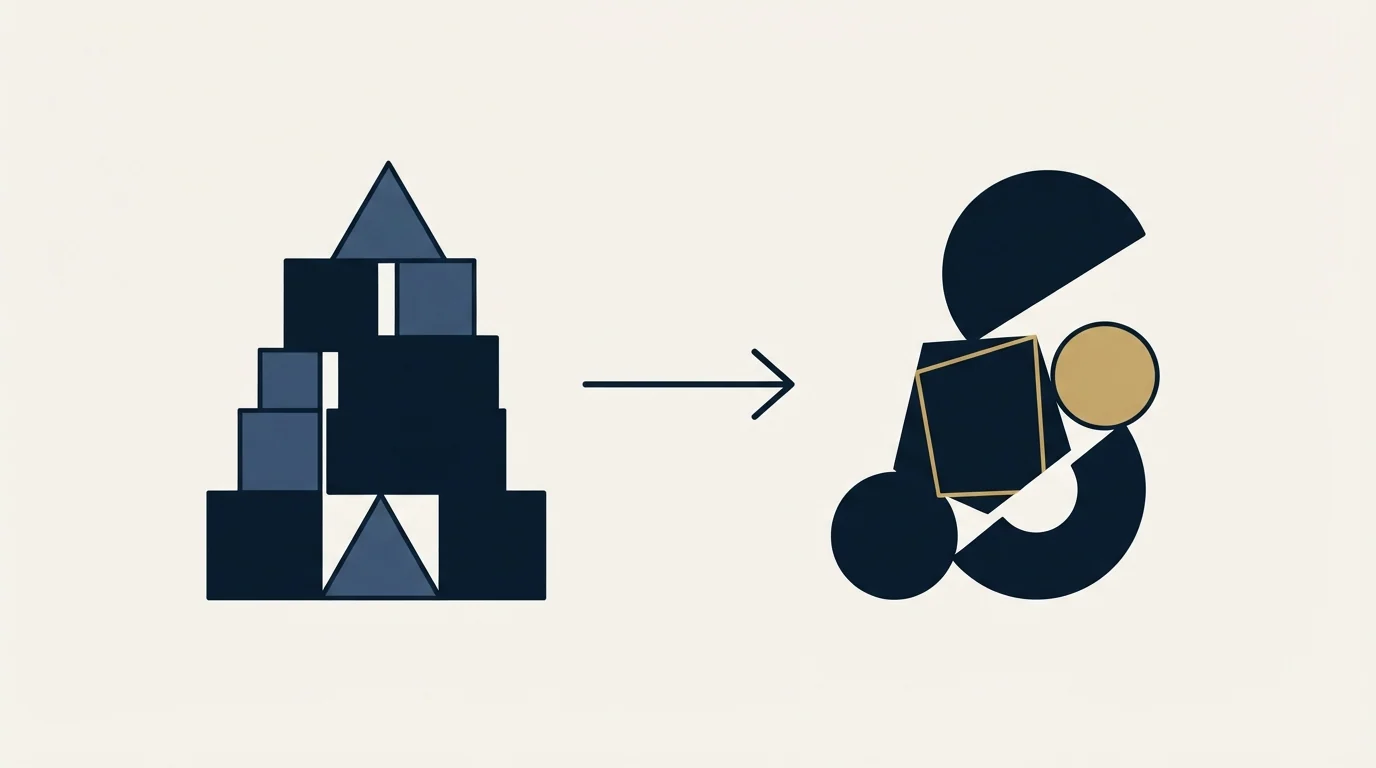
Most demand generation templates carry a section for the contact plan: a scheduled run of emails to captured leads, laid out by week. We never run those, so that section is absent here on purpose. One message per campaign, built on one premise, sent once, with no scheduled reminder afterwards.
Applied at the level of a planning document, the same principle is worth stating: if the plan cannot say why a contact is warranted beyond the fact that time has passed, the contact is not warranted. A later approach is a new campaign with a new premise. The reasoning, and what happened to our meeting rate, is in we stopped using follow-up emails.
- Step 1Diagnose
Name one constraint and the evidence for it. Sections 1 and 2.
- Step 2Predict
Write the belief pair and the observables that would be true if the plan works. Sections 3 and 6.
- Step 3Commit
Agree the wait and concentrate the budget, with a named owner for both. Sections 4 and 5.
- Step 4Review
Mark each observable true or false before opening any dashboard, then apply the rule written in section 9.
Running the review
At the review, read section 6 aloud before looking at any dashboard. Mark each expected observable true or false. Do that first, because opening the analytics first reliably produces a narrative that accommodates whatever the numbers say.
Then make one of three decisions, using the rule written in section 9. Continue, which means the observables came true and the constraint is unchanged. Change, which means the observables came true and the constraint has moved, so the next plan starts from a new diagnosis. Stop, which means the observables did not come true and the theory in section 3 was wrong.
The third outcome is the valuable one and the one organisations handle worst. A plan that was wrong about what buyers believe has produced real information about the market, and that information is worth more than a quarter of activity that nobody can interpret.
Where this sits

This document is one level below the company plan and one level above the campaign brief. The five decisions the level above has to settle first are in go-to-market strategy, and the three buyer states that determine which play each account needs are in demand creation, capture and conversion. If the plan concludes that your buyers will never search for you, the priced comparison of the two ways to reach them is in demand generation agency vs cold outbound.
The short version
A demand generation plan is a prediction with a budget attached. Name one constraint, describe the accounts by verifiable attributes, write down what buyers believe now and what they need to believe instead, agree how long you will wait, concentrate the money, and list what will be observably true at the end. Then write the decision rule before the results arrive, and read the predictions before the dashboard.
If part of the answer is reaching named accounts directly, we will build one researched message to twenty of them so the plan has something concrete in it: free campaign.
Frequently asked questions.
Frequently asked questions- What should a demand generation plan actually contain?
- One named constraint with its evidence, target accounts described by externally verifiable attributes, the belief you are trying to change, the agreed wait in months, a concentrated budget split, the observables expected to be true at the end, per-channel measures, the channels you declined, and a review date with a decision rule.
- Why should the plan not start with a channel list?
- Because channels are an output of the constraint and the audience. Putting them first makes everything above them retrospective justification for choices already made, and it produces the evenly funded portfolio that cannot be evaluated because nothing specific was predicted.
- What goes in the belief section?
- Two sentences: what a target buyer would say about this problem today, and what you need them saying instead. Both should be concrete and the first should be reasonable rather than a strawman. Teams that cannot write it usually need twenty customer conversations more than they need a budget.
- How long should we run a plan before judging it?
- Decide before you start and write the number down with a named owner, because that number is a commercial decision rather than a marketing one. Without it, slow channels get cancelled at the point they would have started working and everyone involved learns the wrong lesson from it.
About the author.

Ben Carden is CRO at RevenueFlow, which builds and operates outbound revenue engines for B2B companies. Previously at Gartner Enterprise. Studied at London School of Economics.
Ben Carden · CRO
Connect on LinkedIn →Explore more.
Ready to scale your outreach?
We build GTM engines that book real meetings. See the receipts.
Related articles.
Demand Gen Strategy: Diagnose the Constraint Before Funding
Fourteen initiatives across six channels, funded evenly, is the output of not making a decision. Three constraints, one afternoon of testing, and one thing to fund.
Demand Generation Agency vs Cold Outbound: Which You Need
Demand gen builds awareness, outbound harvests it. 2026 pricing for both, a three-test decision rule, and the market conditions where each one fails.
Sales Kickoff Meeting: The Decisions It Has to Leave With
A kickoff is the one moment a whole sales organisation can change at once. The four decisions it has to publish, and the week-six check that tests them.
Time Decay Attribution: Setting the Half-Life
Time decay weights recent touches more heavily, and the half-life that controls how fast credit fades decides more than the choice of model does.
Position-Based Attribution: The U, the W and the Timestamp
U-shaped and W-shaped attribution are one model with a switch, and the switch is whether your CRM can be trusted to stamp lead creation.
Last-Touch Attribution: What It Credits, and What It Deletes
Last-touch gives every point of credit to the final interaction, which in outbound is the email that got the reply rather than the work that earned it.