Demandbase Pricing: Published Model, Unpublished Numbers
Demandbase publishes no prices and no tiers, but it does publish the model. What drives your number, and how to make a custom quote comparable to another one.
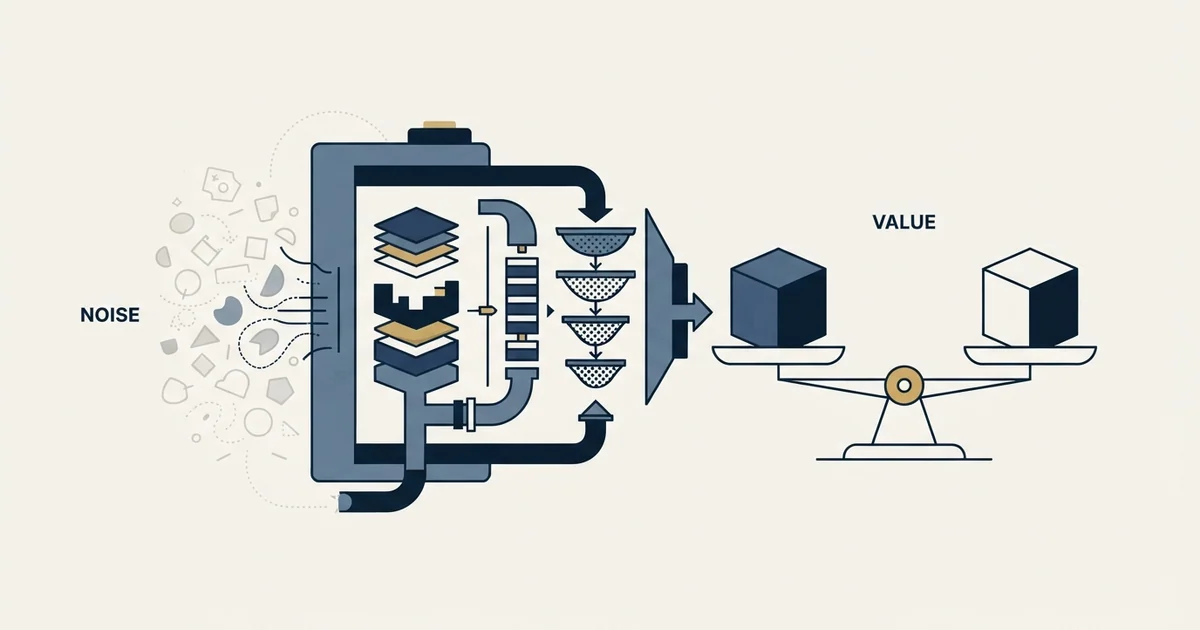
Demandbase publishes no prices. Its pricing page states the model instead: a platform fee covering the software and services, plus a flat fee per user. There are no tiers, because the platform is not sold as separate Marketing and Sales editions. Seat count, not programme size, is the dominant cost variable.
Key takeaways
- Demandbase's pricing page publishes a model rather than a number: a platform fee plus a flat fee per user, with every plan tailored per customer.
- There is no tier table because the vendor states it does not split Demandbase One into standalone Marketing or Sales solutions.
- Seat count drives the bill and programme scope does not, so adding two hundred target accounts costs nothing while adding twenty seats recurs annually.
- Two purchases beyond the platform are named on the same page and missed by most evaluations: advertising as an entry point, and data solutions used standalone.
Reviewed and updated September 2, 2026
Demandbase runs a page called "Flexible & Transparent". It contains no prices. It is about whether you can inspect and modify the platform's predictive models, which is a real thing to care about and is not what most people mean by transparency when they click that link (Demandbase, captured mid-2026).
The pricing page contains no prices either. What it does contain is the pricing model, stated plainly, and that is genuinely more useful than a headline number would be. Demandbase describes "a clear platform fee that covers all the essential software and services" plus "a flat fee per user, allowing you to easily scale according to your needs" (Demandbase pricing). Two components. One fixed, one that moves with headcount.
Everything you can work out about what Demandbase will cost you comes from that sentence and from the three things the page says are purchasable. This piece works through both, and through how to make a custom quote comparable to another custom quote, which is the actual problem when nobody publishes a list price.
There are no tiers, and that is deliberate
Searches for Demandbase pricing usually want a tier table: Starter, Professional, Enterprise, with a number beside each. No such table exists, and the pricing page explains why rather than leaving you to guess. Asked directly whether standalone Marketing or Sales solutions can be bought, the page answers that the platform is built to bring sales and marketing "under one roof, using unified data, tools, and insights" and states "we don't split Demandbase One into separate solutions". Instead the vendor tailors a plan.
So the shape is one product, quoted per customer, with two variables. An article that hands you a tier table for this vendor either has old information or is describing something the vendor does not sell.
Tier tables of this kind do exist elsewhere in the category, and Surfe's published tier ladder shows what one looks like when a vendor commits to per-seat numbers.
- Account-based GTM platform for sales and marketing together
- Platform fee plus a flat fee per user
- Not sold as separate Marketing or Sales editions
- The purchase almost every evaluation is really about
- Offered as an entry point rather than the full platform
- Smaller commitment than the platform purchase
- Useful when the immediate need is reaching accounts
- Named on the pricing page as a way in
- Can be used on their own
- Feeds B2B data and AI-driven insights into systems you already run
- No platform adoption required
- The option most buyers never find out exists
The second and third columns matter commercially. A team whose real gap is account data, and who would not use an orchestration platform if they had one, can buy the data layer without the platform fee. A team who wants to reach a defined account list can start at advertising. Neither of those is the enterprise purchase, and neither shows up in a tier comparison because there is no tier comparison.
What decides your number
With a platform fee and a per-user fee, three inputs drive the total, and only one of them is about ABM.
Seat count is the dominant variable. A flat fee per user means the bill tracks how many people you put on the tool. This has a specific and slightly counterintuitive property: widening the programme is free and widening the team is not. Adding two hundred accounts to the target list costs nothing. Adding twenty sales seats costs twenty times the per-user fee every year, whether or not those twenty log in.
The fixed component sets your floor. The platform fee lands regardless of usage, which means a small team pays a floor designed for organisations with a lot of seats behind it. That is the arithmetic behind most complaints about the category being expensive for mid-market buyers.
Which of the three purchases you are actually making. A data-only purchase and a full platform purchase are not the same order of magnitude, and buyers routinely evaluate the platform when the data layer was the answer.
The Demandbase versus ZoomInfo comparison lays out why one buys contact data and the other buys account coverage, both without published prices.
- Step 1Split the quote
Ask for the platform fee before any users, separately from the per-user fee. A blended annual number hides which half is growing.
- Step 2Price it at year-three headcount
Re-run the same quote at the seat count you expect in two years, not today's.
- Step 3Find the floor
Ask the minimum seat commitment. A per-user price with a seat minimum is a second fixed fee.
- Step 4Ask what escalates
Uplift percentage at renewal, and whether data or advertising volume carries overage above an allowance.
- Step 5Net off what you would drop
Subtract tools this replaces, and only those you will genuinely cancel.
Those five turn two incomparable quotes into two numbers. The first is the one vendors resist most and the one that matters most, because a blended figure lets a seat-heavy quote and a fee-heavy quote look identical at signature and diverge sharply by year two.
The pricing pages you will find that are not Demandbase's

A search for this topic returns several third-party pages carrying confident dollar ranges, including quote-aggregator sites and vendor blogs with figures in their page titles. We do not quote any of them here, and the reason is worth stating rather than implying.
That pattern has a mirror in the channel category, where PartnerStack's single published rate sits on a different product page from the plans that route to a demo.
A price belongs to a source. A number on a vendor's own pricing page is that vendor's published claim and you can hold them to it. A number on an aggregator is a self-reported historical quote from an unnamed buyer at an unstated seat count, contract length and discount level, for a product whose packaging has changed since. Two organisations at the same headcount routinely land in different places for reasons no aggregate can capture. Where the vendor publishes nothing, the honest answer is that the number comes from your own quote, and the useful work is making that quote legible rather than benchmarking it against a stranger's.
The Crayon pricing analysis examines a similar puzzle, showing how a redirect instead of a rate card pushes buyers toward marketplace figures that need separating from vendor fact.
If you want a sense of relative cost across the category before you take a call, the more reliable comparison is the shape of the bill rather than a dollar figure, and that is covered in Demandbase competitors alongside who is actually still in the category. Whether the platform is the right purchase at all is a separate question from what it costs, and the Demandbase review takes it directly.
The costs that are not in the quote
Account data hygiene. The platform reports at account level, so duplicate account records in your CRM split engagement across them and understate everything the tool tells you. One of Demandbase's own published customer stories describes a company that arrived with six account records for every real account after a four-company merger. Whoever cleans that up is a year-one cost that no quote contains.
The operator. A platform licence buys software. Somebody has to run the account list, the segments, the journey definitions and the reporting, and in most teams that is a real fraction of a person. Where nobody is named for it before signing, adoption is the thing that quietly fails and the seats become the most expensive part of the bill.
Advertising spend. If you take the advertising entry point or run account-based advertising on the platform, the media is a separate line and usually the larger one.
What to fix before you take the pricing call
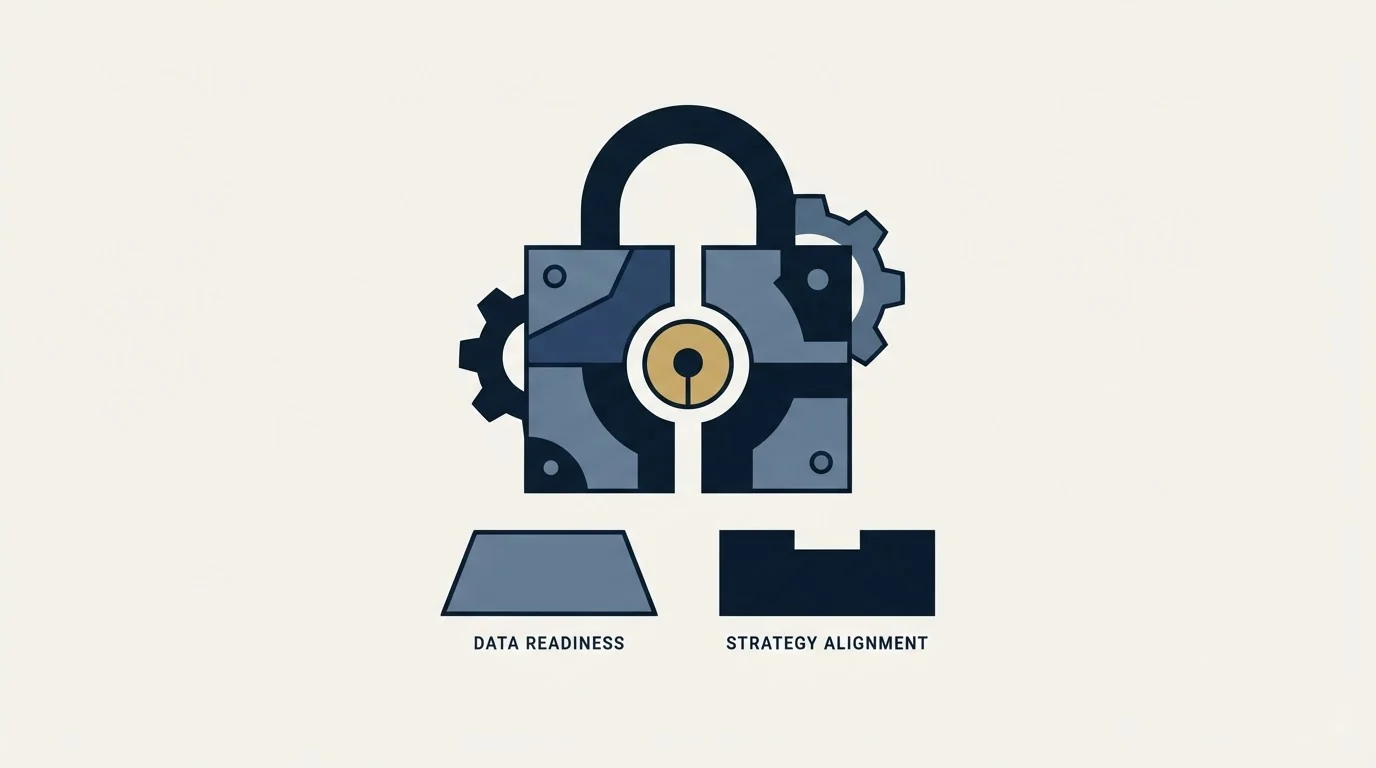
- Yes: Your ceiling, expressed as a share of the pipeline the programme must produce
- Yes: Which of the three purchases you are making: platform, advertising, or data
- Yes: The seat list, by name, and who is accountable for their adoption
- Yes: A live alternative quote to compare against
- Yes: Which existing tools you would genuinely cancel
- No: A target price sourced from a third-party aggregator
Setting the ceiling before the demo is the part most buyers skip, and it is the only one that cannot be recovered afterwards. Once you have seen the product, every number sounds either reasonable or outrageous relative to the demo rather than relative to the pipeline it has to produce.
When the cost is real but the diagnosis is not
A large share of ABM platform evaluations are triggered by a pipeline gap, and a platform is one of several things that can close it. If the underlying problem is that a defined list of accounts is not hearing from you consistently, the platform fee buys reporting on that problem rather than fixing it.
That is the work we do instead of licensing software to do it: a target list you can defend, the buying group inside each account, one message per campaign and never a second one chasing it, and meetings qualified against criteria agreed in writing before anything sends. The case studies carry the definitions alongside the numbers, and a free campaign runs against your own account list so the list is tested before you build a budget around tooling for it. For teams who do want the platform, ABM platforms compared sets out what each product replaces.
There is a budgeting reason to test the list first, beyond the obvious one. The per-user model prices your team, and the account list is free to widen, so the platform quote is almost entirely a bet on how many people will use the tool rather than on how good the list is. If the list turns out to be the weak part, no seat count fixes it and you will have committed to an annual fee to find out. Running the list once, against real recipients, costs nothing near a platform year and answers the question the quote cannot.
The short version

Demandbase publishes no prices and no tiers, and says so: the platform is not split into separate Marketing and Sales editions, and every plan is tailored. It does publish the model, which is a platform fee plus a flat fee per user, so the bill grows with headcount rather than with programme scope. Three things are purchasable, and the advertising entry point and standalone data option are cheaper doors most evaluations never open. Split any quote into its fixed and per-seat halves, re-price it at year-three headcount, and set your ceiling before the demo rather than after it.
Pricing model, packaging and page content verified against Demandbase's own pages as of mid-2026, from stored snapshots of the served bytes. Demandbase published no prices at the time of writing, and no figure in this article is attributed to it. Verify current terms with the vendor before relying on them.
Sources: Demandbase pricing, Demandbase Flexible & Transparent, Navisite customer story.
Frequently asked questions.
Frequently asked questions- How much does Demandbase cost?
- Demandbase does not publish a price, and no honest figure can be quoted for it. Its pricing page describes a platform fee plus a flat fee per user, tailored per customer. Third-party aggregator ranges exist but describe unnamed buyers at unstated seat counts, contract lengths and discount levels, so they will not predict your quote.
- Does Demandbase have pricing tiers?
- No. The pricing page states the platform is not split into separate Marketing and Sales solutions, and that a plan is tailored to your teams instead. Any tier table you find for Demandbase is either out of date or describing something the vendor does not sell. What varies between customers is the platform fee and the number of users.
- What makes one Demandbase quote bigger than another?
- Seat count first, because the per-user fee is flat and recurring. The fixed platform fee sets a floor that a small team pays in full regardless of usage. And which of the three purchases you are making matters most of all: a standalone data purchase and a full platform licence are different orders of magnitude.
- What costs are not in the Demandbase quote?
- Account data hygiene in your CRM, because duplicate account records split engagement and understate the platform's own reporting. The operator time to run account lists, segments and journey definitions, which is a real fraction of a person. And advertising spend, which is a separate and usually larger line if you run account-based advertising.
About the author.

Ben Carden is CRO at RevenueFlow, which builds and operates outbound revenue engines for B2B companies. Previously at Gartner Enterprise. Studied at London School of Economics.
Ben Carden · CRO
Connect on LinkedIn →Explore more.
Ready to scale your outreach?
We build GTM engines that book real meetings. See the receipts.
Related articles.
5 ABM Campaign Examples and How Each One Is Built
Five worked account-based campaign examples, each built on the same five fields: account set, tier, plays in order, owner and handoff, and the exit condition.
ABM vs ABX: What Demandbase Added to the Model
One of these terms belongs to a vendor. What Demandbase says ABX adds, the three things that genuinely change, and the three that stay identical.
ABM Metrics: Coverage Decides Every Other Number
Every published ABM metric is a ratio whose denominator somebody chose. Six numbers, the denominator each one needs, and the comparison that settles it.
Drift Competitors: What Replaced It and What Each Costs
Drift is retired and drift.com now serves a Salesloft page. What the successors publish about price, who owns them now, and which one fits which job.
B2B Database: What to Test Before You Pay
Total record count is the number every vendor leads with and the one that predicts least. The test that replaces it takes a day and settles the purchase.
Belkins Pricing: What the Service Page Publishes
Belkins publishes a starter price and four figures on its service page, and no price at all on its pricing page. Which page a number came from decides what it means.