Crayon Pricing: The Pricing Page Is a Redirect
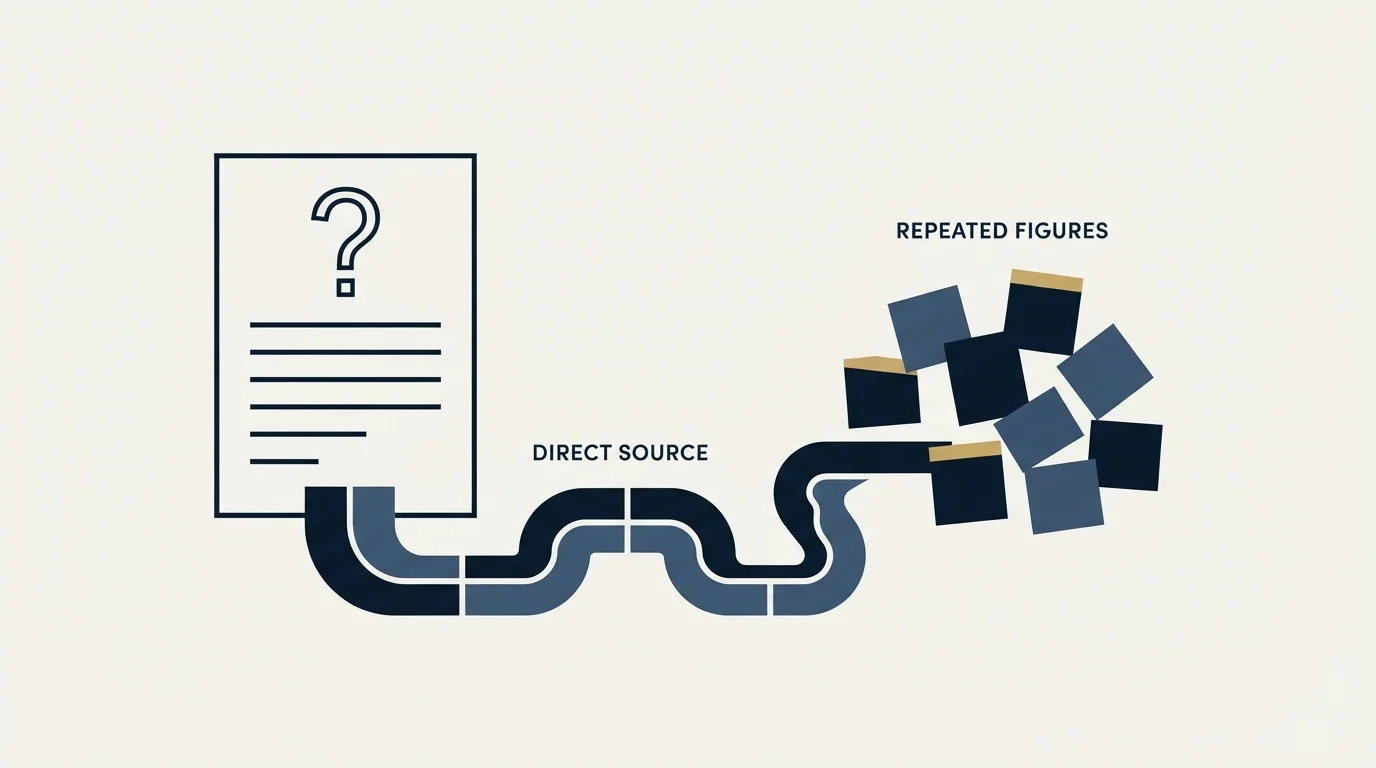
Crayon's pricing URL returns a 301 to an enquiry form, so the figures the market repeats come from a marketplace listing rather than the vendor.

Crayon publishes no rate card. Requesting its pricing URL returns HTTP 301 to a pricing-inquiry form carrying no figure. The numbers the market quotes come from third-party marketplaces, whose observed transaction data and unattributed analysis sit in one voice and need separating before either reaches a negotiation.
Key takeaways
- Requesting crayon.co/pricing returns HTTP 301 to /pricing-inquiry, a contact form with no figure on it, read 28 August 2026.
- The tier names Essentials and Professional appear zero times across Crayon's homepage, pricing page and integrations page.
- Vendr's listing states a median of $30,000 a year from 93 purchases in its summary and a $30,000 average across 72 deals in its header.
- The meter a quote-only contract scales with decides the second year, and Crayon's page rules out two candidate meters without naming the one it uses.
Reviewed and updated September 1, 2026
Crayon Pricing: The Pricing Page Is a Redirect, So Everyone Quotes a Marketplace
Request www.crayon.co/pricing and the server answers HTTP 301, pointing at www.crayon.co/pricing-inquiry. That second page is titled "Crayon Competitive Intelligence Platform | Pricing Inquiry", and the only thing on it that resembles a commercial term is a button reading "Request an Estimate". Fetched 28 August 2026, both paths serve the same document, and neither carries a figure.
That redirect is the whole finding, and it is a decision rather than an oversight. Crayon has taken the URL every buyer types and pointed it at a form. Everything else about researching this purchase follows from it, including why the numbers people quote for Crayon almost never come from Crayon.
What the vendor does publish
The pricing-inquiry page states its model in words rather than numbers. It says Crayon's pricing is "tailored to the needs of your competitive intelligence program", and that it does not matter how many competitive assets you create or how many stakeholders need access to the intel. Then it asks for your details and your CI goals and promises a follow-up.
Read commercially, that is a real statement and a useful one. It says the deal is not metered on assets created or on stakeholders given access, which rules out two of the three obvious meters for this category. What it does not say is what the deal is metered on, and the third meter is the one that matters.
The rest of the site is consistent with a sales-led model. The tier names that circulate widely for this product, Essentials and Professional, appear zero times across the homepage, the pricing-inquiry page and the integrations page as fetched on the same day. Enterprise appears once, on the integrations page, in a context that is not a plan name. Whoever is publishing that ladder, it is not the vendor's own marketing site.
Granting a competitive intelligence tool broad access to CRM data carries its own exposure risk, as the Salesloft Drift connected app breach shows how OAuth tokens can be abused across many tenants.
So the buyer goes to a marketplace, and reads a different kind of number

With the vendor publishing nothing, the results for this query fill with third parties, and the one most people land on is Vendr's marketplace listing, which says on that page that Crayon "does not publish list pricing" publicly. It is worth reading carefully, because it contains two genuinely different classes of statement presented in one voice.
The first class is observed transaction data, and Vendr's page says where it comes from. Its summary states that the median buyer pays $30,000 per year, "Based on data from 93 purchases", with buyers saving 20% on average, and it gives a low of $12,700 and a high of $46,000. The same Vendr page's header states the headline figure differently, as a $30,000 average contract value across "72 Deals handled", with 20.19% average savings.
Those two blocks cover one dataset and disagree twice. The denominator is 93 in one place and 72 in the other. Vendr's page labels the $30,000 a median in its summary and an average in its header, and a mean and a median landing on the identical round number is possible but is the kind of coincidence worth asking about. Neither disagreement makes the data worthless. Both mean the figure needs its source named whenever it is repeated, which is the same discipline that applies to any vendor quoting itself.
The second class is analysis, and nothing beside it attributes any of the numbers to Crayon. The same Vendr page names three tiers, "Essentials, Professional, or Enterprise", assigns competitor-count bands to each, and quotes ranges for add-ons and services, professional services and annual escalation clauses. None of that is sourced to Crayon, and two of those tier names are the ones a first-hand read of Crayon's own site does not contain.
- A median annual figure, with a low and a high
- A count of purchases behind it, given twice and differently
- An average saving, expressed to two decimal places
- An explicit statement that the vendor does not publish list pricing
- Three tier names that do not appear on the vendor's own site
- Competitor-count bands assigned to each tier
- Percentage ranges for add-ons, services and annual escalation
- A range from small-team entry to enterprise deployment, described as typical
The practical instruction is not to discard the marketplace read. It is to carry the two columns separately into the conversation. A median with a stated sample is a legitimate anchor. A tier ladder nobody at the vendor published is a hypothesis, and asking the account team to confirm the plan names is a cheap first question that tells you quickly how much of the rest to trust.
The meter is the question, and the page will not answer it
Every commercial question about a quote-only platform reduces to what the bill scales with, because that is what decides whether the second year costs what the first one did.
For a competitive intelligence platform there are only a few candidates. Seats, which scales with how many people you enable. Tracked competitors, which scales with how wide the programme is. Volume of monitored sources or alerts. Or a flat platform fee with everything included. Crayon's own page removes two of them and names none.
That absence is worth handling directly rather than working around. Ask which meter the contract runs on before discussing a number at all, because a quote that looks reasonable on ten tracked competitors and a dozen seats behaves very differently the year somebody wants the whole field team enabled. The tell that you have the answer is being able to state, in one sentence, what would have to change for next year's invoice to double.
The other clause to settle early is the escalation. A third-party page describing annual increases in a range is not a commitment, and the version that matters is the one written into your own agreement with a cap and a number in it. The same question, asked of a vendor that does publish a price, is set out in 11x pricing, where a published renewal cap turned out not to say what it was capped at.
- Yes: The meter the contract scales with, named in one sentence
- Yes: The real plan names, confirmed by the vendor rather than taken from a third-party page
- Yes: What is inside the platform fee and what is a professional-services line
- Yes: The annual escalation, as a capped number in your agreement
- Yes: What happens at renewal if the tracked-competitor count or the seat count grows mid-term
- Yes: Who inside your company will maintain the content the platform generates
- No: Treating a marketplace median as your target price without matching the scope behind it
Whether the platform is the purchase at all

The budget question underneath a competitive intelligence platform is usually not which vendor. It is whether the constraint is intelligence or distribution.
A platform of this kind aggregates competitor signals and turns them into assets that sellers are supposed to use. Aggregating those signals by hand is genuinely hard at any scale, and that is the part a subscription does well. Getting the resulting assets opened during a live deal is where these programmes come apart, for reasons no subscription addresses. A card that is accurate, current and two folders down did not participate in the deal, which is the argument set out in full in competitive battlecard. Buying better monitoring for a library nobody opens buys a fuller library.
Two cheaper diagnostics come first. Structured win/loss analysis tells you which alternatives buyers actually weighed, in their own words, and it can surface the alternative that no competitor tracker is built to see, which is the buyer deciding to carry on as they are. And the general question of what the enablement function owns, against what it is often asked to buy, is in sales enablement.
If those two say the intelligence is thin, a platform is a reasonable answer and the pricing conversation above is the one to have. If they say the intelligence exists and nobody reads it, the subscription is being asked to fix a distribution problem, and it will not.
What the redirect says about the category
Quote-only pricing is normal in this part of the market. The nearest comparison this corpus has read first-hand is Demandbase, where the model is public and the numbers are not. Crayon has gone one step further by retiring the pricing URL itself in favour of a form.
Teams weighing quote-only vendors against ones that show their numbers upfront can see how that looks in practice in the website visitor identification pricing breakdown.
None of that is evidence about value. It is evidence about the sales motion, and it has one practical consequence. When a vendor publishes nothing, the market's public numbers are produced by people with a commercial interest of their own: marketplaces selling negotiation services, competitors publishing comparison pages, and analysts monetising access to benchmarks. Those sources can be entirely accurate and still be selected. Read them, name where each figure came from, and treat the vendor's own silence as the reason to ask more questions rather than fewer.
Disclosure and where we sit
RevenueFlow does not use Crayon, resell it, or earn anything from a signup, and everything above is a documentation-grounded read of pages we fetched ourselves rather than an account of a tool we run ourselves. We do compete for go-to-market budget in a general sense, since we run outbound as a service and are paid on attended meetings that meet criteria agreed in writing before launch, so the disclosure is worth making explicitly.
Our own campaigns carry one message each, with no thread replies and no bumps, which puts most of the weight on knowing who to write to and what is true about them. Competitive positioning is part of that, and it usually arrives from customer conversations rather than from a monitoring feed.
If the open question is which incumbent your segment is actually running, that is answered faster by writing to a properly defined list and reading the replies than by another subscription: see what a first campaign produces.
Crayon's redirect behaviour, the content of its pricing-inquiry page and the absence of the tier names were read from crayon.co on 28 August 2026, with dated snapshots retained. The transaction figures and the surrounding analysis come from Vendr's Crayon marketplace listing, read on the same day, and are Vendr's rather than Crayon's. Both sites revise these pages; confirm current terms with the vendor before relying on them.
Sources: Crayon pricing inquiry, Vendr marketplace listing for Crayon
Frequently asked questions.
Frequently asked questions- How much does Crayon cost?
- Crayon does not publish a rate card, and its pricing URL redirects to an enquiry form. The most-quoted public figure is Vendr's marketplace listing, which states a median of $30,000 a year with a low of $12,700 and a high of $46,000. That is Vendr's observed contract data rather than a Crayon price, and the scope behind any median has to match yours before it is a useful anchor.
- Does Crayon have published pricing tiers?
- Not on its own site. Third-party pages describe an Essentials, Professional and Enterprise ladder, and a first-hand read of Crayon's homepage, pricing-inquiry page and integrations page on 28 August 2026 found Essentials and Professional appearing zero times. Confirming the real plan names with the account team is a cheap first question and a quick test of how much of the rest to trust.
- What drives the cost of a competitive intelligence platform?
- The meter the contract scales with, which is usually seats, tracked competitors, monitored source volume, or a flat platform fee. Crayon's pricing-inquiry page states that the number of competitive assets created and the number of stakeholders given access do not affect the price, which rules two of those out and leaves the operative meter for the sales conversation.
- Is a competitive intelligence platform the right purchase?
- Only if the constraint is intelligence rather than distribution. These programmes usually fail at the point of use, because a card nobody opens is not improved by better monitoring behind it. Structured win/loss work is the cheaper diagnostic, and it often finds that the alternative deciding most deals is the status quo rather than a named rival that any tracker would surface.
About the author.

B2B cold email experts helping companies generate qualified leads through done-for-you outreach campaigns.
RevenueFlow Team
Explore more.
Ready to scale your outreach?
We build GTM engines that book real meetings. See the receipts.
Related articles.
Lavender Pricing: Two Products, No Pricing Page
Lavender has no pricing page. The Email Coach ladder per seat at both billing states, the free routes, and the separate per-agent price for Ora.
TexAu Pricing: Four Tiers, Billed Only on a Match
TexAu charges credits only when a lookup succeeds. The four tiers at both billing states, the rollover cap, and three places the page disagrees with itself.
Autobound Pricing: One-Time Credit Packs, Not Seats
Autobound's pricing page sells one-time credit packs for a signal data API, not seats. The six packs, the per-endpoint meter, and what a company costs.
Airscale Pricing: Three Plans, One Credit, Four Rates
Airscale prints a different credit cost on every plan, and its advertised per-email price belongs to the custom one. The dated ladder and the rollover rules.
Snitcher Pricing: The $49 Table Is the Annual Rate
Snitcher's visible price table is the annual-billing ladder. The ten bands at both billing states, the unique-company meter, and the rules on a help page.
What Cold Email and Sales Tools Actually Cost in 2026: Pricing Data From 386 Vendors
RevenueFlow's verified dataset of 386 sales tools puts the median starting price at $39.98 a month. Here is the spread by category, tier and billing model.