11x Publishes a Price, and Its Own Page Prints Two of Them
The plan card says $3,750 a month billed annually. The FAQ below it says $36,000 a year. Twelve months of the first figure is $45,000, and the gap matters.
11x's Alice pricing page publishes a Growth plan starting at $3,750 a month billed annually, while the FAQ on the same page states that 11x starts at $36,000 a year. The unit is new prospects per month, 2,000 on Growth, and the page states billing is per lead rather than per send.
Key takeaways
- 11x's plan card publishes $3,750 a month billed annually for Growth, and the FAQ on the same page states $36,000 a year, which is not the same contract.
- The published unit is new prospects per month: 2,000 on Growth, 5,000 on Pro and 10,000 or more on Enterprise.
- The page states that billing is per lead rather than per send, so the price is flat in messages and linear in people contacted.
- Sending infrastructure is bundled at every tier, which means the domains carrying your sending reputation belong to the vendor.
Reviewed and updated August 28, 2026
11x now publishes a price for its outbound agent, which is a change worth recording in a category that mostly does not. The Alice pricing page shows a Growth plan starting at $3,750 a month, billed annually, and the FAQ underneath it states that 11x starts at $36,000 per year on the Growth plan. Fetched from the vendor's own pricing page on 16 August 2026.
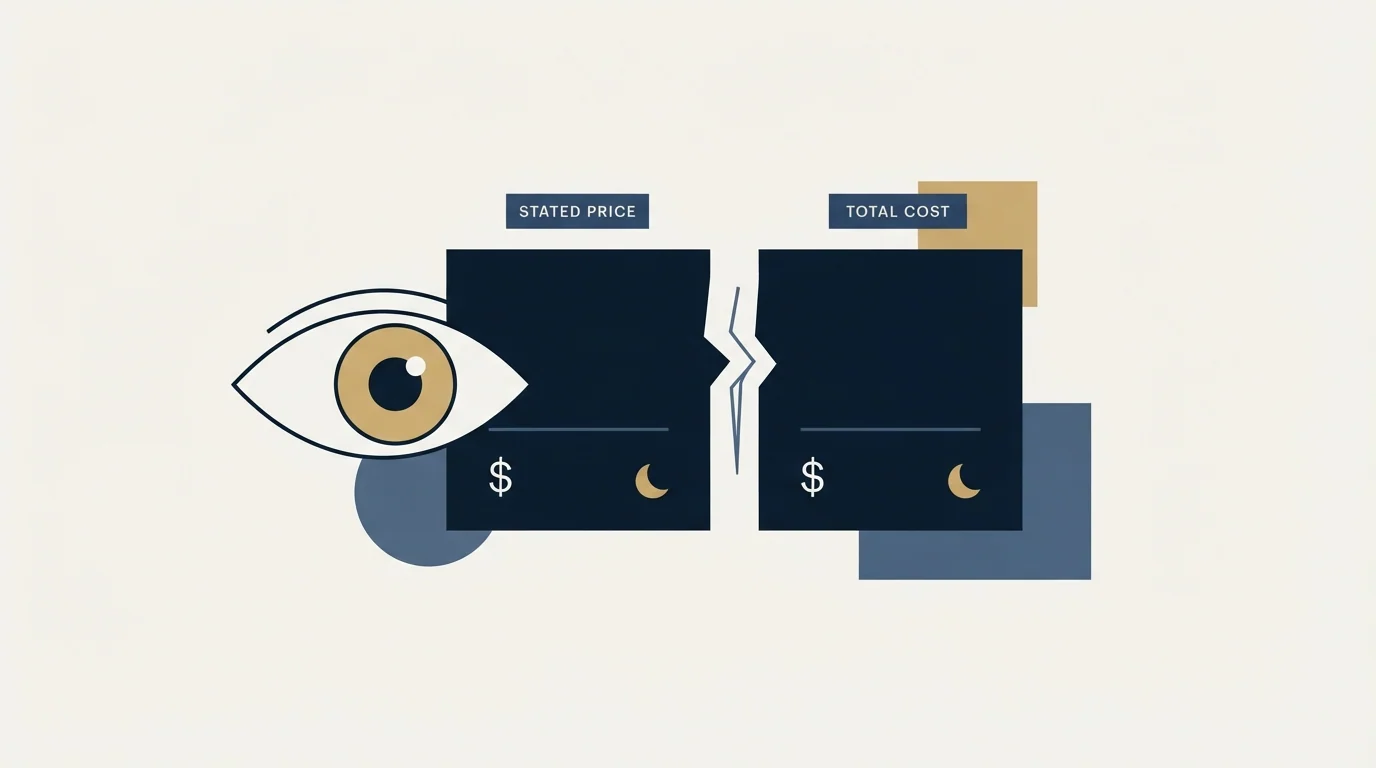
Those two figures do not describe the same contract. Twelve months at $3,750 is $45,000 by our own arithmetic on the vendor's numbers, against the $36,000 the FAQ states. The page also carries a third number in its own metadata, where the description served to search engines and social previews says plans from $2,000 a month. One page, three entry prices, and the visible plan card and the visible FAQ are the two that a reader actually sees disagreeing with each other.
A disclosure before going further. RevenueFlow runs outbound as a service and is paid on attended qualified meetings, so we compete for budget with tools like this one, though not in the same shape. Everything below comes from 11x's own pages, and from TechCrunch's reporting where named, as they rendered on 16 August 2026.
What the three tiers publish
- Up to 5 end users
- 2,000 new prospects per month
- 11x managed Gmail mailboxes with domain setup, warmup, inbox rotation and monitoring
- Bi-directional CRM sync
- The FAQ describes the same plan as $36,000 per year
- Up to 10 end users
- 5,000 new prospects per month
- Multi-language outreach, stated as 105 or more languages
- Signal-based triggers and custom model fine-tuning
- Dedicated onboarding described as two weeks
- Unlimited end users
- 10,000 or more prospects per month
- SSO, custom DPA and custom SLA
- Dedicated customer success manager and a forward deployed engineer
- White-glove onboarding described as four weeks
The unit of the deal is stated plainly and it is the most useful sentence on the page: new prospects per month. The page reinforces it under the plan table with the line that 11x charges per lead rather than per send, and that whether the agent runs three touchpoints or thirty, the price stays the same.
That is a genuine design decision rather than marketing, and it has a consequence a buyer should think through before signing. A price that is flat in messages and linear in people rewards contacting each person more often. Whatever the vendor intends, the incentive inside the pricing model points at more touches per prospect, and the reputation consequences of extra touches land on the sending domains rather than on the invoice.
Which sending domains, and who owns them afterwards
Every tier includes 11x managed Gmail mailboxes, with domain setup, warmup, inbox rotation and monitoring listed as part of the package, alongside deliverability analytics, bounce suppression and domain health monitoring.
Bundled sending infrastructure is a real convenience and it is also the single largest thing to establish in the contract. Three questions decide how much risk you are absorbing: how many domains your volume is spread across, who else sends from them, and what happens to those domains when the contract ends. A programme that spends a year building reputation on domains it does not own has bought performance rather than an asset, and the difference shows up on the day you leave.
A contrasting case worth weighing is AiSDR's tiered pricing breakdown, which states contact allowance, domain count, mailbox count and LinkedIn account count for every plan rather than bundling infrastructure without disclosure.
The general version of that argument, including why we hold far more sending capacity than a plan needs, is in the AI SDR category guide, and the ceilings that decide how many mailboxes a given volume actually requires are in email sending limits by provider.
The arithmetic the page invites, and the one it avoids

The FAQ makes an explicit comparison: it states that a fully loaded SDR costs $8,000 to $12,000 per month in salary, benefits, tooling and management, and sets that against $36,000 a year with no ramp time. That is the vendor's own framing of the comparison rather than a figure we have measured, and it is doing the work most of this category's marketing does.
The framing is not wrong so much as incomplete, and the gap is on the output side rather than the input side. The following arithmetic is invented for illustration and describes no real deployment. Take the published entry commitment of $36,000 a year against the published Growth allowance of 2,000 new prospects a month, which is 24,000 prospects across the year, and the software cost per prospect contacted is $1.50. At a reply rate of one in a hundred and one meeting held for every four replies, that is 60 meetings, or $600 each. Halve the reply rate and the same contract produces 30 meetings at $1,200 each. The subscription did not move. The list, the offer and the sending did.
As printed on the plan card
Our arithmetic on the card price puts twelve months at $45,000
5,000 on Pro, 10,000 or more on Enterprise
The page says the price is the same whether the agent runs three touchpoints or thirty
Prospects contacted is capacity. Meetings held is the outcome, and nothing on the pricing page bridges the two, which is true of every vendor in this category rather than a criticism of this one. The number that decides a renewal is cost per meeting held against an agreed definition of what a meeting has to be, and that definition is the buyer's job to write before the comparison can mean anything.
The commercial terms that are unusually clear
Four things on this page are settled in writing where most vendors leave them to a call, and they are worth crediting.
Onboarding is stated as included at every tier, with no implementation fee, configuration charge or per-integration cost. The page states that every plan bundles contact data, deliverability, warmup, inbox rotation, meeting scheduling, CRM sync and onboarding, and that the only thing you bring is your own CRM licence. Annual billing is the default, with two-year and three-year commitments described as carrying discount tiers. And renewal increases are described as capped, with multi-year commitments locking the rate for the term.
A published renewal cap is rare enough to be worth asking about specifically, because capped at what is the whole question and the page does not say.
The diligence context a buyer should have
Vendor evaluation in this category is not only a feature comparison, and 11x is the company that made that lesson concrete for everyone.
Unlike 11x, some category vendors avoid a stated figure entirely, and Salesloft's pricing page shows what that omission looks like in practice.
TechCrunch reported in March 2025 that 11x had been showing customer logos on its website for companies that were not active customers, that one of those companies was threatening to sue over it, and that sources described product problems and difficulty retaining customers. In May 2025 TechCrunch reported that founder Hasan Sukkar was stepping down as chief executive, with then chief technology officer Prabhav Jain named as the new CEO and Sukkar moving to a non-executive chairman role. The same report noted that an Andreessen Horowitz partner involved in the deal publicly restated the firm's support for the company.
On funding, the company's own pricing page carries the line that it has raised more than $70 million from a16z and Benchmark. Its own blog post from September 2024 announces a $24 million Series A led by Benchmark, and TechCrunch's May 2025 report describes that Series A alongside a $50 million Series B led by Andreessen Horowitz.
None of that settles whether the product works for you now, and a company two chief executives into its history is not automatically a worse purchase than one that has never had a difficult quarter. What it does is set the diligence bar for the whole category.
- Yes: Three reference customers in your segment, past month six, and you pick which ones you call
- Yes: Cohort retention rather than a logo wall: what share of last year's customers still pay
- Yes: How many domains your volume is spread across and who else sends from them
- Yes: What happens to those domains and their reputation at the end of the contract
- Yes: What the renewal cap is capped at, in a number
- Yes: A break clause tied to meetings held against a written definition
- No: Reading prospects contacted per month as though it were an outcome
Where we differ, and what it costs us
Two of our own positions cut against how a per-lead price wants to be used.
We run one message per campaign, with no thread replies and no bumps. A pricing model that is flat in sends makes extra touches feel free, and they are not free: every message after the first reaches only the people who saw the previous one and chose not to answer, which is the population most likely to file a complaint, and the reputation cost of that lands on the sending domain across everything else running on it. What replaces a follow-up is a new campaign built on a genuinely different premise. The full argument, including what the position costs us, is in email sequence software.
We are also paid on attended meetings that meet criteria agreed in writing before launch, with budget, timing and authority deliberately outside that definition. That is the same instinct as writing down what a meeting has to be before comparing any two vendors on cost per meeting: settle the ruler, then read the number.
The short version
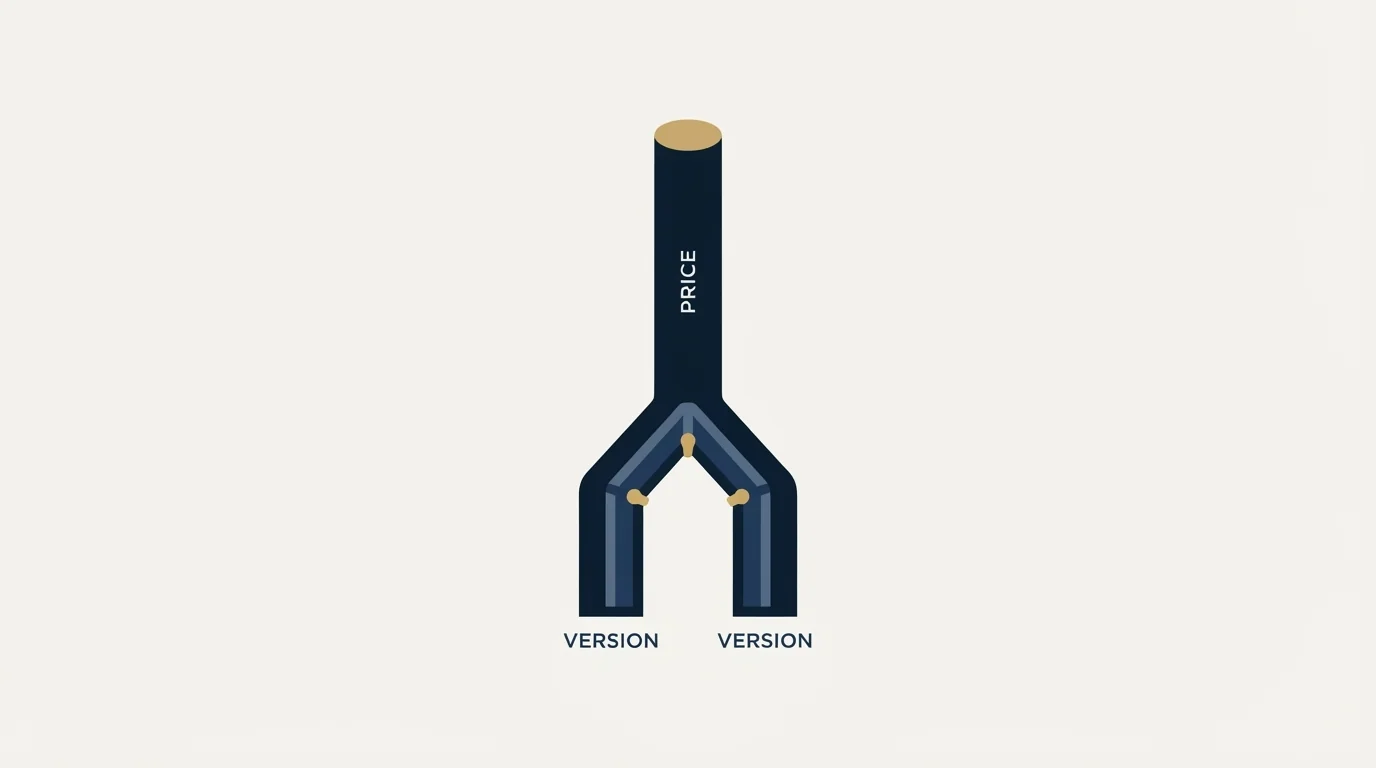
11x publishes an entry price, which is a real improvement on quote-only pricing, and its own page states that price two ways: $3,750 a month billed annually on the plan card, and $36,000 a year in the FAQ. Establish which one the contract will say.
The unit is new prospects per month, 2,000 on Growth and 5,000 on Pro, with unlimited end users and 10,000 or more prospects on Enterprise. Billing is per lead rather than per send, so the model is flat in messages and linear in people.
Sending infrastructure is bundled at every tier, which is convenient and means the domains carrying your reputation are the vendor's. Ask how many, who else is on them, and what happens at the end.
For where this product sits against the rest of the category, AI SDR has the capability line and the vendor landscape, Artisan's pricing page covers a competitor that publishes contact volume instead of a price, and SDR versus AI SDR versus GTM engineer covers which seat to staff.
If what you actually want is meetings rather than a platform to run, see what a campaign would look like for your market.
Pricing and features verified against 11x's own pricing page as of mid-2026, with dated snapshots retained. Verify current terms with the vendor before relying on them.
Sources: 11x Alice pricing, 11x Series A announcement, TechCrunch, 11x CEO Hasan Sukkar steps down
Frequently asked questions.
Frequently asked questions- How much does 11x cost?
- Its Alice pricing page publishes a Growth plan starting at $3,750 per month billed annually, while the FAQ on the same page states that 11x starts at $36,000 per year on Growth. Twelve months at the card price would be $45,000, so establish which figure the contract will carry. Pro and Enterprise are custom-quoted.
- What does 11x charge for?
- New prospects contacted per month rather than messages sent. The pricing page states the price is the same whether the agent runs three touchpoints or thirty, and publishes 2,000 prospects a month on Growth, 5,000 on Pro and 10,000 or more on Enterprise. That makes the model flat in sends and linear in the number of people reached.
- Does 11x provide the sending mailboxes?
- Yes. Every published tier includes managed Gmail mailboxes with domain setup, warmup, inbox rotation and monitoring, alongside deliverability analytics and bounce suppression. That is convenient and it means the sending reputation is built on domains the vendor owns, so ask how many domains carry your volume, who else sends from them, and what happens at the end of the contract.
- What happened with 11x and TechCrunch?
- TechCrunch reported in March 2025 that customer logos on the company's site included companies that were not active customers, with one threatening to sue, and that sources described product and retention problems. In May 2025 it reported that founder Hasan Sukkar stepped down as chief executive, with then chief technology officer Prabhav Jain named CEO.
About the author.

B2B cold email experts helping companies generate qualified leads through done-for-you outreach campaigns.
RevenueFlow Team
Explore more.
Ready to scale your outreach?
We build GTM engines that book real meetings. See the receipts.
Related articles.
Overloop Pricing: Two Seat Rates and No Annual Toggle
Overloop publishes Starter and Growth per user with a credit allowance and no annual rate on the page. What each seat carries, and what the page leaves out.
The Real Cost per 1,000 Emails, Verifications and Data Credits in 2026
Unit prices computed from verified vendor plans: $1.00 per 1,000 emails sent, $2.00 per 1,000 verifications and $19.60 per 1,000 enrichment credits.
Lavender Pricing: Two Products, No Pricing Page
Lavender has no pricing page. The Email Coach ladder per seat at both billing states, the free routes, and the separate per-agent price for Ora.
Snitcher Pricing: The $49 Table Is the Annual Rate
Snitcher's visible price table is the annual-billing ladder. The ten bands at both billing states, the unique-company meter, and the rules on a help page.
What Cold Email and Sales Tools Actually Cost in 2026: Pricing Data From 386 Vendors
RevenueFlow's verified dataset of 386 sales tools puts the median starting price at $39.98 a month. Here is the spread by category, tier and billing model.
Twain Pricing: Credits per Lead, Three Research Modes
Twain sells credits, not seats, and a lead costs 1 to 14 of them depending on the research mode. The two ladders, the four expiry clocks and the cap.