Warmly: Website Visitor Identification From $10,000 a Year
Warmly (warmly.ai) identifies site visitors and orchestrates the follow-up. Verified tier pricing, the credit meter it hides, and why it is not Warmy.io.
Warmly is a website visitor identification and orchestration platform, not an email warmup tool. Its pricing page publishes three products starting at $10,000, $20,000 and $30,000 per year, each metered from 10,000 credits a month and routed through a sales conversation. Person-level resolution is the headline capability and the main European legal question.
Key takeaways
- Warmly at warmly.ai is website visitor identification and orchestration. Warmy.io is a separate company selling email warmup.
- The pricing page publishes three products at $10,000, $20,000 and $30,000 per year, with quarterly equivalents of $4,875, $6,500 and $9,750, and no self-serve tier.
- The advertised 30% annual saving does not reconcile with the published figures: two tiers work out near 23% and the entry tier near 49%.
- All three tiers meter from 10,000 credits a month, and the pricing page never defines what a credit buys, so cost per resolved company cannot be modelled.
Reviewed and updated September 1, 2026
Warmly, at warmly.ai, sells website visitor identification and orchestration. A pixel on your site resolves who is arriving, and the platform then acts on that resolution with real-time alerts, on-site chat, lead routing and outbound sequencing. Not to be confused with Warmy.io, an email warmup service that warms sending domains and mailboxes, which is a separate company in a separate category and is covered in the Warmy.io write-up.
That distinction matters more than it looks, because the two names differ by one letter and sit either side of a hard line. One is a deliverability tool. The other is a data and engagement platform whose entry product is called AI Web-Deanonymization.
The pricing has moved a long way upmarket. Warmly's pricing page, fetched in mid-2026, publishes three products, and the lowest figure on any of them is $10,000 per year. Every tier's button reads "Talk To Sales". There is no self-serve monthly plan anywhere on that page, and the homepage carries no price at all beyond a customer quote. Any lower monthly figure you find in a third-party comparison table is worth checking against the vendor's own page before you build a budget on it.
Anyone searching Warmly pricing is looking for a number, and the honest answer is that the published ladder gives three of them for the same tier depending on billing term, with the discount label on the page disagreeing with the arithmetic underneath it.
Searching Warmly reviews returns two unrelated things, the product's G2 and Trustpilot listings and Glassdoor pages about working at the company, and only the first set says anything about the tool.
What Warmly actually sells
The pitch on the pricing page is "Four products. One AI worker per workflow." The structure underneath that is two agents plus a data layer.
The Inbound Agent is the on-site half: identification, an AI chatbot, personalised landing pages, smart popups, live human chat, meeting booking, lead routing, real-time alerts, retargeting across email and LinkedIn ads, and an AI call agent. The TAM Agent is the off-site half: dynamic audience building, AI ICP tiering, buying committee identification, machine-learning intent scoring, enrichment, LinkedIn ad targeting and outbound orchestration. Sitting under both is what Warmly calls the Context Graph, described on the page as a living world model of your market rather than a static database, holding an activity ledger, resolved entities and derived insights such as ICP tier, intent score and a next best action.
The thing being sold is the bundling. Identification on its own is a commodity, and plenty of vendors will put a pixel on your site and hand you a list. Warmly's argument is that the alert, the chat window, the routing rule and the follow-up sequence should be one system rather than four tools joined by webhooks. Whether that is worth a five-figure commitment depends entirely on whether you would otherwise assemble those four tools, and on whether your traffic justifies any of it.
- Website visitors as contacts and companies
- ICP filtering
- Real-time alerts and Slack alerts
- Lead routing and CRM sync
- SEP and webhook integrations
- Retarget via email, LinkedIn and ads
- Everything in AI Web-Deanonymization
- AI chatbot with one AI Studio Agent
- Warm Calling, described as live chat
- Warm Offers and chat metrics
- Automated email follow-up
- Everything in Inbound Chat
- Unlimited AI Studio Agents plus an Autopilot Agent
- AI goal-setting, qualification and decision-making
- AI slide generation for a mini-demo
- Auto email generation and follow-up
Two add-ons carry published figures on the same page. A GTM Signals Package, described as intent data, hiring activity, funding events and competitive intelligence, is listed at $10,000 per year. Warm Experiences, personalised website content driven by visitor identity, is also listed at $10,000 per year. An AI 24/7 Video Chat Agent is listed as Contact Sales with no figure.
The annual and quarterly ladders do not agree with the discount label
The pricing page carries a billing switch. One control reads "Annual" with a "Save 30%" tag beside it, the other reads "Quarterly", and both sets of figures render into the same HTML document. The annual control and the annual cards appear first in the markup, but the active state is applied by JavaScript rather than written into the HTML, so confirm on the live page which set you are looking at before quoting either.
Run the arithmetic across the two ladders and the 30% label does not hold on any tier.
Inbound Chat is $6,500 per quarter, which is $26,000 across four quarters, against $20,000 on the annual card. That is 23% less, not 30%. AI Inbound Autopilot is $9,750 per quarter, or $39,000 a year, against $30,000 annually, which is the same 23%. AI Web-Deanonymization is the outlier in the other direction: $4,875 per quarter is $19,500 a year against $10,000 annually, a gap of roughly 49%.
One caveat keeps that from being a straightforward inconsistency. The annual figures are all prefixed "Starting at" and the quarterly figures are not, so the two ladders may not describe identical configurations, and the annual number is a floor rather than a quoted price. The practical consequence for a buyer is the same either way: the published figures are an opening position for a sales conversation, and the commitment length is a live negotiating variable rather than a fixed 30% discount.
Credits are the meter, and the page does not define the unit
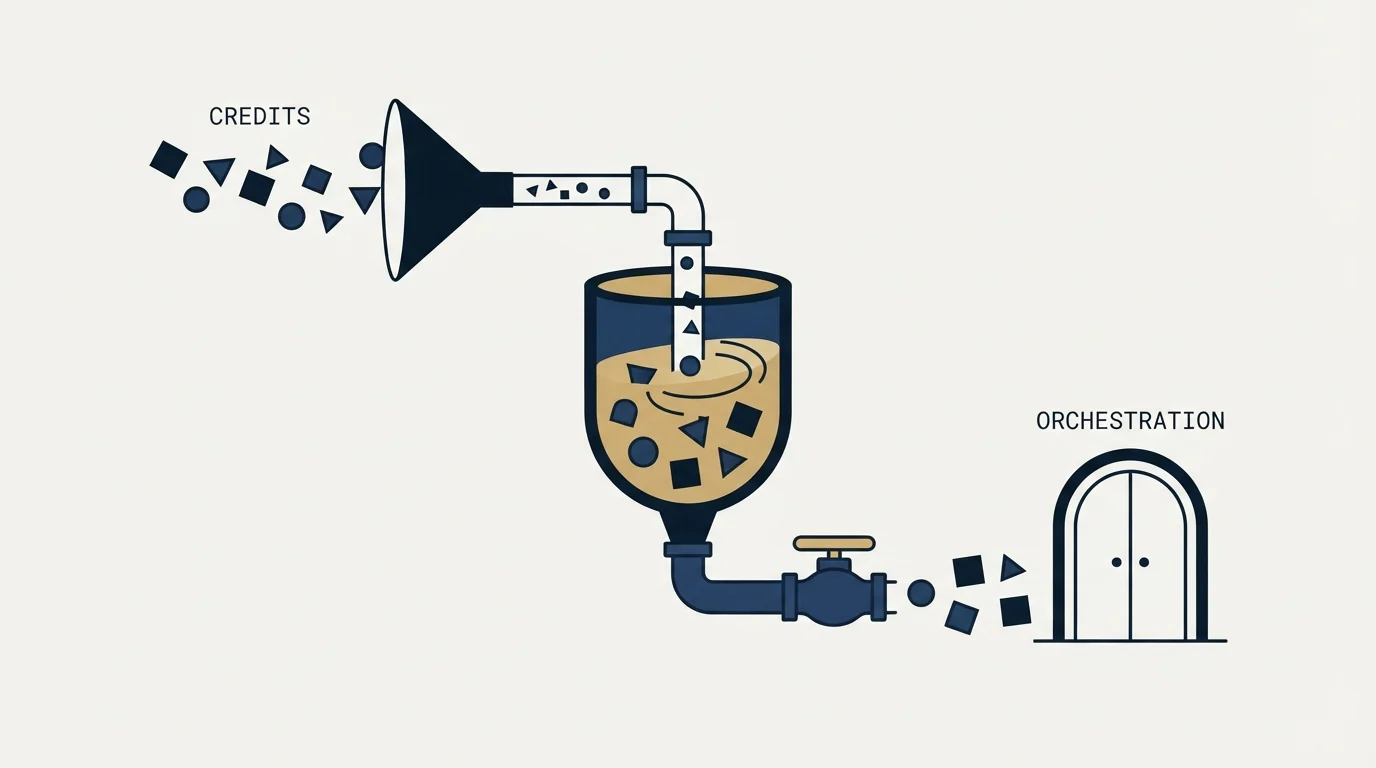
All three tiers carry the same line: "From 10K credits / mo". That is the metering unit, and it is the number that will actually govern your bill once volume grows.
The pricing page does not define what one credit buys. It does not say whether a credit is consumed by a resolved company, a resolved person, an enriched contact record, an outbound message, or some combination. That is the single most important missing number on the page, because it is the only thing that converts a headline price into a cost per usable record.
Credit metering of this kind is not unique to Warmly, and the same question of what a credit actually buys is answered in detail for a LinkedIn-first tool in the Kaspr credit model breakdown.
What can be computed from published figures is a ceiling on precision. If the entry configuration is genuinely $10,000 a year with 10,000 credits a month, that is 120,000 credits a year, or roughly 8.3 cents per credit. The assumption that those two published minimums describe the same configuration is mine and is not stated on the page, so treat that figure as the shape of the calculation rather than a quoted rate. Until a credit is defined, a cost per resolved company cannot be derived at all, and that is a question to put to the sales team in writing before signing.
The data and signals behind the product
Warmly's pricing page publishes a set of data-foundation counts and a breakdown of where its signals come from. First-party signals are website visits at person and company level, in-app visits, CRM fields and lead scoring. Second-party signals are social media monitoring. Third-party signals are listed as Bombora research intent, competitor keyword monitoring, job changes and champion tracking, new hire detection, job postings, funding announcements, technographic changes and leadership changes.
Teams weighing which third-party signals actually justify an outbound message can see how a different vendor structures trigger events in the ZoomInfo Scoops guide.
The Bombora line is worth pausing on, because it names a specific upstream source rather than describing the signal generically. Before paying $10,000 a year for the GTM Signals Package, check which of these sources your existing tools already draw on, and how to read what comes back, in the B2B intent data guide.
Listed under The Data Foundation
Person-level resolution and the European question
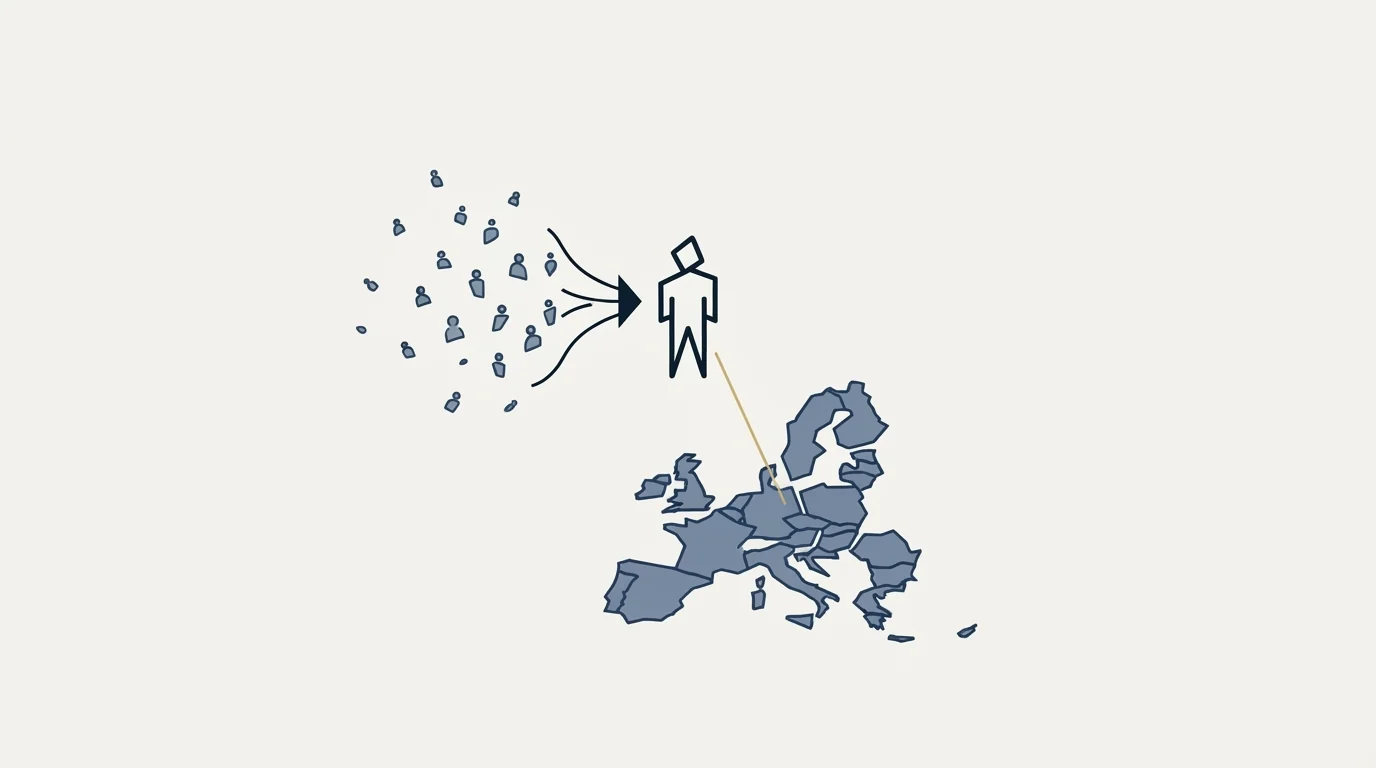
The entry product is named AI Web-Deanonymization, and its feature list opens with "Website visitors (contacts + companies)". Contacts means person level. That is the capability being sold, and it is also the capability that carries the legal exposure, which is why it deserves a direct answer rather than a shrug.
Warmly's privacy policy names the controller for European data protection purposes as Warmly, Inc., at an address in Houston, Texas. The same policy states that the company is located in the United States, that it has service providers in the United States and potentially other countries, and that personal information may be processed and stored in the United States and countries outside your home country, where privacy laws may not be as protective. The policy does carry a dedicated notice for individuals in the EEA, the United Kingdom and Switzerland, and it names legitimate interests among its legal bases. The string "GDPR" does not appear in it; the policy uses the phrase "European data protection legislation" instead.
None of that settles whether person-level de-anonymisation of EU visitors is lawful for you. That verdict, and the match rate you should plan around, are the two things to settle before you buy anything in this category for European traffic.
The point worth carrying away is narrower and is often missed. A vendor's compliance posture is not the sender's compliance posture. A lawfully assembled database answers the sourcing question and nothing else. You still owe your own lawful basis for contacting the person, the country-by-country ePrivacy check that sits on top of the GDPR, and transparency in the first message, all of which are set out in the GDPR compliance guide. Buying an American vendor does not move that obligation, and buying a European one does not discharge it either.
Honest limitations
The floor is high. At $10,000 a year for identification alone, this is not a tool you trial cheaply, and the absence of any self-serve tier on the pricing page means the first step is a sales call rather than a pixel.
The credit unit is undefined on the pricing page, so per-record economics cannot be modelled before that conversation.
The published discount label does not reconcile with the published figures, as shown above, so treat all six numbers as opening positions.
Person-level resolution is the headline capability and the main legal risk for European traffic, and the vendor's own privacy policy places the controller and the processing in the United States.
Company-level and person-level identification both depend on your having enough traffic to resolve. Below a few thousand monthly visitors, no product in this category returns enough named accounts to repay a five-figure contract, whatever its match rate.
- Yes: You have substantial inbound traffic and a defined ICP to filter it against
- Yes: You want alerts, chat, routing and sequencing as one system rather than four integrations
- Yes: You have budget authority for a five-figure annual commitment
- No: Your traffic is predominantly EU or UK and person-level resolution is the reason you are buying
- No: You want to trial identification cheaply before committing
- Depends: You need a defined cost per resolved company before you sign
Who this fits and who should skip it

Warmly fits a mid-market or enterprise team with real inbound volume, a US-weighted audience, an existing motion that already touches four separate tools, and a budget process that can absorb a five-figure annual line item. For that team, the bundling argument is genuine and the orchestration layer is the product.
It does not fit a team testing whether visitor identification works at all. The category has cheaper entry points, and the person-level end of it is compared directly in the RB2B review and alternatives page, which carries verified per-tier pricing for that comparison.
It also does not fit a team whose traffic is mostly European and whose plan depends on person-level resolution. That is a legal question before it is a tooling question, and it should be answered with counsel rather than with a vendor's feature list.
Since European traffic and its legal exposure are the sticking point, teams can weigh a Stockholm-run alternative in the EU-native visitor identification review.
Whatever you conclude about identification, the signal is only worth what the follow-up does with it. If you want the outbound half handled without buying another platform, start a free campaign and see what a single well-targeted message produces before adding a five-figure data layer underneath it.
Pricing and features verified as of mid-2026. Verify current terms with the vendor before relying on them.
Frequently asked questions.
Frequently asked questions- Is Warmly the same as Warmy.io?
- No. Warmly, at warmly.ai, is a website visitor identification and orchestration platform that resolves who visits your site and drives alerts, chat and sequencing from it. Warmy.io is a separate company selling email warmup, which warms sending domains and mailboxes to protect deliverability. The names differ by one letter and the two products solve unrelated problems.
- How much does Warmly cost?
- Warmly's pricing page published three products in mid-2026: AI Web-Deanonymization starting at $10,000 a year, Inbound Chat at $20,000 and AI Inbound Autopilot at $30,000. Quarterly equivalents are $4,875, $6,500 and $9,750. Every tier's button reads Talk To Sales, and the page shows no self-serve monthly plan, so the figures are opening positions.
- Does Warmly work for EU website traffic?
- Warmly's privacy policy names Warmly, Inc. in Houston, Texas as the controller for European data protection purposes, and states that data may be processed and stored in the United States. It carries a dedicated EEA, UK and Switzerland notice. Whether person-level de-anonymisation of EU visitors is lawful for your use case is a question for counsel, not for a vendor feature list.
- What is a Warmly credit?
- The pricing page does not say. All three tiers list a floor of 10,000 credits a month, but the page never defines whether a credit is consumed by a resolved company, a resolved person, an enriched record or an outbound message. That makes cost per usable record impossible to derive from published figures, so ask for the definition in writing before signing.
About the author.

B2B cold email experts helping companies generate qualified leads through done-for-you outreach campaigns.
RevenueFlow Team
Explore more.
Ready to scale your outreach?
We build GTM engines that book real meetings. See the receipts.
Related articles.
Ontraport Pricing: Three Plans and Five Other Meters
Ontraport now publishes three plans, not the four most pricing pages still quote. The rates are its annual state at the smallest contact band.
Is Clay Free? The Free Plan, the Trial and Where Each Stops
Clay's free plan, its 14-day trial and the no-charge-on-a-miss rule are three different things. What each holds and where it stops, from clay.com on 19 September 2026.
Social Selling Tools by Job, and the Account-Risk Line
Fourteen social selling tools sorted into six jobs, split by whether each acts through your LinkedIn account or beside it, from the vendors' own pages.
Video Prospecting Tools by Job: What Each One Is For
Ten video prospecting tools sorted by the job each vendor's own page describes: record and share, personalise at volume, avatars, hosting and interactive demos.
Seamless.AI Email Finder: How It Works, What a Credit Buys
How Seamless.AI's email finder resolves a contact in real time, what one Universal Credit buys, the Total AI score on every address, and what the Chrome extension reads.
What Cold Email and Sales Tools Actually Cost in 2026: Pricing Data From 386 Vendors
RevenueFlow's verified dataset of 386 sales tools puts the median starting price at $39.98 a month. Here is the spread by category, tier and billing model.