Kaspr: The Credit Model, the Coverage Claim, and Cognism
Kaspr advertises unlimited business emails while metering phone and direct email credits. Here is what its published tiers, add-on rates and coverage claims say.
Kaspr is a LinkedIn-first prospecting tool, part of Cognism since 2022, sold per user. Its pricing page publishes Starter at EUR45 and Business at EUR79 per user per month on annual billing, with unlimited business email credits but metered phone and direct email credits that set the real cost.
Key takeaways
- Kaspr's pricing page publishes Starter at EUR45 and Business at EUR79 per user per month with the annual toggle active, and EUR59 and EUR99 on monthly billing.
- Unlimited applies only to B2B email credits. Phone and direct email credits stay metered, and Starter includes 5 direct email credits per month against Business at 200.
- Add-on rates show the unit cost: phone credits run from EUR0.35 down to EUR0.20 per credit, roughly twice the price of direct email credits at matching volumes.
- Kaspr publishes 200 million plus European contacts but answers its own regional coverage question with a global one-liner, giving no North American figure to plan against.
Reviewed and updated September 1, 2026
Open a LinkedIn profile with the Kaspr extension installed, click once, and a phone number appears. The counter that moves when you do that is the entire commercial model, and it is not the counter most buyers look at when they compare tools. Kaspr's plans advertise unlimited business email credits, which draws the eye, while the thing you are actually rationing is phone credits and direct email credits.
This page walks the credit model, the published tier prices, the add-on rates that reveal the real unit cost, and the coverage claim, all read off Kaspr's own surfaces. It also covers the Cognism relationship, because a buyer comparing the two needs to know they are shopping inside one company.
What Kaspr is, and where it sits inside Cognism
Kaspr's about page describes the product as "the go-to (super user-friendly, too) prospecting tool for SMBs and individual contributors" and states plainly that "Kaspr is part of Cognism". The same page dates the relationship: "We joined Cognism in 2022 and provide global data, too." Cognism is described on that page as "a global leader in sales intelligence".
That positioning is the most useful thing on the page for a buyer. Kaspr is pitched at individuals and small teams working profile by profile in a browser. Cognism is pitched at sales intelligence buyers operating at company scale. They sit under one roof, which matters when you are evaluating both, because the underlying data assets are related and you can end up paying twice for overlapping coverage. If you are running that comparison, the wider alternatives landscape is covered in our Cognism alternatives roundup, and Cognism's own pricing belongs on its own page rather than here.
ZoomInfo Intent: What a Signal Score Actually Measures explains how a company scale sales intelligence vendor turns browsing behaviour into a comparative signal rather than a raw volume count.
The practical read: treat Kaspr as the seat-priced, LinkedIn-first entry point into that data, and Cognism as the platform-priced one. Ask any rep quoting you both which contact records overlap.
The credit model is three currencies, not one
Kaspr's pricing page meters three separate things, and conflating them is the most common way a plan turns out to be smaller than it looked.
The first is B2B email credits. On the paid tiers these are published as "Unlimited B2B email credits", with the page's FAQ pointing to a fair use policy rather than a number. The second is phone credits, which are strictly metered on every tier. The third is direct email credits, also metered, and scarcer than phone credits on the entry plan. On top of those sits a separate export limit governing how many enriched leads you can push to a CRM or download.
So the headline word "unlimited" applies to the cheapest thing to derive and verify, while the two genuinely scarce assets stay counted. That is a reasonable way to build a product, and it means the sticker price tells you very little until you map your own workflow onto the right counter. If phone numbers are what you need, the phone credit line is your real price.
What the tiers actually publish
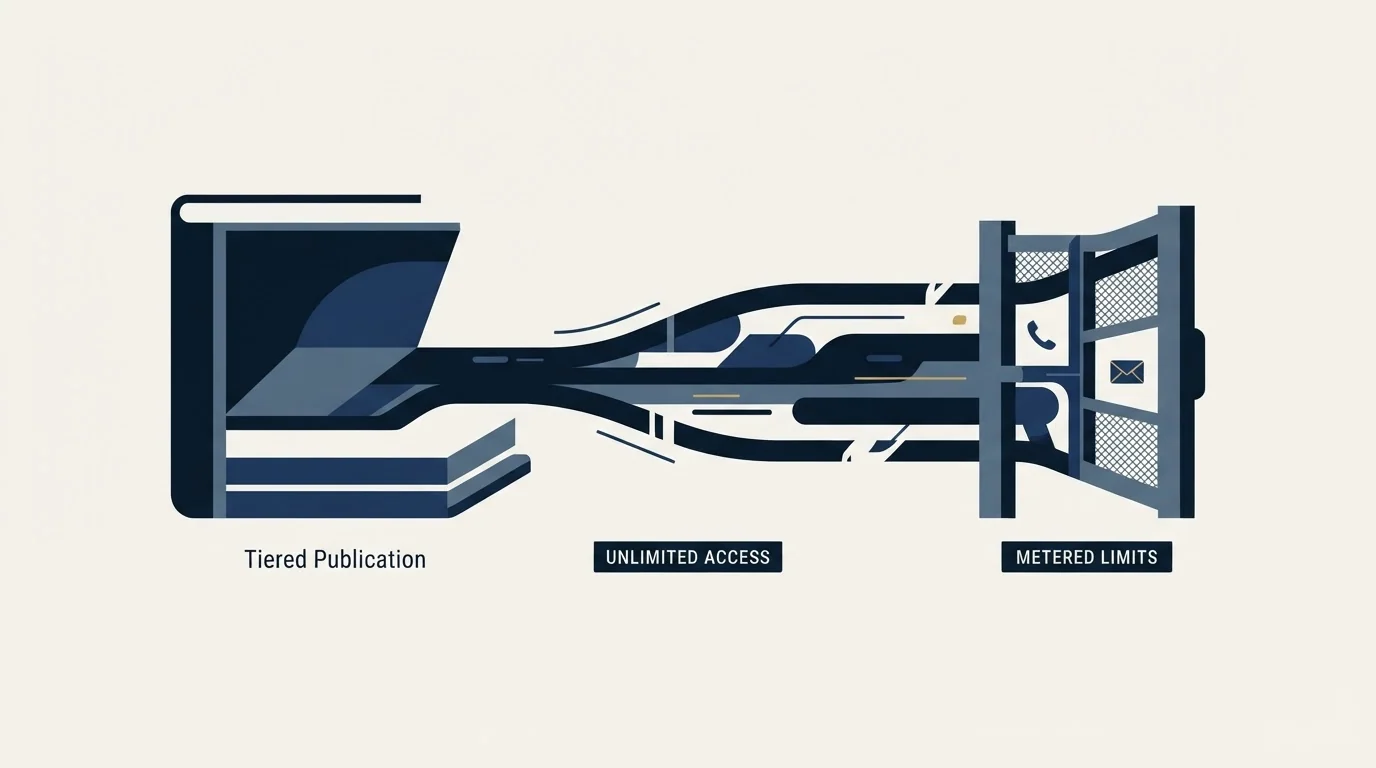
Kaspr's pricing page renders a billing toggle and a currency switcher. In the page markup the annual option carries the active state and the euro option is the default currency, so the euro annual figures below are what the page shows before a visitor touches anything. Monthly billing is a click away, and the toggle is labelled "Annually 25% off".
- 15 B2B email credits
- 5 phone credits
- 5 direct email credits
- Chrome extension and lead management
- No Sales Navigator support
- Unlimited B2B email credits
- 100 phone credits per month
- 5 direct email credits per month
- Up to 12,000 exports per year
- Kaspr on Sales Navigator, shared credits
- Unlimited B2B email credits
- 200 phone credits per month
- 200 direct email credits per month
- Up to 30,000 exports per year
- API access, custom member permissions
Kaspr also publishes dollar and sterling equivalents on the same cards: Starter at $49 annual and $65 monthly, Business at $79 annual and $99 monthly. An Enterprise tier is listed at custom pricing with unlimited credits.
Re-read on 4 September 2026, every figure on those cards was unchanged, the euro was still the active currency in the page's markup, and the phone add-on ladder still ran from EUR0.35 to EUR0.20 a credit.
The jump worth noticing is direct email credits. Starter gives 5 per month, Business gives 200. That is a fortyfold increase for a price difference of EUR34 per user per month at annual billing. If direct emails are the reason you are buying, Starter is close to a trial tier regardless of what the phone allowance says.
Add-on credits are where the real unit cost shows up
Subscription pricing hides unit economics. Kaspr's add-on credit tables do not, and they are the most useful numbers on the page. Kaspr publishes separate ladders for phone credits, direct email credits and export credits, each with an annual and a monthly column and a stated price per credit.
EUR875.00 for 2,500 credits
EUR20,000.00 for 100,000 credits
EUR400.00 for 2,500 credits
Published rate at the 100,000 block
Two things follow. Phone data is roughly twice the price of direct email data at comparable volumes, which tells you where Kaspr's own cost sits. And the volume discount is real but shallow: buying forty times as many phone credits moves the rate from EUR0.35 to EUR0.20, a little over 40 percent off. Anyone modelling a large programme should not assume enterprise negotiation collapses that curve much further.
A worked example, invented to show the shape
The numbers in this section are invented to show the shape of the calculation, not measured, and they assume a usage pattern that may not be yours.
Take a single rep on annual Starter at EUR45 per user per month. That is EUR540 per user per year, and the annual plan includes 1,200 phone credits per year. If phone numbers are the only reason that rep has the tool, and they burn every credit, the subscription works out at EUR0.45 per phone number. The smallest annual add-on block prices phone credits at EUR0.35.
That comparison is deliberately unfair to the subscription, because the subscription also carries unlimited business email credits, the extension, exports and lead management. The point is the method rather than the answer: work out what your scarce credit costs inside the plan, compare it to the published add-on rate, and you will know whether you are buying a tool or buying data. Not every found number becomes a usable one either, so apply your own match rate before treating the credit price as a contact price.
The coverage claim, and the part it does not answer

Kaspr's data page leads with "Unlock 200 million + European B2B contacts" and "Powered by 120+ verified data sources and providers", and says Kaspr is the provider of choice for "over 10,000 sales teams". The European framing is consistent throughout that page, which describes the company as born in France with hubs in the UK and Spain.
The specificity stops at Europe. Asked directly, in its own FAQ, "Which regions does Kaspr cover?", the page answers in a single sentence: "We provide data for B2B decision makers across the globe." There is no published North American contact count, no per-country breakdown, and no regional fill-rate figure anywhere on that page. The about page adds only that Kaspr provides "global data, too".
This is worth stating plainly because the asymmetry is the finding. Kaspr publishes a large, specific European number and an unquantified everywhere-else. If your target market is North America or APAC, the vendor's own surfaces give you nothing to plan against, and any regional figure you find in a comparison blog did not come from Kaspr. Run a paid pilot on your own list before committing, which is the same advice that applies to every finder in our email finder comparison guide.
Where the data comes from
Kaspr's data FAQ names three source types. Publicly available information, including country and state legal registries and company websites. First-party collection and verification, meaning validation of an email or phone during inbound lead enrichment, CRM sync, sign-up, or inbound email. And third-party data providers, which the page says are subject to due diligence and contractual terms.
On freshness, the page says contact information is updated in real time when a user requests data, and that email data goes through a multi-step verification process and is re-validated "every two months". A two-month revalidation cycle is a reasonable published cadence, and it is a ceiling rather than a guarantee. Contact data decays continuously as people change roles, so budget for data decay between refreshes rather than treating a verified flag as durable.
Because Kaspr is a single-source enrichment step keyed on LinkedIn profiles, it behaves differently from a multi-provider cascade. If you are deciding whether one provider is enough, the tradeoffs are laid out in our guide to waterfall enrichment, and the broader tooling landscape in our enrichment tools roundup for SDR teams.
Compliance is the vendor's answer to a different question
Kaspr's data page states that it processes under the lawful basis of legitimate interest under Article 6.1(f), that each party acts as an independent controller, that it operates on an opt-out basis, and that it notifies "over 50,000 contacts per day". It commits to breach notification within 72 hours.
Kaspr's own wording draws the boundary better than most vendors manage: data is collected in compliance with GDPR and CCPA, "however, users remain responsible for ensuring their own compliance with applicable laws, including local marketing and consent requirements". Take that at face value. A lawful source answers the sourcing question and nothing else, so the sender still owes a documented lawful basis of their own, a country-by-country ePrivacy check before the first send, and transparency in that first message. Our GDPR guide for B2B outbound covers what that obligation actually requires, and the CCPA page covers the US side.
Two comparison tables that do not agree
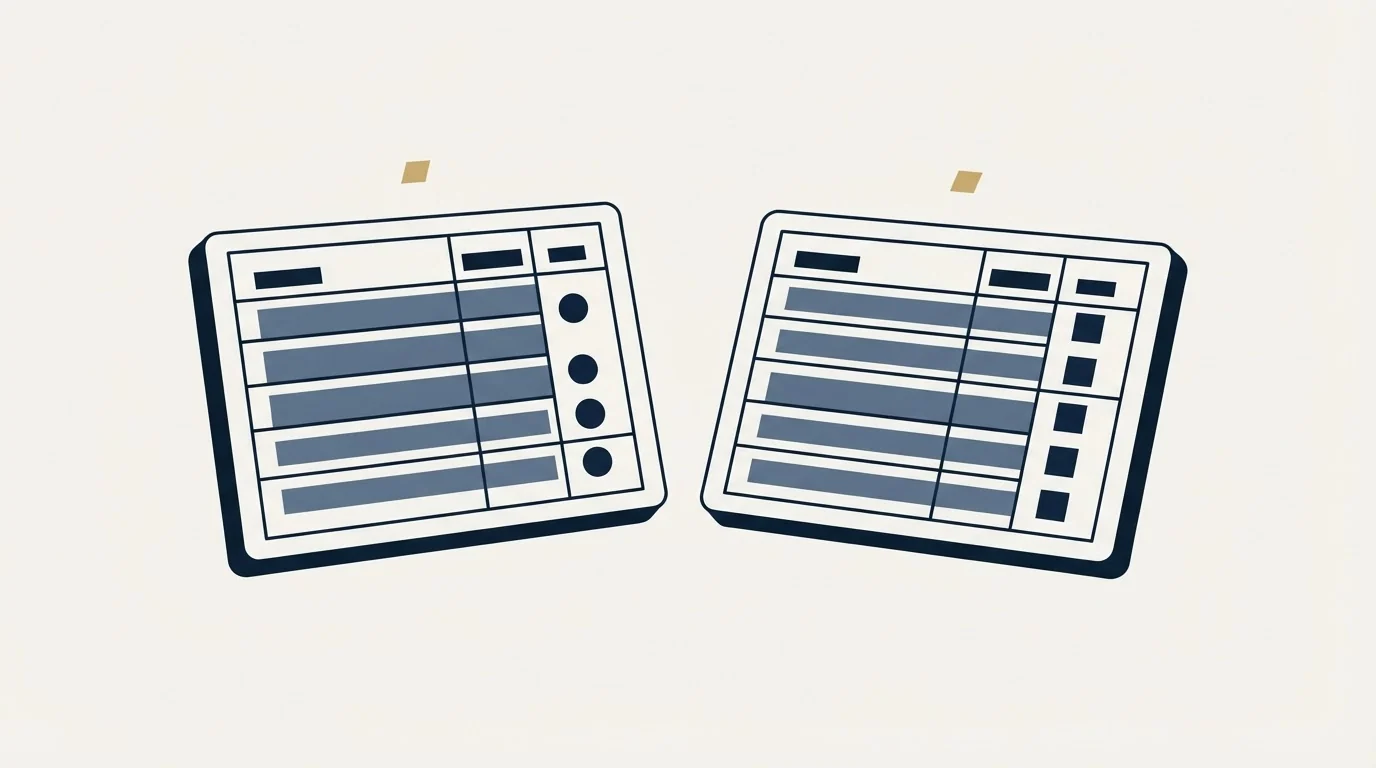
Reading the stored HTML of the pricing page turns up an inconsistency a buyer should know about. The page carries two plan comparison tables, and they disagree about the free tier.
The newer table lists free-tier B2B email credits at "15/month" and an export limit of 100. A second, older table on the same page lists free-tier B2B email credits at 25 and export credits at 10. That second table also has a column headed "Organization", a plan name the current pricing cards do not offer, since they end at Enterprise. The naming inconsistency repeats on the data page, whose FAQ says "Kaspr offers three different pricing plans: Starter, Business, and Organization" and omits the free plan entirely, on a site whose pricing page title advertises unlimited B2B emails on the free plan.
None of this is deceptive. It reads like a stale module that outlived a repackaging. The lesson is procedural: on this vendor, confirm your tier's credit allowances in the checkout or with a rep rather than trusting a comparison table, and get the number you were quoted in writing.
Who Kaspr fits
- Yes: Your prospecting happens on LinkedIn profiles, groups, events or Sales Navigator
- Yes: Your targets are European, where the published coverage figure is specific
- Depends: You need phone numbers at volume, so you have priced the phone credit line
- Depends: You need direct emails at volume, which effectively rules out the Starter tier
- No: Your targets are mostly North American, where no coverage figure is published
- No: You want one provider to cover a large list without a fallback step
Kaspr fits an individual contributor or a small team whose motion genuinely starts in LinkedIn, whose market is European, and whose scarce resource is phone numbers they are willing to price per credit. It fits poorly as the single enrichment layer under a large multi-region list, both because coverage outside Europe is unpublished and because a seat-priced browser tool is an awkward shape for bulk work.
Whichever finder you land on, the enrichment step is upstream of the part that decides whether any of it works. If you want to see what a campaign built on verified contacts looks like end to end, start with a free campaign and judge the data by the replies rather than by the credit counter.
Pricing and features verified as of mid-2026. Verify current terms with the vendor before relying on them.
Frequently asked questions.
Frequently asked questions- Is Kaspr owned by Cognism?
- Kaspr's about page states that Kaspr is part of Cognism, and that the company joined Cognism in 2022. The two are positioned differently: Kaspr for SMBs and individual contributors working inside LinkedIn, Cognism for larger sales intelligence buyers. If you are quoted both, ask which contact records overlap before paying twice for the same coverage.
- What does the Kaspr free plan actually include?
- Kaspr's free tier is published at zero euros with 15 B2B email credits, 5 phone credits and 5 direct email credits. Worth knowing before you sign up: the pricing page carries two comparison tables that disagree, and the older one lists 25 B2B email credits instead. Confirm your allowance at checkout rather than trusting either table.
- How much does a phone number cost on Kaspr?
- Kaspr's add-on tables price phone credits at EUR0.35 per credit for the smallest annual block of 2,500, falling to EUR0.20 per credit at 100,000. Direct email credits are cheaper, published from EUR0.16 down to EUR0.11. The rate implied by a subscription differs from the add-on rate, so compare both before scaling a programme.
- Does Kaspr have good North American coverage?
- Kaspr publishes no North American figure. Its data page answers the regional coverage question by saying it provides data for B2B decision makers across the globe, and the about page mentions global data. The one specific number, 200 million plus contacts, is European. Run a paid pilot on your own list before committing to a non-European market.
About the author.

B2B cold email experts helping companies generate qualified leads through done-for-you outreach campaigns.
RevenueFlow Team
Explore more.
Ready to scale your outreach?
We build GTM engines that book real meetings. See the receipts.
Related articles.
Firmographic Data Providers: What Six of Them Publish
Six firmographic data providers read from their own pages: the fields each sells, the coverage each states, how the data is delivered, and who prints a price.
Salesgear Pricing: Two Ladders Under One Plan Title
Salesgear's page is titled as one plan and carries a Data ladder and an Outreach ladder. Both at both billing states, what each meters, and the two vendor-side conflicts.
Bookyourdata Pricing: 25 Packs, Priced Per Contact
Bookyourdata sells credits in twenty-five packs with no subscription. The dated ladder, the per-contact rates rendered in the browser, the guarantee rule and BeSpoke.
Zeliq Pricing: One Seat Rate and a Credit Meter
Zeliq prices one self-serve seat in dollars with a credit meter that never expires. Both billing states, the three credit rates, the top-up ladder and the Custom floor.
Is Clay Free? The Free Plan, the Trial and Where Each Stops
Clay's free plan, its 14-day trial and the no-charge-on-a-miss rule are three different things. What each holds and where it stops, from clay.com on 19 September 2026.
Video Prospecting Tools by Job: What Each One Is For
Ten video prospecting tools sorted by the job each vendor's own page describes: record and share, personalise at volume, avatars, hosting and interactive demos.