Win/Loss Analysis: Why the Sample Decides the Answer
Win/loss analysis is the buyer's account of a decision. The interview is the easy part; the sampling, the timing and which losses you look at decide the findings.
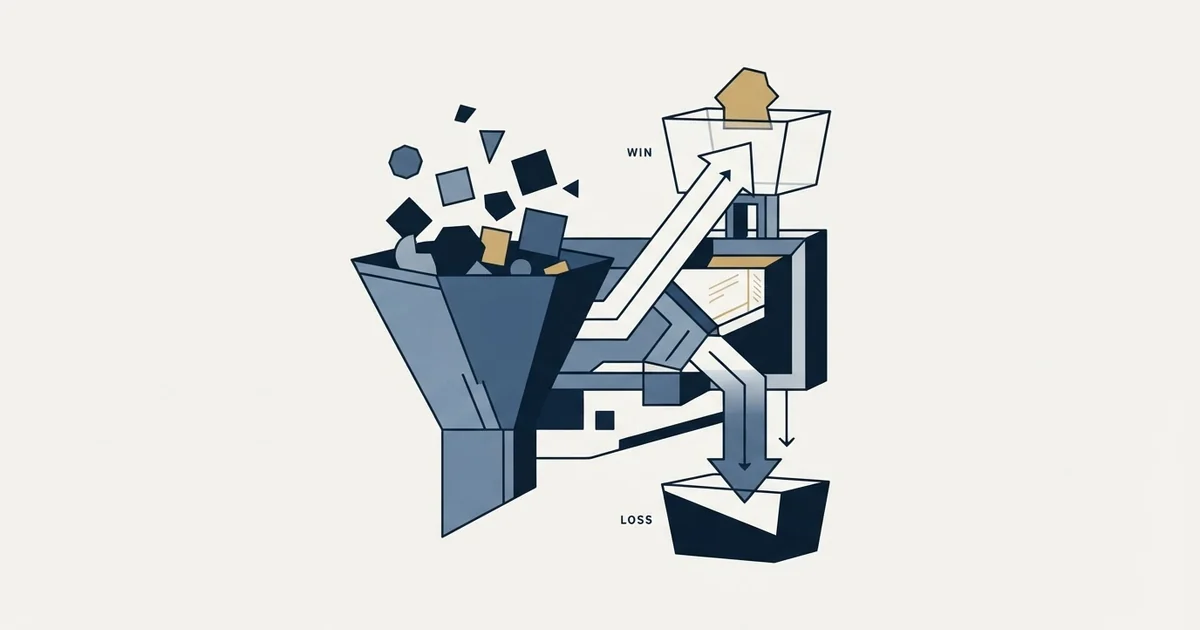
Win/loss analysis collects the buyer's own account of why a deal was won or lost, which is the only account containing the conversation that happened after the seller left the call. Its accuracy depends far more on how the sample is drawn than on how the interview is run, and most samples over-represent late-stage losses.
Key takeaways
- The closed-lost reason field is the seller's account of a loss, written by the person the answer reflects on and recorded before the pattern is visible.
- Buyers who agree to be interviewed skew toward late-stage losses with clean explanations, so a sample drawn from volunteers confirms what you already believe.
- No-decision outcomes are usually the largest loss category in B2B and the least studied, because they feel like nothing happened.
- Split outbound-sourced deals from buyer-initiated ones before analysing, or timing losses will bury the competitive signal.
Reviewed and updated August 28, 2026
Every revenue team already believes it knows why it loses. Ask three people about the same closed-lost opportunity and you will usually get price, timing and a competitor, in that order, delivered with confidence and sourced from nobody outside the building. The reason given in the CRM was typed by the person with the strongest incentive to explain the loss in terms that are not about them, and it was typed on the day the deal died, which is the day the seller understood it least.
Win/loss analysis is the practice of replacing that with evidence from the buyer. It is not complicated and it is not expensive at small scale. What makes it fail is almost never the interview technique. It is the sampling, the timing and the question of which losses get looked at, and those three decisions are made before anybody picks up the phone.
What the practice actually is
A win/loss programme collects the buyer's account of a decision, from a person who was in the room, close enough to the decision that they still remember the alternatives they weighed. That is the whole of it. The interview, the survey, the recorded call review and the third-party research firm are four delivery mechanisms for the same object.
The distinguishing feature is the source. A closed-lost reason field is the seller's account. A pipeline review is the manager's account. A conversation-intelligence summary is a transcript of what was said to the seller, which is not the same as what was decided after the seller left the call. Only the buyer knows the last part, and the last part is usually where the decision was made.
Two things follow from that immediately. First, wins are as informative as losses and are systematically under-collected, because nobody feels urgency about a deal that closed. Second, the reason a buyer gives a researcher three weeks later differs from the reason they gave the seller at the time, and the second one is the useful one. Sellers get told the polite version.
- Written by the person the answer reflects on
- Recorded on the day, before the pattern is visible
- Constrained to a picklist somebody designed in advance
- Useful as a volume signal, not as a cause
- Written from the seller's account, one step further removed
- Optimised for the forecast rather than for the diagnosis
- Good at spotting which deals stalled, blind to why
- The only source with the post-call conversation in it
- Names the alternatives actually weighed, including doing nothing
- Costs time and access, and the access is the hard part
The sample decides the answer, and most samples are broken
The single most common failure in this practice is treating whoever agrees to talk as representative. They are not. Buyers who take the call are disproportionately the ones who liked you, the ones who reached a late stage, and the ones whose decision had a clean explanation they are comfortable repeating. Every one of those biases pushes the findings toward the losses you already understand.
The losses that matter most are the ones you cannot interview. A prospect who went dark at stage two has no incentive to explain themselves, and yet the reason they went dark is a better description of your positioning problem than anything a finalist will tell you. A programme that only reaches the finalists produces a tidy report about pricing and feature gaps, and misses the thing that is actually costing the quarter.
Three practical corrections, none of which require a vendor.
Interview no-decisions on purpose. The deals that ended in no decision are usually the largest single loss category in a B2B pipeline and they are the least studied, because they feel like nothing happened. Something happened: the buyer decided the problem was survivable. That is a finding about your offer, and it belongs in the sample deliberately rather than by accident.
Loss reasons are the diagnosis behind a conversion ratio, and how that ratio is defined, denominated and read across a team is set out in sales effectiveness.
Set a quota per stage, not per outcome. If your sample is drawn from closed-lost records, it inherits the shape of your pipeline. Deciding in advance to interview a fixed number of early-stage disqualifications alongside the late-stage losses is the cheapest correction available.
Record who declined. The refusals are data. If the buyers who decline cluster in one segment, one deal size or one competitor, the findings from everybody else carry a known lean, and knowing the direction of the lean is worth more than pretending it does not exist.
Timing, and why the reason changes
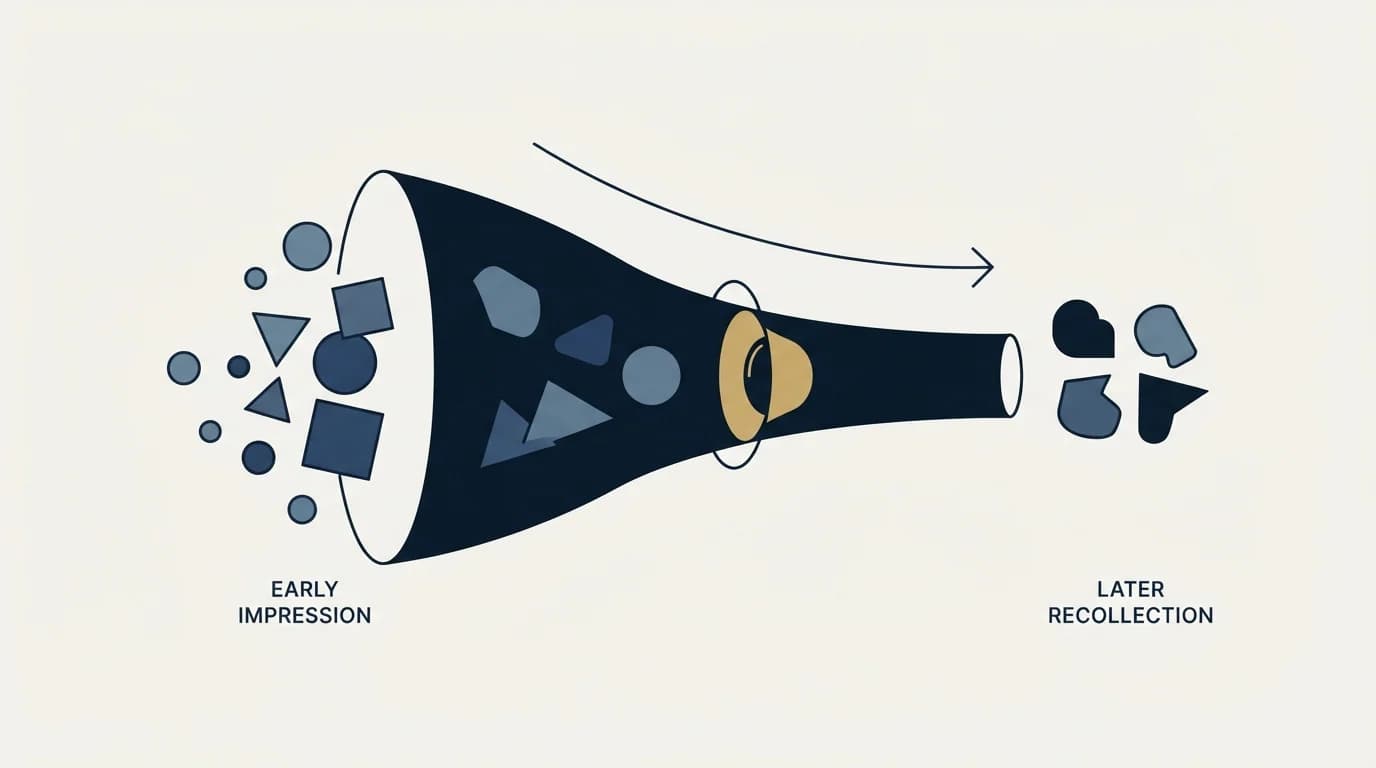
The reason a buyer gives moves over time, in a predictable direction. Immediately after the decision, they give the account they gave internally, which is the account that justified the choice to their own stakeholders. Some weeks later, once the chosen vendor has been implemented or has disappointed them, they give a more candid version that includes the parts they were not willing to say while the relationship was live.
Interviewing too early gets you the internal justification. Interviewing too late gets you a reconstruction, because people forget the alternatives they rejected faster than they forget the choice they made. The practical window most programmes settle on sits somewhere after the decision has been communicated and before the implementation has coloured the memory, and the right answer for your business is discoverable by running the same interview at two different lags and comparing what changed.
That comparison is worth running once, deliberately, before standardising on a lag. It costs two interviews and it tells you something no vendor's methodology page can tell you about your own cycle.
What to ask, in an order that survives contact
The interview fails when it is an interrogation about your product. Approvals, legal review and pricing exceptions all leave marks that the buyer remembers and the CRM does not, which is why a company with a deal desk often finds its clearest loss patterns sitting in that function's records rather than in sales. The buyer came to talk about their decision, and the moment the conversation becomes a feature post-mortem they revert to the polite version.
- Step 1Reconstruct the trigger
What changed in the business that made this a project at all. If nothing changed, you were selling into a want rather than a need.
- Step 2List the alternatives
Every option considered, including building it internally and doing nothing. The list is more informative than the ranking.
- Step 3Map the decision
Who had to agree, who could veto, and who was never in the room. Most surprises live here.
- Step 4Ask what nearly changed it
The counterfactual question. What would have had to be true for the answer to go the other way.
- Step 5Ask about the process, last
How the evaluation felt to run. Left to the end so it does not frame everything before it.
The fourth move is the one that earns the interview. A buyer who says they chose a competitor on price has told you very little; a buyer who says the decision would have gone differently if the security review had been resolved two weeks earlier has told you where to spend the next quarter. The counterfactual is also the question buyers enjoy answering, because it is speculative and costs them nothing to be honest about.
Turning a buyer's stated problem into a question that surfaces its real consequence is exactly what implication questions in SPIN selling are built to do.
Reading the output without fooling yourself

The output of a win/loss programme is a set of reasons with counts attached, and the counts are the dangerous part. A reason cited in six of twenty interviews is not a sixty-percent problem or a thirty-percent problem; it is six anecdotes from a sample you know to be leaned. Treat the ranking as a list of hypotheses to test against the pipeline data you already hold, not as a measurement.
The test is whether the hypothesis shows up in a place the interviews did not touch. If buyers say the evaluation dragged, time in stage should show it, and if it does not, one of the two sources is wrong and finding out which is the actual finding. If buyers say a competitor's positioning was clearer, the segment where that competitor plays should show a different win rate from the rest of the book, and the pipeline metrics you already report are the cheapest place to look. Corroboration across two instruments is what turns an interview theme into something worth changing the business over.
There is also a category error worth naming. A win/loss programme measures the deals that became deals. It cannot see the accounts that never entered the pipeline, and for a company whose real problem is targeting rather than selling, that blind spot is the whole of the problem. If the interviews keep returning "we were not really the right fit", the finding is about the ideal customer profile rather than about the sales process, and no amount of further interviewing will make that clearer.
Where outbound changes the shape of this
An outbound-sourced pipeline generates a loss population that an inbound-sourced one does not: people who were qualified, took the meeting, and turned out to have no live project. Those are not sales losses in any useful sense. Counting them alongside competitive losses in the same report will bury the competitive signal under a mountain of timing, and it is the single most common way a win/loss report from an outbound-heavy business ends up saying nothing.
Split the population before you analyse it. Deals that entered on a buyer-initiated trigger and deals that entered because somebody wrote to them are answering different questions, and the second group is mostly telling you about the targeting and the timing of the approach rather than about the pitch. That split is also the point at which a win/loss programme starts feeding the outbound programme instead of just reporting on it: the loss reasons from the outbound-sourced half describe which signals actually predict a live project, which is a targeting input.
- Yes: The sample includes early-stage disqualifications, not only late-stage losses
- Yes: No-decision outcomes are interviewed as their own category
- Yes: Wins are sampled at a fixed ratio to losses rather than when someone remembers
- Yes: Outbound-sourced and buyer-initiated deals are analysed separately
- Yes: Refusals are logged, so the lean in the sample is known
- Yes: The interviewer is not the account owner
- Yes: Findings are corroborated against pipeline data before anything changes
- No: Reason counts are reported as percentages of a small sample
- No: The programme is scoped to competitive losses only
Who should run the interview

Not the account owner. This is the one procedural rule that does not have a reasonable exception. The seller cannot ask the counterfactual question without it sounding like an appeal, the buyer cannot answer it without managing the relationship, and both of them know it.
Beyond that the choices are ordinary. A product marketer, a customer researcher or a founder can all run these well; a third-party firm buys you the appearance of neutrality and a buyer who is more willing to be blunt, at a price that only makes sense once the volume justifies it. For a team closing a few dozen deals a year, the founder doing ten interviews personally will produce better material than a purchased programme, because the follow-up questions are the value and only somebody who knows the business asks good ones.
The failure mode of the cheap version is that it stops. Ten interviews in a burst produce a document that gets read once. The version that changes anything is a standing cadence, small and boring, where a fixed number of interviews happen every month and the findings are reviewed against the same forecast and pipeline instruments each time, so a drift is visible as a drift rather than as a new discovery.
The short version
Win/loss analysis is the buyer's account of a decision, and its value comes from being the only account with the post-call conversation in it. The interview technique is the easy part. The sample is the hard part, and a sample drawn from whoever agrees to talk will systematically confirm what you already believe.
Interview the no-decisions, sample wins on purpose, log the refusals, and split outbound-sourced deals from buyer-initiated ones before drawing any conclusion. Treat the reason counts as hypotheses and corroborate each one against an instrument the interviews did not touch. Keep it small and standing rather than large and occasional.
If the recurring finding is that the deals were never the right shape to begin with, the problem is upstream of the sales process. See what a first campaign against a properly defined target list produces before rebuilding the pitch.
Frequently asked questions.
Frequently asked questions- What is the difference between win/loss analysis and a closed-lost report?
- A closed-lost report summarises what sellers typed into a reason field. Win/loss analysis collects the account from the buyer instead. The distinction matters because the decision is usually made after the seller leaves the call, so only the buyer has that part, and the reason a buyer gives a researcher later differs from the polite version given to the rep at the time.
- How many win/loss interviews do you need before the findings mean anything?
- Fewer than people expect, provided the sample is designed rather than collected. Ten interviews spread deliberately across stages and outcomes produce better material than fifty volunteers from late-stage losses. Treat the resulting reason counts as hypotheses to test against pipeline data rather than as measurements, because a small leaned sample cannot carry a percentage.
- When should you run the interview after a deal closes?
- After the decision has been communicated and before implementation colours the memory. Too early returns the internal justification the buyer used with their own stakeholders. Too late returns a reconstruction, because people forget rejected alternatives faster than chosen ones. Run the same interview at two different lags once and compare what changed before standardising.
- Can the account owner run their own win/loss interviews?
- No, and this is the one procedural rule without a reasonable exception. The seller cannot ask what would have changed the outcome without it sounding like an appeal, and the buyer cannot answer candidly without managing the relationship. A product marketer, a researcher or a founder can all run these well as long as they did not own the deal.
About the author.

Ben Carden is CRO at RevenueFlow, which builds and operates outbound revenue engines for B2B companies. Previously at Gartner Enterprise. Studied at London School of Economics.
Ben Carden · CRO
Connect on LinkedIn →Explore more.
Ready to scale your outreach?
We build GTM engines that book real meetings. See the receipts.
Related articles.
Sales Call Planning: The Plan a Booked Call Needs
A call cannot produce a commitment nobody named in advance. The four fields a call plan carries, and why the ask has to be decided before the meeting opens.
The Seven-Step Sales Process: What Each Step Assumes
Prospecting through follow-up, walked one box at a time. Each of the seven steps carries an assumption about the buyer, and most of them have quietly stopped holding.
The Five-Step Sales Process: What You Stop Checking
Cutting a process to five steps is a decision about which checks you drop. Which deals the short version fits, and the two loss patterns that say it does not.
Solution Selling: The Generic Term and the Licensed Method
One name covers a generic problem-led posture and a specific licensed methodology. The lineage, the three moves that matter, and the assumption that aged badly.
The Customer-Centric Sales Process: The Edit That Matters
Renaming the pitch achieves nothing. Writing every step as buyer evidence changes the forecast within a quarter, and three other things nobody warns you about.
Is Sales Commission a Period Cost Under ASC 340-40?
The classroom answer is yes, and current filings show commissions capitalised as assets instead. Both are right, and the benefit period decides which applies.