Deal Desks: What They Decide, and When You Need One
A deal desk exists so the whole shape of a non-standard deal is visible in one place before it is sent, owned by somebody who is not selling it.
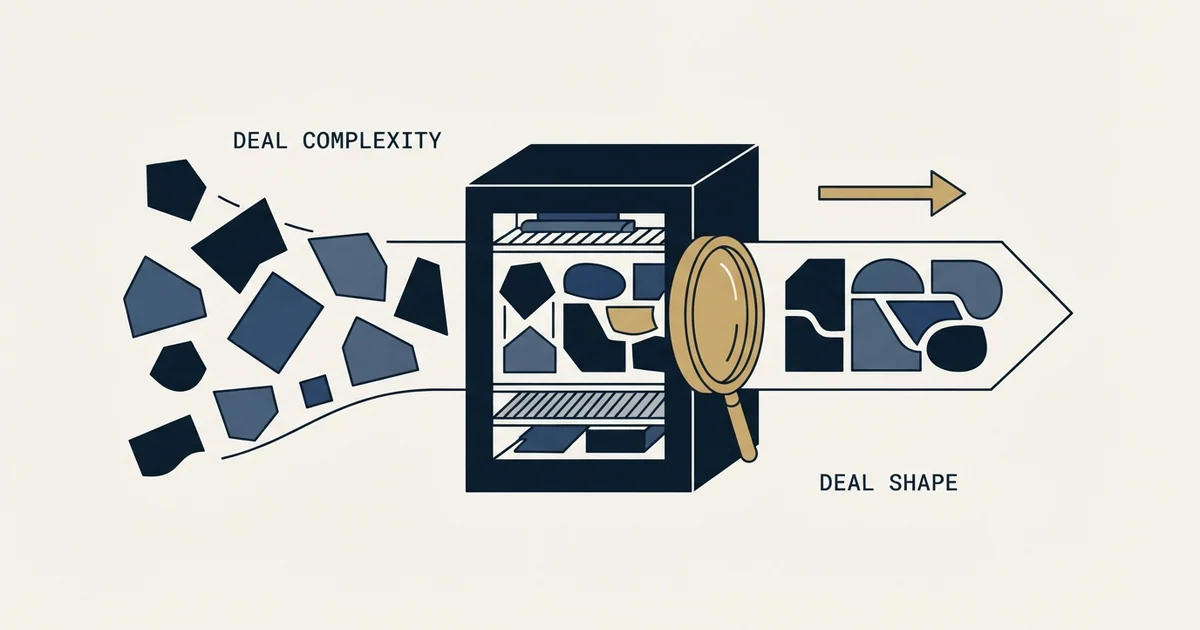
A deal desk is a named owner for deals that fall outside standard terms. It covers discount approval, non-standard contract terms, quote structure and the exception path itself, so the whole shape of a deal is reviewed in one place before it reaches a customer.
Key takeaways
- A deal desk owns four decisions: discount approval, non-standard terms, quote structure and the exception path itself.
- The trigger is variance rather than headcount: multiple products, negotiated segments, usage pricing or a partner channel.
- Thresholds should keep most deals out of the desk entirely, because the function's cost is measured in days of cycle time.
- An exception granted twice is either a policy nobody wrote or a refusal nobody made, so precedent has to be reviewed on a schedule.
Reviewed and updated September 2, 2026
A rep sends a quote with a 40 percent discount, a three-year term, quarterly billing in arrears, and a service level the company has never offered. Legal sees it a week later. Finance sees it at invoicing. The customer signed a contract nobody in the building would have approved if the whole thing had been visible at once, and every function that would have objected only saw the part in front of it.
A deal desk exists to make that deal visible in one place before it is sent, and to give it a single owner who is not the person selling it. That is the whole idea. Everything else about the function is a decision about scope, thresholds and how much time the check is allowed to cost.
What a deal desk actually owns
The name suggests a committee. The working version is closer to an editorial desk: a small group, sometimes one person, that non-standard deals pass through, with the authority to approve, restructure or refuse them.
Four decisions belong there, and they are the four that go wrong quietly when nobody owns them.
Pricing and discount approval. Whether this discount is allowed, at this size, on this term, for this segment. The value here is not the individual ruling. It is that the rulings are consistent across reps, which is the thing a manager approving deals one at a time cannot deliver.
Non-standard terms. Payment schedules, termination rights, service levels, liability caps, custom security commitments. Each one is a promise the company has to keep after the celebration, and the person negotiating it is measured on closing rather than on delivering it.
Quote structure and accuracy. What is on the order form, at what quantity, for how long, with which ramps and renewals. This is unglamorous, it is where most revenue leakage actually happens, and it is the part a deal desk fixes fastest. It also depends on the system holding the deal being able to express the structure at all, which is a real constraint on smaller stacks and one of the things worth checking in a CRM comparison.
Because quote accuracy depends on the system holding the deal being able to express its structure, what a GTM system must record lays out the definitions and handoffs that make that possible.
The exception path itself. Who can approve what, in what order, and how quickly. A deal desk that has no documented path becomes a bottleneck with opinions.
- Discounts approved by whoever is nearest
- Terms negotiated in the document, invisible until signature
- Precedent set silently, then cited by the next rep
- Approval speed depends on who is online
- Nobody can say what the standard deal looks like
- Thresholds written down and applied the same way twice
- Non-standard terms reviewed as a package, not clause by clause
- Exceptions recorded with the reason, so precedent is deliberate
- A stated turnaround the seller can plan around
- The standard deal is a document anyone can read
When you need one, and when you do not
The trigger is not headcount. It is variance.
A company selling one product at one price to one segment does not need a deal desk, however many reps it has, because there are no non-standard deals to route. A company with usage pricing, multiple products, an enterprise segment that negotiates, and a partner channel needs one much earlier than its size suggests, because the number of ways a deal can differ from standard has multiplied faster than the team has.
Reading whether those deals are actually alive is a separate job from approving their terms, and it is the one deal intelligence names.
Three signals say the function is overdue. Discount depth varies widely between reps closing similar accounts. Contracts arrive at finance with terms nobody recognises. And the same exception is requested repeatedly without ever being turned into policy, which is the clearest sign of all, because it means the organisation is making the same decision from scratch every time and calling it judgement.
The counter-signal matters too. If most deals are standard and the desk reviews them anyway, the function is adding days to the cycle in exchange for confirming that nothing needed to be confirmed. Thresholds are what prevent that, and they should be set so most deals never touch the desk at all.
The cost, which is measured in days
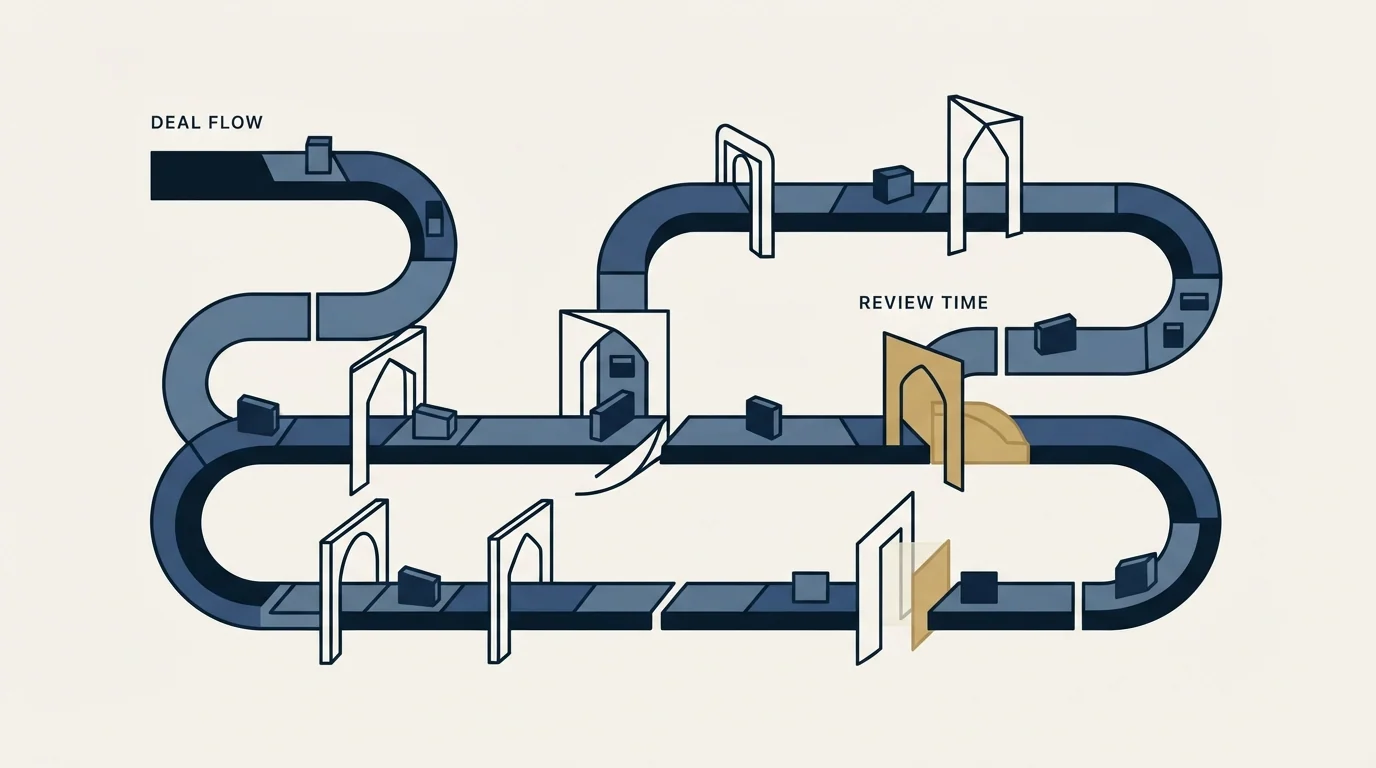
A deal desk taxes the sales cycle. That cost is real, it is the reason the function is resisted, and it is manageable only if somebody agrees to measure it.
Two commitments make the trade honest. A stated turnaround, so a seller knows whether to promise the customer a document today or on Thursday. And a rule that anything inside the standard envelope does not come to the desk at all, which keeps the queue short enough for the turnaround to be credible.
The failure mode to watch for is the desk that becomes a second sales manager: reviewing strategy, questioning whether the deal is real, asking for the discovery notes. That work may be worth doing and it belongs in a pipeline review, not in the approval path for a quote, because merging the two makes the quote wait for a conversation about something else.
Naming what each internal participant owns has the same effect on a call, and who earns a seat on the call is decided by the question only they can answer.
- Step 1Standard check
Inside published price, term and terms: the seller issues the quote with no review at all
- Step 2Desk review
Outside the envelope on price, term or structure: one owner reviews the whole package against written thresholds
- Step 3Named approval
Above the desk's own authority: a named approver, with the threshold that triggered it recorded
- Step 4Precedent capture
An exception granted twice becomes either policy or a documented refusal, so the next deal does not relitigate it
The fourth step is the one that turns a deal desk from an approval queue into an asset. Every exception is evidence about where the standard offer is wrong, and a desk that grants the same exception repeatedly without feeding it back into the price book is absorbing a pricing problem indefinitely rather than surfacing it.
Where it sits against the neighbouring functions
Deal desk work overlaps with three other functions, and the boundaries are worth drawing explicitly because unclear ones are how the desk becomes a bottleneck.
Revenue operations owns the systems, the reporting and the process design. The deal desk operates inside that design on live deals. Where the same person does both, which is common in a mid-sized company, the distinction still matters at the calendar level, because live-deal work will always displace the process work if nobody protects the time.
Commission tooling counts the same people from a different angle, and QuotaPath counts payees and approvers as users, which puts finance inside the licensed population.
Legal owns the contract language and the risk position. The desk decides whether a request is worth taking to legal at all, and that filter is most of its value: it keeps standard deals out of legal review entirely and gives legal a package rather than a clause.
Finance owns revenue recognition, billing mechanics and the margin position. The desk should know enough about all three to recognise the structures that create problems downstream, particularly around ramps, credits and mid-term changes.
Sales management owns whether the deal is real and worth pursuing. That question belongs upstream, at the point an opportunity is accepted into the pipeline rather than at quote approval, which is why the entry criteria matter as much as the exit ones. Pipeline stages that earn their place covers writing criteria a buyer produces rather than a seller asserts, the boundary two teams negotiate covers where an opportunity is allowed to enter, and MQL versus SQL covers the handoff definitions that decide what reaches a seller in the first place.
What a deal desk does to forecasting

The connection people miss is that a deal desk changes what a forecast means, in a direction that is useful.
A forecast built from deals whose structures nobody has inspected is a forecast of amounts that may or may not be collectable in the period claimed. Ramped contracts, deferred starts, quarterly-in-arrears billing and mid-term expansion rights all move revenue relative to the close date, and none of them are visible from the opportunity amount field.
A related limitation appears in expansion planning itself: building the whitespace grid only pays off when every empty cell carries a stated reason for staying empty.
A desk that reviews structure sees all of that before signature, which means the difference between bookings and what actually lands can be described rather than discovered. That is the same discipline as labelling every forecast figure as commit, weighted or best case, and it is worth reading beside pipeline coverage, where the softness of both inputs to the ratio is the point.
- Yes: A written standard deal: price, term, payment terms, and the terms that are non-negotiable
- Yes: Thresholds that decide what comes to the desk, so most deals do not
- Yes: A stated turnaround the seller can promise a customer
- Yes: A named approver above the desk, for the cases beyond its authority
- Yes: A record of every exception with the reason, reviewed on a schedule
- No: Routing whether the deal is real and worth working through the desk
- No: Reviewing standard deals because reviewing everything feels safer
The part nobody writes down
The desk needs the authority to say no and lose the deal. Without it the function is a formality, and everybody works out inside a quarter that the answer is always yes if the seller escalates loudly enough.
That authority is uncomfortable, which is why it has to be granted explicitly and in advance rather than defended case by case at quarter end, when the pressure is highest and the deal in question is the one that closes the gap. A desk whose refusals are routinely overturned in the last week of a quarter has taught the organisation exactly when to bring it the deals it would refuse.
Our own version of this discipline sits earlier in the funnel rather than at the quote. We agree the criteria a meeting has to meet in writing before a campaign launches, with budget, timing and authority deliberately outside the definition, because settling the ruler before anyone reads the number is the only version of the argument that ends. A deal desk is the same instinct applied to what gets signed.
The short version
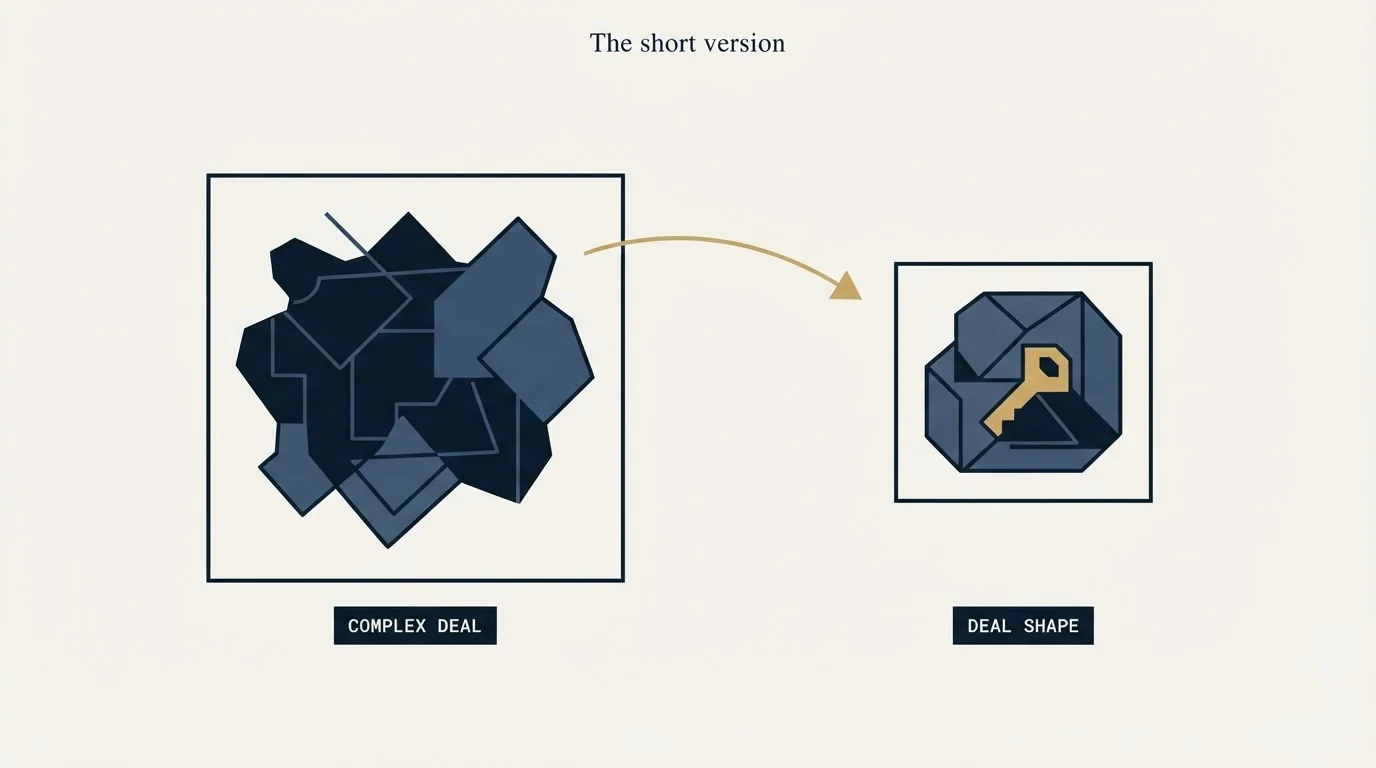
A deal desk is a named owner for the deals that fall outside standard, covering discount approval, non-standard terms, quote structure and the exception path itself. It exists so that the whole shape of a deal is visible in one place before it is sent.
The trigger is variance rather than headcount: multiple products, negotiated segments, usage pricing or a partner channel. Thresholds should be set so that most deals never reach the desk, because the function's cost is measured in days of cycle time.
Record every exception with its reason and review them on a schedule. An exception granted twice is either a policy you have not written or a refusal you have not made, and a desk that never feeds precedent back into the price book is absorbing a pricing problem rather than surfacing it.
If the constraint is that there are not enough deals to review in the first place, that is a supply problem rather than a process one. See what a first campaign produces for your market.
Frequently asked questions.
Frequently asked questions- What does a deal desk actually do?
- It reviews deals that fall outside the standard offer and decides whether to approve, restructure or refuse them. In practice that covers discount depth against segment and term, non-standard contract terms such as payment schedules and service levels, the accuracy and structure of the quote itself, and who has authority to approve what when the desk's own limit is reached.
- When does a company need a deal desk?
- When variance rather than volume becomes the problem. Signals include discount depth varying widely between reps closing similar accounts, contracts reaching finance with terms nobody recognises, and the same exception being requested repeatedly without ever becoming policy. A company selling one product at one price to one segment does not need one however many reps it has.
- How is a deal desk different from revenue operations?
- Revenue operations owns the systems, reporting and process design. The deal desk works inside that design on live deals. Where one person does both, the distinction still matters at the calendar level, because live-deal work always displaces process work unless the time is protected. Legal owns contract language, and the desk decides what is worth taking to legal at all.
- Does a deal desk slow deals down?
- It adds time to any deal that enters it, which is why thresholds matter more than the review itself. Two commitments keep the trade honest: a stated turnaround a seller can promise a customer, and a rule that anything inside the standard envelope never reaches the desk. A desk reviewing standard deals is spending cycle time to confirm nothing needed confirming.
About the author.

B2B cold email experts helping companies generate qualified leads through done-for-you outreach campaigns.
RevenueFlow Team
Explore more.
Ready to scale your outreach?
We build GTM engines that book real meetings. See the receipts.
Related articles.
Win Rate Benchmarks: Which Figures State a Population
A catalogue of the published average sales win rates, sorted by whether the page names the population behind its own number. Most do not.
Sales Kickoff Agendas: Five Published, Session by Session
Five publishers print a sales kickoff agenda. They agree on four blocks and disagree on session length, rehearsal and where the agenda comes from.
Sales Cycle Length Benchmarks: What Each Figure Counts
The published B2B sales cycle benchmarks, sorted by what each page says it counted. The same number means two different things in two of them.
Sales Enablement Charters: What the Published Ones Ask For
Six publishers set out what a sales enablement charter should contain. Five describe a document nobody can check, and one writes a definition with inspection in it.
Sales Comp Plan Design: What the Publishers Prescribe
Four publishers set out how to design a sales compensation plan. Here are their procedures, their components, and which of their ratios carry a population.
Command of the Sale: Force Management's Process Programme
Command of the Sale is Force Management's sales process and qualification programme, not its messaging one. What the vendor says it is, delivers and how it runs.