Deal Intelligence: Reading a Deal From Its Evidence
Deal intelligence is the practice of assessing an open sales opportunity from the evidence the deal itself produced, such as email threads, call recordings, meeting attendance and timestamps, instead of from the seller's own assessment. It is a second source on deal health, useful in pipeline reviews, and it describes the past rather than forecasting.
Key takeaways
- Deal intelligence judges an open opportunity from emails, calls, attendance and timestamps, because in a CRM the record and the reporter are the same person.
- Sales intelligence and intent data apply before any conversation exists, while deal intelligence exists only after contact and is derived from that one relationship.
- The category oversells in five ways: it describes the past, sees only connected channels, cannot interpret silence, is changed by recording consent, and reads thin deals as risky.
- Outbound-sourced deals start with a near-empty record, so score them separately from inbound ones and attach the premise the opportunity was created on.
A forecast call reaches a deal marked commit, closing this month. The rep is confident. The account has not replied to anything in five weeks, the only person who ever engaged left the company in July, and nobody on the call knows either of those things because neither is a field in the CRM.
Deal intelligence is the practice of assessing an open opportunity from the evidence the deal itself produced, rather than from the seller's own assessment of it. The evidence is the recorded material around the deal: email threads, call recordings and transcripts, meeting attendance, document activity and the timestamps on all of it.
It is a second source on a question the CRM answers with self-report, and that is the whole reason the category exists.
What is deal intelligence?
Deal intelligence is a way of judging an open deal from what actually happened in it, not from what the seller says about it. It reads the emails, calls, meeting attendance and timestamps a deal has produced and asks one question: when did the buyer last do something, and who was it. Sales teams use it in pipeline reviews, and vendors sell it as software that sits on top of the CRM.
What the CRM says
- Stage: commit
- Close date: this month
- The rep is confident
What the deal's own record says
- The account has not replied to anything in five weeks
- The only person who ever engaged left the company in July
- Nobody on the call knows either fact
What it is built from, and where it sits
The raw material is the exhaust of a sales process that was going to happen anyway. Emails were sent, calls were held, invitations were accepted or ignored, and each of those left a record with a time on it. Deal intelligence is the practice of reading that record as a description of the deal rather than as an activity log.
Salesloft's own page on the product category, fetched on 2 September 2026, describes the promise in operational terms: "Utilize visualized dashboards to accurately assess pipeline and deal health", and "Take action before deals slip through the cracks". It also frames the output as something to circulate rather than to hoard, saying to "Share insights with your sales reps and make the right decisions for the right opportunities". That is the category describing itself, and it is a fair statement of what the tools do: aggregate the record, score it, and surface the deals whose record has stopped matching their stage.
The boundary that matters most is against a term it is constantly confused with.
Sales intelligence looks outward and earlier. It answers who to approach, from data about companies and people that exists whether or not you have ever spoken to them.
Deal intelligence looks inward and later. It answers what is happening inside an opportunity you are already working, from evidence generated by that specific relationship.
The two share a word and share almost no mechanism. Intent data, which reports third-party behaviour before any conversation exists, sits on the first side of that line and is a frequent source of the same confusion.
Why it matters: the record and the reporter are the same person
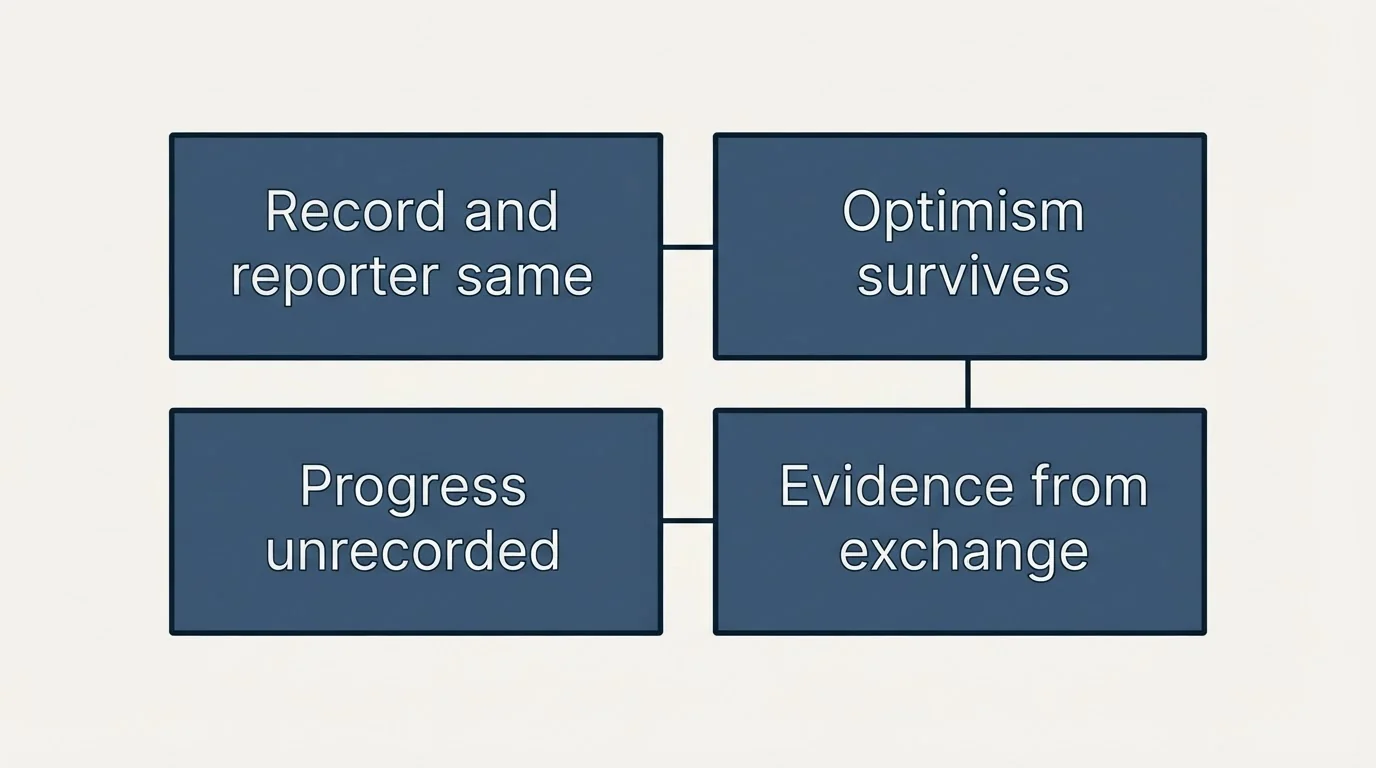
A CRM will report a healthy pipeline made of deals nobody is working, because everything it knows about a deal was typed in by the person whose performance the deal describes. The live guide on pipeline management in a CRM works that property through in detail, and it is the problem deal intelligence is a response to.
Two failures follow from single-source reporting, and they pull in opposite directions.
Optimism survives too long. A stage is a claim, and a stage that was accurate in April is left alone in July because changing it is an admission. The deal ages inside a category it no longer belongs to.
Real progress goes unrecorded. A rep who had a genuinely important conversation and did not log it has a deal that looks stalled and is not. The forecast is wrong in the flattering direction on the first case and in the pessimistic direction on the second.
Evidence drawn from the exchange itself is immune to both, because nobody decided to write it down. The invitation was accepted or it was not. The thread went quiet on a particular date. A second name appeared, or never did. Those facts do not require anyone's honesty, which is the specific value the category adds.
What it buys, concretely, is the ability to ask a better question in a pipeline review. Not whether the rep feels good about the deal, but when the buyer last did something and who it was.
Where the category oversells
It describes the past and is sold as a forecast. A deal whose record has gone quiet is a deal whose record has gone quiet. That is a fact about the last three weeks. The step from there to a probability requires an assumption about how such deals have resolved historically, on a sample that is small at most companies. A risk flag is worth a phone call. It is not worth a number in a board pack.
It can only see the channels it is connected to. A considered B2B decision runs partly through conversations you are not part of, on channels you have no access to, between people whose names you may not know. A complete engagement record of your own surface is a partial record of the decision. That is the same limit the buying committee entry describes, and no amount of instrumentation on your side closes it.
Silence has several meanings. An account in a procurement stage is often forbidden to talk to a vendor. An account whose champion is on leave produces exactly the same signal as an account that chose a competitor. The risk flag earns a question rather than a conclusion, which is the same discipline pipeline acceleration argues for when reading a stuck deal.
Recording changes the conversation being recorded. Notice, consent and what a buyer will say once a call is being transcribed are policy questions with real answers that differ by jurisdiction and by company. They are worth settling before the tooling is deployed rather than after, and the honest reading is that some of the most valuable material in a deal will never be in the corpus because of it.
It is easiest to deploy where the deal is already well recorded. Enterprise deals with formal cycles and many meetings produce a rich corpus. A transactional deal closed in two conversations produces almost nothing to analyse, and the tooling will report a thin record as a risk rather than as a normal shape.
| What is implied | What is true |
|---|---|
| It forecasts | It describes the last few weeks. A flag is worth a phone call, not a number in a board pack |
| It sees the whole deal | It sees the channels it is connected to, and much of a B2B decision happens elsewhere |
| Silence means risk | Procurement quiet periods, a champion on leave and a lost deal all look identical |
| Recording is neutral | Notice and consent change what buyers say, and the rules differ by jurisdiction |
| It works on any deal | A deal closed in two conversations leaves almost nothing to read, and thin is scored as risky |
How it is used in outbound
An outbound programme sits upstream of all this, and the connection point is a single artefact: the record that travels with a booked meeting.
A deal created by an outbound campaign starts with less evidence than one created by an inbound request. Nobody visited a pricing page, nobody downloaded anything, and the entire history is one message and one reply. Any deal-health model reading that opportunity in its first weeks is reading a near-empty corpus, and it will score the deal as thin because it is thin, without that meaning anything about its quality.
Three practical consequences follow.
Record the premise, not just the outcome. The most useful thing an outbound-sourced opportunity can carry into a deal-health system is why this account was contacted: the trigger, the fit criteria that were true, and the claim the message made. That is context no downstream tool can reconstruct, and it is what makes a later risk flag interpretable.
Do not compare cohorts with different starting evidence. An outbound-sourced deal and an inbound-sourced deal accumulate signal at different rates from different baselines. Scoring them on one model produces a systematic pessimism about the outbound cohort, which then gets read as a channel quality finding when it is a measurement artefact. The same objection applies to win rate whenever source is not split out.
The earliest honest signal is still whether the other side did anything. Before any of this tooling applies, the question is whether the buyer replied, attended and widened the conversation, which is buyer engagement read on one account rather than across a portfolio. Deal intelligence is that question industrialised across a portfolio of opportunities, with the same limits.
Our own scope stops at the hand-off. We send one message per campaign, built on one premise, and the meeting we hand over carries that premise with it. What happens to the deal afterwards belongs to the team that closes it, and the most useful thing an outbound partner can do for their deal-health reporting is to make the starting context explicit rather than to guess at the rest. Where those meetings routinely arrive and stall, the diagnosis is usually upstream of any tooling, and meetings land and nothing closes works through the order to check things in.
Worth acting on when
- The flag names which signal fired and on what date
- The deal is old enough to have produced a corpus worth reading
- Outbound-sourced and inbound-sourced deals are scored separately
- Recording notice and consent were settled before deployment
Not yet, if
- The flag is converted into a forecast probability without a check
- Silence has not been asked about before being interpreted
- The opportunity does not carry the premise it was created on
Related terms
Deal intelligence reads an open sales qualified opportunity and reports on the sales pipeline it belongs to. The buyer-side reading it industrialises is buyer engagement, and the signal it is most often confused with is intent data, which applies before any conversation exists. The metrics it feeds are win rate and sales velocity, and the function that governs the commercial terms once a deal is real is described in the deal desk guide. The wider tooling category it usually ships inside is covered in sales engagement platforms.
The short version
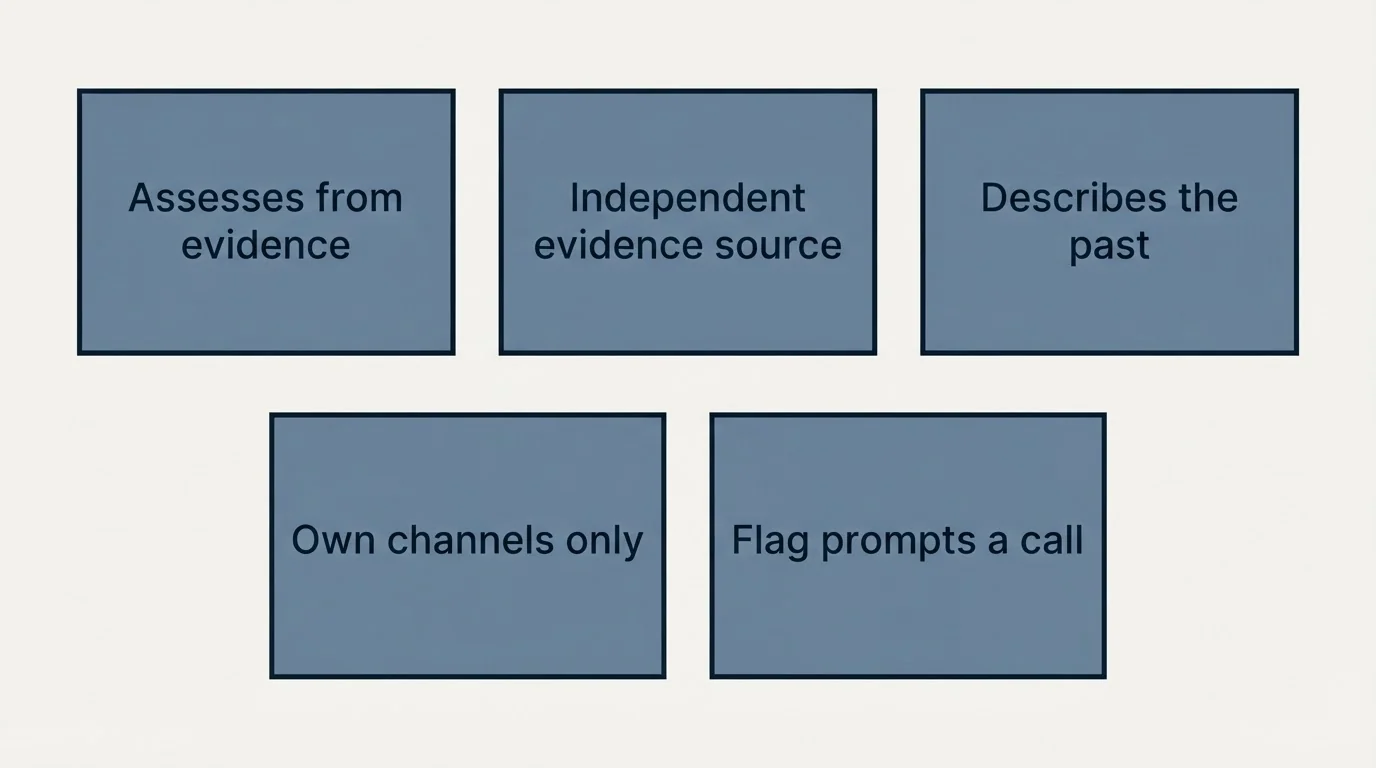
Deal intelligence assesses an open opportunity from the evidence the deal produced rather than from what the seller typed into a stage field, which is why it exists: in a CRM the record and the reporter are the same person. It is a second source on deal health, drawn from threads, calls, attendance and timestamps, and it is genuinely useful for asking a better question in a pipeline review. It describes the past, it sees only your own channels, and it reads a young outbound-sourced deal as thin because that deal is thin. Treat every flag as a reason to make a call rather than as a number to forecast with.
RevenueFlow runs cold email and LinkedIn outreach for B2B teams, one message per campaign, and hands over meetings with the premise they were created on attached. If you would rather that front end were somebody else's job, see how the campaigns work.
Salesloft's deal intelligence software page was fetched on 2 September 2026. Verify current wording with the source before relying on it.
Frequently asked questions.
Frequently asked questions- What is deal intelligence?
- Deal intelligence is the practice of assessing an open opportunity from the evidence the deal itself produced, rather than from the seller's own assessment. The evidence is the recorded material around the deal: email threads, call recordings and transcripts, meeting attendance, document activity and the timestamps on all of it. It is a second source beside the CRM.
- What is the difference between deal intelligence and sales intelligence?
- Sales intelligence looks outward and earlier: it answers who to approach, from company and contact data that exists whether or not you have spoken to them. Deal intelligence looks inward and later: it answers what is happening inside an opportunity you are already working, from evidence that specific relationship generated. They share a word and almost no mechanism.
- Can deal intelligence forecast which deals will close?
- Not reliably. It describes the past: a deal whose record has gone quiet is a fact about the last few weeks. Turning that into a probability needs an assumption about how similar deals resolved, on a sample that is small at most companies. A risk flag is worth a phone call. It is not worth a number in a board pack.
- Why does deal intelligence score outbound deals as weak?
- Because a deal created by an outbound campaign starts with less evidence than an inbound one. Nobody visited a pricing page, and the whole history is one message and one reply. A deal-health model reads that near-empty record as thin. Score outbound and inbound cohorts separately, and attach the premise the opportunity was created on.