Meetings Land, Nothing Closes: Reading the Failure in Order
A full calendar and a flat revenue line is a different problem from a quiet calendar. How to read it in order, and why buying more meetings makes it worse.
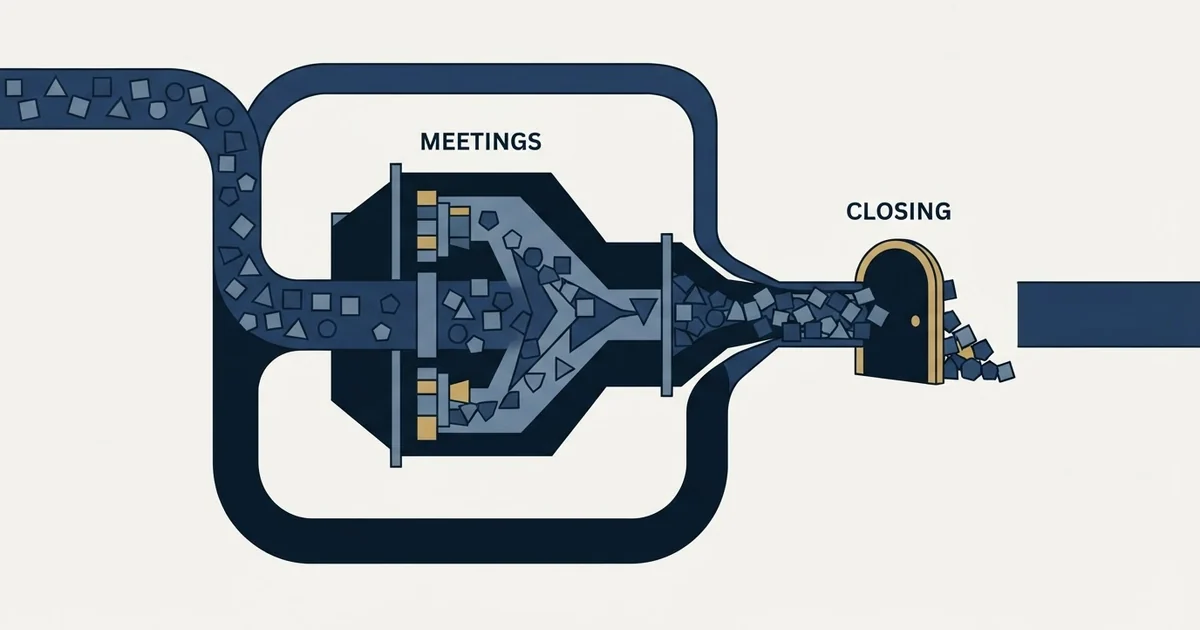
When meetings land and nothing closes, check first that enough time and enough conversations have passed for a zero to be evidence. Then read the audience, the attendee, the premise and the sales conversation in that order, from the meetings themselves, because every stage produces the same dashboard row.
Key takeaways
- A zero is only evidence once elapsed time exceeds your cold sourced sales cycle and enough meetings have happened that zero is surprising.
- The four candidate failures are the audience, the attendee, the premise and the sales conversation, and they have to be read in that order.
- The evidence sits in the meetings rather than in any report, because all four failures produce an identical row on a dashboard.
- Buying more meetings multiplies whichever failure is live and burns addressable market at the same time.
Reviewed and updated October 1, 2026
Meetings Are Landing and Nothing Is Closing: Reading the Failure in Order
Twenty eight meetings over six months and nothing closed is a specific complaint, and it is a different complaint from a quiet calendar. The programme did the thing it was bought to do. Conversations happened, with real people, at real companies, and the revenue line has not moved. That is a harder problem to read than an empty pipeline, because every intermediate number looks acceptable and the only bad number is the last one.
The instinct is to buy more meetings. That is the one response guaranteed to make it worse, since it multiplies whatever is actually wrong by the number of new conversations. What the situation needs first is a reading, and the reading has an order, because each stage makes the next one uninterpretable if you skip it.
Before diagnosing, establish whether the number is readable
A zero is only evidence once enough time has passed for a deal to have closed, and enough meetings have happened for a zero to be surprising.
Two clocks decide this. The first is your sales cycle measured from a cold sourced first conversation, which is usually longer than your overall average, because a cold meeting starts earlier in the buyer's process than a referral does. The second is elapsed time since the meetings actually started landing, which is not the same as time since the engagement began. A programme that ramped for six weeks and has been producing meetings for four months has had four months, not six.
If your cold sourced cycle is nine months and the meetings began four months ago, a zero is uninformative and the honest answer is that nobody knows yet. If your cycle is six weeks and twenty eight meetings have had six months to convert, the zero is real and worth reading.
Readability has a second condition, which is the count. A handful of meetings can produce a zero through ordinary variance, and reading a diagnosis into it manufactures a fix for a problem that may not exist. How many it takes depends on the close rate you expected. Take an illustrative one in ten: twenty conversations still produce a zero about twelve percent of the time by chance alone, and twenty eight about five percent, which is why the twenty eight in the example above deserves an investigation and five would not have. The same discipline applied to the volume side of the funnel is in outbound is sending and not booking.
- Yes: Elapsed time since meetings began exceeds the cold sourced sales cycle
- Yes: The cycle used is measured on cold conversations, not on referrals
- Yes: Enough meetings have happened that a zero is surprising rather than ordinary
- Yes: Attendance is counted separately from booking
- Yes: Deals sourced from this channel are identifiable in the CRM
- No: The count starts from the contract date rather than the first meeting
The four places the failure can sit
Once the zero is readable, there are four candidates, and they sit in a fixed order. Each one makes the ones after it impossible to judge, so working backwards from the sales conversation is the standard way to spend a quarter fixing the wrong thing.
The audience. The companies were never able to buy. Wrong size, wrong sector, wrong maturity, or a real problem that your product does not solve. This produces polite, engaged conversations that end without a next step, and it is the failure that looks least like a failure in the room.
The person. The companies were right and the attendees were not. Somebody with an interest in the area but no ownership of it will take a meeting, ask good questions, and have nowhere to take the answer. The distinction between reaching a title and reaching the person who owns the premise is worked through in finding and reaching decision makers in outbound.
The premise. The audience and the people were right, and what you offered them was not the thing they act on. This is the most common cause and the hardest to see, because the meeting itself feels productive. The tell is that the conversation reliably drifts to a topic you did not raise.
The sales conversation. Everything upstream was right and the meeting does not convert. This is a real cause and it is the last one to reach for, not the first.
Wrong size, sector or maturity produces engaged conversations with no next step.
Interest without ownership books willingly and decides nothing.
The tell is a conversation that drifts to a topic you did not raise.
A genuine cause, and the last one to reach for rather than the first.
Read the meetings, not the dashboard
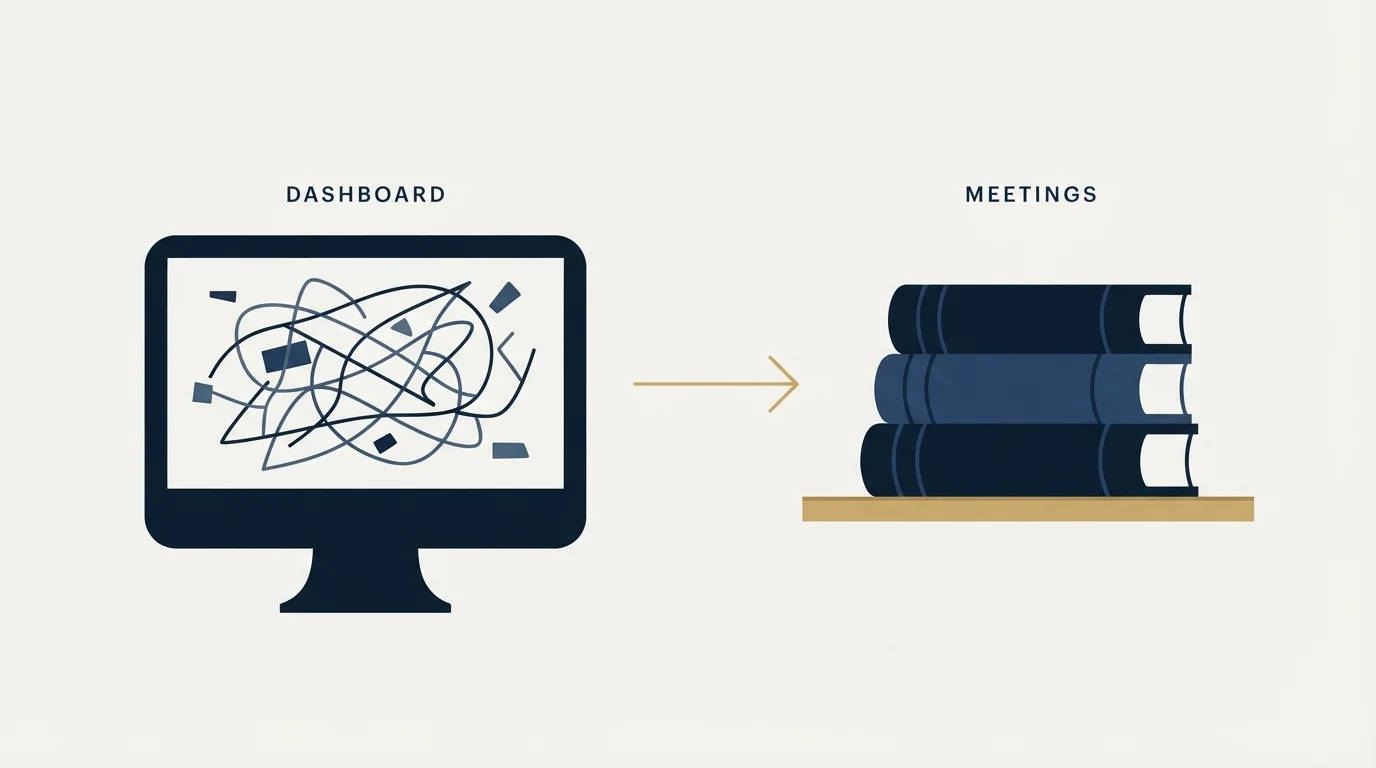
The evidence for all four candidates is in the conversations themselves, and it is not in any report. A dashboard can tell you that twenty eight meetings happened and none closed. It cannot tell you which of the four stages produced that, because every stage produces the same row.
The exercise that works is unglamorous. Take every meeting that happened, and for each one write down three things: what the company actually does, what the attendee actually owns, and how the prospect framed their own situation in their own words. Twenty eight rows of that takes an afternoon and it usually answers the question outright.
What you are looking for is a pattern rather than a verdict on any single meeting. If the companies keep turning out smaller than the ones you close, the audience is the answer. If the attendees are consistently one layer below the person who would sign, the person is the answer. If the companies and the people are right and the prospects keep describing a problem adjacent to the one you pitched, the premise is the answer, and the fix is a different campaign rather than a better closer.
The reason this has to be a hand read rather than a query is that the useful field does not exist in the CRM. What the prospect was actually worried about goes unrecorded, and it is the one piece of evidence that separates a premise failure from an execution failure.
The definition question, which is separate and also live
Where meetings are supplied by a vendor on a per meeting arrangement, there is a fifth possibility that sits underneath the four above: the meetings met the letter of an agreed standard and were never going to be worth attending.
That is a contract question rather than a diagnosis, and it is answerable from the standard itself. A definition written as adjectives rather than ranges, with no responsibility test on the attendee and no requirement that the prospect agreed to a conversation on a stated topic, will pass meetings that fail all four stages above. What a definition has to contain to be checkable by someone who was not in the room is set out in qualified appointment, and the specific ways a loose one gets used are in pay per appointment B2B.
Two things follow from finding this. The remedy is to tighten the definition and expect the rate to rise, because criteria move work onto the unbillable side of the supplier's ledger. And the finding does not exonerate the four stages above, since a tightened definition still delivers meetings into whatever premise you are running.
Budget, timing and authority stay out of that definition even here. Requiring them means paying outbound rates to reach only the people already running an evaluation, which is the smallest and most contested part of any market, and it is not the part outbound is good at reaching.
What more meetings does to each of the four
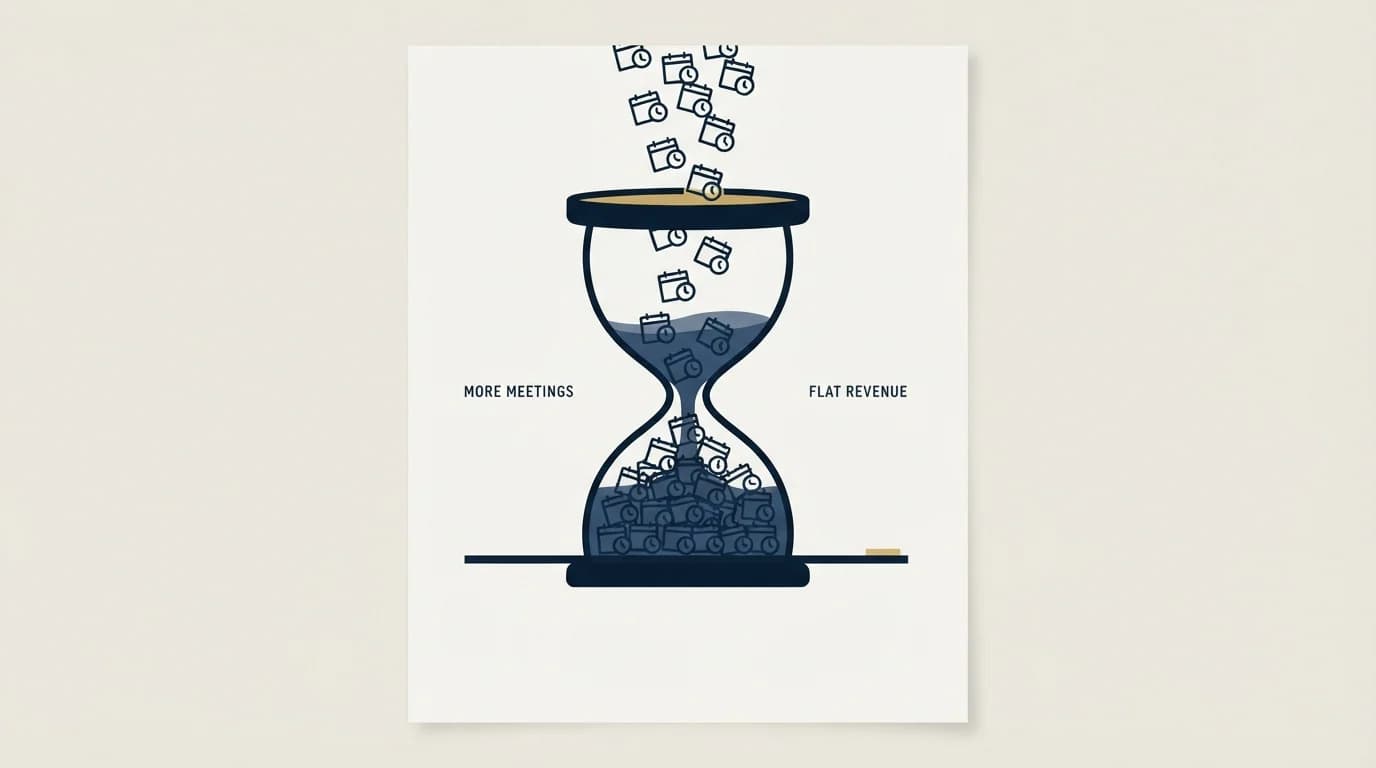
The reason the buy more reflex is expensive is worth spelling out per stage, because it is not equally wrong in each.
Where the audience is wrong, more meetings multiplies the wrong audience and burns the addressable market at the same time. Where the person is wrong, more meetings produces more conversations with people who cannot act, and each one costs a seller an hour. Where the premise is wrong, more meetings is the most expensive possible way to keep testing a message that has already been tested twenty eight times. Only in the fourth case, where everything upstream is right and the conversation is the constraint, does volume do anything useful, and even there the cheaper move is to fix the conversation first and then add volume to something that works.
The arithmetic is unforgiving in the same direction every time. Doubling the meeting count on a broken premise doubles the cost and leaves the revenue line where it was, and the cost is not only the invoice. It is the seller hours, and the share of a market's tolerance that cannot be bought back.
What to change, and in what order
Change one thing. Running a new audience, a new premise and a new script at once produces a result nobody can attribute, which is how a second quarter gets spent on the same question.
If the audience is the answer, rebuild the target definition from the companies you have actually closed rather than from the ones you would like to close, with disqualifiers written down. That work belongs in an ideal customer profile with the arithmetic attached.
If the premise is the answer, the replacement comes from what the prospects said rather than from a brainstorm. The sentence that keeps recurring in the meetings is the offer, and rewriting the copy around a premise nobody in twenty eight conversations raised is the same failure repeated with better adjectives. Why the offer outranks the copy is in prospects ignore your cold emails and it is rarely the copy.
If the conversation is the answer, that is a sales problem and no commercial model or volume change touches it.
Broad programme labels hide the same distinction, and three problems sharing the revenue acceleration label have different owners and different fixes.
One constraint applies whichever you pick. We run one message per campaign, with no bumps and no thread replies, and a later approach exists as a separate campaign with its own reason. That is documented practice rather than a claim about results, and it matters here because it keeps the next reading clean: when each person receives one message built on one premise, the next quarter's number is a reading on that premise rather than on persistence.
The short version

A zero on the revenue line with meetings on the calendar is a different problem from a quiet calendar, and it has to be read in order. Establish first that the zero is readable at all, using a cold sourced cycle length and a meeting count large enough that zero is surprising. Then read the audience, the person, the premise and the sales conversation in that sequence, from a hand read of the meetings themselves rather than from a report, because every stage produces the same dashboard row.
Where meetings are supplied under an agreement, check the written definition separately, and expect a tighter one to cost more. Then change one thing, sourced from what the prospects actually said, and run it as its own campaign so the next reading means something.
If a rebuilt audience and a premise drawn from real replies is the change you need, we will build it and show you the list.
Frequently asked questions.
Frequently asked questions- How many meetings before no closed deals means something is wrong?
- At an illustrative one in ten close rate, a zero from twenty conversations is about a twelve percent chance and from twenty eight about five percent, so a zero at that volume deserves an investigation, though the count matters less than the clock. Elapsed time since meetings actually began has to exceed your sales cycle measured on cold sourced conversations, which is usually longer than your overall average because a cold meeting starts earlier in the buyer's process than a referral does.
- How do I tell a targeting problem from a sales problem?
- Read the meetings by hand. For each one record what the company actually does, what the attendee actually owns, and the sentence the prospect used about their own situation. Companies consistently smaller than the ones you close points at the audience, attendees one layer below the signer points at the person, and prospects raising a problem you did not pitch points at the premise.
- Should we ask the vendor to tighten the meeting definition?
- If the standard is written as adjectives rather than ranges, has no responsibility test on the attendee, and does not require agreement to a conversation on a stated topic, then yes. Expect the rate to rise, because criteria move work onto the unbillable side of the supplier's ledger. Keep budget, timing and authority out of it, since those cannot be checked before the conversation.
- What is the first thing to change?
- One thing, chosen from what the meetings actually said. If the audience is wrong, rebuild the target definition from companies you have closed rather than ones you would like to close. If the premise is wrong, take the replacement from the sentence prospects kept using. Changing audience, premise and script together produces a result nobody can attribute.
About the author.

B2B cold email experts helping companies generate qualified leads through done-for-you outreach campaigns.
RevenueFlow Team
Explore more.
Ready to scale your outreach?
We build GTM engines that book real meetings. See the receipts.
Related articles.
SDR Outsourcing for Business Brokers: The Fee Timing
Whether a success-fee brokerage should rent sales development at all: the fee timing, the texts that limit what an outside person may say about value, and who signs.
SDR Outsourcing for Logistics Companies: The Brokerage Line
What an outside sales development team may do in a freight company's name, the calling and email rules it inherits, and which arrangement survives a bid-shaped market.
Appointment Setting for Business Brokers: The Seller Meeting
What a bought meeting with a business owner has to be for a brokerage: the three-part qualification, the confidentiality rules, the licence line and the owner's reasons.
SDR Outsourcing for Financial Services: The Third Party
What a bank, broker-dealer, adviser or agency's regulators say about an outside team that speaks for it, the licensed line, and which arrangement survives due diligence.
Sales Prospecting for Health Systems: The Public Record
Where health systems are written down in public: the Medicare cost report, the facility list a non-profit system files, and the two gates that follow qualification.
Cold Calling for PPC Agencies: What You Can See First
A paid media prospect is partly readable before the call and has already been told by the platform what to do when a stranger rings about its ads.