Dropcontact: The Algorithm-Only Model, Coverage and Cost
Dropcontact says it derives addresses algorithmically and holds no contact database. That claim changes where it finds people, where it misses, and what a credit buys.
Dropcontact is a French B2B enrichment service whose pricing page states it operates exclusively with algorithms and uses no contact databases, deriving and verifying addresses on demand. The page displays Starter at 79 EUR and Growth at 120 EUR per month in euros, with monthly billing shown by default and credit tiers selectable.
Key takeaways
- Dropcontact's pricing page states it operates exclusively with algorithms and does not use any contact databases, which makes it a derivation service rather than a data vendor.
- The no-database claim is scoped to email. The same page says mobile numbers come from signature extraction within internal email flows with five years of historical depth.
- The page displays Starter at 79 EUR and Growth at 120 EUR per month, with monthly billing active by default and yearly billing advertised at 20 percent off.
- The page contradicts itself on credits: visible copy promises re-crediting on a miss, while its structured data says credits are consumed regardless of result.
Reviewed and updated September 1, 2026
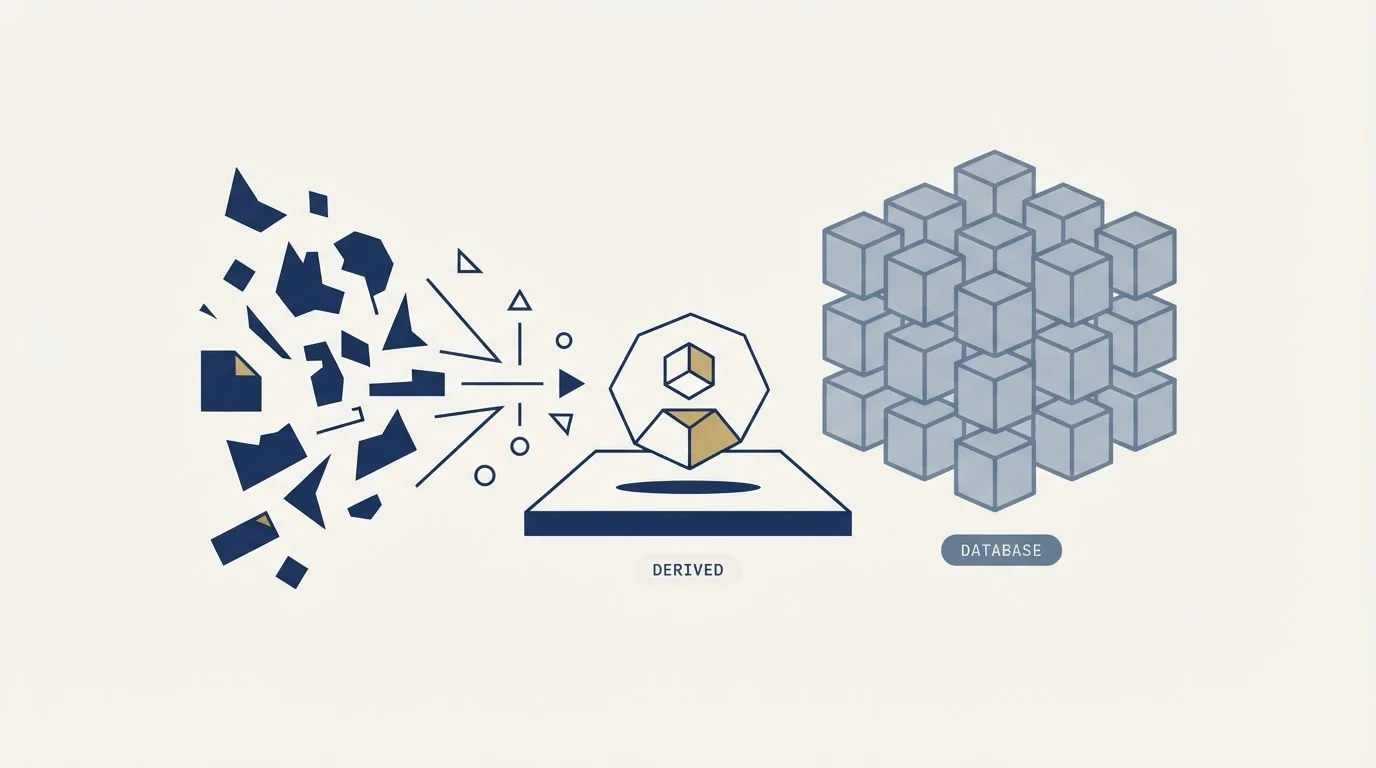
Upload a list of 4,000 contacts to most enrichment vendors and they look each row up in a store of records they already hold. Dropcontact's pricing page says it does not have that store. Its FAQ states the position in one sentence: "Unlike waterfall enrichment tools, which aim to collect as many email addresses as possible, Dropcontact operates exclusively with algorithms and does not use any contact databases."
That single claim is the whole reason to evaluate Dropcontact separately from everything else in the category. A database vendor and a derivation service fail in different ways, produce different coverage gaps, and carry different compliance exposure. A buyer should know which of the two they are purchasing before they compare price per credit, because the two are not the same product wearing different labels.
What a derivation service actually does
Dropcontact's model works forward from what it knows about a person rather than backward from a record it holds. Given a name and a company, the algorithm generates candidate addresses from the patterns that company's mail actually uses, then verifies them. The pricing page calls the verification layer "Native and exclusive email validation" and "Advanced catch-all verification", and claims the combination is built "to guarantee 99% validity of the data provided".
That mechanic has a name in the trade, and understanding it explains both the strength and the ceiling. If you have not met it before, our glossary entry on email permutation covers the generate-then-verify loop, and catch-all domain covers the case that makes verification hard.
The strength is freshness by construction. A derived address cannot be stale in the way a two-year-old purchased record can, because it is generated and checked at the moment you ask. There is no gap between when someone else collected the data and when you use it.
The claim has one honest boundary, and the vendor states it
The no-database claim is scoped to email. On the same pricing page, describing mobile numbers, Dropcontact writes that they are "sourced from signature extraction within internal email flows" with "5-year historical depth" and updated daily.
That is a collected dataset by any reasonable reading. It does not contradict the email claim, which is specifically about contact databases behind the email finder, and Dropcontact is not hiding it. It does mean a buyer should read the claim as written: the email finding is algorithmic, and the phone data has a different and more conventional provenance. Anyone whose compliance review turns on "this vendor holds no personal data" should read the mobile numbers paragraph before signing.
Where a derivation service and a database fail differently

This is the comparison that should drive the decision, and it is not a question of which is better.
- Fails when the record was never collected
- Fails silently when the record is stale and the person has moved
- Coverage is strong where the vendor has invested in collection
- A wrong address can still be deliverable, pointing at the wrong person
- You inherit the vendor's collection lawful basis
- Fails where the company mail pattern is unguessable
- Fails where verification cannot confirm, such as accept-all domains
- Coverage follows conventional mail setups rather than vendor investment
- A returned address has been checked at the moment you asked
- Nothing is held about people you never queried
The practical translation for a list build: a derivation service will do well on companies running standard corporate mail on their own domain with a predictable naming convention, and less well on organisations using shared inboxes, unusual domains, or catch-all configurations that swallow verification signals. Role addresses like info@ and contact@ are a related trap, covered in our role-based email entry, since a technically valid address is not the same as a person you can reach.
The other half of the translation is what you do about the misses. A database vendor's misses can sometimes be recovered by adding a second database. A derivation service's misses tend to be structural, so a second provider with different sourcing helps more than a second derivation pass. That logic is exactly what the provider ordering in our guide to waterfall enrichment is built around, and it is worth reading before assuming any single vendor covers a full list. For the shape of a stack that pairs providers deliberately, our enrichment tools roundup for SDR teams walks the combinations.
The credit model and what the page actually shows
Dropcontact's pricing page prices in euros and carries a Monthly and Yearly toggle. In the page markup the Yearly control carries an inactive state, so Monthly is the state a visitor sees first, with Yearly advertised at 20 percent off.
Each plan card carries a credit dropdown running from 500 credits per month up to 150,000, and the price beside it changes with the selection. With the page as served, the Starter card displays 79 EUR per month and the Growth card displays 120 EUR per month.
There is a wrinkle worth knowing before you quote those figures to anyone. The credit dropdown's first option is 500 credits, but the page's structured data maps the displayed 79 EUR to the Starter tier at 4,000 credits per month, and separately lists Starter at 500 credits per month for 29 EUR. So the headline price and the dropdown's default option do not describe the same tier. Read the price next to your own selection rather than the one the page loads with.
Entry point in the published ladder
The figure the pricing card displays
Growth adds credit carryover and LinkedIn enrichment
Enterprise starts from 200,000 credits per month
Growth is where the feature line moves rather than just the volume. The page lists credit carryover, LinkedIn enrichment without a login, LinkedIn URL enrichment, job cleaning, AI job classification, company change detection, and company name to domain matching as Growth additions on top of Starter. Enterprise is quoted from 200,000 credits per month at custom pricing.
What a credit buys, and one contradiction to check
Dropcontact's visible FAQ describes a pay-on-success model. The Starter card lists "Pay on success" as an included feature, and the FAQ says that "In case an email is not found by Dropcontact, it will be re-credited to you".
The page's structured data says something different. In its embedded FAQ markup, a credit "corresponds to one processed contact" and "Credits are consumed regardless of the result". Those two statements cannot both describe the same billing behaviour. The visible copy is what a visitor reads and is the one to hold the vendor to, but the disagreement is real and it sits on a single page, so get the re-credit behaviour confirmed in writing before you size a subscription around it. On a list with a low expected hit rate, that one question changes the effective price per usable address by a large multiple.
One more billing boundary catches people out. The page states that "The Email Finder subscription and the CRM enrichment subscription are two differents plans" and that "You can not use your Email Finder credits to enrich your CRM". Two products, two budgets, and buying the wrong one is an easy mistake given both are sold from the same site. Dropcontact offers 50 free credits to try the Email Finder before committing.
A worked cost example, invented to show the method

The numbers in this section are invented to show the shape of the calculation, not measured, and the hit rate is a placeholder for whatever your own list returns.
Take Starter at 79 EUR per month for 4,000 credits, which is roughly 0.020 EUR per credit. Suppose a list returns verified addresses for 55 percent of rows.
If misses are re-credited, as the visible FAQ describes, every credit you actually spend has bought a hit. Those 4,000 credits yield 4,000 usable addresses at 0.020 EUR each, and you push roughly 7,300 rows through the plan to get there. If credits are consumed regardless of result, as the structured data describes, the same 4,000 credits process 4,000 rows and return 2,200 usable addresses, at about 0.036 EUR each. Same subscription, same list, nearly double the effective price.
The gap widens as the hit rate falls. At a 30 percent hit rate, re-crediting still delivers usable addresses at 0.020 EUR while consumption-regardless pushes them to about 0.066 EUR. Run the calculation both ways with your own hit rate, and treat the distance between the two answers as the value of getting a straight answer on re-crediting. The method for measuring that hit rate honestly is in our email finder comparison guide.
Compliance posture, and the line it does not cross
Dropcontact leans harder on compliance than most of the category. The pricing page lists "100% GDPR-compliant data processing" on the Starter tier, says the service is "Audited against Europe's strictest data protection standards (CNIL)", and claims processing "is performed exclusively by our own native algorithms on EU-based servers" without reliance on third-party providers it considers non-compliant.
A related contrast comes from vendors that identify site visitors rather than derive emails, as covered in Albacross's visitor identification platform, which prices its EU-hosted service in the same currency.
For an EU sender that is a genuinely useful posture, and the no-database model is part of why. A service that derives an address on demand holds less about people who were never queried than a vendor maintaining a standing store.
By contrast, a vendor built on a standing database raises different questions about legal basis and opt-out, as explored in RocketReach's compliance posture.
The line it does not cross is the one every buyer should draw for themselves. The vendor's compliance is not the sender's compliance. A GDPR-lawful sourcing method answers where the address came from, and it answers nothing about whether you may send to it: you still owe a documented lawful basis of your own, a country-by-country ePrivacy check before the first message, and transparency in that first contact. Our GDPR guide for B2B outbound sets out what that actually requires in practice.
The benchmark claim, read carefully
Dropcontact's page carries a strong performance claim: "More valid and accurate emails than 20+ providers combined", supported by what it describes as its own benchmark "on 20 000 contact's emails across all market players", which it says shows Dropcontact V2 beating even the best waterfall solutions.
Treat that as a vendor self-benchmark, because that is what it is. The methodology is the vendor's, the list is the vendor's, and no independent party is named. That does not make it false, and it is not a number to plan a budget against. The only benchmark that settles this question is the one you run on your own list, which is why the 50 free credits and a small paid month are worth more than any comparison table.
- Depends: Whether credits are re-credited on a miss, since the page says both things
- Yes: That you are buying Email Finder credits and not the separate CRM enrichment plan
- Yes: Your own hit rate, measured on your own list with the free credits
- Depends: Whether your targets sit on catch-all or shared domains, where derivation struggles
- Depends: That your compliance review has read the mobile number sourcing paragraph
- No: Assuming the vendor's own benchmark predicts your list
Who it fits
Dropcontact fits a European team that wants freshness and a defensible sourcing story, works lists of companies with conventional corporate mail, and is willing to pair it with a different kind of provider for the rows it cannot derive. It fits less well as the only enrichment layer under a list heavy with catch-all domains, or for a team that needs mobile numbers as the primary asset, where the sourcing model is a separate conversation. The wider set of options for early-stage teams is covered in our enrichment tools roundup for startups.
Whichever model you buy, the enrichment step only decides whether the message can arrive. What happens after that is a separate problem, and a better-verified list will not rescue a weak offer. If you want to see the whole chain working, start with a free campaign and judge the data by the replies it produces.
Pricing and features verified as of mid-2026. Verify current terms with the vendor before relying on them.
Frequently asked questions.
Frequently asked questions- Does Dropcontact really have no contact database?
- Dropcontact's pricing page states that it operates exclusively with algorithms and does not use any contact databases, deriving candidate addresses and verifying them on demand. That claim is scoped to email finding. The same page describes mobile numbers as sourced from signature extraction within internal email flows, which is a collected dataset by any reasonable reading.
- How much does Dropcontact cost?
- Dropcontact's pricing page displays Starter at 79 EUR per month and Growth at 120 EUR per month, priced in euros with monthly billing shown by default. Each plan carries a credit dropdown from 500 up to 150,000 credits per month, so the displayed price moves with your selection. Enterprise is quoted from 200,000 credits per month.
- What happens to a credit when Dropcontact finds nothing?
- Dropcontact's visible FAQ says a credit is re-credited when an email is not found, and the Starter card lists pay on success as a feature. The page's structured data says the opposite, that credits are consumed regardless of result. Get the behaviour confirmed in writing, because on a low hit rate it changes your effective price per address substantially.
- Where does a derivation service miss people?
- Derivation struggles where a mail pattern cannot be guessed or a candidate cannot be verified. Accept-all domains that answer everything, shared or unusual domains, and organisations running non-standard naming conventions are the common gaps. Those misses tend to be structural, so a second provider with different sourcing recovers more of them than a second derivation pass.
About the author.

B2B cold email experts helping companies generate qualified leads through done-for-you outreach campaigns.
RevenueFlow Team
Explore more.
Ready to scale your outreach?
We build GTM engines that book real meetings. See the receipts.
Related articles.
Seamless.AI Email Finder: How It Works, What a Credit Buys
How Seamless.AI's email finder resolves a contact in real time, what one Universal Credit buys, the Total AI score on every address, and what the Chrome extension reads.
LeadGibbon Pricing: Three Monthly Plans, No Annual Tab
LeadGibbon publishes three monthly plans and no annual rate. The dated ladder, the verified-emails-only meter, the rollover rule, and what the page does not publish.
PersistIQ Pricing: A Demo Form Where the Ladder Was
PersistIQ's pricing address serves a demo form and no platform price. What the site does publish, the Luka add-on ladder at both billing states, and how to read a quote.
Enrow Pricing: Three Billing States, Two Currencies
Enrow prices per verified result across monthly, annual and pay-as-you-go tabs in euros and dollars. The ladder, the credit meter and the currency clause.
SalesQL Pricing: Four Plans, Priced Per Credit
SalesQL publishes four plans on a monthly-first pricing page. Here is the dated ladder, the per-profile credit meter, the seat limits, and what the page leaves out.
Video Prospecting Tools by Job: What Each One Is For
Ten video prospecting tools sorted by the job each vendor's own page describes: record and share, personalise at volume, avatars, hosting and interactive demos.