Email Finder by Phone Number: Most Tools Run the Other Way
The tools ranking for phone-to-email mostly do email-to-phone. That is a property of how B2B contact data is indexed, not of the vendors being evasive.

Most tools ranking for this query run the opposite direction, taking an email address or a profile and returning a phone number. B2B contact data is indexed by person, so a mobile number is an output of that index rather than a key into it. Recover the name and employer first, then run an ordinary email waterfall.
Key takeaways
- Tomba's phone finder page and Hunter's reverse email lookup page both describe the opposite operation to the one this query asks for, and both rank for it.
- SignalHire's published description of its Person API is the one on this results page that names a phone number as an accepted lookup key, and it sits at the API layer rather than in the search interface.
- Products that genuinely start from a phone number are people-search and open-source-intelligence tools with different sourcing and different rules, not B2B sales data providers.
- The score that matters is cost per correct address rather than hit rate, because a verifier confirms a mailbox exists and has no opinion about whose mailbox it is.
Reviewed and updated September 2, 2026
Email Finder by Phone Number: Almost Every Tool Ranking for This Runs the Other Way
Search for an email finder that works from a phone number and the results fill with products that do the opposite. Tomba's phone finder page describes its own job as "Find verified mobile and direct-dial phone numbers from email addresses, websites, or LinkedIn profiles." Hunter's reverse email lookup page says the tool "turns an email address into a full picture of the person behind it." Both rank for the phone-to-email question. Neither takes a phone number as an input.
The reason is structural rather than evasive. B2B contact data is assembled in one direction, and understanding which one saves a purchase that would never have worked.
Read what each tool says it takes and returns
The fastest way through this category is to ignore the headline and read the input field. Every one of these statements comes from the vendor's own page.
- Tomba: phone numbers from email addresses, websites, or LinkedIn profiles
- Hunter reverse lookup: an email address to the person behind it
- This is the direction the market is built for
- ContactOut: emails and phone for 350M professionals
- SignalHire: verified emails and direct dials from a profile
- The name and employer are the join key
- SignalHire Person API: full profiles and verified contacts by social media profile URL, email, or phone
- One route, in the API rather than the interface
SignalHire's own product page is the exception that proves the rule. It states that its Person API "returns full profiles and verified contacts by social media profile URL, email, or phone", which makes it the one B2B provider on this results page whose published description names a phone number as an accepted lookup key, and it does so at the API layer rather than in the search interface most buyers will try first.
Saleshandy's free phone number finder goes the other way in its own FAQ, which says the tool "helps you find names or business details linked to publicly available phone numbers". That sentence describes the reverse direction, while the page around it sells database search by filter and by AI-described persona. When a vendor's marketing copy and its FAQ describe different operations, the useful move is to run one lookup in the free tier and see which one the product actually performs, rather than deciding from either sentence.
Why the market is built email to phone and not the reverse

B2B contact databases are assembled from surfaces where a person is identified by name, employer and domain: company pages, professional profiles, published bios, conference listings, documents on the open web. An email address is derivable from that set, because the address is a function of a name and a domain and there is a small number of patterns to test. Tomba's page advertises "2B+ Pages crawled monthly" and "450M+ Verified B2B emails", and ContactOut's homepage offers to "Get email and phone numbers for 75% of people online". Those are vendor claims on vendor pages, and the shape of them is the point: the unit being indexed is the person, keyed by identity.
A mobile number is not published on those surfaces. It arrives through other routes and it is the scarce, expensive output of the process rather than a key into it. So the index is built to answer who a person is and how they can be reached, which makes email-to-phone a straightforward lookup and phone-to-email a query the index was never shaped for.
- Step 1A person is identified
Name, employer and domain, taken from surfaces that publish all three
- Step 2The address is derived
Patterns tested against the domain and verified, which is why coverage is high and cheap
- Step 3A phone number is acquired separately
Different sourcing, lower coverage, and the reason it is the premium field
- Step 4Lookups run from the identity outward
Email in, phone out. A phone number is a leaf, and leaves make poor keys
The products that genuinely start from a phone number are people-search and open-source-intelligence tools rather than B2B sales data providers. They resolve consumer identity across public records, social accounts, breach corpora and directory listings. They are a different category with different sourcing, different accuracy characteristics and different rules about what may be done with the result, and treating one as a B2B prospecting tool because it ranks on the same query is the mistake this results page invites.
Swordfish AI, and what could not be verified
Swordfish AI sits at or near the top of this results page with its reverse search product, so it deserves a straight answer rather than a summary lifted from a directory listing.
We could not produce one. Every request to swordfish.ai from our own fetching, on the homepage, the reverse search page and the pricing page, came back as a byte-identical 8,175 character bot challenge at HTTP 200 whose entire visible text is "Checking for any bots". That is our access failing, not evidence about the product: a challenge is not a vendor publishing nothing, and three identical responses across three different paths is the signature of a wall rather than of three empty pages. So no pricing, no coverage figure and no capability claim from Swordfish appears in this article, because none of it could be read from bytes we hold.
That is worth stating rather than skipping for two reasons. A comparison built on figures nobody fetched is how third-party roundups end up quoting prices the vendor never published. And a vendor whose own surfaces will not serve a plain request is one you can only evaluate by using it, which means the trial is the evaluation and the free tier is the only honest first step.
Vendor pages carry claims of two kinds, and Badger Maps publishes rates and unaudited claims side by side, which is the distinction worth making before either enters a business case.
What to do instead, when the phone number is all you have

The situation this query usually describes is a real one. A number appears in a voicemail, a CRM record carries a mobile and nothing else, or a form submission arrived with a phone field filled and the email misspelled. Three paths are worth trying in order, and the first two cost nothing.
Resolve the identity first, not the address. A phone number in a B2B context nearly always belongs to somebody whose name and employer are recoverable from context: the call log, the account it is attached to, the meeting it was booked from, the signature on an earlier thread. Once you have a name and a company, you are back in the direction the entire market is built for, and every ordinary finder works.
Ask. For an inbound contact this is faster and more accurate than any lookup, and it is the only route that produces an address the person expects mail at.
Use a provider whose published description names a phone number as an input, if it must be automated, and treat the result as unverified identity rather than as a contact. This is the step that carries the risk described below.
Field level pricing makes that choice explicit, and Explorium prices each field separately, charging more credits for a phone number than for an email address.
The failure this direction makes likely
A reverse lookup returns an address associated with a number, and associated is doing a lot of work there. The number may be a shared line, a former employee's handset, a company switchboard, a personal mobile whose owner has changed employer twice since the row was built, or a recycled number issued to somebody else entirely.
Verification does not catch any of that. A verifier answers whether a mailbox exists and accepts mail, which is a question about the server. It has no opinion about whose mailbox it is. That gap is the expensive one in this whole category, and our page on the Hunter email verifier sets out exactly which claims a verification result can and cannot support.
So the number worth scoring here is not the hit rate and not the bounce rate. It is the cost per correct address: verified, and belonging to the right person at the right company. The method for measuring it on your own list, including the domain-agreement audit that is the only step that sees identity errors, is in email finder tools, compared on your own list. Sending to a valid mailbox belonging to the wrong person costs a prospect rather than a credit, and nothing in the delivery data distinguishes it from a good send.
- Yes: You have tried to recover the name and employer from the context the number arrived in
- Yes: You have read the vendor's own page for what it says it accepts as an input
- Yes: You ran the free tier on numbers whose owner you already know, and checked the answers
- Yes: You can say which surface the returned address came from
- No: You are treating a matched address as a verified identity
- No: You are building a sending list from reverse-resolved numbers
That last line is the one worth holding. A list built from reverse phone resolution has, by construction, the weakest provenance of any list in the building: nobody can say where the person was identified or when, and the address cannot be traced back to a surface you could show them. Our own order is MillionVerifier brute-force first, then Prospeo, with the catch-all and no-address tail banked rather than mailed, and the reason that order works is that every address it produces is derived from a company and a name we can point at. The cost logic behind it is in waterfall enrichment, and the limits of what a free tool can do at the same job are in free email finders.
The short version
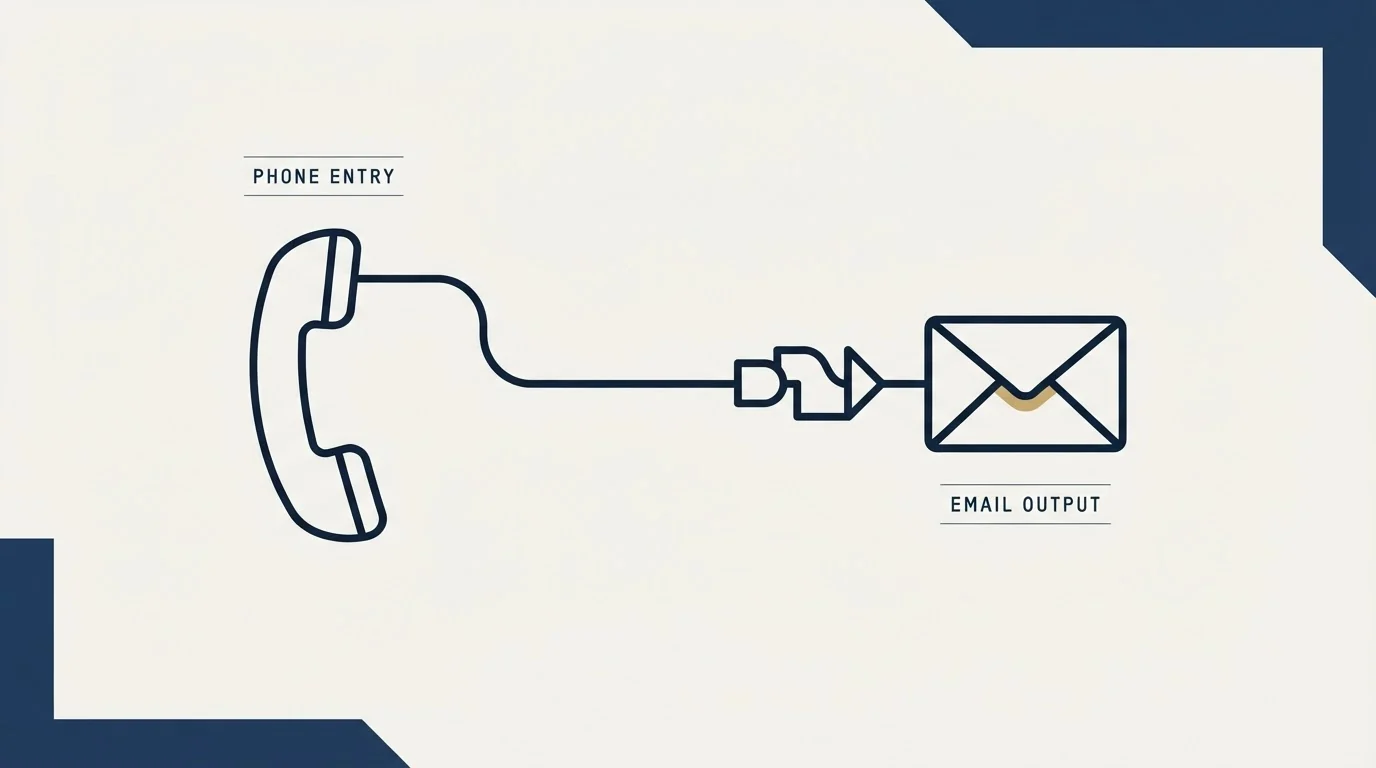
The query asks for phone to email, and the tools ranking for it mostly run email to phone, because B2B contact data is indexed by person and a mobile number is an output of that index rather than a key into it. Read the input field on the vendor's own page before buying anything: Tomba and Hunter both describe the opposite operation, and SignalHire is the one on this page whose Person API accepts "social media profile URL, email, or phone". Swordfish AI could not be assessed at all, because its site served a challenge page rather than content to every request we made, which is a fact about our access and a reason to treat the trial as the evaluation. When you do hold only a number, recover the name and the employer first and run the ordinary waterfall, because an address matched to a number carries no identity you can defend and no verifier will tell you so.
If you would rather receive a list whose every row can be traced back to a company and a name, see what a first campaign looks like on your market.
Vendor statements in this article come from snapshots of each vendor's own pages taken in August 2026. No Swordfish AI figure appears here, because its pages served a bot challenge rather than content. Check current terms with vendors before relying on them.
Sources: Tomba phone finder, Hunter reverse email lookup, SignalHire, ContactOut, Saleshandy phone number finder
Frequently asked questions.
Frequently asked questions- Can you actually find an email address from a phone number?
- Rarely through B2B sales tooling, which is indexed by person rather than by number. The products that do it at scale are consumer people-search and open-source-intelligence tools resolving identity across public records and directory listings. They carry different sourcing and different constraints, and treating one as a prospecting tool because it ranks on this query is the mistake the results page invites.
- Why do phone finder tools rank for email finder by phone number?
- Because the phrase contains both nouns and the vendors sell the pairing, not the direction. Tomba's page offers phone numbers from email addresses, websites or LinkedIn profiles. Hunter's reverse lookup turns an address into a person. The fastest way through the category is to ignore the headline and read what the input field on the vendor's own page accepts.
- What should I do when a phone number is the only contact detail I have?
- Recover the identity before chasing the address. The name and employer are usually recoverable from the context the number arrived in: the call log, the account it sits on, the meeting it was booked from, an earlier signature. Once you hold a name and a company you are back in the direction every ordinary finder is built for. For an inbound contact, asking is faster and more accurate.
- Is an email address matched to a phone number safe to send to?
- Treat it as unverified identity rather than as a contact. The number may be a shared line, a former employee's handset, a switchboard, or a recycled number now issued to somebody else. Verification answers whether a mailbox exists and accepts mail, which is a question about the server. Sending to a valid mailbox belonging to the wrong person costs a prospect rather than a credit.
About the author.

B2B cold email experts helping companies generate qualified leads through done-for-you outreach campaigns.
RevenueFlow Team
Explore more.
Ready to scale your outreach?
We build GTM engines that book real meetings. See the receipts.
Related articles.
Seamless.AI Email Finder: How It Works, What a Credit Buys
How Seamless.AI's email finder resolves a contact in real time, what one Universal Credit buys, the Total AI score on every address, and what the Chrome extension reads.
SalesQL Pricing: Four Plans, Priced Per Credit
SalesQL publishes four plans on a monthly-first pricing page. Here is the dated ladder, the per-profile credit meter, the seat limits, and what the page leaves out.
LeadGibbon Pricing: Three Monthly Plans, No Annual Tab
LeadGibbon publishes three monthly plans and no annual rate. The dated ladder, the verified-emails-only meter, the rollover rule, and what the page does not publish.
Enrow Pricing: Three Billing States, Two Currencies
Enrow prices per verified result across monthly, annual and pay-as-you-go tabs in euros and dollars. The ladder, the credit meter and the currency clause.
Is Clay Free? The Free Plan, the Trial and Where Each Stops
Clay's free plan, its 14-day trial and the no-charge-on-a-miss rule are three different things. What each holds and where it stops, from clay.com on 19 September 2026.
Video Prospecting Tools by Job: What Each One Is For
Ten video prospecting tools sorted by the job each vendor's own page describes: record and share, personalise at volume, avatars, hosting and interactive demos.