Gong: What Revenue Intelligence Records
Gong publishes no prices, but it does publish the shape of the bill: per-user licences plus a platform fee that scales with users supported. What that means for scoping.
Gong is a revenue intelligence platform that records, transcribes and analyses customer conversations across a team. Its pricing page publishes no figures but states that licences are priced per user and that a platform fee applies based on the number of users supported, so seat count drives both lines of the bill.
Key takeaways
- Gong's pricing page states that licences are priced per user and that a separate platform fee is based on the number of users supported, so cost rises faster with headcount than a single per-seat model implies.
- The category answers questions about what was said across every conversation, which no manager can reach by sitting in on calls, and it answers nothing about companies that never replied.
- Buying revenue intelligence to fix a shortage of conversations is the common misdiagnosis, because the instrument reads recordings and a targeting problem produces no recordings to read.
- Recording obligations vary by jurisdiction and land on the buyer, so automatic disclosure, a documented process for participants who decline, and a decided retention period belong in the rollout rather than after it.
Reviewed and updated September 1, 2026
Gong's pricing page publishes no prices. What it publishes instead is the shape of the bill, and that turns out to be the more useful disclosure. The page states that pricing depends on factors specific to your team, that "Licenses are priced per user", and that "There is a platform fee based on the number of users supported".
Two components, one of which most buyers do not budget for. A per-user licence cost is the number people expect and the number they model. A platform fee that scales with the number of users supported is a second line that moves in the same direction, which means the cost of adding people to Gong rises faster than a simple per-seat model implies.
That is worth establishing before anything else, because it changes how you should scope a first deployment.
What Gong is, in the category sense
Gong sits in revenue intelligence, sometimes described as conversation intelligence. The product records and transcribes customer conversations across calls, meetings and email, analyses them, and surfaces patterns across a team rather than across a single rep.
Revenue intelligence sits downstream of lead sourcing, and the comparison with Cognism explains why contact data acquisition and conversation analysis solve separate workflow stages.
The vendor's own site organises the product into named components: an overall platform, plus Engage, Forecast, Enable and a revenue graph, with an AI layer across them. The distinction that matters for a buyer is between the recording and analysis core, which is what most people mean when they say Gong, and the engagement and forecasting products that compete with a different set of vendors.
What the core does well is answer questions about what was actually said, at a scale no manager can reach by listening. A sales leader who wants to know how their team handles a specific objection has, without something like this, two options: ask the reps, or sit in on calls. The first returns what reps believe they say. The second returns a sample of five conversations. Neither answers the question about the other four hundred.
- How the team actually handles a named objection, across every call
- Which topics appear in conversations that closed and not in those that did not
- Whether a message reached the buyer intact or was reshaped by the rep
- Where in the call the conversation changed direction
- Whether the people being called were worth calling
- Why a company that never took a meeting did not
- What the market thinks that never reached a recorded conversation
- Whether the pipeline is large enough to hit the number
What the analysis surfaces in practice
The abstract description of a revenue intelligence platform makes it sound like a search engine over recordings. The value in daily use is narrower and more specific than that, and it is worth knowing which findings actually recur, because they are what a deployment has to produce to justify itself.
The first is drift between the message you agreed and the message being delivered. A positioning statement is written once and then travels through however many people repeat it in their own words. Over a quarter it changes, usually in the direction of whatever is easiest to say on a call. Nothing catches this without listening at scale, and it is invisible in a CRM because the notes record what happened rather than what was said.
The second is where in a conversation deals turn. Managers usually have a theory about this, and the theory is typically built from the calls they personally sat in on, which are not a random sample: they are the calls that were flagged as important or already going badly. An analysis across every call frequently relocates the turning point earlier than the theory places it.
The third is the gap between how reps describe their objection handling and what they do. This is not dishonesty. People remember their best version of a repeated exchange, and the best version is the one they replay when asked. The recording holds the median version.
The fourth is talk-time and question ratios, which are the metrics the category is best known for and probably the least useful of the four. They are easy to measure and easy to game, and a rep who has been told to talk less will talk less without necessarily listening more. Treat them as a prompt to go and read a transcript rather than as a number to manage against.
Adoption is the failure mode, not accuracy
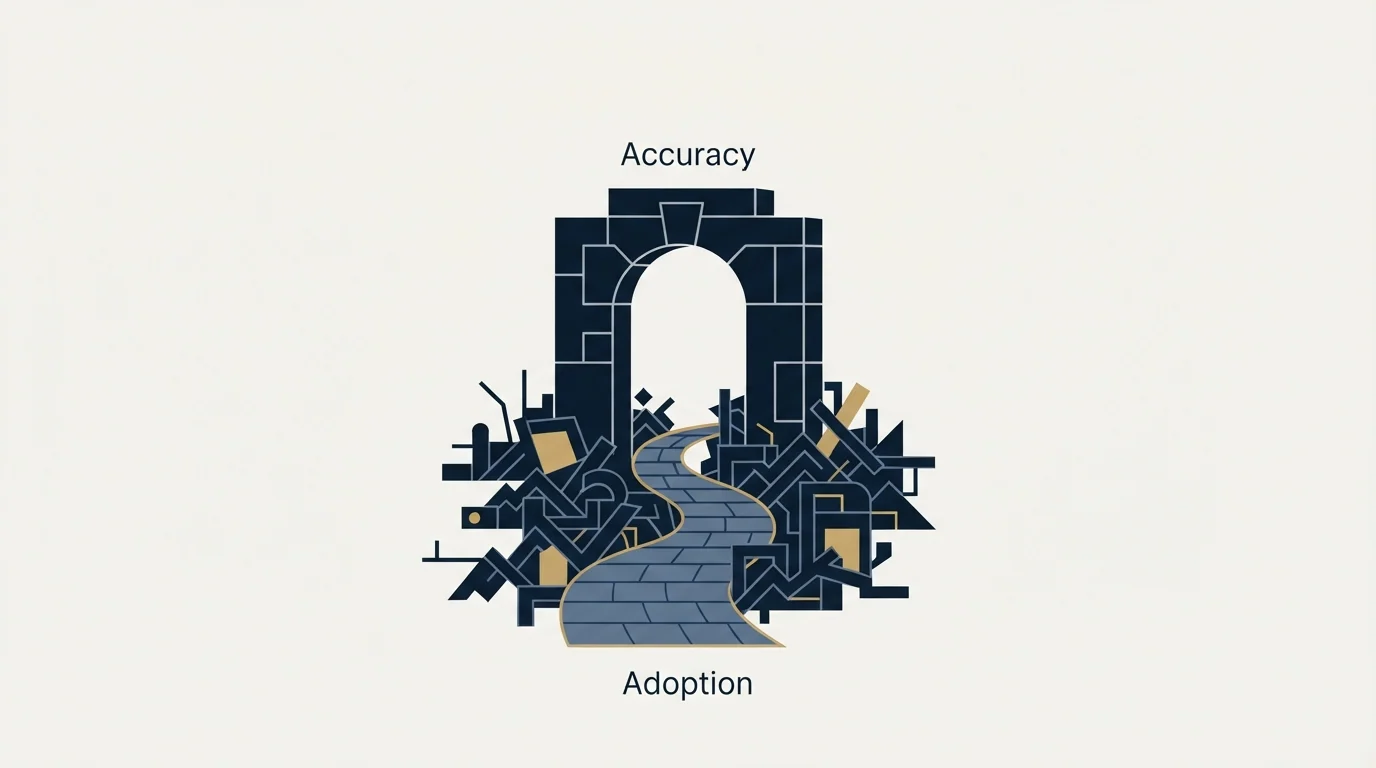
Deployments of this category rarely fail because the transcription was poor. They fail because nobody looks at the output after the first month.
The pattern is consistent enough to plan against. The platform is bought by a leader who wants visibility, rolled out to a team that experiences it as surveillance, and reviewed enthusiastically for a few weeks while it is new. Then the reviewing stops, because reviewing is a discretionary task competing with a quota, and the recordings accumulate into an archive nobody queries.
Two things change that outcome, and both are decided before purchase rather than after. One is that a named person owns a recurring review with a defined output, so the analysis feeds a specific decision on a specific day rather than being available in general. The other is that the team sees something back. A platform that only ever produces management findings is experienced as monitoring; one that reps use to find how a colleague handled the objection they just lost on becomes a tool they open themselves.
That second point is worth weighing against the seat-scoping advice above, because it pulls in the opposite direction. The cheapest deployment gives seats only to reviewers. The one most likely to still be in use in a year gives them to the people being recorded as well. Which tension you resolve in favour of is a real decision rather than an oversight, and it is better made deliberately.
The pricing model, and how to read a quote
When a vendor publishes no figures, the negotiation happens on terms rather than on price, and knowing which terms move is most of the preparation.
Because licences are per user and a platform fee tracks the number of users supported, the seat count is the primary driver on both lines. That has a specific consequence for deployment planning: the instinct to give everyone visibility is expensive twice. A deployment scoped to the people who will actually change behaviour based on what they see costs less than a deployment scoped to everyone who might find it interesting, and the difference is larger than a single per-seat calculation suggests.
The question that matters more than the discount is which seats are genuinely load-bearing. Recording a rep's calls requires that rep to be licensed. Reviewing them does not necessarily require the reviewer to hold the same class of licence, and the boundary between those is exactly the kind of detail that is defined in a quote rather than on a website.
Two further things are worth pinning down in writing before signing, and neither is unique to this vendor. What happens to your recordings and transcripts if you leave, and in what format you can take them. And what the renewal looks like if your headcount falls, since a model priced on users supported is asymmetric in practice: adding people is easy and mid-term reductions usually are not.
The published-price question also affects comparison shopping. Any per-seat figure you find for this category on a third-party site is someone else's negotiated outcome at their seat count, and it is not a price list. Treat those numbers as evidence that a range exists rather than as the range.
Which vendors in the category publish anything at all, and what revenue intelligence software is actually made of underneath the label, is compared in where the evidence comes from.
- Step 1Name the decision it will change
Write down the specific management decision the recordings are meant to inform. A deployment without one becomes an archive nobody queries.
- Step 2Scope seats to behaviour
Count the people who will act on what they see, not the people who would like access. Both pricing lines track that count.
- Step 3Separate recorded from reviewing seats
Establish in the quote which roles need which licence class, since the distinction is not published.
- Step 4Agree the exit terms
Recording and transcript portability, and what renewal looks like if headcount falls, belong in writing before signature.
What it improves, and the failure it does not fix
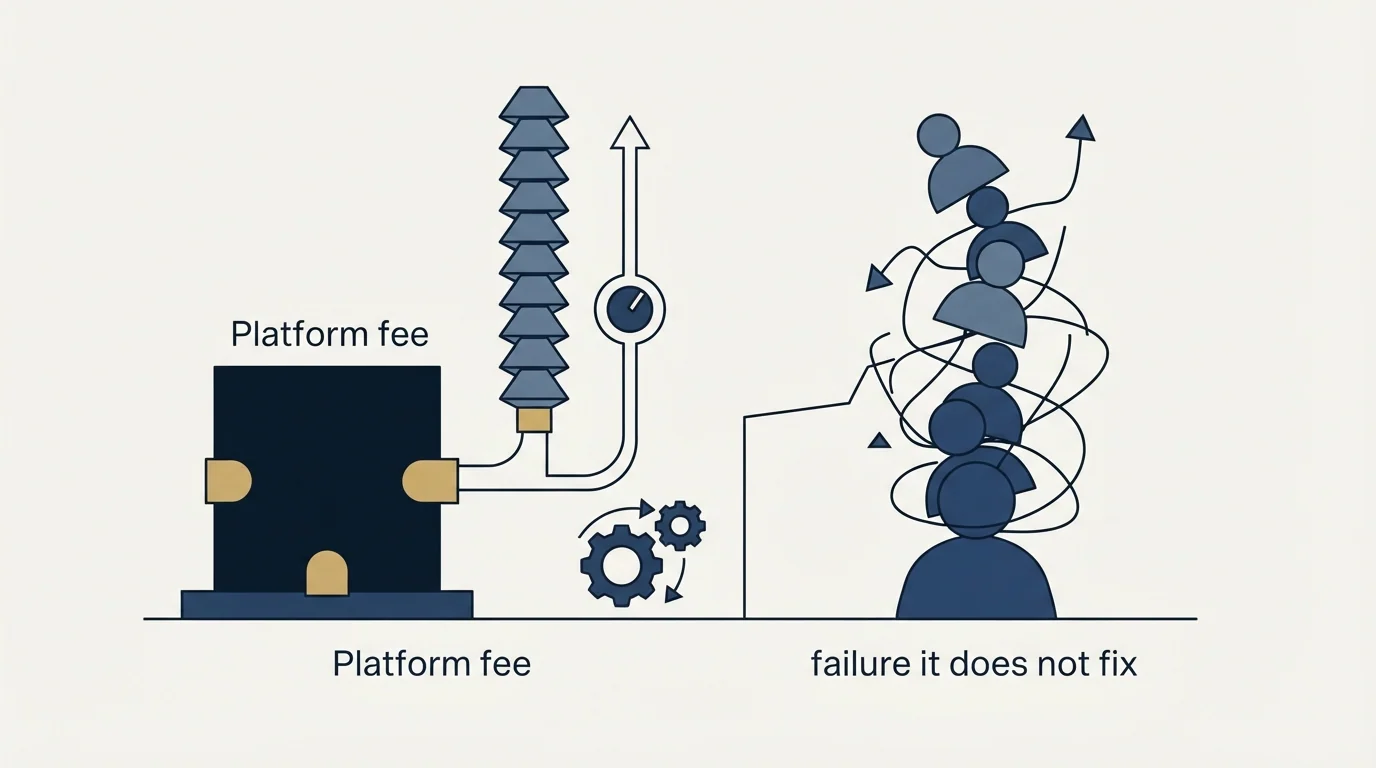
Revenue intelligence improves the conversations you are already having. That is a genuinely valuable thing and it is also a precise limit.
If a team's problem is that reps handle pricing objections inconsistently, or that discovery calls skip qualification and the pipeline fills with deals nobody can close, this category addresses it directly. The evidence is in the recordings, the analysis surfaces it, and a manager can act on something specific rather than on an impression. The structure that those calls should follow is a separate discipline, and we have written it up in the discovery call.
If a team's problem is that there are not enough conversations to analyse, no amount of recording changes the number. This is the misdiagnosis worth naming, because the tooling is compelling enough to buy on its merits while the actual constraint sits upstream. A team having thirty meaningful conversations a month with the wrong companies does not have a conversation-quality problem. It has a targeting and volume problem, and the instrument that reads conversations cannot see it, because the companies that never replied produce no recordings.
Since Gong and outreach execution tools solve different stages of the funnel, the comparison with Reply.io clarifies where conversation intelligence stops and campaign volume takes over.
The clean test is to ask which number you want to move. If it is win rate or cycle length on deals you already have, the analysis is pointed at the right thing. If it is the number of qualified conversations entering the pipeline, the constraint is in sourcing and outreach, and the intelligence layer will describe the symptom accurately while leaving the cause untouched.
- Yes: The number you want to move is win rate or cycle length, not pipeline volume
- Yes: A named person owns reviewing the output weekly
- Yes: Seat count is scoped to people who will change behaviour
- Yes: Recording consent is settled for every jurisdiction your team calls into
- Yes: Transcript portability and renewal terms are agreed in writing
- No: Buying it to fix a shortage of conversations
- No: Treating a third-party per-seat figure as a price list
The consent question, which is not optional
Recording conversations at scale carries obligations that vary by jurisdiction, and they land on you rather than on the vendor. Some jurisdictions require all parties to consent, others require one. Meetings that cross borders inherit the stricter rule in practice, and a sales team calling internationally will cross borders routinely.
The workable version is a standing policy rather than a per-call judgement: automatic disclosure at the start of every recorded conversation, a documented process for a participant who declines, and a retention period someone has actually decided. This is ordinary compliance hygiene, it is cheap to set up before rollout, and it is unpleasant to retrofit once a year of recordings exists.
Where it sits relative to what we do
Revenue intelligence and outbound are different layers of the same motion, and confusing them is common enough to be worth stating plainly. Gong reads what happened in conversations. Outbound creates conversations that would not otherwise have happened.
Another way to see that contrast is through a direct look at how Gong and Outplay differ, since one analyzes conversations already happening while the other orchestrates the outreach that creates them.
Where the question is not which alternative but whether Gong overlaps with a CRM you already run, the Close versus Gong comparison lays out how the two workflows actually complement each other.
Our own practice sits on the creation side: sourcing companies that match a written definition, sending one message per campaign rather than a sequence, and qualifying the meetings that result against criteria agreed in writing before launch. We do not run phone outreach, so the calling half of what a conversation intelligence platform records is not something we operate.
For a team weighing this category against adjacent products, our roundup of alternatives to Gong covers where each competitor is genuinely different, and the neighbouring category of sales engagement platforms is worth understanding separately, because the two overlap in marketing more than in function.
If the number you actually need to move is qualified conversations rather than their quality, see what a first campaign looks like.
Pricing model details quoted here were verified against raw page bytes from gong.io in mid-2026, where the pricing page describes the model without publishing figures. Verify current terms with the vendor before relying on them.
Frequently asked questions.
Frequently asked questions- How much does Gong cost?
- Gong does not publish figures. Its pricing page states that pricing depends on factors specific to your team, that licences are priced per user, and that there is a platform fee based on the number of users supported. Any per-seat number you find elsewhere is another company's negotiated outcome at their seat count rather than a price list.
- What does Gong actually do?
- It records and transcribes customer conversations across calls, meetings and email, then analyses them to surface patterns across a whole team. The practical value is answering questions like how the team handles a specific objection across every call rather than across the handful a manager can listen to.
- Will Gong improve my pipeline?
- It improves the conversations you are already having, which moves win rate and cycle length. It does not create conversations. If the constraint is the number of qualified conversations entering the pipeline, the cause sits upstream in targeting and outreach, and a tool that reads recordings cannot see companies that never replied.
- What should I agree before signing?
- Which roles need which licence class, since recorded and reviewing seats are defined in a quote rather than on the website. What happens to your recordings and transcripts if you leave, and in what format. And what renewal looks like if headcount falls, because a model priced on users supported is easier to scale up than down.
About the author.

B2B cold email experts helping companies generate qualified leads through done-for-you outreach campaigns.
RevenueFlow Team
Explore more.
Ready to scale your outreach?
We build GTM engines that book real meetings. See the receipts.
Related articles.
Is Clay Free? The Free Plan, the Trial and Where Each Stops
Clay's free plan, its 14-day trial and the no-charge-on-a-miss rule are three different things. What each holds and where it stops, from clay.com on 19 September 2026.
Video Prospecting Tools by Job: What Each One Is For
Ten video prospecting tools sorted by the job each vendor's own page describes: record and share, personalise at volume, avatars, hosting and interactive demos.
Seamless.AI Email Finder: How It Works, What a Credit Buys
How Seamless.AI's email finder resolves a contact in real time, what one Universal Credit buys, the Total AI score on every address, and what the Chrome extension reads.
Social Selling Tools by Job, and the Account-Risk Line
Fourteen social selling tools sorted into six jobs, split by whether each acts through your LinkedIn account or beside it, from the vendors' own pages.
Snitcher Pricing: The $49 Table Is the Annual Rate
Snitcher's visible price table is the annual-billing ladder. The ten bands at both billing states, the unique-company meter, and the rules on a help page.
Apollo Integrations: What Connects, and on Which Plan
Apollo's integrations marketplace sorted by job: what its own pages say each CRM sync moves, which plan ticks which integration, and what a sync costs.