Lead Generation for a Small Business: What One Person Runs
The constraint at eight people is attention, not budget. Which single motion to run, the setup an owner can hold alone, and what to stop doing this week.
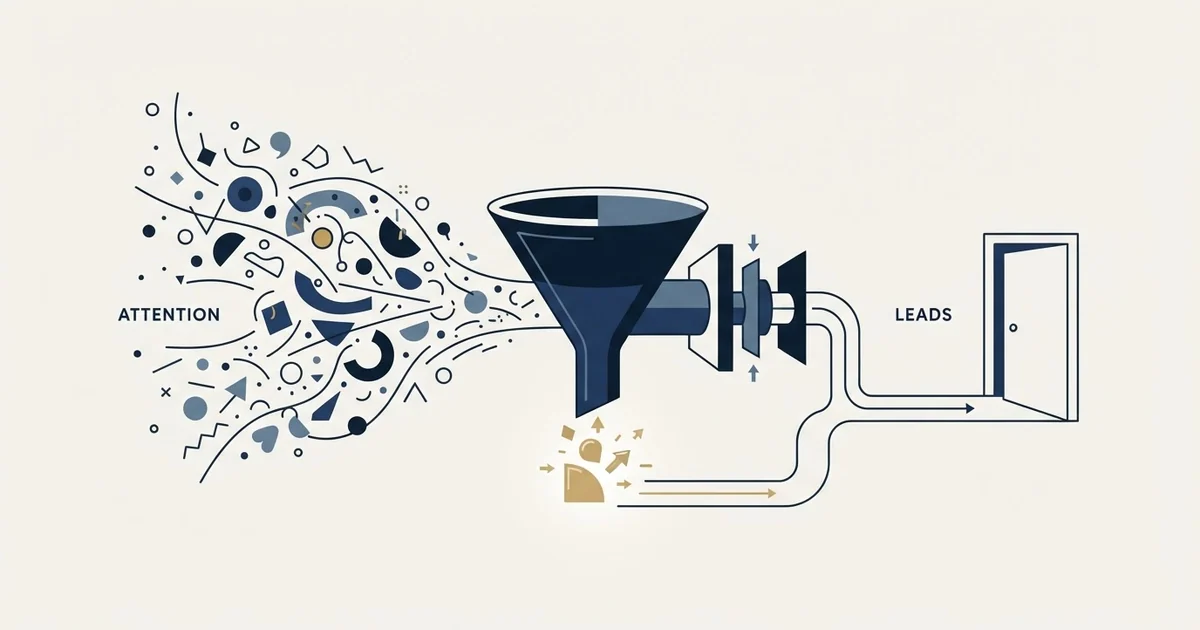
Small business lead generation improves when the list of active channels gets shorter. Attention is the binding constraint, so run one motion properly rather than six badly. Direct outreach is usually the right primary choice because its timing is the only one you control.
Key takeaways
- Attention rather than budget is the binding constraint, and four hours a week split across six channels produces six things done badly.
- A hundred companies chosen by name beats a thousand assembled by filter, because the value in a small-business list is in the choosing.
- Send outreach from a separate domain rather than the one carrying client email and invoices, and verify addresses before sending.
- A quiet month at small volume is ordinary variance, and abandoning the programme costs the domain warmup and target research already built.
Reviewed and updated September 2, 2026
Lead Generation for a Small Business: What One Person Can Actually Run
An owner of an eight-person consultancy spends about four hours a week on new business. Those four hours are split across a LinkedIn account, a half-finished newsletter, an SEO project someone recommended, a networking group, an occasional round of emails to old contacts, and a website refresh that has been in progress since spring. Nothing is failing outright. Nothing is working either.
The constraint at this size is attention rather than budget, and attention divided six ways produces six things done badly. Almost every small business lead generation problem improves the moment the list of active channels gets shorter.
Pick the channel your business is actually shaped for
Channel advice aimed at small businesses is usually written as a menu, which is the wrong format. The right question is which single motion fits how your business already wins work, then whether you can commit enough weekly attention to it to reach a result.
SMB lead generation is that same choice made under a harder constraint, which is that the person running the motion is usually the person delivering the work. Weekly attention rather than budget is the binding input, and it is why one channel run properly beats three run occasionally.
- Works when you can name the companies you want
- Results possible within weeks, not quarters
- Demands a target list and a specific reason to write
- Time cost is front-loaded into research
- Fails when the list is a filter rather than a decision
- Highest conversion rate of anything available to you
- Slow to build and hard to scale on demand
- Demands that people can describe what you do in one line
- Cost is relationship time rather than money
- Fails silently when your positioning is vague
- Compounds, and keeps working when you stop
- Rarely produces anything meaningful inside six months
- Demands consistent output at a quality bar
- Cheapest per lead eventually, most expensive to start
- Fails when the market does not already search for what you do
Most small businesses should be running direct outreach as the primary motion and building one of the other two underneath it, because outreach is the only one whose timing you control. That said, if your work has always arrived through referral and you have never been able to explain in one sentence what you do, fixing the sentence is worth more than any campaign.
A different angle worth naming is calling owner-led businesses directly, covered in cold calling for owner-led businesses, where one person holds budget, need and authority at once.
The minimum setup an owner can run without help
Lacking the internal resource for a dedicated sales team is the ordinary case at this size rather than a deficiency, and it decides the shape of everything below: one motion, run properly by one person, beats three run in the gaps between client work.
Direct outreach at small scale has a smaller technical footprint than the market suggests. What it needs is a target list you actually chose, addresses that resolve, one message worth reading, and somewhere for a reply to land.
- Step 1Choose 100 companies
Named individually, not filtered in bulk. This is the part that decides everything.
- Step 2Find the right person
One decision maker per company, with a verified work address
- Step 3Write one message
One premise, specific to why you picked that company
- Step 4Send in small batches
Enough per week that replies are manageable alongside your actual job
- Step 5Handle replies same day
Speed here matters more than anything upstream of it
A hundred well-chosen companies is a more useful starting point than a thousand filtered ones, for a reason specific to your situation: you cannot process the replies from a thousand, and a poorly targeted campaign at volume damages a sending reputation you will need later. Start at a size where every message could survive being read aloud to the person who received it.
Budget the time honestly before starting. Choosing and researching a hundred companies properly is measured in hours, not minutes, and it is the step owners skip when the week gets busy. A campaign built on a filter instead of a decision is the most common way this fails, and it fails quietly, because the output looks identical until the replies do not come.
The two technical things worth getting right

Almost everything technical can wait, with two exceptions that cost real money to get wrong.
The first is where you send from. Sending outreach from the same domain that carries your client email and your invoices puts a working business at risk if a campaign goes badly, and the damage is not recoverable on a useful timescale. A separate sending domain that redirects to your main site is inexpensive and removes the whole class of problem. It also needs to be set up early enough to be warmed up before real sending starts, which is a matter of weeks rather than days.
The second is verifying addresses before sending. Sending to addresses that no longer exist is the fastest way to lose the ability to reach anyone, because mailbox providers read a high bounce rate as evidence that the sender is guessing. Verification is cheap per address and is not the place to save money.
Everything else at this scale is optional. A CRM is helpful and a spreadsheet works. Automation matters at volumes you will not reach in the first quarter. Owners who spend the first month choosing tools have usually spent it avoiding the part that decides the outcome, which is choosing who to write to.
What to stop doing
The same reasoning applies when the missing role is a marketing person to own lead generation rather than a seller: the work does not shrink to fit the gap, so the honest move is to cut the number of motions until one of them fits the attention actually available.
A marketing automation small business search lands here, and a platform is usually the wrong first purchase, because it automates motions you have not yet chosen while the constraint at this size is attention rather than execution speed.
Capture tools hide the same problem in their pricing, since every self-serve Jotform tier is one seat and a team needs the enterprise route regardless of volume.
Three activities absorb disproportionate small-business time and rarely repay it at this size.
Posting without a distribution plan. Content on a small account reaches almost nobody by default. It can work as material to send to specific people, and as something a prospect finds when they check you out, and it very rarely works as a lead source on its own in year one.
Rebuilding the website before knowing what converts. A site is a capture instrument that works on demand that already exists. If nobody is arriving, a better site changes nothing, and the money is better spent creating the demand first. The distinction is set out in demand creation versus capture versus conversion.
Buying lists as a shortcut past targeting. A purchased list solves the easy half of the problem and leaves the hard half untouched, because the value in a small-business target list is in the choosing rather than the compiling.
A fourth is worth naming because it feels productive: attending events without a reason to be there. Networking works for small businesses, and it works when you arrive knowing which five people you want to meet and why. Attending in general, hoping to meet someone useful, converts a whole evening into a business card and is the most expensive hour on this list once travel is counted.
Our position on how the outreach runs
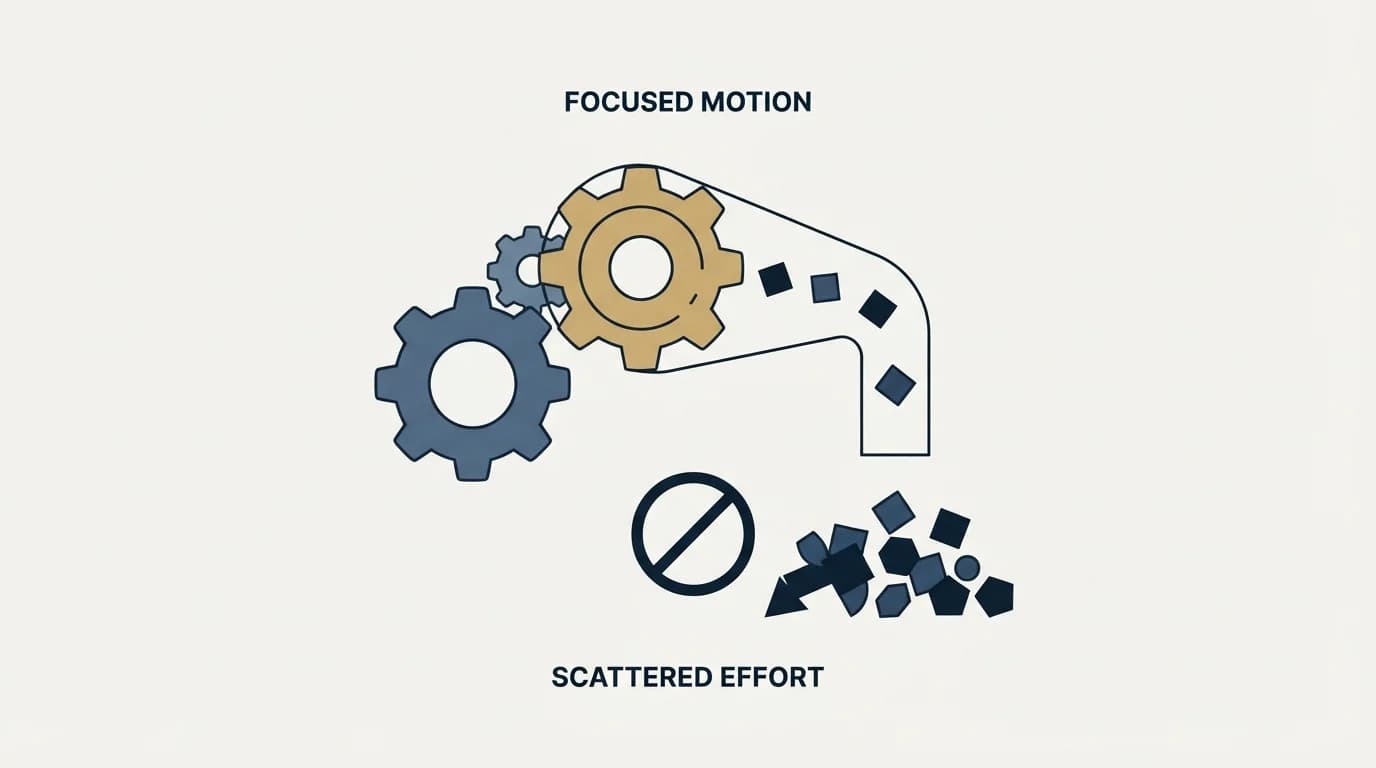
One message per campaign, built on one premise, sent once. If a later approach is worth making, it is a separate campaign with a different premise, aimed at a different role or a different observation about the company.
For a small business this constraint is a practical advantage rather than a restriction. It removes the largest ongoing time sink in outreach, which is managing an ever-growing set of pending messages to people who have not answered. It caps the reputational downside, which matters most when your name and your company's name are the same thing in a market where people talk. And it forces the research to be good, because a single message has to earn its reply on relevance alone.
It also makes the work fit into a real week. Choosing companies and writing to them is a task with a beginning and an end. Maintaining an open-ended set of chases is not, and it is what usually causes an owner to abandon outreach altogether.
When to stop doing it yourself
There is a point where owner-run lead generation stops being the right answer, and it is worth recognising in advance rather than in exhaustion.
The clearest signal is that the constraint has moved. If you are turning away good conversations because you cannot service them, the problem is delivery capacity. If you are consistently failing to run the campaign because client work takes the week, the motion is real and the operator is the bottleneck. Either way, the honest options are hiring, buying meetings, or accepting a slower rate of growth.
The signal people misread is a quiet month. Small numbers move violently: a hundred messages producing three conversations one month and none the next is ordinary variance rather than evidence that anything has stopped working. Judging a small-scale programme on a single month usually leads to abandoning something that was fine, and the abandonment costs more than the quiet month did, because the domain warmup, the target research and the accumulated context all have to be rebuilt.
Before committing to any of those, work out what a client is worth to you across the whole relationship and what you can therefore afford to spend acquiring one. That number decides which options are even available, and most owners have never calculated it. The method is in cost per lead in B2B, and the difference between buying leads and buying meetings is in appointment setting versus lead generation.
If you are weighing an outside provider, the arithmetic of what agencies charge at small-business scale, and where it stops working, is covered separately in lead generation companies for small business. It is worth reading before any calls, because the entry costs are the part most owners discover late.
Where to start this week

- Yes: Write the one sentence that says what you do and who for, and test it on an outsider
- Yes: Register a separate sending domain and start warming it
- Yes: Choose twenty companies by name and write down why each one
- Yes: Find one decision maker per company and verify the address
- Yes: Write and send twenty individual messages, one premise each
- Yes: Clear the calendar to answer replies the same day
- No: Buy tooling before any of the above is done
Write down the one sentence that says what you do and who for, and test it on somebody outside your business. If they cannot repeat it back in their own words, no campaign built on top of it will work, and rewriting it costs nothing.
Then choose twenty companies by name, find one right person at each, and write to them individually. Twenty is small enough to finish inside a week alongside real work, and large enough to tell you whether your positioning survives contact with strangers. Record why you picked each one, because that note is what the message is built from and it is also what tells you, later, whether your idea of a good target was right.
If nothing comes back, the answer is almost always in the choosing or in the sentence, and it is worth fixing those before scaling anything. A structural version of that diagnosis is in four frameworks for broken lead generation.
If you would rather see what this looks like built properly against your own market, see what a first campaign looks like.
Frequently asked questions.
Frequently asked questions- How much time does small business lead generation actually take?
- Budget hours rather than minutes for the part that decides the outcome, which is choosing and researching target companies. Sending and reply handling are quick by comparison. Owners who run out of time usually skip the research and substitute a filter, which produces a campaign that looks identical until the replies fail to arrive.
- Which lead generation channel should a small business start with?
- Usually direct outreach, because it is the only motion whose timing you control and it can produce results in weeks. Referral converts better but builds slowly and depends on people being able to describe what you do in one line. Inbound content compounds but rarely produces anything meaningful inside six months.
- Do I need a CRM and automation tools to start?
- No. A spreadsheet works at the volumes a first quarter reaches, and automation matters later. Two technical things do matter early: send from a separate domain rather than the one carrying your client email and invoices, and verify addresses before sending, because a high bounce rate costs you the ability to reach anyone.
- When should a small business hire or outsource lead generation?
- When the constraint has visibly moved. Turning away good conversations means the problem is delivery capacity, not demand. Consistently failing to run the campaign because client work takes the week means the operator is the bottleneck. Before choosing, calculate what a client is worth across the relationship, since that decides which options exist.
About the author.

Ben Carden is CRO at RevenueFlow, which builds and operates outbound revenue engines for B2B companies. Previously at Gartner Enterprise. Studied at London School of Economics.
Ben Carden · CRO
Connect on LinkedIn →Explore more.
Ready to scale your outreach?
We build GTM engines that book real meetings. See the receipts.
Related articles.
Two Agencies, One Target List: Who Owns Which Accounts
Two outbound suppliers on one market will contact the same companies unless the buyer splits it first. How to cut the list, run the exclusion feed and check the overlap.
HR Lead Generation: The Renewal Clock and Who Signs
An HR buyer who agrees with every word still cannot act outside their own renewal window. Which triggers are observable, and who signs.
IT Lead Generation: The Buyer Runs Your Playbook
Technology buyers evaluate outbound for a living, and their purchases carry a security review nobody in your meeting owns. Which triggers are real.
5 ABM Campaign Examples and How Each One Is Built
Five worked account-based campaign examples, each built on the same five fields: account set, tier, plays in order, owner and handoff, and the exit condition.
Last Outbound Agency Did Not Deliver: Locating the Failure
The leads were bad names a symptom and no stage. Four places an outbound engagement fails, the counts that separate them, and what to change in the next purchase.
When Outbound Stops Scaling: What Breaks First
Doubling the budget rarely doubles the meetings. The five constraints that bind in order, the signature each one leaves in the numbers, and what actually buys more.