Lempod Is Live, and Its Pricing Changed: The Pod Question
Competitor posts say Lempod was discontinued. A direct fetch returns a live site, an active checkout and a pricing model rebuilt since those posts.
Lempod is a LinkedIn engagement pod tool delivered as a browser extension, where pod members automatically like and comment on each other posts. A direct fetch on 16 August 2026 found the site live with a credit-based pricing model across ten tiers, contradicting third-party claims that it shut down.
Key takeaways
- A direct fetch on 16 August 2026 returned a live site and an active pricing page, contradicting competitor posts claiming the tool was discontinued.
- Pricing has been rebuilt around two credit balances, Gold and Silver, across ten tiers from $9.99 to $1,499.99 a month excluding tax.
- Silver credits expire one month from the date they are added, so an unused balance is not banked value.
- LinkedIn's User Agreement names automated liking and commenting and driving inauthentic engagement among its prohibited automated methods.
Reviewed and updated August 28, 2026
Competitor blog posts ranking for "lempod" today say the tool was discontinued and pulled from the Chrome Web Store. A direct fetch of lempod.com on 16 August 2026 returns a live site, an active pricing page, and a billing model that has been rebuilt since those posts were written. The claim and the evidence disagree, and the evidence is the vendor's own bytes.
That matters because the same posts also quote Lempod at $9.99 per pod per month, with most users joining two to five pods. The live pricing page does not sell pods that way any more. It sells two credit balances called Lempod Gold and Lempod Silver, across ten tiers running from $9.99 to $1,499.99 a month.
What Lempod does
Lempod is a LinkedIn engagement pod tool delivered as a browser extension. You join pods, which are groups of members organised by industry or location, and when a member publishes a post the other members' accounts automatically like and comment on it. The product's stated purpose is multiplying post views by routing early engagement at the post from the pod.
That mechanism is the whole product, and it is what makes this vendor a different case from every sequencer in the LinkedIn tooling category. A sequencer automates outreach you were going to send anyway, to people you chose, in your own voice. A pod automates engagement from people who did not read the post and would not have engaged with it. The first compresses work you had already decided to do. The second manufactures a signal that was not there.
What LinkedIn's own pages say about that
This is the part that decides whether the tool belongs in a stack, and it does not require anyone's opinion.
LinkedIn's User Agreement, effective 3 November 2025, lists among its prohibitions that members will not "use bots or other unauthorized automated methods to access the Services, add or download contacts, send or redirect messages, create, comment on, like, share, or re-share posts, or otherwise drive inauthentic engagement".
Automated likes and comments are named in that sentence twice over: the specific acts, and then the general category of driving inauthentic engagement.
LinkedIn's help page on prohibited software and extensions goes further and addresses pods as a class without using the word. It states that LinkedIn does not permit third-party software including crawlers, bots, browser plug-ins or browser extensions "that scrape, modify the appearance of, or automate activity on LinkedIn's website", and adds that it does not permit "fake accounts or fake engagement on LinkedIn's website, including any tools or services that try to manipulate LinkedIn's content algorithms". The same page states that any member using such tools "is in violation of the User Agreement", risks "having their accounts restricted or shut down", and risks the tools becoming non-functional.
- Yes: Automated liking and commenting is named in User Agreement section 8.2
- Yes: Driving inauthentic engagement is named separately in the same clause
- Yes: Tools that manipulate content algorithms are named on the prohibited software page
- Yes: Browser extensions that automate activity are named on the same page
- No: LinkedIn publishes a numeric detection threshold for pod activity
- No: Any vendor can state what LinkedIn currently detects
There is no ambiguity to resolve here, and the honest answer to a search for this tool is that the platform's own documentation describes what it does as prohibited. What LinkedIn does not publish is any figure for how much of it is detected or how quickly, which is a different question and one nobody outside LinkedIn can answer.
What it costs now
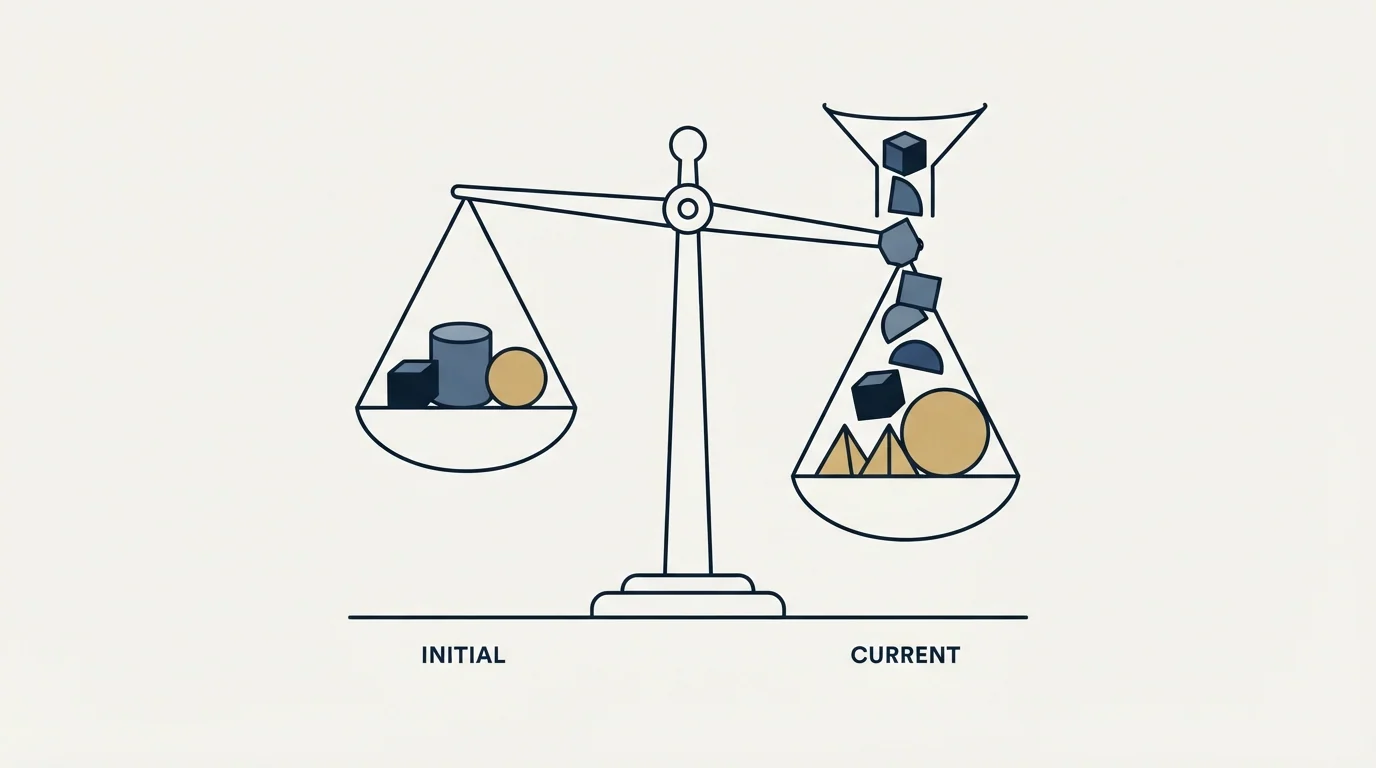
The current pricing model is a two-balance credit system, which is worth documenting because the figures in circulation describe the retired one.
Pricing structure itself often signals who a product is built for, a pattern examined in pricing models built for different buyers comparing per seat and per agency charges.
- Lite at $9.99, described as experienced users only
- Starter at $14.99: 100 Gold, 500 Silver, 550 engagements
- Essential at $29.99: 200 Gold, 3,500 Silver, 1,350 engagements
- Starter is positioned for one small pod
- Growth at $72.99: 500 Gold, 5,000 Silver, 3,000 engagements
- Pro at $134.99: 800 Gold, 16,000 Silver, 5,600 engagements
- Agency at $149.99: 1,700 Gold, 55,000 Silver, 14,000 engagements
- Agency XL at $179.99: 2,500 Gold, 105,000 Silver, 23,000 engagements
- Unlimited at $199.99: 500 Gold, 1,000,000 Silver, 102,500 engagements
- Corporate at $799.99: 5,000 Gold, 260,000 Silver, 51,000 engagements
- Enterprise at $1,499.99: 9,400 Gold, 555,000 Silver, 102,500 engagements
- Conversion rate published as 1 Gold equals 50 Silver
- Silver expires one month after it is added
Two mechanics on that page deserve attention independently of the prices. Silver credits expire one month from the date they are added, so an unused balance is not banked value. And billing notes state that add-on features are charged separately under an annex, which means the tier price is a floor rather than a total.
The expiry rule interacts badly with the tier structure. Buying a large Silver allowance to cover an expected campaign means committing to spending it inside a month, and the credit that expires unused was bought at the same rate as the credit that worked.
The credit arithmetic, and what it hides
The following is our own arithmetic on Lempod's published figures rather than anything the vendor states, and it is illustrative of the shape rather than a quote.
Our arithmetic: $14.99 over 550 stated engagements
Our arithmetic: $72.99 over 3,000 stated engagements
Our arithmetic: $149.99 over 14,000 stated engagements
The vendor's own stated rate
The curve does what volume pricing usually does, and the per-engagement rate falls by more than half between the entry and agency tiers. That comparison is also the least useful number on the page, because it prices the wrong unit.
An engagement here is a like or a comment from someone who did not read the post. What a publisher actually wants is a reader who works somewhere relevant and now knows something they did not. Those two units are priced identically by a credit model and are worth wildly different amounts, and no tier discount changes the ratio between them.
The expiry rule sharpens that. Silver expires one month from the date it is added, so buying a larger balance to get the better rate only pays if the whole balance is consumed inside the window. A balance sized for a busy month and spent in a quiet one converts a discount into waste at full price.
What a pod is, operationally
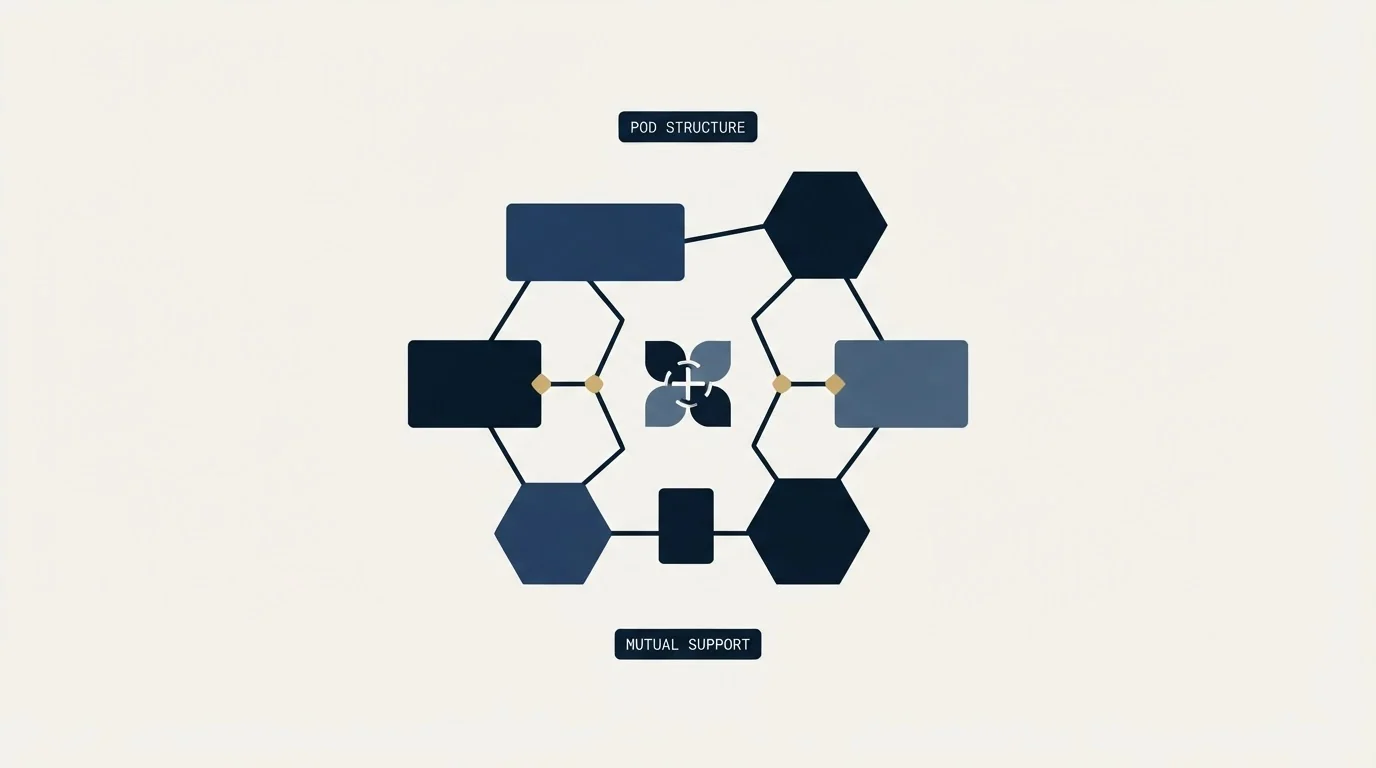
It is worth being concrete about the mechanism, because the marketing language obscures how visible it is.
A pod places a burst of likes and comments on a post within a short window of publication, from a repeating set of accounts that engage with each other's posts and with little else. That pattern has three properties that are trivially observable from inside the platform: the timing is clustered, the responding accounts recur across many unrelated authors, and the comments are frequently generic because they were written to satisfy a quota rather than to answer the post.
None of that requires sophisticated detection to notice. It also means the accounts doing the engaging carry the same exposure as the account being boosted, which is the part people underweight when they join a pod to promote one post a week. Membership is continuous participation, not an occasional favour.
Why we do not run pods, and would not
RevenueFlow runs LinkedIn outreach through HeyReach alongside cold email, and pods are not part of that and will not be. Three reasons, in order of how much they cost.
The first is the one above. LinkedIn's own documentation names automated liking and commenting as a prohibition and states that accounts using such tools risk restriction or closure. Putting a client's sender accounts behind that is not a trade we would make on their behalf.
The second is that pod engagement does not do the thing it appears to do. Likes and comments from an industry pod are engagement from people outside the audience the post was written for, and the signal a feed algorithm reads from that is engagement from accounts with no relationship to the reader you wanted. Reach bought that way arrives detached from intent.
The third is that it solves the wrong problem. Posts that do not travel are usually posts that did not say anything a specific person needed, and no amount of routed engagement fixes that. The same money spent on writing fewer, better posts to a defined audience compounds; the pod spend stops the month you stop paying.
If you are searching for this because reach is flat

The honest alternative is unglamorous. Publish to a defined audience rather than to a feed, write to one reader's problem rather than to a topic, and pair the content with direct outreach so a post that lands has somewhere to go. That is the model behind our own LinkedIn work, and the outreach half of it is described in LinkedIn prospecting and in our HeyReach review.
If the underlying goal is pipeline rather than impressions, the channel comparison in LinkedIn automation tools sets out which parts of this category carry account risk and which parts are ordinary sending discipline. And if you would rather have the sender infrastructure and ramp discipline already running, get a free campaign plan and we will map the channel to your ICP before anything sends.
The correction worth keeping
Two things in the public record about Lempod are wrong as of this fetch. The tool is not gone: lempod.com serves a live site with a live checkout. And its pricing is not $9.99 per pod: that model has been replaced by Gold and Silver credit balances across ten tiers.
Both errors run in the same direction, which is what happens when a category's coverage is written largely by the vendors competing in it. A competitor has every reason to publish that a rival has shut down, and no reason to re-check it a year later when the rival is still trading.
Check the vendor's own page and the date on it before quoting either the obituary or the price. Resolving a domain costs one request, and it is the difference between reporting what a market says and reporting what is there.
Pricing and features verified as of mid-2026. Verify current terms with the vendor before relying on them.
Frequently asked questions.
Frequently asked questions- Is Lempod still working?
- A direct fetch of lempod.com on 16 August 2026 returned a live site with an active pricing page and checkout. Competitor posts stating it was discontinued and removed from the Chrome Web Store are contradicted by the vendor's own bytes. Those posts also quote a per-pod price the current page no longer uses.
- What does Lempod cost now?
- Its pricing page publishes ten tiers from $9.99 to $1,499.99 a month excluding tax, built on two credit balances it calls Gold and Silver at a published conversion of one Gold to fifty Silver. Silver expires one month after it is added, and add-on features are billed separately under an annex.
- Do engagement pods violate LinkedIn rules?
- LinkedIn's User Agreement prohibits using bots or other unauthorized automated methods to create, comment on, like, share or re-share posts, or otherwise drive inauthentic engagement. Its help page adds that it does not permit fake engagement or tools that try to manipulate its content algorithms, and that members using such tools risk restriction or closure.
- What should I do instead if reach is flat?
- Publish to a defined audience rather than to a feed, write to one reader's problem rather than to a topic, and pair the content with direct outreach so a post that lands has somewhere to go. Posts that do not travel are usually posts that did not say anything a specific person needed.
About the author.

B2B cold email experts helping companies generate qualified leads through done-for-you outreach campaigns.
RevenueFlow Team
Explore more.
Ready to scale your outreach?
We build GTM engines that book real meetings. See the receipts.
Related articles.
The Real Cost per 1,000 Emails, Verifications and Data Credits in 2026
Unit prices computed from verified vendor plans: $1.00 per 1,000 emails sent, $2.00 per 1,000 verifications and $19.60 per 1,000 enrichment credits.
Airscale Pricing: Three Plans, One Credit, Four Rates
Airscale prints a different credit cost on every plan, and its advertised per-email price belongs to the custom one. The dated ladder and the rollover rules.
Lavender Pricing: Two Products, No Pricing Page
Lavender has no pricing page. The Email Coach ladder per seat at both billing states, the free routes, and the separate per-agent price for Ora.
Autobound Pricing: One-Time Credit Packs, Not Seats
Autobound's pricing page sells one-time credit packs for a signal data API, not seats. The six packs, the per-endpoint meter, and what a company costs.
Twain Pricing: Credits per Lead, Three Research Modes
Twain sells credits, not seats, and a lead costs 1 to 14 of them depending on the research mode. The two ladders, the four expiry clocks and the cap.
Snitcher Pricing: The $49 Table Is the Annual Rate
Snitcher's visible price table is the annual-billing ladder. The ten bands at both billing states, the unique-company meter, and the rules on a help page.