Pipedrive vs GoHighLevel: Per Seat Against Per Agency
One charges per user, the other a flat fee with unlimited users. That difference names each product's buyer, and it predicts nearly everything else about the comparison.
Pipedrive vs GoHighLevel comes down to who you sell for. Pipedrive suits a B2B sales team, charging per seat from £14 to £79 a month billed annually as served here. GoHighLevel suits an agency, at $97, $297 or $497 a month for unlimited users, with a ladder built from client sub-accounts.
Key takeaways
- GoHighLevel lists Starter at $97, Unlimited at $297 and Agency Pro at $497 a month, each with unlimited contacts and users and a 14-day trial.
- Pipedrive's pricing page serves pounds here: Lite £14, Growth £39, Premium £59 and Ultimate £79 per seat a month, billed annually.
- GoHighLevel's messaging, calling and AI features carry usage-based charges, and many add-ons are priced per sub-account, so the bill grows with clients.
- Pipedrive's limits scale with seats: 2,500 leads and deals per seat on Lite up to 20,000 on Ultimate, with no automations on Lite.
Reviewed and updated September 21, 2026
These two products get compared because both have a pipeline and both call themselves a CRM. Their pricing pages give the game away faster than any feature table. Pipedrive charges per user. GoHighLevel charges a flat monthly fee and advertises unlimited users and unlimited contacts on every tier. That single difference tells you who each company thinks its buyer is, and it predicts almost everything else.
Pipedrive is a sales CRM sold to a sales team. GoHighLevel is an agency operating platform sold to a business that runs marketing for other businesses. A company evaluating both is usually two companies wearing one coat.
GoHighLevel writes its own name as one word, and searchers type it as three: Go High Level, GoHighLevel and HighLevel all describe the same product compared here.
Pipedrive vs GoHighLevel: The Short Answer
Pipedrive is the better fit for a B2B sales team: it charges per seat, from £14 to £79 a month billed annually as its pricing page serves here, and its plans are built around deals, forecasts and automations. GoHighLevel is the better fit for an agency: $97, $297 or $497 a month for unlimited users, with a ladder built from client sub-accounts and resale.
GoHighLevel's published prices, and the sub-account unit
GoHighLevel publishes its pricing in the served HTML of its own pricing page, with monthly and annual figures shown side by side:
| Plan | Monthly | Annual | The distinguishing feature |
|---|---|---|---|
| Starter | $97 | $970 | 3 sub-accounts, unlimited contacts, unlimited users |
| Unlimited | $297 | $2,970 | Unlimited sub-accounts, rebill phone and email at no markup, basic API access |
| Agency Pro | $497 | $4,970 | SaaS Mode, automated sub-account creation, rebill with markup, advanced API access |
| Enterprise | Custom | Custom | Contact their enterprise team |
Every plan carries a 14-day free trial.
The unit that matters is the sub-account, which is how one agency workspace holds many client workspaces. Starter allows three, Unlimited allows any number, and Agency Pro adds automated creation of them plus SaaS Mode, which is the machinery for reselling the platform under your own brand. That ladder is not a capability ladder in the usual sense. It is a ladder of how many clients you have and whether you intend to resell.
A company with no clients has no use for sub-accounts, and is buying a three-workspace platform for $97 a month to use one workspace. That is the shape of the mismatch when a straightforward B2B sales team lands on GoHighLevel.
Two things the flat price does not cover
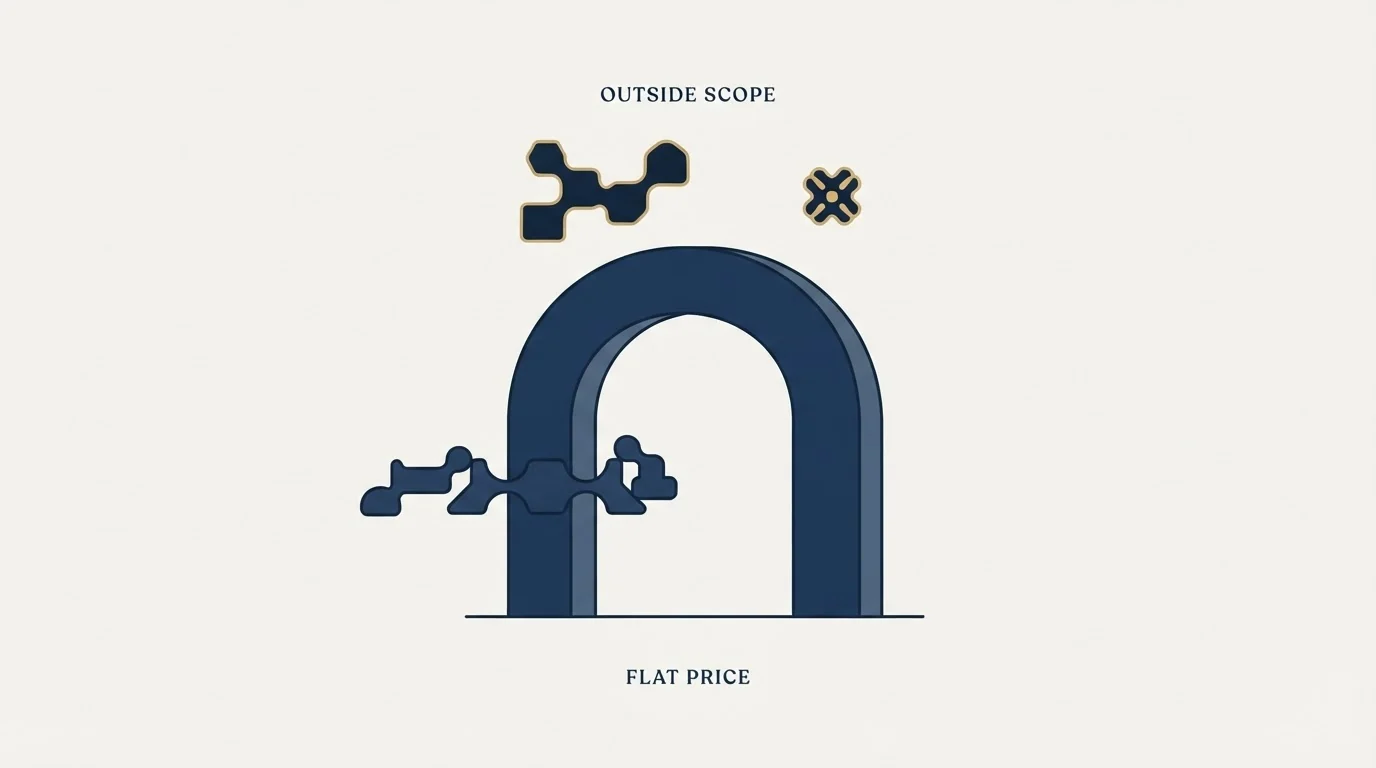
"Unlimited" is doing real work on that pricing page, and two categories sit outside it.
Usage-based charges. GoHighLevel marks several core features with a note that usage-based charges apply, including Conversation AI, Voice AI, Reviews AI, email and SMS marketing, and inbound and outbound calling. So the communication features, which are the ones an agency uses most, meter on top of the subscription. The flat fee covers the platform; the sending and calling are consumption.
Add-ons, most of them priced per sub-account. The published list includes dedicated email IPs at $59 per month per IP, an AI Employee plan at $50 or $97 per month per sub-account, a branded client portal app at $49 per month per sub-account, online listings management at $30 per month per sub-account, a premium prospecting tool at $29 per month per sub-account, SEO at $79 per month per sub-account, WhatsApp integration at $10 per month per sub-account, HIPAA compliance at $297 per month, a white-label mobile app at $497 per month, premium support at $500 per month, and a certification programme at $97 per month.
Note the per-sub-account construction on most of them. Take an invented case to see what that does: an agency with twenty clients wanting listings management and SEO across all of them multiplies the published $30 and $79 per sub-account, so $109, by twenty, which comes to $2,180 a month. The client count there is illustrative rather than typical, and the two prices it multiplies are the published ones. Even at that invented scale the add-on line lands well above the subscription. The flat platform fee is genuinely flat; the delivered service is not, and the arithmetic scales with clients rather than with seats.
What Pipedrive costs, and where to read it
Pipedrive's pricing page serves pounds from this network: Lite £14, Growth £39, Premium £59 and Ultimate £79 per seat per month billed annually, shown as one payment of £168, £468, £708 and £948 per seat a year, with a free 14-day trial and no credit card required. Its monthly prices sit behind a switch that the automated browser used here was blocked from reaching, so they are not quoted. The knowledge base adds that you are charged per seat whether it is assigned to a user or not, and that your location determines the billing currency.
The structure is documented in the same knowledge base. Pipedrive introduced a new pricing and packaging structure in 2025, with four plans, Lite, Growth, Premium and Ultimate, and its usage limits article publishes the ceilings for each. Leads and deals run 2,500 per seat on Lite, 5,000 on Growth, 15,000 on Premium and 20,000 on Ultimate, up to 300,000 per company. Automations do not exist on Lite and run 50, 150 and 250 per company above it. If/else conditions are capped at 3 per automation on Growth and 10 on Premium. Email sync covers 1 account per user on Growth, 3 on Premium and 5 on Ultimate, and Growth adds a forecast view and forecast reports. The detail is in the Pipedrive Essential plan and what replaced it.
| Plan | Per seat, annual | What the limits allow |
|---|---|---|
| Lite | £14 | 2,500 leads and deals per seat; no automations |
| Growth | £39 | 5,000 per seat; 50 automations; forecast view and reports |
| Premium | £59 | 15,000 per seat; 150 automations; LeadBooster, Projects and Smart Docs included |
| Ultimate | £79 | 20,000 per seat; 250 automations |
Two structural notes for anyone modelling cost. Record limits scale with seats on every plan, so adding a seat also raises the record ceiling, which occasionally makes an extra seat the cheaper answer to a data problem. And the plans article notes that switching to Lite moves the subscription to Pipedrive's latest list pricing, so check what a plan change does to a legacy rate before making it.
The feature surfaces are different sizes on purpose
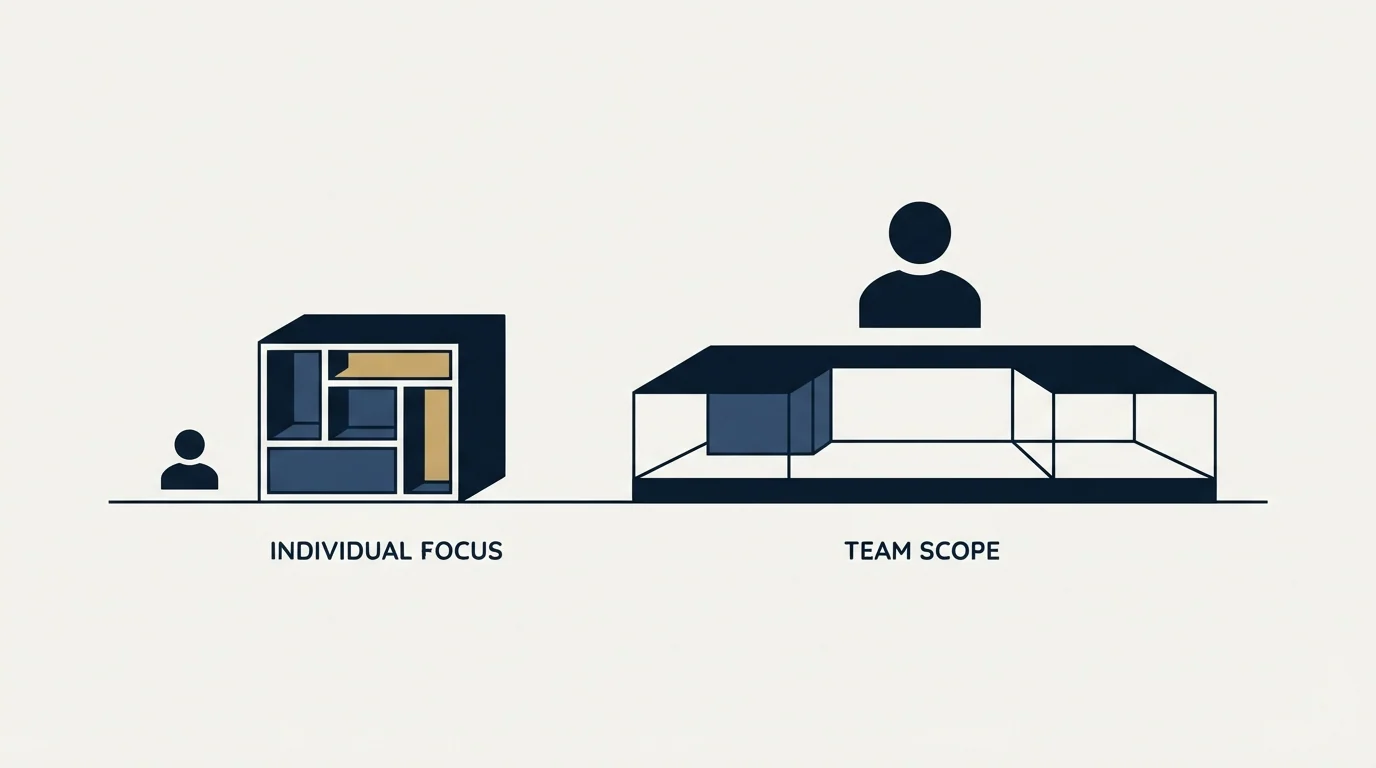
GoHighLevel's published core feature list is long, and reading it is the fastest way to understand the product's ambition. It includes a website and funnel builder, domain management, CRM and pipelines, custom dashboards and reporting, email and SMS marketing, inbound and outbound calling, unified conversations, social media management, workflow automation, forms and surveys and quizzes, booking calendars, an ad manager, online reputation management, a prospecting tool, payments and invoicing, a mobile app, courses and communities, and API access, alongside several AI features. It integrates with Stripe, PayPal, NMI, Authorize.net, Square, Adyen and Razorpay for payments.
That is not a CRM feature list. It is the list of everything a small marketing agency needs to operate, assembled in one subscription so the agency does not buy and integrate nine tools. The CRM sits inside it as one component among twenty.
Pipedrive's surface is deliberately narrower, and its comparable capabilities are sold as separate purchases when they exist at all: Campaigns for email marketing, LeadBooster for chat and web forms and prospecting, Projects for post-sale delivery. A website builder, social scheduling, reputation management and a payments layer are not on its pricing page's plan or add-on lists.
Pipedrive's narrow scope also raises the question of how deals get sourced in the first place, a gap explored in the comparison of contact data sourcing versus pipeline tracking.
Neither approach is wrong and the tradeoff is the familiar one. A bundle that covers everything is cheaper than nine subscriptions and weaker at each individual job than the specialist you would otherwise buy. A focused tool is better at its one job and leaves you assembling the rest. What decides it is how many of those twenty jobs you actually have. An agency has most of them. A B2B sales team has about three, and paying for seventeen it will not use is a worse deal than the flat price suggests.
Which one fits which company
The honest test is not feature count. It is whether you sell to clients or for clients.
GoHighLevel fits an agency, and the tell is that its ladder is built from sub-accounts and reselling. If you deliver marketing for other companies, need a separate workspace per client, want funnels, booking calendars, reputation management, social scheduling and messaging in one place, and might eventually resell the platform under your own name, the product is aimed directly at you and the flat fee across unlimited users is a genuine advantage. Client work is delivered by variable numbers of people, and paying per seat for that is a tax on staffing.
Pipedrive fits a sales team, and its ladder is built from record limits, reporting depth and automation capacity. If you have a defined pipeline, deals with stages, a forecast someone is accountable for, and reps whose job is progressing opportunities, the deal object is the right spine and the per-seat model matches how the work is staffed.
The mismatch cases are the instructive ones. An agency on Pipedrive ends up simulating client separation with filters and permissions, because the product has one workspace and no concept of a sub-account. A B2B sales team on GoHighLevel gets an all-in-one platform whose strongest features are the marketing ones they will not use, and a CRM layer that is thinner than the one they left.
The thing neither of them does

Both platforms hold records, move them through stages and report on what happened. Neither one finds the companies you should be talking to. That is a sourcing and targeting job that happens before either system has anything to say, and it is where outbound programmes actually succeed or fail.
It is worth being explicit about one adjacent temptation, because GoHighLevel in particular makes it easy. An all-in-one platform with email and SMS built in invites you to run prospecting from the same identity that carries client work and commercial correspondence. Cold sending belongs on separate infrastructure with its own domains and warmed mailboxes, isolated so that a bad week in prospecting cannot damage the deliverability of anything else. The convenience of one place to do everything is real, and the reputation of your sending domains is not something to trade for it.
Our own scope is email and LinkedIn, and the campaign shape is one message, sent once, with no bumps and no thread replies. A platform that can automate a follow-up sequence does not make a follow-up sequence a good idea; a second message lands beneath the one that was ignored and reads as a chase whatever triggered it.
For the neighbouring comparisons buyers usually run at the same time, HubSpot CRM vs Pipedrive and Pipedrive vs Salesforce cover the two most common alternatives, best Pipedrive alternatives covers the wider field, and best CRM tools for marketing agencies covers the agency question specifically. Pipedrive review reads the documented limits in more depth.
For the part neither platform does, see what a properly built list produces.
Pricing and features are taken from the vendors' own pages. Verify current terms with the vendor before relying on them.
Frequently asked questions.
Frequently asked questions- Is Pipedrive or GoHighLevel better?
- Pipedrive is better for a B2B sales team working deals through stages, because it prices per seat and its plans add automations, forecasting and higher record limits. GoHighLevel is better for a marketing agency running client work, because it charges a flat monthly fee with unlimited users and builds its ladder from client sub-accounts and the ability to resell the platform.
- What about Go High Level for a small business?
- GoHighLevel, also written HighLevel, is built for agencies: even Starter at $97 a month includes 3 sub-accounts, which a single business with no clients will not use. Its all-in-one features, from funnels to reputation management, suit a business that would otherwise buy several tools, but usage-based charges apply to its messaging, calling and AI features.
- How much does Pipedrive cost?
- Pipedrive's pricing page serves pounds from this network: Lite £14, Growth £39, Premium £59 and Ultimate £79 per seat per month billed annually, or one payment of £168, £468, £708 and £948 per seat a year. Its knowledge base says you are charged per seat whether it is assigned to a user or not, and location sets the currency.
- What does the GoHighLevel flat price not cover?
- Usage-based charges on features such as Conversation AI, Voice AI, email and SMS marketing and calling, and optional add-ons, most priced per sub-account: online listings at $30 and SEO at $79 a month per sub-account, for example. Across an invented book of twenty clients those two alone come to $2,180 a month, well above the $297 plan fee.
About the author.

B2B cold email experts helping companies generate qualified leads through done-for-you outreach campaigns.
RevenueFlow Team
Explore more.
Ready to scale your outreach?
We build GTM engines that book real meetings. See the receipts.
Related articles.
Which CRMs and Tools the Outbound Stack Connects To: Integration Data From 342 Sales Tools
HubSpot is named as an integration by 52.3% of 342 verified sales tools, Zapier by 50.3% and Salesforce by 43.3%. Here is the full map by category.
HubSpot Alternatives for Small Business: Where Free Stops
HubSpot publishes its free CRM as free for up to two users. Four alternatives whose own pricing pages could be read, and where each one puts its gate.
Best Outlook CRM: What the Add-In Actually Does
An Outlook CRM is a Microsoft platform object under Microsoft's rules. What five vendors publish about install route, mailbox eligibility and silent logging gaps.
Social Selling Tools by Job, and the Account-Risk Line
Fourteen social selling tools sorted into six jobs, split by whether each acts through your LinkedIn account or beside it, from the vendors' own pages.
Seamless.AI Email Finder: How It Works, What a Credit Buys
How Seamless.AI's email finder resolves a contact in real time, what one Universal Credit buys, the Total AI score on every address, and what the Chrome extension reads.
Is Clay Free? The Free Plan, the Trial and Where Each Stops
Clay's free plan, its 14-day trial and the no-charge-on-a-miss rule are three different things. What each holds and where it stops, from clay.com on 19 September 2026.