PlusVibe Pricing: Three Tiers and a Credit Slider
PlusVibe publishes its whole ladder, monthly and annual, with an enrichment credit slider on every tier. The entry figure is the lowest step, not the price.

As published on its own plans page on 2 September 2026, PlusVibe lists Personal from $37 a month, Business from $77 a month and Agency from $497 a month, each with an enrichment credit slider that raises the rate step by step. An annual view labelled as two months free prices the same rows lower.
Key takeaways
- Every published headline is the lowest credit step of its tier, and the slider beside each plan raises the monthly rate at every step up.
- Both billing states render into the same page, so a figure quoted without naming monthly or annual may be a rate no visitor saw by default.
- Included emails and active leads are one ceiling and enrichment credits are another, and the two scale on different curves between Personal and Business.
- The plans page carries the vendor's own statement that pipl.ai is re-branding to plusvibe.ai, which settles the two-name question from the vendor's side.
Reviewed and updated September 2, 2026
PlusVibe publishes its whole ladder, which is unusual in the cold email platform category and makes the comparison a genuine one. Its plans page, headed "Better Pricing. Greater Value.", lists three paid tiers and a free trial, prices each tier at several enrichment credit volumes, and shows a monthly and an annual rate for every one of them, as published on plusvibe.ai/plans and read on 2 September 2026.
The page also carries the naming answer people arrive with. A banner at the top of it reads "pipl.ai is re-branding to plusvibe.ai", which is the vendor's own statement that the two names refer to one product rather than two.
The published ladder
Three paid plans and a trial, priced monthly. Personal is listed at $37 a month, Business at $77 a month, and Agency at a starting figure of $497 a month described on the page as "Isolated back-end setup for each client". The free option is listed at zero for a fourteen day trial.
The headline figures are entry points for each plan rather than fixed prices, because every paid tier has an enrichment credit slider beside it and each step up the slider raises the monthly rate. On the monthly view, as read on 2 September 2026:
| Plan | Credits included | Monthly rate as published |
|---|---|---|
| Personal | 1,000 | $37 |
| Personal | 3,000 | $45 |
| Personal | 5,000 | $52 |
| Personal | 7,000 | $58 |
| Business | 3,000 | $77 |
| Business | 7,000 | $92 |
| Business | 15,000 | $119 |
| Business | 30,000 | $165 |
| Business | 50,000 | $220 |
| Agency | Custom | From $497 |
The annual view is labelled "Get 2 Months Free!" and prices the same rows lower, expressed as a per month figure. On that view the published rates are $30.8 to $48.3 for Personal and $64.2 to $183.4 for Business across the same credit steps, with Agency published from $415 a month. The arithmetic is consistent with ten months of the monthly rate spread across twelve, which is what the label describes.
That toggle is the single most important thing to settle before quoting any figure from this vendor, because both views render into the same page, and a summary that omits which one it read gives a number a visitor may never have seen.
What each tier actually includes
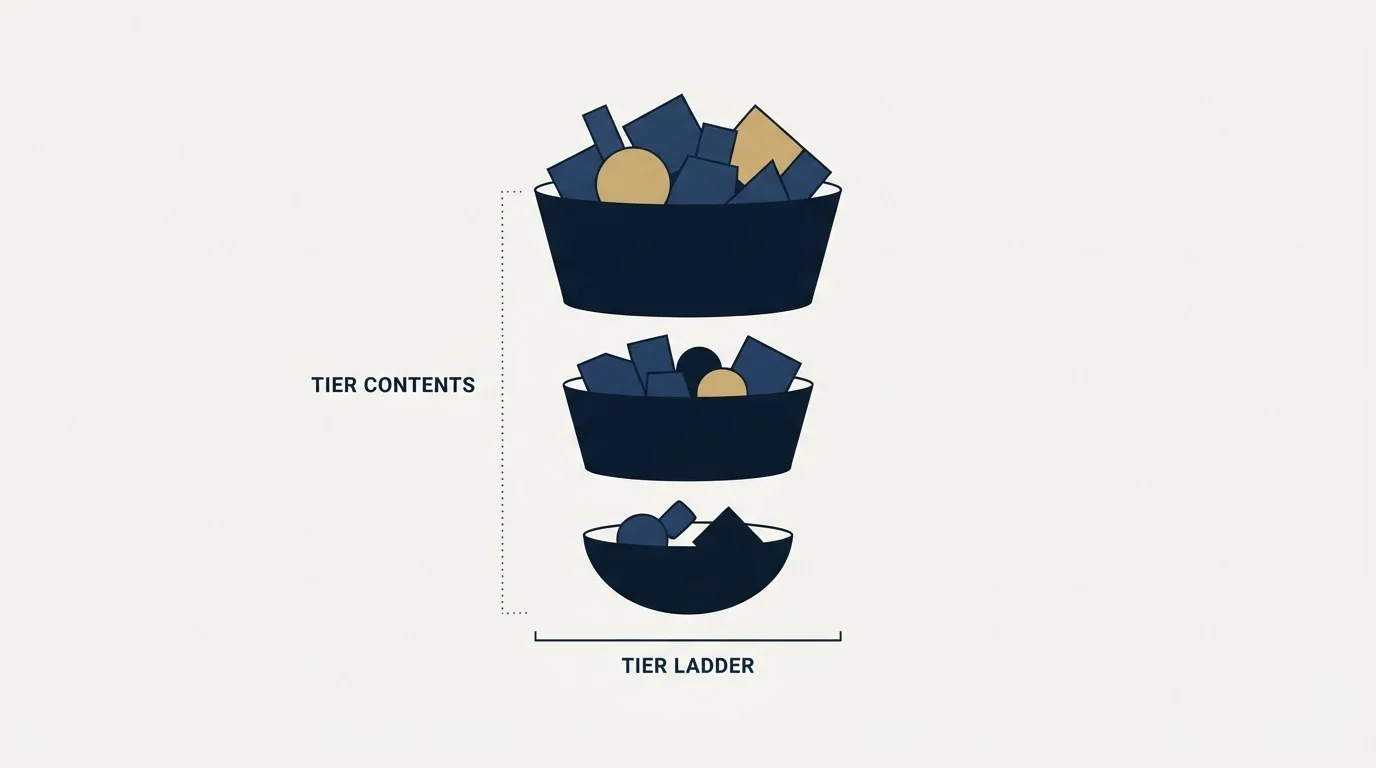
Volume, not credits, is the first axis. Personal is described as being "For individuals and small teams that are just getting started with sending cold outreach" and includes 25,000 emails and 30,000 active leads, with basic warm up and unlimited campaigns. Business is described as being "For established marketers and sales teams looking to crush their goals" and includes 150,000 emails and 100,000 active leads with advanced warm up. Agency includes 500,000 or more emails, custom credits, an isolated sending server, and "Dedicated Connector IPs and Rotation".
The free tier is a fourteen day trial rather than a permanent free plan, listed with 1,000 emails, 100 enrichment credits and three inboxes.
- 25,000 emails included per month
- 30,000 active leads
- Basic warm up, unlimited campaigns
- Basic email service provider matching
- Unified inbox and AI reply sentiment detection
- Credit slider runs from one thousand to seven thousand
- 150,000 emails included per month
- 100,000 active leads
- Advanced warm up settings and language models
- Advanced email service provider matching
- AI reply agents, webhooks and API access
- Credit slider runs from three thousand to fifty thousand
- 500,000 or more emails included
- Custom credit allocation
- Isolated sending server per client
- Dedicated connector IPs and rotation
- White labelling and dedicated client workspaces
- Unlimited users and team members
The feature split between Personal and Business is where the real decision sits. Business adds the reply automation, the integration surface and the advanced warm up controls. Personal adds none of those and carries a sixth of the email allowance, which makes the gap between the two tiers considerably wider than the difference in their entry rates suggests.
There is a second reason to settle the billing state early, and it is commercial rather than arithmetic. An annual commitment on a cold email platform locks a year of spend against a programme whose shape usually changes inside a quarter, and the saving is the equivalent of two months. That trade is worth taking once the programme is stable and the send volume is understood, and it is worth refusing while the list, the audience or the message is still being decided, because the cheaper rate buys nothing if the plan is the wrong size by month three.
The active lead ceiling deserves the same early attention. It is the limit teams notice last and hit first, because a list that is being built continuously accumulates records faster than it consumes send volume. A programme with a large addressable universe and a modest weekly send can sit comfortably inside its email allowance and still run into the lead ceiling, and the only fix at that point is a tier change rather than a setting.
Reading the credit meter correctly
Enrichment credits are the second meter and they are separate from the email allowance. The plans page describes what the credits buy in its own terms, offering "Real-time bulk email verification" and "AI-powered cold outreach personalization at scale" alongside prospect data collection. It is worth noting that the same page states the source count twice and differently, once as "Collect sales intel on your prospects from 35+ sources" and once as "Gather and utilize sales intelligence from 80+ sources", so the coverage claim is a question for the vendor rather than a settled figure. Every credit step is priced as an increment on top of the plan, and the page shows those increments explicitly beside each step.
Credit counts mislead in the revenue intelligence category too, where UserGems publishes an annual rate card and its credit figure turns out not to be the unit being bought.
Two properties of that structure decide whether the arithmetic works for a given programme.
The email allowance and the credit allowance scale on different curves. Moving from Personal to Business multiplies the included emails by six while the entry credit allowance rises by a factor of three. A team whose constraint is sending volume gets more from the tier change than a team whose constraint is enrichment, and a team constrained by enrichment may find that climbing the slider inside Personal is the cheaper path until the email ceiling binds.
A credit is not a contact. Finding an address, verifying it and personalising a message are separate operations in the product's own description, which means the number of prospects a credit allowance covers depends on how many of those operations each record needs. A list that arrives with verified addresses consumes credits at a very different rate to one built from scratch, and the only way to size it is to run a sample rather than divide the allowance by a headcount.
- Step 1Count the sends
Monthly message volume across every campaign, including follow ups, decides which email ceiling binds.
- Step 2Count the active leads
The active lead ceiling is a separate limit from the send volume and often binds first on a large list.
- Step 3Sample the enrichment
Run a representative slice through the enrichment steps you actually use and measure credits consumed per usable record.
- Step 4Pick the billing state
Decide monthly or annual before comparing, because the same tier carries two published rates.
- Step 5Price the slider, not the tier
The published entry rate is the lowest credit step. Read the rate at the step your sample landed on.
What the price does not buy

The published rates cover the platform. Three costs sit outside them and they are the ones that decide the real monthly figure for a cold email programme.
Mailboxes and domains are not included. A cold email platform sends through mailboxes you own, on domains you bought and authenticated. That inventory is a separate line item with a separate supplier, and at real volume it is frequently the larger of the two. The architecture question of what to send through which system is the one that decides how many mailboxes a given send volume actually needs.
Deliverability is not a feature you can buy. Warm up pools, provider matching and sender rotation are real capabilities and none of them substitutes for authenticated sending domains and a list that was verified close to the send. A platform can rotate senders across a burned domain very efficiently.
Unlimited campaigns is a permission, not a plan. Running many campaigns from one workspace is only useful if each one carries a distinct message to a distinct audience. A programme that reads unlimited as an invitation to raise volume against the same list is buying send capacity it should not use, and the spam rate benchmarks are the instrument that reports the consequence.
- Yes: Monthly send volume, counted across every campaign and follow up
- Yes: Peak active lead count, which is a separate ceiling from send volume
- Yes: Credits consumed per usable record, measured on a real sample
- Yes: Which billing state you are comparing, since annual and monthly rates both publish
- Yes: Mailbox and domain inventory costed separately from the platform subscription
- Yes: Whether the reply automation on the higher tier is work you would otherwise do by hand
- No: Comparing entry rates across vendors without matching the included volumes
- No: Treating the lowest credit step as the price you will actually pay
Where it sits in the category
PlusVibe sits at the accessible end of the cold email platform market and puts more of its ladder in public than its competitors do, which makes it easy to compare and easy to under-read. The entry figure on the page is the lowest credit step of the lowest tier, and the figure a working team pays is a few steps up from there.
For a side by side against the platforms that rank alongside it, our PlusVibe alternatives roundup sets out the comparison, and best email sending tools for cold email teams covers the wider category on the criteria that separate them. If the question underneath the pricing one is whether to run on a platform at all, cold email outreach platforms is the build versus buy argument by volume.
The short version

As published on its own plans page on 2 September 2026, PlusVibe lists Personal from $37 a month, Business from $77 a month and Agency from $497 a month, each with an enrichment credit slider that raises the rate step by step, and an annual view labelled "Get 2 Months Free!" that prices the same rows lower. A fourteen day free trial with 1,000 emails and three inboxes sits below all of them.
The two meters are what to size on. Included emails and active leads are one ceiling, enrichment credits are another, and they scale on different curves between tiers. Settle which billing view you are quoting, price the credit step your own sample lands on rather than the entry step, and cost the mailboxes and domains separately, because the platform subscription is not the whole bill.
RevenueFlow runs cold email and LinkedIn outreach for B2B teams on infrastructure we build and monitor ourselves, one message per campaign. See how the campaigns work.
Pricing verified as of 2 September 2026 against PlusVibe's own plans page. Verify current pricing with the vendor before relying on it.
Frequently asked questions.
Frequently asked questions- How much does PlusVibe cost?
- As published on its own plans page on 2 September 2026, Personal starts at $37 a month with 25,000 emails and 1,000 enrichment credits, Business starts at $77 a month with 150,000 emails and 3,000 credits, and Agency starts at $497 a month with 500,000 or more emails. Each tier prices higher as the credit slider moves up.
- Is PlusVibe the same product as pipl.ai?
- Yes, according to the vendor. A banner on its own plans page states that pipl.ai is re-branding to plusvibe.ai, describing it as the same platform under a new name. Facts about the product should be taken from plusvibe.ai rather than from pages published under the older name, which are no longer the vendor's current surface.
- How much cheaper is the annual plan?
- The plans page labels the annual view as two months free and prices the same rows lower as a per month figure. Personal runs from $30.8 and Business from $64.2 across the same credit steps, with Agency starting at $415 a month. The arithmetic is consistent with paying ten months of the monthly rate across twelve.
- What is an enrichment credit on PlusVibe?
- The plans page describes credits as paying for prospect data collection from many sources, email finding, verification and AI personalisation. Because those are separate operations, the number of prospects a credit allowance covers depends on how many of them each record needs, so sizing it means running a representative sample rather than dividing the allowance by a headcount.
About the author.

B2B cold email experts helping companies generate qualified leads through done-for-you outreach campaigns.
RevenueFlow Team
Explore more.
Ready to scale your outreach?
We build GTM engines that book real meetings. See the receipts.
Related articles.
Snitcher Pricing: The $49 Table Is the Annual Rate
Snitcher's visible price table is the annual-billing ladder. The ten bands at both billing states, the unique-company meter, and the rules on a help page.
The Real Cost per 1,000 Emails, Verifications and Data Credits in 2026
Unit prices computed from verified vendor plans: $1.00 per 1,000 emails sent, $2.00 per 1,000 verifications and $19.60 per 1,000 enrichment credits.
What Cold Email and Sales Tools Actually Cost in 2026: Pricing Data From 386 Vendors
RevenueFlow's verified dataset of 386 sales tools puts the median starting price at $39.98 a month. Here is the spread by category, tier and billing model.
TexAu Pricing: Four Tiers, Billed Only on a Match
TexAu charges credits only when a lookup succeeds. The four tiers at both billing states, the rollover cap, and three places the page disagrees with itself.
Twain Pricing: Credits per Lead, Three Research Modes
Twain sells credits, not seats, and a lead costs 1 to 14 of them depending on the research mode. The two ladders, the four expiry clocks and the cap.
Lavender Pricing: Two Products, No Pricing Page
Lavender has no pricing page. The Email Coach ladder per seat at both billing states, the free routes, and the separate per-agent price for Ora.