SalesIntel vs ZoomInfo: Human Verification Against Scale
SalesIntel builds its positioning on human verification. ZoomInfo maintains eleven competitor pages and SalesIntel is not one of them. What that is worth.
For outbound teams that prioritize human-verified direct dials and intent over sheer contact volume, SalesIntel is the one to trial first: it says it guarantees 95% accuracy on AI+Human-verified contacts refreshed every 90 days and pairs PredictiveIntent with Bombora. ZoomInfo leads on scale. Both are vendor claims, so test your own list.
Key takeaways
- SalesIntel's homepage says it guarantees 95% accuracy on AI+Human-verified contacts, refreshed on a 90-day cycle by more than 2,000 researchers, with Research On Demand for records it lacks.
- ZoomInfo's Sales page states 420M+ global contacts including 120M+ direct dials and 145M+ companies, while the same page also cites over 70M phone numbers.
- ZoomInfo's own compare sitemap lists eleven competitor pages and SalesIntel is not among them, which maps who it meets in deals rather than product quality.
- Neither vendor shows a readable price: ZoomInfo's pricing page refused both fetches, and SalesIntel's asks you to request pricing for unlimited export and enrichment credits.
Reviewed and updated September 19, 2026
For an outbound sales team that prioritizes human-verified direct dial accuracy and intent data over the broadest possible contact volume, SalesIntel is the vendor whose own pages make that argument, and ZoomInfo is the one whose pages lead with scale. SalesIntel's homepage says it guarantees 95% accuracy on AI+Human-verified contacts, refreshed on a 90-day cycle by more than 2,000 researchers. ZoomInfo's Sales page leads with 420M+ global contacts including 120M+ direct dials. Every one of those figures is a claim a vendor published about itself, and none of them is a measurement of the data you would receive.
That distinction is the honest starting point, and the test that settles it takes an afternoon.
SalesIntel vs ZoomInfo for outbound teams that prioritize human-verified direct dials and intent over volume
Trial SalesIntel first if verified direct dials and intent outrank reach for you. Its site describes its contact data as human-verified direct dial, mobile, business email and title, backed by Research On Demand for gaps, and credits its intent to its own PredictiveIntent plus Bombora. ZoomInfo's case is breadth, signals and CRM workflow. Neither accuracy story is independent, so a same-list test decides it.
What "human-verified" means on SalesIntel's own pages. Its homepage answers the accuracy question in one paragraph: "SalesIntel guarantees 95% accuracy on AI+Human-verified contacts and refreshes records on a 90-day cycle." Records, it says, are built by merging public, partner, and proprietary sources, which its trust section shortens to three sources merged into one record, then verified by a team of more than 2,000 researchers. Research On Demand covers any contact or account not already in the database, and its pricing page meters that service at 10 credits per user per month.
What ZoomInfo's pages say about direct dials. Its Sales page states access to 420M+ global contacts including 120M+ direct dials and 145M+ companies. Lower on the same page it describes the contact database as holding over 70M phone numbers and 174M-plus verified email addresses, so the page carries two phone totals. It publishes no accuracy percentage there; the percentages on that page belong to customer quotes. Read that as a reason to test rather than as a verdict, because two definitions of a phone record on one page is ordinary marketing and says nothing about any single number.
Where intent fits. Both sell it and source it differently, which the intent section below takes apart. For a team that ranks intent above volume, the practical question is whether the signal is one competitors can buy from the same supplier.
What each one claims to be
ZoomInfo positions on scale and workflow. Its Sales product page organises around a verified B2B database, buying signals for prioritising accounts, and CRM integration, and states access to 420M+ global contacts including 120M+ direct dials and 145M+ companies, filterable on 300+ attributes, with CRM integration and automatic data updates. Its developer documentation states different volumes for the same platform, describing 100M+ companies and 500M+ professionals, which is a useful reminder that a database total is a definition before it is a measurement.
SalesIntel positions on verification. Its homepage describes it as "a pipeline generation platform for GTM teams", built on a foundation of AI automation and human-verified B2B data. Its published stat row states 200M+ verified B2B contacts, 95% data accuracy, 54M+ verified mobile numbers, 2,000+ human researchers, 30+ signal categories and 60,000+ intent topics, the last of these attributed on the page to SalesIntel PredictiveIntel plus Bombora.
Every figure in both paragraphs is a vendor claim published by that vendor about itself. None of them is independently measured, and this article does not treat any of them as verified fact about the data you would receive.
| ZoomInfo | SalesIntel | |
|---|---|---|
| Contacts | 420M+ global contacts on the Sales page; 500M+ professionals in its developer docs | 200M+ verified B2B contacts |
| Phones | 120M+ direct dials; the same page also says over 70M phone numbers | 54M+ verified mobile numbers |
| Verification | A verified B2B database with automatic data updates | AI + human-verified, 95% accuracy on a 90-day refresh cycle |
| Signals | 50+ real-time buying and business signals | 30+ signal categories, 60,000+ intent topics with Bombora |
| Price | Pricing page refused both fetches | Request pricing |
The actual trade, once you strip the marketing
The two positions describe a real engineering trade rather than a difference of opinion.
Machine-scale verification, the scale-first end, processes everything, cheaply, continuously. It covers the long tail because a crawler does not get bored, and it produces confident-looking output for records nobody has ever looked at. Its characteristic failure is a plausible record that is wrong in a way no automated check catches.
Human verification, the verification-first end, produces higher confidence on the records it touches and cannot touch everything. Its characteristic failure is a coverage gap: the record you need is not there, because nobody got to it. Its second failure is staleness, since a human-verified record is verified as of a date, and a person who moved job last month does not know your researcher checked them in March.
Neither of those is a defect. They are the two ends of a cost curve, and which one suits you depends entirely on the shape of your market.
If your target list is a few thousand named accounts in a defined segment, verification depth is worth more than breadth. You will hit the same records repeatedly, and a wrong number costs a rep an afternoon.
If you prospect wide across a long tail, coverage is worth more than depth, because the constraint is whether the record exists at all. You will handle accuracy with your own verification layer regardless.
That last point is the one both vendors' marketing skips, so it is worth stating plainly. Whichever source you buy, an address is verified immediately before it is used. That is our own operating policy rather than a result we are claiming, and it holds regardless of what the source promised, because a mailbox that was live in March is not evidence about August. The email verification tools comparison covers that step, and it is the layer that makes a source's accuracy claim mostly irrelevant to your bounce rate.
The missing comparison page, and what not to read into it
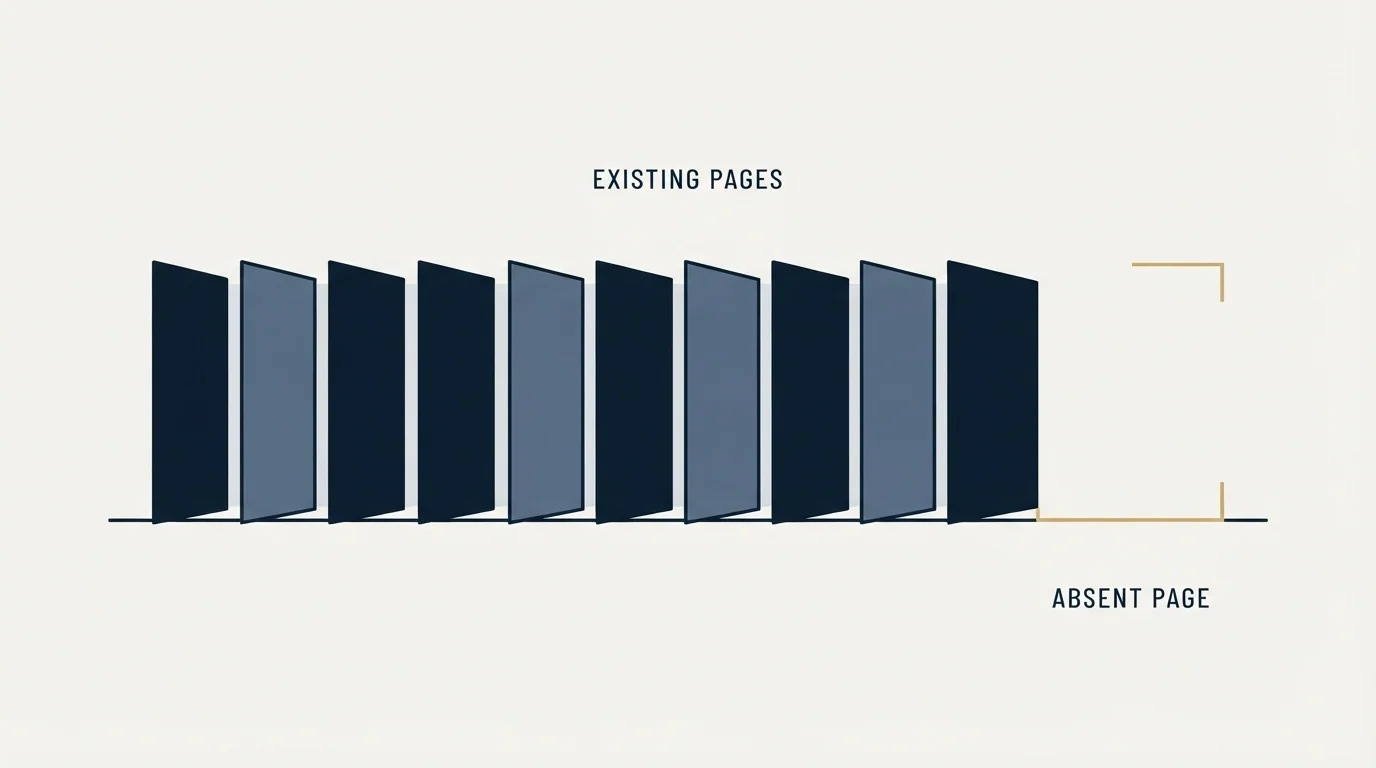
ZoomInfo maintains eleven competitor comparison pages, one each for LinkedIn Sales Navigator, Demandbase, Lead411, LeadIQ, 6sense, D&B Hoovers, Kaspr, Lusha, Clay, Apollo and Cognism. Its own compare sitemap enumerates them, and SalesIntel is not on that list. Meanwhile SalesIntel's homepage builds its positioning on human verification, and its footer links a ZoomInfo Alternative page. One company has organised its marketing around a contrast with the category leader. The category leader has not published a page about it.
It is worth being careful with that asymmetry, because it is easy to over-read.
What is verifiable: ZoomInfo's comparison sitemap enumerates eleven competitor pages and SalesIntel is not among them. What is not verifiable is why. A direct probe of the URL where such a page would live returned a block rather than a clean not-found, and a block cannot distinguish an absent page from a protected one, so the sitemap absence is the only evidence here and it is the one this article relies on.
The reasonable reading is modest. Vendor comparison pages are built where a vendor loses deals often enough to justify the content, so the list is a rough map of who shows up in ZoomInfo's pipeline. SalesIntel's absence from that map suggests it appears less often in those rooms than Apollo or Cognism do. It says nothing about the product.
The unreasonable reading, which you will find in comparison posts, is that absence implies inferiority. It does not. Plenty of good tools never appear on a market leader's comparison pages, usually because they sell to a segment where the leader does not compete hard.
Intent data, where the two differ structurally
Both vendors sell intent, and they source it differently, which matters more than the topic counts.
SalesIntel's homepage credits its 60,000+ intent topics to SalesIntel PredictiveIntent plus Bombora's topic network, and lists Bombora Intent among the signals it surfaces. Part of that feed is therefore a third-party source rather than something SalesIntel collects alone, which is worth knowing because a bought-in signal is available to anyone else who buys it.
ZoomInfo's developer documentation describes 50+ real-time buying and business signals, and its Sales page describes tracking website visitors and identifying accounts researching solutions like yours.
The practical question is not whose topic list is longer. It is whether your competitors are buying the same signal from the same supplier, because a shared source means everyone arrives in the same inbox in the same week. A proprietary signal is not automatically better, but it is at least differently timed. Ask each vendor which of their signals are exclusive and which are resold, and expect a straight answer.
Reading an accuracy guarantee

A published accuracy percentage is a commercial promise rather than a measurement, and the useful questions are about the mechanism rather than the number.
SalesIntel's is the published one in this pair. Its homepage says it guarantees 95% accuracy on AI+Human-verified contacts and refreshes records on a 90-day cycle, lists "Run your own sample against ours" among its trust claims, and its own comparison answer says teams evaluating alternatives typically test accuracy on a sample of their own target accounts before committing. That is the right instinct, and it is the vendor's own.
Which has more accurate contact data, ZoomInfo or SalesIntel? No independent measurement answers it. The closest thing on either vendor's pages is a customer quote on SalesIntel's pricing page, in which a CEO says a test of 1,000 contacts across Cognism, ZoomInfo and SalesIntel gave SalesIntel a 35% connection rate against ZoomInfo's 16%. That is one customer's list, a connection rate rather than an accuracy rate, and a testimonial the vendor chose to publish. It is a reason to run the test, not its result.
Four questions do most of the work. What exactly is measured: the email, the phone, the job title or the whole record? What triggers a re-check between 90-day cycles? How fast does a Research On Demand request come back? And what happens when a batch misses the number, including whether credits are refunded for bad records and who adjudicates? Whatever the answers, never treat a published percentage as your expected bounce rate.
| SalesIntel's page says | Ask before it enters a business case |
|---|---|
| 95% accuracy on AI+Human-verified contacts | Measured on the email, the phone, the job title or the whole record? |
| Records refreshed on a 90-day cycle | What triggers a re-check between cycles? |
| Research On Demand, 10 credits per user per month | How fast does a request come back? |
| Run your own sample against ours | Accept, with the same-list test below |
| A published percentage | Never your expected bounce rate |
The answers turn a marketing number into a contractual one, and they are the difference between a guarantee that pays you back and a guarantee that is a sentence on a homepage.
Pricing, and why this comparison has no table
Neither vendor shows a price on a page this comparison could read, and no dollar figure appears anywhere on this page.
ZoomInfo's pricing page answered HTTP 403 to a plain request and to a headless browser when this comparison was refreshed, and so did its pricing FAQ, so nothing from either is carried here. Its Sales page offers a free trial and a route to try ZoomInfo Lite, and no rate.
SalesIntel's pricing page asks you to request pricing, and it does publish the shape of the plan: unlimited export credits and unlimited enrichment credits per user per month, Research on Demand at 10 credits per user per month, and advanced intent, ads, visitor identification and forms listed as add-ons. Its homepage frames the same model as one fee with unlimited data and no credit counting.
Any figure you find for either vendor in a comparison post was published by a third party rather than by the vendor.
So this is a two-quote comparison. Get both, with the same seat count and the same volume assumptions in each conversation, or the numbers you receive will not be comparable.
How to decide, in one afternoon

The evaluation that settles this is not a feature matrix. It is a bake-off on your own list, and it takes less time than reading the comparison pages.
The test has five steps. Build one list of 200 accounts in your real segment, geography and seniority, not a sample either vendor supplies. Run the identical list through both during each evaluation window and record the match rate at the seniority you sell to. Verify every returned address yourself before judging either source. Check where each came up empty, because gaps concentrate by geography and company size. Then price the winner, bringing your trimmed seat count and realistic export volume to each quote.
Build one list of 200 accounts
Your real segment, geography and seniority, not a sample either vendor supplies.
Run it through both
Same list, same fields, in each evaluation window; record the match rate at the seniority you sell to.
Verify both outputs yourself
Every returned address, before judging either source.
Check the misses
Gaps concentrate by geography and company size.
Price the winner
Bring your trimmed seat count and realistic export volume to each quote.
The one thing that test cannot tell you is whether the data stays right. Decay is a property of time rather than of a snapshot, so ask both vendors how often a record is re-checked and what triggers a re-check, and write the answer into your evaluation notes rather than accepting a percentage.
Where this leaves you
SalesIntel sells depth of verification and names its mechanism. ZoomInfo sells breadth, workflow and signals. Both publish claims about themselves that nobody outside can measure, and neither shows a price that could be read. The comparison resolves on your own list, in your own segment, at your own seniority, which is a test you can run in an afternoon and which outranks every claim on this page.
For the wider field, the ZoomInfo alternatives roundup covers the vendors that come up most, Lead411 versus ZoomInfo is the closest neighbour to this comparison, and the Cognism comparison is worth reading if European coverage matters. If you want a testing method rather than a verdict, Apollo versus ZoomInfo data accuracy sets one out you can run on a sample.
A different kind of comparison entirely pairs a CRM with a data provider, and the Freshsales versus ZoomInfo breakdown explains why teams often run both rather than pick one.
Where that pairing involves a CRM instead of a data provider, the Zoho CRM comparison explains why the two tools serve different stages of the workflow rather than competing directly.
If the shortage is qualified conversations rather than contact records, that is a different purchase. RevenueFlow builds and runs the campaigns and charges per qualified meeting, against criteria agreed in writing before launch, which you can see on your own market with a free campaign.
Pricing and features are taken from the vendors' own pages. Verify current terms with the vendor before relying on them.
Frequently asked questions.
Frequently asked questions- Is SalesIntel or ZoomInfo better for human-verified direct dials?
- SalesIntel is the one that builds its case on it. Its site describes contact data as human-verified direct dial, mobile, business email and title, and says it guarantees 95% accuracy on AI+Human-verified contacts on a 90-day refresh. ZoomInfo's Sales page leads with 120M+ direct dials instead. Both are vendor claims, so test the same list through both before deciding.
- Which has more accurate contact data, ZoomInfo or SalesIntel?
- No independent measurement answers it. SalesIntel's pricing page quotes a customer whose test of 1,000 contacts gave SalesIntel a 35% connection rate against ZoomInfo's 16%, but that is one list, a connection rate rather than accuracy, and a testimonial the vendor chose to publish. Run 200 of your own accounts through both and verify every address yourself.
- Why does ZoomInfo have no SalesIntel comparison page?
- Its compare sitemap lists eleven competitors and SalesIntel is not among them, but the reason is not verifiable. Vendor comparison pages are built where deals are contested often, so the list is a rough map of who ZoomInfo meets in its pipeline. It is not evidence about product quality in either direction.
- How should I choose between them?
- Build one list of 200 accounts in your real segment, geography and seniority. Run the identical list through both during their evaluation windows, verify every returned address yourself rather than trusting either accuracy claim, and look at where each source came up empty. Gaps concentrate by geography and company size, which is where fit actually shows.
About the author.

B2B cold email experts helping companies generate qualified leads through done-for-you outreach campaigns.
RevenueFlow Team
Explore more.
Ready to scale your outreach?
We build GTM engines that book real meetings. See the receipts.
Related articles.
Firmographic Data Providers: What Six of Them Publish
Six firmographic data providers read from their own pages: the fields each sells, the coverage each states, how the data is delivered, and who prints a price.
Salesgear Pricing: Two Ladders Under One Plan Title
Salesgear's page is titled as one plan and carries a Data ladder and an Outreach ladder. Both at both billing states, what each meters, and the two vendor-side conflicts.
Bookyourdata Pricing: 25 Packs, Priced Per Contact
Bookyourdata sells credits in twenty-five packs with no subscription. The dated ladder, the per-contact rates rendered in the browser, the guarantee rule and BeSpoke.
Zeliq Pricing: One Seat Rate and a Credit Meter
Zeliq prices one self-serve seat in dollars with a credit meter that never expires. Both billing states, the three credit rates, the top-up ladder and the Custom floor.
Is Clay Free? The Free Plan, the Trial and Where Each Stops
Clay's free plan, its 14-day trial and the no-charge-on-a-miss rule are three different things. What each holds and where it stops, from clay.com on 19 September 2026.
Video Prospecting Tools by Job: What Each One Is For
Ten video prospecting tools sorted by the job each vendor's own page describes: record and share, personalise at volume, avatars, hosting and interactive demos.