Unipile: The Messaging API Behind Other Outreach Tools
Unipile sells the plumbing that other companies' LinkedIn outreach runs on. Its unit is a linked identity, and that definition governs the whole cost curve.
Unipile is a unified messaging API for software companies, covering LinkedIn, WhatsApp, Instagram, Telegram, Gmail, Outlook and IMAP behind one schema. Its published pricing starts at 49 euros or $55 a month covering up to ten linked accounts, where each linked profile, number or address counts as one.
Key takeaways
- Published pricing on 16 August 2026 was a 49 euro or $55 monthly minimum covering up to ten linked accounts, with volume discounts and custom pricing above 5,000 accounts.
- The billing unit is a linked identity rather than a user, so a product where each user connects three channels costs three times one where each connects one.
- Invoices are post-paid on the peak number of accounts active simultaneously in a 30-day period, so a single spike sets the whole period.
- The obligation under LinkedIn's User Agreement sits with the member whose account is connected, which in this model is your customer rather than you.
Reviewed and updated September 1, 2026
Unipile does not sell LinkedIn outreach. It sells the plumbing that other companies' LinkedIn outreach runs on, which makes it the odd entry in this category and the one most often evaluated by the wrong buyer.
Its pricing is built on a unit it calls a linked account, and it publishes the rule plainly: 49€ or $55 minimum per month, covering up to 10 linked accounts, where one LinkedIn profile, one WhatsApp number and one email address each count as one. Fetched 16 August 2026.
Who this is actually for
Unipile is a unified messaging API for software companies. If you are building an applicant tracking system, a CRM, an outreach product or an AI agent that needs to read and send messages on a user's behalf across LinkedIn, WhatsApp, Instagram, Telegram, Gmail, Outlook and IMAP, Unipile is the layer that spares you writing and maintaining a separate integration for each one.
Its own published use cases name exactly that audience: ATS software publishers, CRM software publishers, outreach software, AI agent publishers and no-code builders.
So the buyer is a product team, not a sales team. A salesperson looking for a tool to run their own LinkedIn campaigns is looking at the wrong product; they want one of the sequencers built on top of this class of infrastructure. A founder building the sequencer that salesperson will eventually buy is looking at exactly the right one, and should read the pricing model as a cost of goods rather than as a software subscription.
The pricing model, which is the interesting part
- One LinkedIn profile linked counts as one
- One WhatsApp number linked counts as one
- One email address linked counts as one
- Tiered: the more accounts linked, the lower the rate per account
- Prices stated as excluding VAT
- 49€ or $55 minimum per month
- That minimum covers up to 10 linked accounts
- Worked example on the page: 20 users each linking one LinkedIn profile, one WhatsApp number and one Gmail address
- That is 60 linked accounts, billed at 4.50€ each
- Total in the example: 270€ per month
- Custom pricing above 5,000 accounts
- Invoices generated at the end of each 30-day period
- Billed on the peak number of accounts active simultaneously in the period
- All accounts appear on the dashboard regardless of status
- 7-day free trial, no credit card required
- Volume discounts published through an on-page calculator
Two mechanics in that model deserve attention before anyone budgets against it.
Billing on peak concurrent accounts rather than on average means a single spike sets the invoice for the whole period. A customer who connects two hundred accounts for a migration and disconnects them the next day pays for two hundred that month. That is a defensible way to price infrastructure and it punishes bursty usage patterns specifically.
And the unit is an identity rather than a user. A product where each user connects three channels costs three times a product where each user connects one, at identical user counts. That is the arithmetic to run before choosing which integrations to expose in your own product, because your pricing has to survive it.
The build-versus-buy question
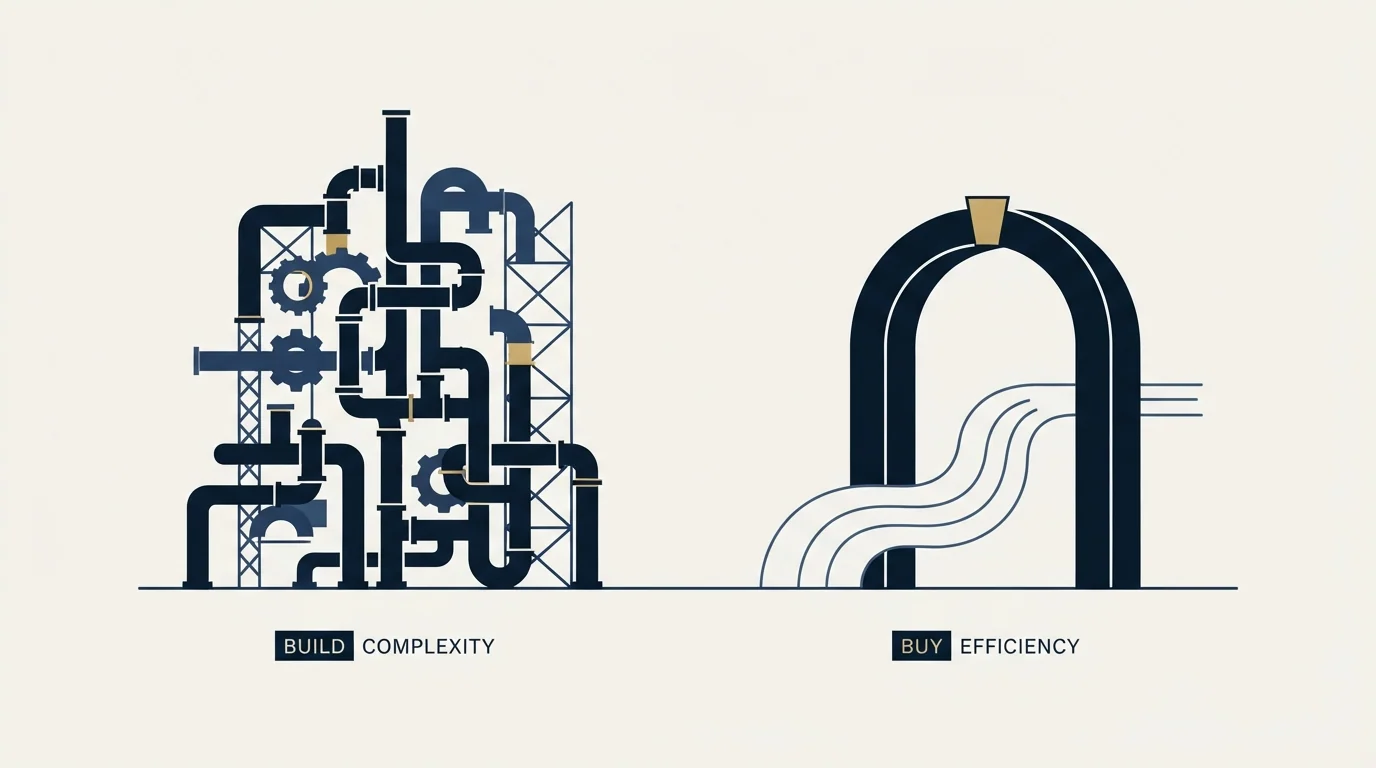
The honest case for this class of product is maintenance rather than initial build.
Writing one integration is a manageable project. Keeping six of them working, across platforms that change without notice and authenticate differently, is a permanent engineering commitment that competes with your actual roadmap forever. Unipile's own pitch of integrating in two days is a claim about the first week; the value is in years two and three.
The case against is dependency. Your product's core communication capability sits behind someone else's uptime, someone else's relationship with each platform, and someone else's pricing decisions. The unit-based model means your cost of goods scales with a number you only partly control.
Linked Helper's desktop-first architecture shows a contrasting way to avoid the vendor dependency that comes with API-based platforms.
The middle position most teams land on is to buy the long tail and own the channel that matters most. If your product lives or dies on one channel, that one is worth owning even if the other five are not. The test is not which channel has the most users, it is which one a customer would cancel over if it broke for a week. That is usually a shorter list than the integrations page suggests, and it is the only part worth carrying the maintenance for.
The LinkedIn question, stated honestly
This needs saying plainly, because it is the part a technical evaluation tends to skip.
Unipile provides programmatic access to LinkedIn messaging. LinkedIn's official partner APIs do not offer general member-messaging access of that kind to arbitrary applications, which is why an unofficial layer exists at all and why the category is commercially viable.
LinkedIn's User Agreement, effective 3 November 2025, prohibits members from developing, supporting or using "software, devices, scripts, robots or any other means or processes (such as crawlers, browser plugins and add-ons or any other technology) to scrape or copy the Services", and from using bots "or other unauthorized automated methods to access the Services, add or download contacts, send or redirect messages". Its help page on prohibited software and extensions states that members using such tools are in violation of the User Agreement and "risk having their accounts restricted or shut down", and that the tools may become non-functional without notice.
That obligation sits with the member whose account is connected, which in this model is your customer rather than you. A product built on this layer is a product that exposes its users to that risk, and the responsible version of that is to say so in your own documentation rather than let a customer discover it when an account is restricted.
- Yes: Decide whether your users are told, in plain language, what connecting an account means
- Yes: Model your cost of goods on linked identities rather than on users
- Yes: Model the peak-usage billing rule against your own burst patterns
- Yes: Plan for a channel becoming non-functional without notice
- No: Assume programmatic LinkedIn messaging is a stable long-term dependency
- No: Repeat a vendor's safety framing as a platform position
What Unipile publishes about protecting accounts

The vendor's own platform-features list names built-in proxy and quota management under the heading of account protection, alongside authentication on behalf of the user, real-time events, webhooks, and compliance claims covering GDPR and SOC 2.
Proxy and quota management is the meaningful one. It is the same mitigation the cloud sequencers apply, moved down a layer: hold each connected account on a consistent address and rate-limit what it does. That is genuinely the right architecture, and it is a mitigation rather than a permission.
Quota management also solves a problem specific to this shape of product. When your customers drive the sending, you do not control their volume, so a platform-level rate limit is the only thing standing between one aggressive customer and a pattern that affects everyone connected through the same infrastructure.
The unified-inbox problem this actually solves
The technical pitch is a single schema across many providers, and it is worth explaining why that matters more than the endpoint count suggests.
Every messaging platform models a conversation slightly differently. Threading, read state, attachments, participant identity and history depth all differ, and the differences are not cosmetic. A team writing integrations one at a time ends up with six data models and a translation layer nobody owns, and the bugs surface as messages appearing in the wrong thread or a reply that never reaches the person who sent it.
A unified schema moves that translation problem to the vendor. Your product stores one shape of conversation and one shape of contact, and the awkward mapping between a LinkedIn thread and a Gmail thread becomes someone else's maintenance. That is the actual purchase, and it is worth considerably more than the time saved on the first integration.
The catch is that a unified schema is lossy by construction. Anything one platform does that the others do not either gets flattened into a generic field or does not surface at all. Before committing, list the platform-specific behaviours your product genuinely depends on and check each against the API rather than against the marketing page, because a capability that exists on LinkedIn and not in the unified schema is a capability your product will not have.
That check is cheap to run during a trial and expensive to discover afterwards, since by then the schema is in your database.
Where it sits against the alternatives
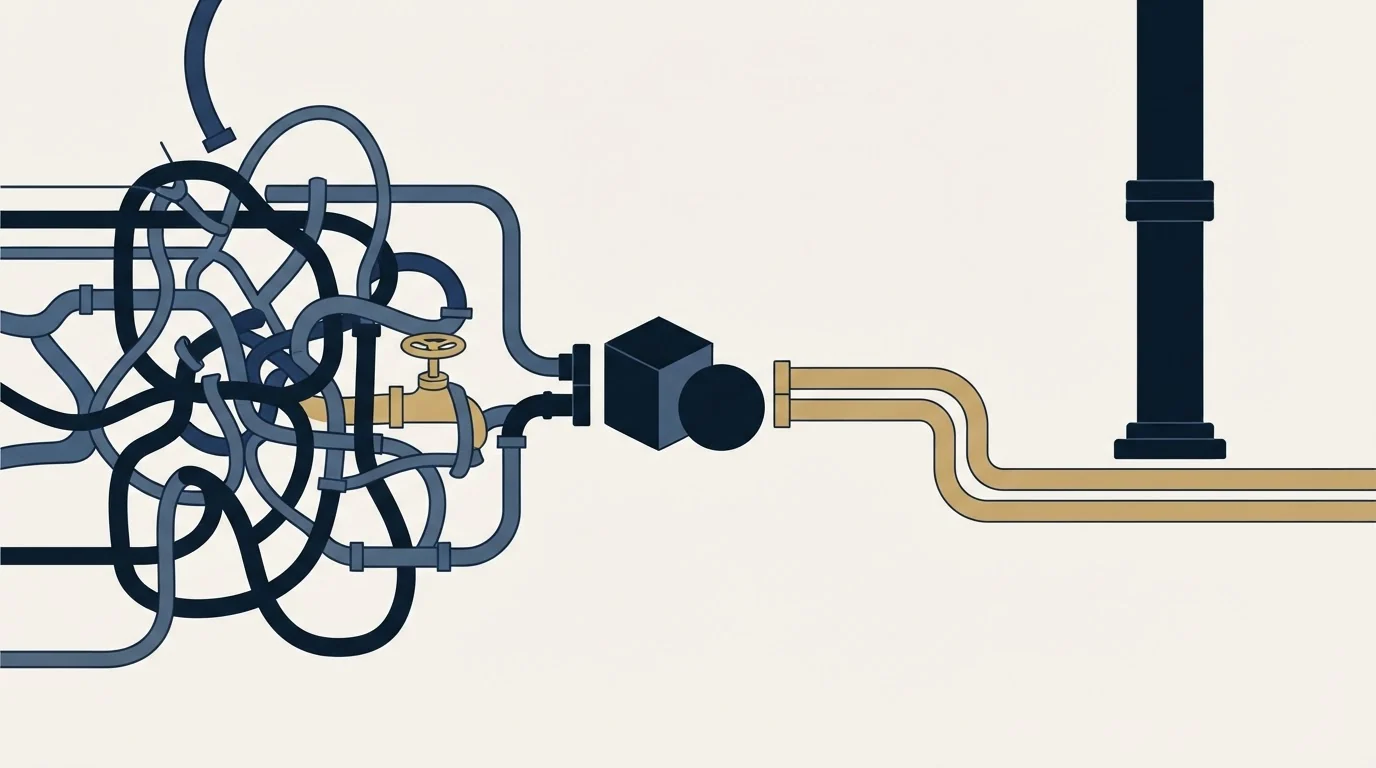
For a product team the real comparison is against building direct integrations, against other unified messaging APIs, and against restricting your product to the channels with official APIs. Email has genuine official access; LinkedIn messaging at this level does not, and that asymmetry should shape the roadmap rather than be papered over by a single integration surface.
That same tension between a vendor's official claims and independent verification shapes the SalesIntel versus ZoomInfo comparison, where human verified data is weighed against sheer scale.
For a sales team that arrived here by mistake, the products built for you sit one layer up: the architecture comparison across LinkedIn tools is in LinkedIn automation tools, and the multi-sender model we run client outreach on is in our HeyReach review.
The developer-facing detail, endpoints, authentication and what the API does and does not permit, is in Unipile API.
What to settle before committing
Model the bill on linked identities, using the vendor's own worked example as the template, rather than on seats or users.
Establish how the peak-usage rule treats disconnected accounts within a period, because that single definition can double an invoice.
Establish what happens operationally when a connected account is restricted: what your product sees, what your customer sees, and whether reconnection is automatic.
And decide what you tell your own users about the platform relationship. That is a product decision rather than a technical one, and it is the one that determines whether a restriction is a support ticket or a trust problem. If what you actually need is the pipeline rather than the plumbing, get a free campaign plan and we will map the channel to your ICP before anything sends.
Pricing and features verified as of mid-2026. Verify current terms with the vendor before relying on them.
Frequently asked questions.
Frequently asked questions- What does Unipile cost?
- Its pricing page published a minimum of 49 euros or $55 a month covering up to ten linked accounts, with tiered discounts above that. Its own worked example bills 60 linked accounts at 4.50 euros each for 270 euros a month. Prices are stated as excluding VAT and billing is post-paid on peak concurrent accounts.
- Who is Unipile for?
- Software companies rather than sales teams. Its published use cases name applicant tracking systems, CRM publishers, outreach software, AI agent platforms and no-code builders. A salesperson wanting to run their own LinkedIn campaigns wants one of the products built on top of this class of infrastructure instead.
- Is programmatic LinkedIn messaging allowed?
- LinkedIn's User Agreement prohibits members from using software, scripts, robots or other automated methods to access the service, add contacts or send messages, and its help page states that accounts using such tools risk restriction or closure. That obligation attaches to the member whose account is connected, which is your customer in this model.
- Should I build integrations myself instead?
- Writing one integration is manageable; keeping six working across platforms that change without notice is a permanent engineering commitment. The position most teams reach is to buy the long tail and own the single channel their product would be cancelled over if it broke for a week. That list is usually shorter than the integrations page suggests.
About the author.

B2B cold email experts helping companies generate qualified leads through done-for-you outreach campaigns.
RevenueFlow Team
Explore more.
Ready to scale your outreach?
We build GTM engines that book real meetings. See the receipts.
Related articles.
SalesRobot Pricing: Two Tabs, Yearly Opens First
SalesRobot prices LinkedIn per account and email per user on two tabs, with the LinkedIn tab opening on yearly. Both ladders at both states, quotas and credits.
Humanlinker Pricing: Euros First, Two Users for One
Humanlinker's Pro plan is priced in euros on a user slider where two users cost the same as one. Every slider step, the annual factor, and how the dollar figure is made.
La Growth Machine Pricing: Per Identity, Euros First
La Growth Machine prices per identity and loads in euros on annual billing. The full matrix from the page's own script: four periods, three currencies, three plans.
Snitcher Pricing: The $49 Table Is the Annual Rate
Snitcher's visible price table is the annual-billing ladder. The ten bands at both billing states, the unique-company meter, and the rules on a help page.
Autobound Pricing: One-Time Credit Packs, Not Seats
Autobound's pricing page sells one-time credit packs for a signal data API, not seats. The six packs, the per-endpoint meter, and what a company costs.
What Cold Email and Sales Tools Actually Cost in 2026: Pricing Data From 386 Vendors
RevenueFlow's verified dataset of 386 sales tools puts the median starting price at $39.98 a month. Here is the spread by category, tier and billing model.