Agent Lead Generation: Which Parts of the Workflow AI Owns
Lead generation is six jobs, not one, and agents handle them very differently. Which stages take autonomy well, which need a gate, and the failure that costs money.
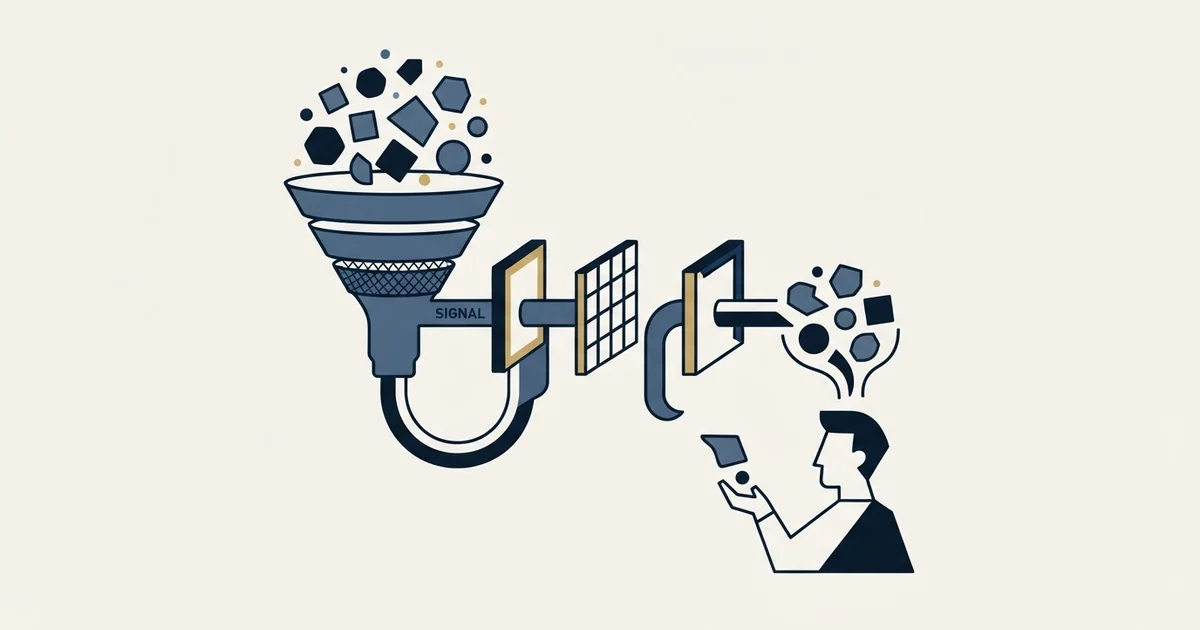
An AI agent can own the checkable stages of lead generation: research from public sources, structured extraction, person resolution, reply classification and first drafts. Sourcing decisions, factual claims reaching the message, qualification calls and volume pacing need a human gate, because being wrong there is expensive to undo.
Key takeaways
- Lead generation is six stages with different automation answers, and most products sold as agents cover two or three of them.
- The stages agents handle well share one property: the output can be checked against a retrievable source.
- The expensive failure is a confident, specific, wrong message, because a thin-evidence agent produces fluent output rather than an error.
- Volume is the wrong thing to accelerate: poor targeting at machine speed burns sending domains and a finite buyer population at the same time.
Reviewed and updated September 2, 2026
Agent Lead Generation: Which Parts of the Workflow an AI Agent Can Actually Own
A team wires an agent into their lead generation stack in a fortnight. It sources companies from a written brief, researches each one, writes a personalised message, and sends. Output goes from forty messages a day to four hundred. Three weeks later the sending domain is in trouble, the reply rate has collapsed, and a customer has forwarded a message that confidently described a product line the company discontinued in 2019.
Nothing in that setup was badly built. The mistake was treating lead generation as one job to hand over, when it is six jobs with very different tolerance for autonomy. Some of them agents do genuinely well. Others fail in ways that are expensive and slow to detect, because the output looks correct.
Wherever those six jobs write back to a shared record, the object model and stage exit criteria decide whether outbound and the CRM ever agree on a number.
Break the workflow before deciding what to automate
The useful unit of analysis is the stage, not the function. Each stage has a different failure mode and a different cost when it goes wrong.
- Step 1Sourcing
Deciding which companies belong on the list
- Step 2Resolution
Finding the right person and a deliverable address
- Step 3Research
Establishing what is true about the account
- Step 4Writing
Turning that research into a message worth reading
- Step 5Sending
Delivery, volume pacing, and domain health
- Step 6Reply handling
Classifying answers and getting to a booked conversation
Run that list against any product sold as an agent for lead generation and the marketing usually resolves to two or three of the six. That is not a criticism. It is the question to ask before buying, and vendors who are clear about which stages they cover are the ones worth talking to. For the category boundary itself, and how to tell an agent from a workflow with a chat interface, we covered that separately in AI sales agents.
Where agents genuinely earn their place
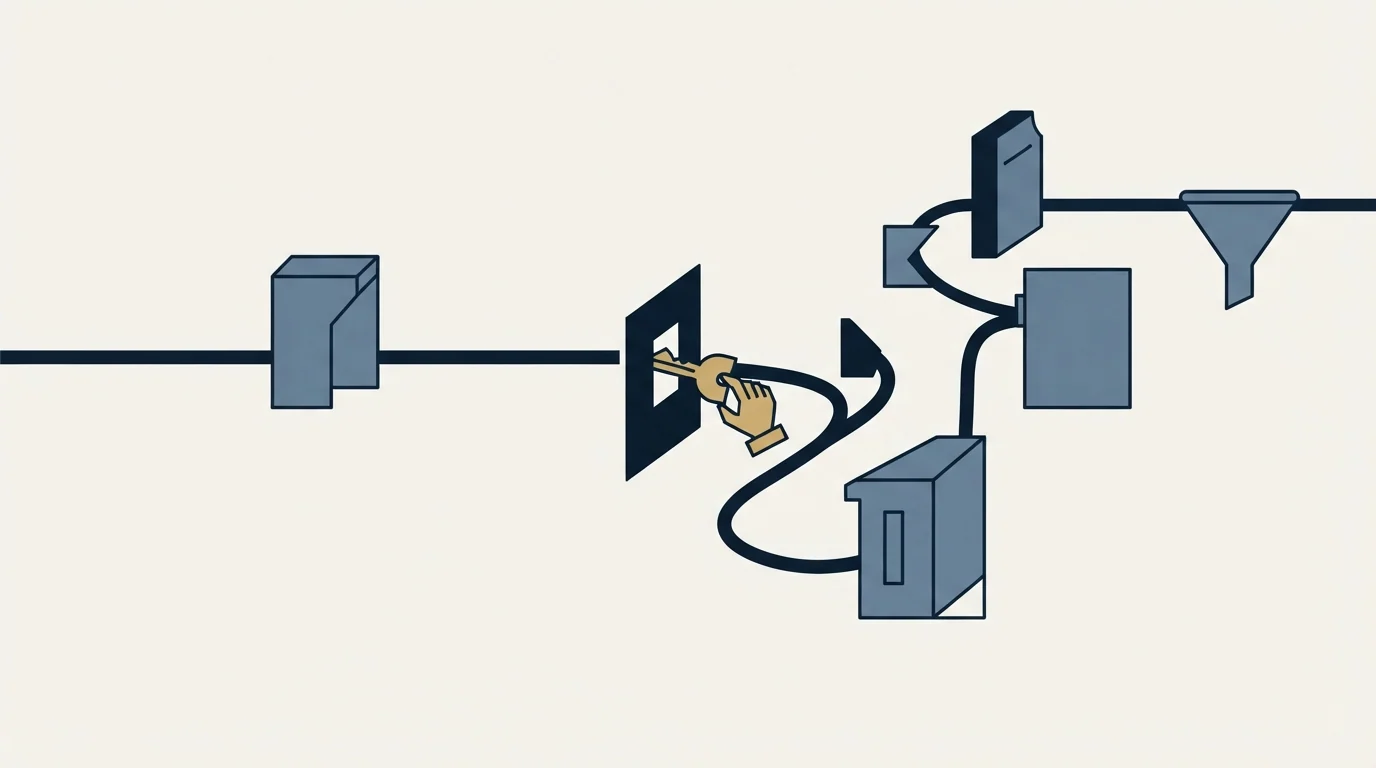
Three stages absorb agent autonomy well, and they share a property: the output is checkable against something.
- Research and summarising what a company publicly says
- Structured extraction from messy pages into fields
- Resolving a person to a role from public sources
- Classifying inbound replies by intent
- Drafting a first version against a tight brief
- Deciding which companies are worth contacting at all
- Any factual claim about the prospect that reaches the message
- Qualification calls that decide whether a meeting counts
- Volume and pacing decisions that touch domain health
- Sending without a review step on the rendered output
- Negotiating or committing to anything on your behalf
- Anything a recipient would experience as a person deceiving them
The first column is where most of the real value sits, and it is unglamorous. Research at scale is the stage where human teams are slowest and where an agent working from public sources is fastest, provided the output is grounded in something retrievable rather than generated from what the model already believes. The distinction between those two modes is the whole safety question, and it is worth interrogating in any product demo. Clay's agent approach is one worked example of grounded enrichment in practice, described in Clay agents and Claygent, and the general shape of chaining sources is in waterfall enrichment.
The stage that resists automation hardest is the first one, and it is worth being precise about why. Sourcing looks like a filtering problem, which is exactly what an agent should be good at. In practice deciding which companies belong on a list encodes commercial judgment that is rarely written down anywhere the agent can read: which accounts are already in a partner's territory, which are existing customers under a different legal name, which segment leadership has decided to stop selling into, which two hundred companies were contacted badly last year and should be left alone.
A brief detailed enough to convey all of that is most of the work of building the list by hand. Teams that get value here narrow the agent's job to executing a decision a person already made, which is a genuinely useful thing to automate and a much smaller claim than sourcing.
The failure that actually costs money
The expensive failure in agent-run lead generation is not a bad email. It is a confident, specific, wrong one.
An agent asked to personalise at volume will always produce something, because producing something is what it does. When the underlying evidence is thin, the output does not arrive marked as uncertain. It arrives as a fluent sentence about the prospect's recent expansion, their new product, or their hiring plans, and the only person who can tell it is wrong is the recipient.
That asymmetry is what makes this different from a human writing badly. A human who cannot find anything interesting about a company writes a duller message. An agent in the same position writes an equally confident one that happens to be false, and does it four hundred times a day.
Three practices contain it, and all three are design choices rather than tools.
Ground every claim in a retrieved source, and store the source. If a sentence in the message cannot be traced to a page the system actually read, it does not go out. This is a mechanical check, and it removes the majority of the risk.
Fail to a shorter message rather than to invention. When the research turns up nothing specific, the correct output is a message that says less. Systems that always produce the same message shape are the ones that fabricate to fill it.
Sample the rendered output, not the template. A template that reads well can render badly against real values, and the only way to see it is to read what actually goes to specific people. Reading twenty rendered messages before a send catches things no template review will.
There is a fourth practice that costs nothing and is skipped almost universally: keep the failures. When a grounded check rejects a row, record why. That log is the only honest measure of how much of your list the agent can actually serve, and it usually reveals that the technology works well on the third of accounts with a strong public footprint and adds nothing on the rest. Knowing that split changes the plan, because the answer for the remaining two thirds is a different motion rather than a better prompt.
Speed is the wrong thing to accelerate
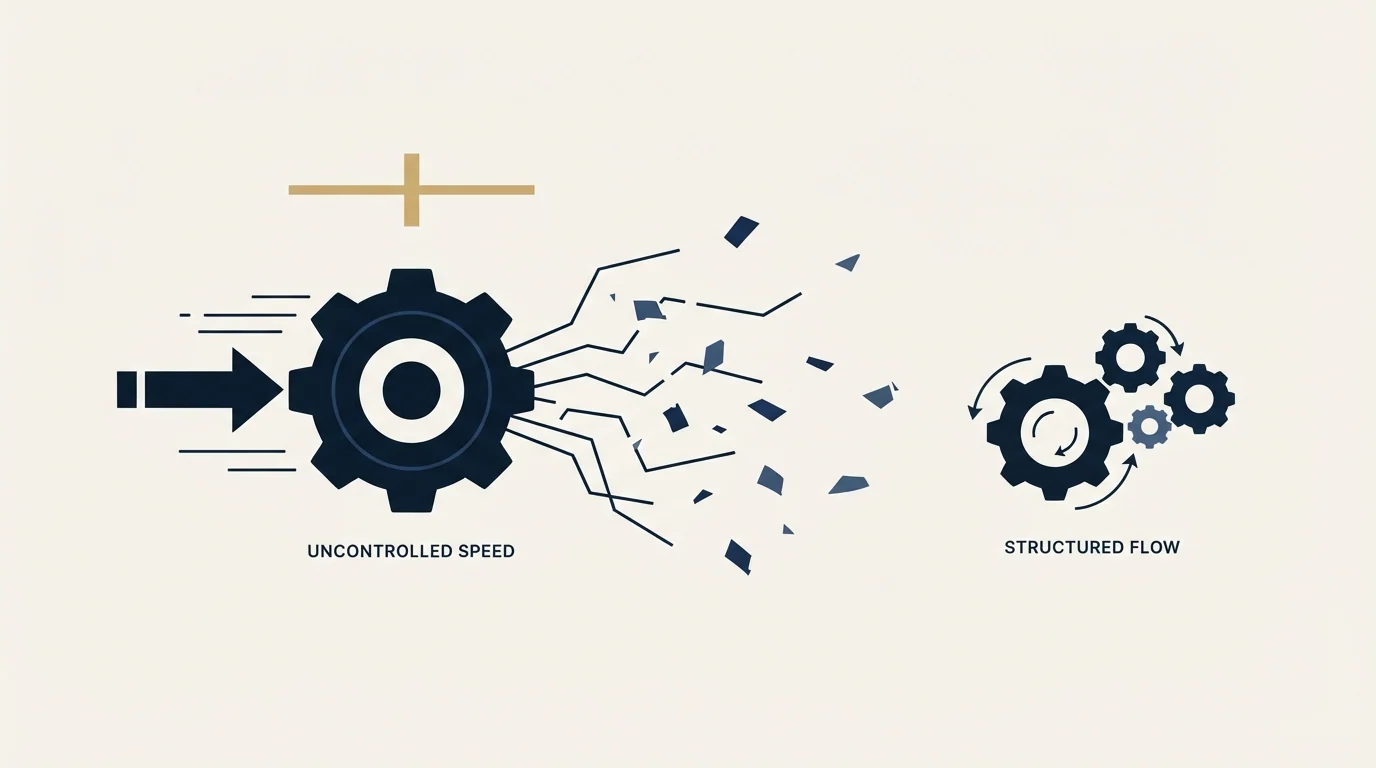
The instinctive use of an agent is more messages. That is the one application where the technology makes the underlying problem worse, because volume was never the constraint in lead generation and poor targeting at machine speed damages assets that take months to rebuild.
Sending reputation is the obvious one. A domain burned by a large badly targeted campaign is not repaired by pausing, and the recovery timeline is measured in weeks of careful sending. What that costs is set out in cold email deliverability guide.
The less obvious asset is the market itself. A finite population of buyers has now received a message from you, and a bad first message spends that permanently. In a narrow ICP the entire addressable market might be two thousand companies, which one enthusiastic month of automated sending can exhaust. There is no version of that mistake you can undo by improving the copy afterwards.
The third asset is internal, and it is the one nobody counts. A team that has watched an automated campaign produce nothing tends to conclude the channel does not work, and the next person to propose outbound at that company inherits the scepticism. Failed experiments are cheap when they are small and expensive when they are loud.
Our own position follows from this, and it constrains what we would hand to an agent. One message per campaign, built on one premise, sent once. If a later approach is worth making, it is a separate campaign with a different premise. An agent operating inside that constraint has to make one message good rather than many messages fast, which points its capability at research and grounding instead of at throughput. That is also where the honest capability actually is.
What to ask before buying one

Four questions separate a product that will help from one that will produce activity.
Which of the six stages does it cover, and what happens at the boundaries. Where does its factual content come from, and can you see the source for a given sentence. What does it do when it finds nothing, and can you inspect that behaviour before committing. And what is the human review step, given that a system with no review step has simply moved the review to your recipients.
- Yes: Names which workflow stages it covers, and which it does not
- Yes: Shows the retrieved source behind any factual sentence in a message
- Yes: Has a defined behaviour when research turns up nothing
- Yes: Lets you read rendered output before anything sends
- Yes: Logs rejected rows with the reason, so coverage is measurable
- No: Leads with messages-per-day as the headline capability
- No: Demonstrates only on well-known companies with rich public footprints
Then run it against a small list first and read the rendered output yourself. Every product in this category demos well, because demos are run on companies with rich public footprints. Your list contains many that do not, and the difference between a demo account and a typical account on your own list is where the whole evaluation actually lives.
Build the trial to be readable. Fifty accounts drawn from the middle of your list rather than the top, output reviewed line by line by somebody who knows the market, and a written note of what was wrong and how it was wrong. That takes an afternoon and answers the question. A three-month pilot judged on meetings booked answers a different question much more slowly, and confounds the tool with the targeting, the timing and the copy all at once.
For how these systems sit alongside human roles rather than replacing them, SDR versus AI SDR versus GTM engineer covers the org question, and eight GTM agent workflows covers concrete applications that are working now.
If you would rather see a grounded campaign built against your own list before deciding what to automate, see what a first campaign looks like.
Frequently asked questions.
Frequently asked questions- What can an AI agent actually do in lead generation today?
- The stages where output is checkable: researching what a company publicly says, extracting structured fields from messy pages, resolving a person to a role from public sources, classifying inbound replies by intent, and drafting a first version against a tight brief. Those are real capabilities and they are where most of the value sits.
- Why does agent personalisation go wrong so often?
- Because an agent asked to personalise always produces something. When the underlying evidence is thin, the output does not arrive marked as uncertain, it arrives as a fluent sentence about the prospect that happens to be false. A human with nothing to say writes a duller message. An agent writes an equally confident one, at scale.
- Can an agent decide which companies to target?
- Rarely, because sourcing encodes commercial judgment that is usually written down nowhere the agent can read: partner territories, existing customers under other legal names, segments leadership has stopped selling into, accounts contacted badly last year. A brief detailed enough to convey that is most of the work of building the list by hand.
- How should we evaluate an agent product before buying?
- Ask which of the six workflow stages it covers, where its factual content comes from and whether you can see the source for a given sentence, what it does when it finds nothing, and what the human review step is. Then run fifty accounts from the middle of your own list and read the rendered output line by line.
About the author.

B2B cold email experts helping companies generate qualified leads through done-for-you outreach campaigns.
RevenueFlow Team
Explore more.
Ready to scale your outreach?
We build GTM engines that book real meetings. See the receipts.
Related articles.
Cold Outreach Automation: Where the Line Sits
Cold outreach automation is seven decisions, not one purchase. Four stages automate cleanly, two produce confident nonsense, and one is the feature we decline.
CRM Setup: The Objects, Stages and Write-Back Loop
A vendor neutral CRM setup for an outbound team: the object model, stage exit criteria, the required field set, ownership rules and the campaign write-back loop.
The Pipedrive API: A Daily Token Budget
Pipedrive prices API calls rather than counting them. The published token budget, the cost of each endpoint type, and the two ceilings a sync has to respect.
Pipedrive Sequences: A 250-Item Cap and What the Tool Is For
Ten steps, 250 items and a per-sequence sending authorisation. Pipedrive's caps describe the audience the feature was designed for more clearly than its feature list.
HubSpot Power Dialers: Pooled Minutes Are the Real Cap
HubSpot's calling minutes are pooled across the whole account rather than granted per seat. That changes the arithmetic of a calling programme more than the dialer does.
Outbound AI Calling Agents: Four Pricing Models
A rate ladder, a hosting fee with the model billed separately, a $30,000 annual floor, and pure pay as you go. The shape decides which number to read.