CRM for Medical Sales: Three Products, One Phrase
Medical sales CRM covers three different products: a compliance platform, a field activity app and an ordinary commercial CRM. Which one a device team needs.
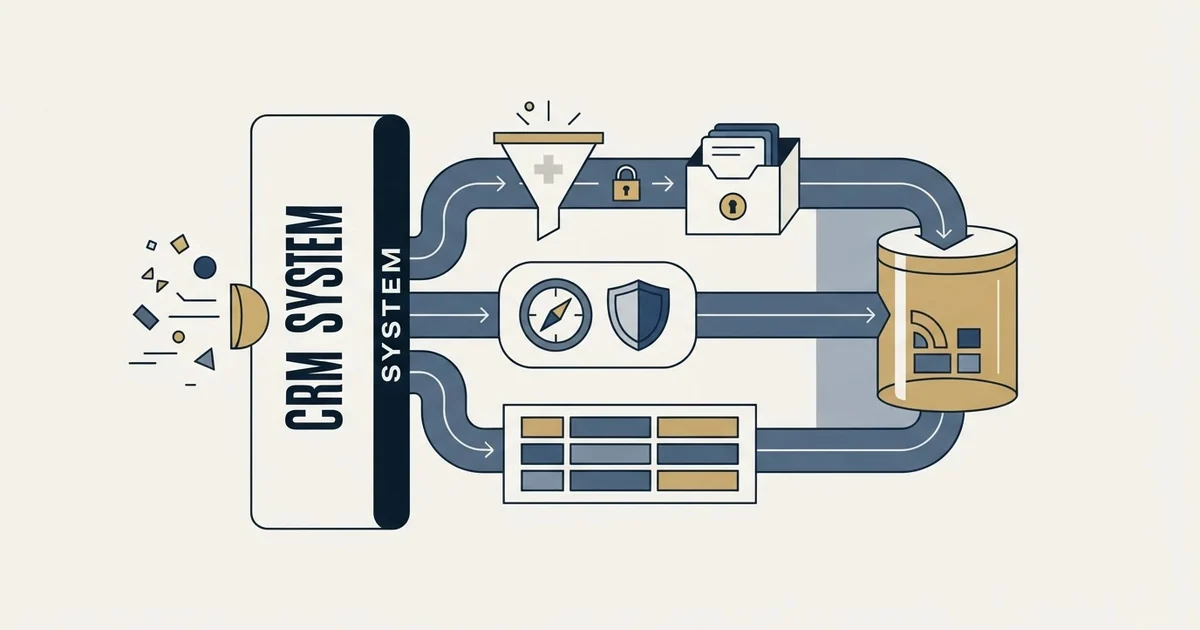
The best CRM for medical sales, for a device or diagnostics team selling into hospitals, is an ordinary commercial CRM that models one health system with many sites and a buying committee, such as Dynamics 365 Sales or Salesforce Sales Cloud. A field app like RepMove sits beside it, and medical affairs is a separate purchase.
Key takeaways
- Medical sales CRM names three products: a life sciences compliance platform, a field activity app for territory reps, and an ordinary commercial CRM.
- Salesforce's Health Cloud pricing page lists Enterprise at $350 and Unlimited at $525 per user a month billed annually, beside provider network, home health and insurance products.
- Dynamics 365 Sales Professional is $65 a user a month paid yearly, and RepMove's field app starts at $16.67 a user a month billed annually.
- The CRM has to hold one health system with many sites, a committee of several contacts, and an evaluation stage that lasts months.
Reviewed and updated September 18, 2026
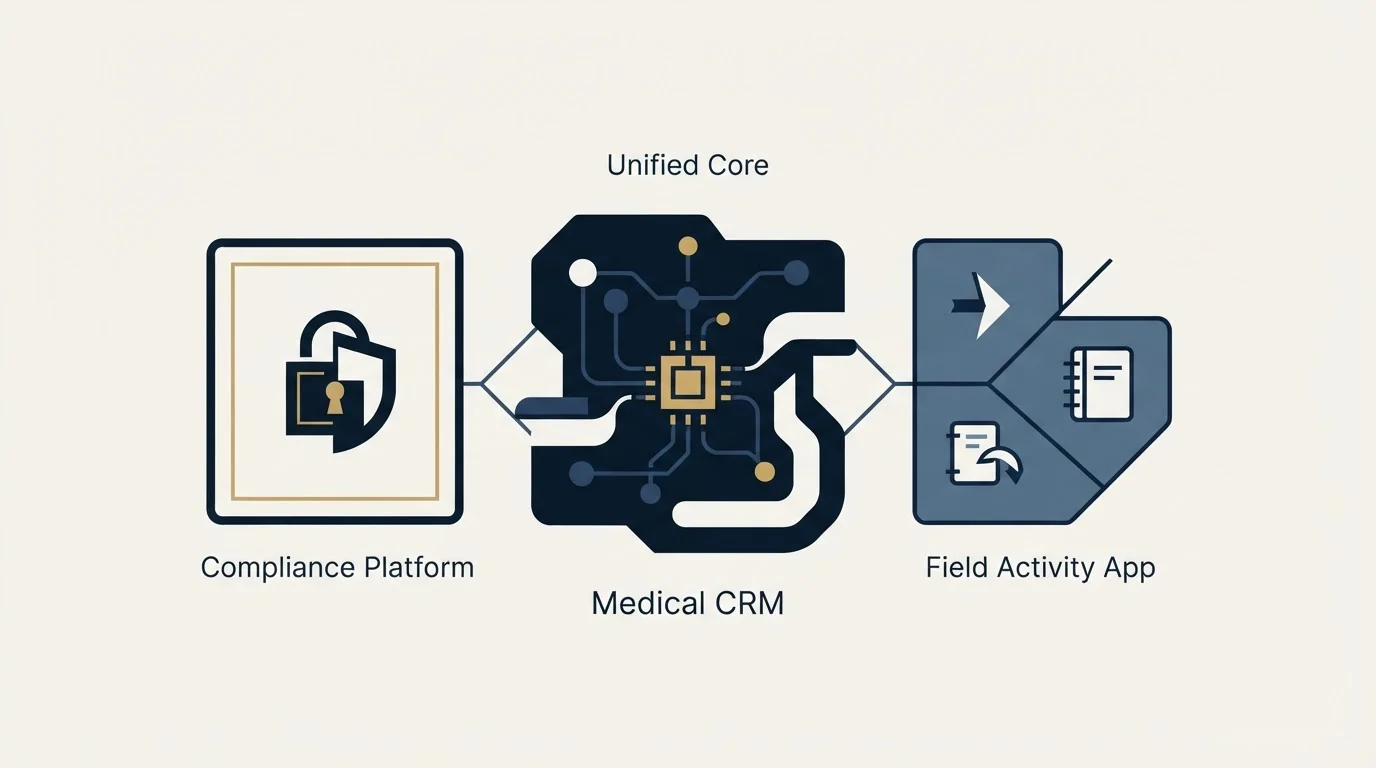
There is no single best CRM for medical sales, because the phrase covers three different products bought by three different people, and picking from a ranked list without deciding which of the three you are is how device and pharma teams end up paying for software their reps never open. The three are a life sciences compliance platform, a field activity app for reps who spend the day driving between accounts, and an ordinary commercial CRM that happens to be sold to a healthcare vertical.
Work out which one you need first. A commercial team selling devices or diagnostics into hospitals usually needs the third, sometimes with the second beside it, and almost never the first. The lists that rank all three against each other are comparing a compliance system, a route planner and a pipeline database as though they competed.
What is the best CRM for medical sales?
For a device or diagnostics team selling into hospitals, the best CRM for medical sales is an ordinary commercial CRM that models one health system with many sites, and a committee in place of a single buyer: Dynamics 365 Sales or Salesforce Sales Cloud, usually decided by which suite the company already runs. Add a field app such as RepMove only if reps drive a territory. Pharma medical affairs is a separate purchase.
The three products hiding behind one phrase
The confusion is not the reader's fault. Every vendor in this space uses the word CRM, and the word carries a different job in each case.
The life sciences compliance platform exists because pharmaceutical and medical affairs interactions are regulated activity that has to be logged in a defensible way. It is bought by a company, configured over months, and its value is the audit trail and the sample or interaction rules rather than the pipeline view.
The field activity app exists because a rep covering a territory has a routing and visit problem before they have a pipeline problem. It optimises the day, records the visit, and pushes activity somewhere else.
The commercial CRM is the ordinary thing: accounts, contacts, opportunities, stages, forecast. It is what a device company's inside sales and commercial team runs on, and it is what most people asking this question actually want.
Compliance platform
Bought by the company
- Regulated interaction logging with a defensible history
- Configured over months
- Its value is the audit trail and the interaction rules
Field activity app
Bought for the rep
- Optimises the day and records the visit
- Pushes activity somewhere else
- RepMove Flex: $16.67 a user a month, billed annually
Commercial CRM
Bought by sales leadership
- Accounts, contacts, opportunities, stages, forecast
- What a device company's commercial team runs on
- Dynamics 365 Sales Professional: $65 a user a month, paid yearly
The usual answer is a provider product
Search this phrase and the most common recommendation is Salesforce Health Cloud. Read Salesforce's own Health Cloud pricing page and the product it is selling becomes clear quickly.
That page now publishes the editions: Health Cloud Enterprise at $350 USD per user per month, Health Cloud Unlimited at $525, and two Agentforce 1 editions, one for Service and one for Sales, at $750, all billed annually. Enterprise lists clinical and insurance data models and integrated care management. The products listed around them on the same page are where the intent shows: that page carries "Provider Network Management $100 USD/User/Month" and "Analytics for Health and Life Sciences $165 USD/User/Month", along with Home Health from $30 USD/Login/Month and Digital Insurance from $180,000 USD/Year/Org.
Provider networks, home health delivery, group benefits, insurance. That is a product line for health systems and payers running care and member relationships. A rep selling an infusion pump into those organisations is on the other side of that relationship, and the tooling built to manage patients and provider networks is not built for them. Our page on CRM tools for healthcare organisations covers that buyer properly, and it is a different buyer from this one.
What Veeva's own page says Medical CRM is
The second recommendation that recurs is Veeva, usually cited as the life sciences CRM everyone in pharma uses. That is broadly true and the specific page people are pointed at is the wrong one.
Veeva's Medical CRM address now redirects to a page titled "Vault CRM for Medical Affairs", which leads with the line "Drive Personalized Scientific Exchange" and describes Vault CRM as an agentic CRM for life sciences that connects sales, marketing and medical teams on a single platform. Its customer quotes come from medical affairs roles, a Medical Affairs Transformation Lead and a Chief Medical Officer among them. That page publishes no price and ends with a Contact Us button.
Medical affairs is not commercial sales. It is the function that runs scientific exchange with clinicians and investigators, and it is deliberately separated from selling in most large pharma organisations for good regulatory reasons. Vault CRM itself is sold as one platform across sales, marketing and medical teams, so a commercial rep reaches the same product through a different door, and either way the price comes from a conversation rather than a page.
The ones that publish a number
Four of the vendors on this page publish a rate card you can plan against, and the difference between them is what job the seat is doing.
Microsoft Dynamics 365 Sales
The clearest ladder of the group, and that page publishes the unit on every row as "$65.00 user/month, paid yearly" and its equivalents. That page shows Dynamics 365 Sales Professional at $65.00 user/month paid yearly, Sales Enterprise Edition at $105.00 on the same basis, and Sales Premium at $150.00. Microsoft Relationship Sales on the same page is priced as variable.
For a device company already inside Microsoft 365 with an IT function that will do the integration work, the Professional tier is an ordinary commercial CRM at a published price, and the ladder above it buys sales intelligence rather than more CRM.
Salesforce Sales Cloud
Not Health Cloud. The commercial product. Its own pricing page lists Free Suite at $0 and Starter Suite at $25 USD per user per month, billed monthly or annually, then Pro Suite at $100, Core at $195, Advanced at $395 and Max at $550, billed annually. Several add-ons on the same page publish figures too, among them Agentforce for Sales from $125 USD/user/month and Revenue Intelligence from $220 USD/user/month.
Read those add-on rates before treating the entry price as the cost. In this category the add-ons are usually where the number a finance team eventually sees comes from.
RepMove
The field app, and the one whose published pricing is easiest to act on. Its middle plan is described on that page as "Command the field with a mobile app and web-based CRM platform." That page shows Flex at $16.67 user/month billed annually or $19.99 billed monthly for individual users; Sales Pro at $54 billed annually, $56.99 billed quarterly or $59.99 billed monthly for up to 10 users; and Accelerate at $80 billed annually, $83.99 billed quarterly or $87.99 billed monthly for 11 or more users.
One thing on that site is worth more than the prices. RepMove's own industry navigation lists Equipment Rental and Dealers, Medical Distribution and Supply, and Insurance and Benefits. It is a field sales tool with a medical distribution vertical rather than a medtech native platform, which is a reasonable thing to be and not what the roundups calling it purpose built for medical device sales describe.
LeadSquared
LeadSquared's sales CRM pricing page now publishes two plans: Sales Pro at $40 per user a month and Sales Super at $60, both billed annually, with contacts unlimited on both and storage rising from 2GB plus 20MB per user to 10GB plus 20MB per user. It still asks "Which Plan Works Best for You?" beside a Let's Talk button, and its marketing automation page prices two plans per account, at $1,200 and $2,000 billed annually.
A published per-user rate makes LeadSquared plannable in a way the compliance platforms are not, and the per-account marketing price is a reminder to check which unit each line of a quote is counted in.
The compliance question is narrower than it looks

Healthcare and life sciences buyers reach for compliance early in this evaluation, and for a prospecting CRM the honest scope is smaller than the anxiety around it.
A commercial pipeline runs on business contact details and business problems. The name of a supply chain director, their hospital, their title and the reason they might take a meeting are business contact data. Protected health information has no reason to enter a sales CRM at all, and the cheapest compliance posture is a field design that gives it nowhere to go. That decision is made once, at import, and it removes the question.
What does land on the tool is ordinary and worth confirming at the tier you intend to buy: whether suppression holds across campaigns rather than inside one, what a complete export contains, how long history is kept, and who can see which fields. Those are contract and configuration questions, and none of them is answered by a badge on a marketing page.
Export questions are really questions about which records a team owns, and the classes of sales data separates bought account attributes from outcomes only your own sending produces.
What actually decides a medtech deal, and it is not the CRM
The reason the tooling question feels urgent is usually that pipeline is not moving, and in this market the cause is almost never the database.
A clinician can want your device and cannot buy it. The purchase runs through a value analysis committee, supply chain and finance, and the evidence pack is what moves it. That structure is the whole subject of medical device lead generation, and the sequencing of the gate sits in medical device go to market strategy.
The CRM's real job in that world is modest and specific. It has to model an account hierarchy where one health system contains many sites, hold the committee as multiple contacts with different jobs rather than one buyer, and record the evaluation as a stage that lasts months rather than as a status somebody forgets to update. A pipeline that does not model the evaluation stage at all will slip in one direction, and that is the common failure in medtech forecasting. Pipeline management in a CRM covers what a record has to carry to be worth querying.
Commercial sales or medical affairs. That single answer removes most of the vendor list.
Field territory coverage, inside sales from a desk, or both. The field app only exists for the first.
One health system, many sites, a committee rather than a buyer. Test candidates with real records.
Compare published ladders against quoted ones honestly, and count the add-ons rather than the entry tier.
Choosing, in one pass

A device or diagnostics commercial team selling into hospitals wants an ordinary CRM that models account hierarchy and a long evaluation stage. Dynamics 365 Sales and Salesforce Sales Cloud both publish enough to plan against, and the choice between them usually comes down to which suite the company already runs.
Teams choosing a lighter tool instead face a different axis, and folk against Pipedrive on where records live shows how a contact manager and a deal pipeline diverge.
A team whose reps genuinely live in a territory should look at a field app beside that CRM rather than instead of it, and should read the vendor's own industry list before believing a roundup's claim about medtech specialisation.
A pharma or medical affairs organisation with regulated interaction logging requirements is in a different purchase entirely, with a quoted price and an implementation project, and no list of general CRMs will answer it.
Whichever way that lands, the CRM records the meeting. It does not create it. Reaching the supply chain director and the committee chair with something worth reading is the constraint, and that work is covered in cold email for medical device companies. If you would rather have that half run for you, see what a campaign would look like for your market.
Pricing and features are taken from the vendors' own pages. Verify current terms with the vendor before relying on them.
Frequently asked questions.
Frequently asked questions- What is the best CRM for medical sales?
- For a device or diagnostics team selling into hospitals, an ordinary commercial CRM that models account hierarchy and a long evaluation stage: Dynamics 365 Sales or Salesforce Sales Cloud, usually chosen by which suite the company already runs. A field app such as RepMove belongs beside it when reps drive a territory. Pharma medical affairs needs a separate, quoted compliance platform.
- Is Salesforce Health Cloud a CRM for medical device sales reps?
- Health Cloud is built for health systems and payers managing patients, members and provider networks. Its pricing page lists Enterprise at $350 and Unlimited at $525 per user a month billed annually, beside Provider Network Management, Home Health and Digital Insurance. A device rep selling into those organisations sits on the other side of that relationship.
- How much does a CRM for medical sales cost?
- It depends which product class. Dynamics 365 Sales Professional is $65 a user a month paid yearly, Salesforce Starter Suite is $25 a user a month, RepMove's field app starts at $16.67 billed annually, and LeadSquared's Sales Pro is $40 billed annually. Veeva's Vault CRM publishes no price and routes to a contact form.
- Does a medical sales CRM need to hold patient data?
- A commercial pipeline runs on business contact details, such as a supply chain director's name, hospital and title, and protected health information has no reason to enter a sales CRM. The cheapest compliance posture is a field design that gives it nowhere to go, decided once at import. Suppression, export and field access are then contract and configuration questions.
About the author.

B2B cold email experts helping companies generate qualified leads through done-for-you outreach campaigns.
RevenueFlow Team
Explore more.
Ready to scale your outreach?
We build GTM engines that book real meetings. See the receipts.
Related articles.
Which CRMs and Tools the Outbound Stack Connects To: Integration Data From 342 Sales Tools
HubSpot is named as an integration by 52.3% of 342 verified sales tools, Zapier by 50.3% and Salesforce by 43.3%. Here is the full map by category.
Pipeline CRM Pricing: Three Plans, Two Deal Ceilings
Pipeline CRM publishes its whole ladder at both billing states. The active deal ceilings, the flat add-ons and the onboarding packages are what decide the bill.
Is Clay Free? The Free Plan, the Trial and Where Each Stops
Clay's free plan, its 14-day trial and the no-charge-on-a-miss rule are three different things. What each holds and where it stops, from clay.com on 19 September 2026.
Seamless.AI Email Finder: How It Works, What a Credit Buys
How Seamless.AI's email finder resolves a contact in real time, what one Universal Credit buys, the Total AI score on every address, and what the Chrome extension reads.
Video Prospecting Tools by Job: What Each One Is For
Ten video prospecting tools sorted by the job each vendor's own page describes: record and share, personalise at volume, avatars, hosting and interactive demos.
Social Selling Tools by Job, and the Account-Risk Line
Fourteen social selling tools sorted into six jobs, split by whether each acts through your LinkedIn account or beside it, from the vendors' own pages.