Best CRM Tools for Healthcare (2026)
The five CRMs healthcare organisations compare most, each priced from its own pricing page, with the agreement question to settle first and where permissions sit.
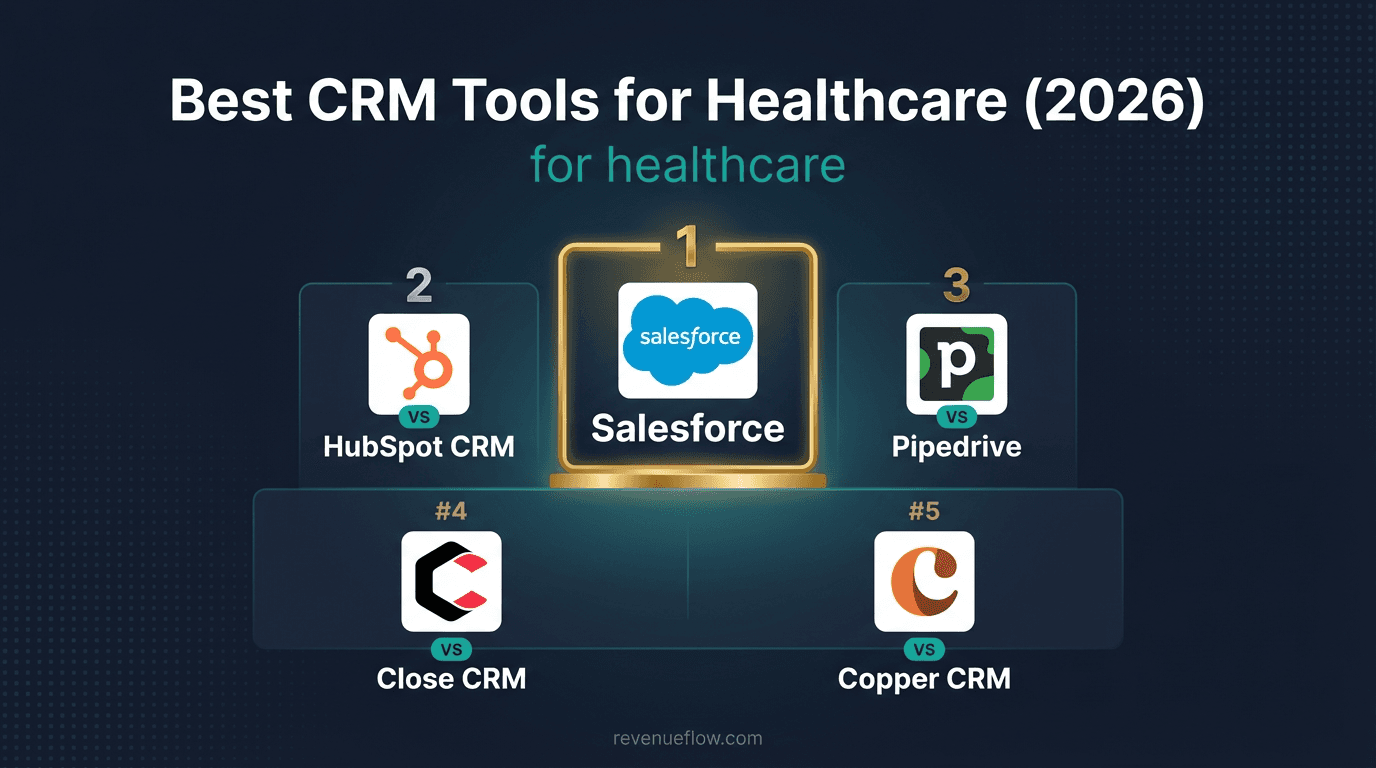
The healthcare CRM alternatives most teams compare are HubSpot, Zoho CRM, Freshsales, Salesforce and Pipedrive. Settle whether the vendor signs a business associate agreement, and at which tier, before comparing prices, because the controls health organisations need usually sit near the top of each ladder.
Key takeaways
- Ask first whether the vendor signs a business associate agreement and on which tier, because a plan that cannot carry one is a different product.
- On annual billing in pounds, entry tiers run from £7 a seat on HubSpot and Freshsales to £20 on Salesforce, and top tiers from £42 on Zoho CRM to £440 on Salesforce.
- Freshsales puts field-level permissions and audit logs on Enterprise at £49 a user a month, the cheapest published tier here that names them.
- A proactive health review is bought as a support plan: Salesforce's Premier Success Plan, at 30% of net license fees, lists health checks and recommendations.
Reviewed and updated September 21, 2026
The first question a healthcare organisation should ask a CRM vendor is not about features. It is whether they will sign a business associate agreement, and at which tier, because the answer decides whether the rest of the evaluation is worth doing. This guide compares the healthcare CRM alternatives most teams shortlist, HubSpot, Zoho CRM, Freshsales, Salesforce and Pipedrive, on the prices their own pages show and on where the controls a health organisation needs sit on each ladder.
A device or diagnostics team selling into those organisations is asking a different question, and the products built for that side of the relationship are compared in CRM for medical sales.
What healthcare organisations need
- A signed agreement at a known tier
- An account model for health systems
- Field-level permissions on who sees what
HIPAA posture is the gate. Several CRMs offer HIPAA-aligned configurations, typically restricted to higher tiers under a signed agreement, so a plan chosen on price can prove unusable at review. Establish it in writing first, and note that a compliant configuration is a shared responsibility rather than a switch the vendor flips.
Provider targeting is a CRM job understood correctly: segmentation of records you already hold, by department, role and organisation. That depends on custom fields and on how well the CRM models a provider organisation with many sites, which is an account-hierarchy problem rather than a contact list.
The third demand is who can see what. A healthcare CRM accumulates context not everyone should read, and field-level permissions are commonly a top-tier feature: a real cost input, easier to find now than in a security review.
Keeping patient data out of scope
None of these five is a HIPAA compliance product, and the honest framing is that several offer HIPAA-aligned configurations under a signed business associate agreement, usually on higher tiers. That is a contractual arrangement with shared responsibility, and it should be settled in writing before a plan is chosen.
The practical line is narrower than it looks. Sales and revenue planning runs on business contact details and business problems, so protected health information has no reason to enter the CRM, and the cheapest compliance posture is a field design giving it nowhere to go. A pipeline built that way can connect to a revenue plan without bringing patient data into scope. Beyond that, confirm field-level permissions, retention and deletion behaviour, and what a complete export contains, all at your intended tier.
Healthcare CRM alternatives: the five, priced
The five CRMs healthcare organisations most often compare all publish per-seat prices. On annual billing, in pounds as each page rendered for our connection, the lowest paid tier runs from £7 on HubSpot and Freshsales to £20 on Salesforce, and the top published tier from £42 on Zoho CRM to £440 on Salesforce, where governance controls usually sit.
Every price here was read from the vendor's own pricing page and is attributed to it. All five pages rendered in pounds for our connection; Salesforce publishes the same ladder in dollars beside it, and Freshsales' page as first served carries dollars too. Nobody here ran five implementations side by side, so the guide makes no claim about which is fastest to deploy.
Top 5 CRM tools for healthcare

1. HubSpot CRM
An all-in-one CRM platform with a free tier and separate Hubs for marketing, sales, service and content.
From HubSpot's Sales Hub pricing page, in pounds on annual billing: free for up to 2 users, Starter from £7 a seat a month against a struck-through £18, Professional from £77 against £85, and Enterprise from £135, with required one-time onboarding fees of £1,310 on Professional and £3,050 on Enterprise.
Widely used for healthcare marketing and sales with a free entry point. The Sales Hub page read today does not say which tier carries a HIPAA-aligned configuration, so ask for that in writing before choosing one.
2. Zoho CRM
A broad, low-cost CRM from the Zoho ecosystem, with sales automation, analytics and the Zia AI assistant, integrated across the Zoho suite.
From Zoho's CRM pricing page, in pounds: free for 3 users, then Standard at £12, Professional at £18, Enterprise at £35 and Ultimate at £42 a user a month on yearly billing, or £16, £28, £45 and £55 on monthly billing.
Cost-effective and broad, with the same caveat that the controls this industry needs are tier-gated.
3. Freshsales
An AI-assisted CRM from Freshworks with built-in email and phone and Freddy AI for lead scoring and deal insights.
From the Freshsales pricing page, in pounds: Growth at £7, Pro at £29 and Enterprise at £49 a user a month, billed annually; the page as first served lists them at $9, $39 and $59. There is no free tier, only a 21-day trial.
Its own page places field-level permissions and audit logs on Enterprise, at £49 a user a month billed annually, which is the number a healthcare buyer should plan against rather than the entry price.
4. Salesforce
The largest CRM platform, with sales, service, marketing and commerce products and deep customisation.
From the Salesforce pricing page, in pounds with the published dollars in brackets: Starter Suite at £20 ($25) a user a month billed monthly or annually, then Pro Suite at £80 ($100), Core at £156 ($195), Advanced at £316 ($395) and Max at £440 ($550), each billed annually. The editions above Pro Suite have been renamed since this guide was first written: Core, Advanced and Max replace Enterprise, Unlimited and Agentforce 1 Sales.
The most common destination for healthcare organisations with real governance requirements, and the only page here that prices the support plans above standard, covered below.
5. Pipedrive
A sales-first CRM built around a visual deal pipeline and activity-based selling.
From Pipedrive's pricing page, in pounds: Lite at £14, Growth at £39, Premium at £59 and Ultimate at £79 a seat a month, billed annually, with a 14-day trial and prices that exclude VAT.
A straightforward pipeline for a small commercial team selling into healthcare rather than for a provider organisation itself.
What each page says about governance
| CRM | Permissions and audit | Paid support or onboarding |
|---|---|---|
| HubSpot | Not stated on the Sales Hub page read | Onboarding fees of £1,310 and £3,050 |
| Zoho CRM | Not stated on the plan cards read | Not stated |
| Freshsales | Field-level permissions and audit logs on Enterprise | Not stated |
| Salesforce | Not named on the plan cards | Premier at 30% of net license fees; Signature on request |
| Pipedrive | Not stated on the plan cards read | Not stated |
Getting a proactive health review into the support plan
A proactive system health review is sold as part of a support plan rather than a licence, so it is bought as a line item. Salesforce's pricing page shows the clearest version: its Premier Success Plan, priced at 30% of net license fees, lists health checks and recommendations with expert guidance and 24/7 support for business-stopping issues, and its Signature plan, priced through an account executive, adds a designated customer success manager and proactive monitoring.
So the route is to name it at contract time: ask which support plan includes a scheduled health check, what it covers, and how its price is calculated, because a percentage of license fees grows with every seat you add.
What the CRM actually has to do with outbound
A CRM does not send cold email and does not improve deliverability, so the reason it belongs in an outbound stack is narrower than a feature list suggests: it is the record of truth that outlives every other tool in that stack.
Two consequences follow, both cheap now and expensive later. Decide which system is the record of truth before integrating anything, because a team treating both as authoritative reconciles them monthly. And agree the qualification criteria in writing before the first campaign, in the CRM's own fields, so a meeting is judged against a definition rather than a memory. Budget, timing and authority are never among those criteria.
The house rule follows: one message per campaign, no bumps and no thread replies. A CRM will happily record a five-touch sequence, and recording it does not make it a good idea.
Recommendation by budget
The lowest entry prices. HubSpot Starter and Freshsales Growth both render at £7 a seat a month on annual billing, but neither is the tier a healthcare buyer ends up on.
The governance tier. Freshsales Enterprise at £49 is the cheapest published tier here that names field-level permissions. Salesforce's ladder runs to £440 ($550), with its support plans priced on top as a share of license fees.
The free tiers. HubSpot is free for up to 2 users and Zoho CRM for 3, and Salesforce lists a Free Suite; none of these is where a signed agreement will sit.
How to choose for healthcare
Will they sign a BAA, and at which tier? Settle this first, in writing. A plan that cannot carry a signed agreement is a different product rather than a cheaper one.
Where do field-level permissions start? Commonly the top tier. On Freshsales' page they are on Enterprise, so plan against that price rather than the entry one.
Can it model a health system, not a contact list? Many sites and departments, one organisation. Account hierarchy is the feature, and it is not universal.
What is the retention and deletion behaviour? Contract terms rather than settings, and the questions that stall a security review after the tool is chosen.
Getting it adopted
Whether the vendor signs a business associate agreement, and on which plan, in writing.
Business contacts and business problems only.
Sites under systems, departments under sites, before the first import.
Who sees what while the CRM is empty; then test write-back with real records.
Then keep outbound on dedicated sending domains and let the CRM hold the record. One message per campaign, since clinical and administrative leaders are busy rather than undecided, and a complaint here follows the organisation rather than the campaign.
Where the tool stops mattering
The tool stops mattering at governance. The healthcare failure mode is three teams contacting one health system with no shared record, solved by a suppression policy and an owner rather than a feature.
The second limit is relevance. Healthcare buying is departmental, driven by what a department has been told to fix this year. A CRM records that once somebody learns it.
Final thoughts

Governance and audit requirements: Salesforce, with its support plans priced separately. Field-level permissions at the lowest published price: Freshsales Enterprise at £49 a user a month on annual billing. Marketing and sales together with a free start: HubSpot, agreement tier to be confirmed. Cost-led and broad: Zoho CRM. A small commercial team selling into healthcare: Pipedrive.
Related Reading
- Best HubSpot CRM Alternatives in 2026
- Best Zoho CRM Alternatives in 2026
- Best Salesforce Alternatives in 2026
- Best Pipedrive Alternatives in 2026
- Best Freshsales Alternatives in 2026
- Email sending tools for healthcare teams
If you would rather have this run for you, RevenueFlow books qualified meetings on a pay-per-meeting basis and publishes client results.
Pricing and features are taken from each vendor's own pricing page, read as served and rendered in a browser, in the currency each page rendered for our connection, with dollars given where the vendor publishes them. Verify current terms, and any business associate agreement, with the vendor before relying on them.
Frequently asked questions.
Frequently asked questions- What is the best CRM for healthcare organizations?
- For governance and audit requirements, Salesforce, whose support plans are priced on its own page. For field-level permissions at the lowest published price, Freshsales Enterprise. HubSpot suits marketing and sales together with a free start, Zoho CRM is cost-led, and Pipedrive suits a small commercial team selling into healthcare. Confirm the agreement tier first.
- Which CRMs will sign a HIPAA business associate agreement?
- Several offer HIPAA-aligned configurations under a signed business associate agreement, usually on higher tiers, and the pricing pages read for this guide do not say which tier. Ask each vendor in writing which plan carries a signed agreement before choosing one, and treat compliance as shared responsibility rather than a feature the vendor turns on.
- How do you get a proactive system health review in a CRM support plan?
- Buy the support plan that includes it and name it at contract time. Salesforce's Premier Success Plan, priced at 30% of net license fees, lists health checks and recommendations, and its Signature plan adds proactive monitoring through an account executive. Ask what the review covers and how the price scales, since a percentage grows with seats.
- How can a CRM keep patient data out of scope?
- By design rather than by setting. Sales and revenue planning needs business contacts and business problems, so build the field set so protected health information has nowhere to land, and keep clinical detail out of notes. Then confirm field-level permissions, retention, deletion and what a full export contains at the tier you intend to buy.
About the author.

B2B cold email experts helping companies generate qualified leads through done-for-you outreach campaigns.
RevenueFlow Team
Explore more.
Ready to scale your outreach?
We build GTM engines that book real meetings. See the receipts.
Related articles.
CRM Report Template: Four Reports, Field by Field
A CRM report template is four saved queries: pipeline by stage, activity by owner, conversion by source and stale deals, each with its filter, fields and formulas.
Which CRMs and Tools the Outbound Stack Connects To: Integration Data From 342 Sales Tools
HubSpot is named as an integration by 52.3% of 342 verified sales tools, Zapier by 50.3% and Salesforce by 43.3%. Here is the full map by category.
Sales Data: The Classes, and Which Ones You Can Buy
Sales data covers two collections with almost nothing in common: the account attributes a provider sells you, and the outcomes only your own sending produces.
Best CRM for Google Workspace: What Lives in Gmail
Working with Google Workspace covers four separate integrations, and most of the category ships as a browser extension. What five vendors publish about theirs.
Best Time to Cold Call: What the Studies Counted
The best time to cold call figures traced to their originals: one inbound study from six companies, three vendor call datasets, and what survives the read.
Best Time to Send a Sales Email: What Was Measured
The send time studies behind the midweek morning answer, what each one actually counted, and why a broadcast finding does not transfer to a sales email.