What a Cold Calling Firm Charges, and What It Leaves Out
Published entry prices for outsourced calling run from under $2,000 a month to $30,000. The gap is mostly the unit of purchase, not the quality of the callers.
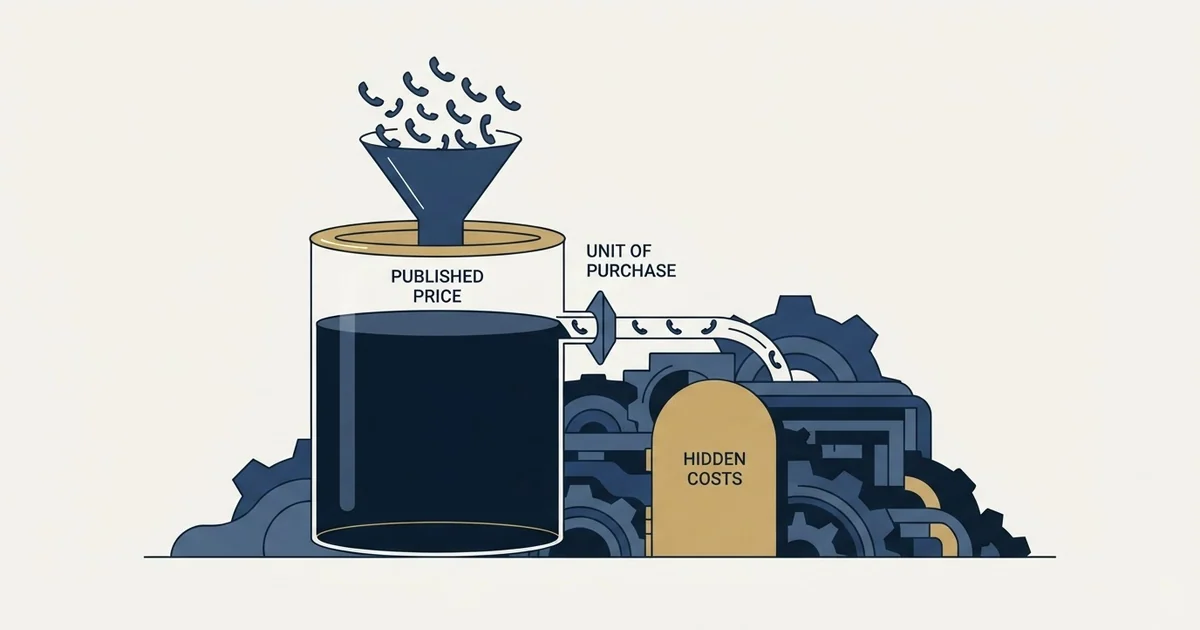
Cold calling firms price capacity, not meetings: a retainer per rep, a retainer per pod, or a guaranteed appointment count. Published entry prices run from $1,998 a month to $30,000 a month for one pod, and none of seven firms publishes a price per qualified meeting, for manufacturing or any buyer.
Key takeaways
- Superhuman Prospecting's pricing page publishes packages starting at $1,998 and $4,995 a month, plus list building at $3.00 per contact.
- SalesRoads' pricing slider shows one SDR at $11,950 and two at $16,750 per four weeks, while its appointment-setting page still shows $6,950 and $9,500 cards.
- Belkins publishes from $5,000 with 100 guaranteed appointments a year on its service page, while its pricing page is quote-only.
- No calling firm read publishes a per-qualified-meeting price; the ratio of monthly price to meetings actually held is the number to make the vendor produce.
Reviewed and updated September 21, 2026
What done-for-you cold calling agencies charge per qualified meeting is the number buyers ask for first, manufacturing buyers included, and it is the one number none of the seven firms read for this page publishes. They price capacity instead: a rep for four weeks, a pod for a month, a starter package. A cost per meeting only exists once a month closes and somebody divides the invoice by the meetings that were actually held.
Published entry prices for outsourced cold calling run from just under $2,000 a month to $30,000 a month, and several firms in the same market publish no figure at all. The spread is mostly a difference in what the unit of purchase is rather than a difference in the quality of the callers.
This is a buyer's guide to that market, written by a company that does not sell calling. RevenueFlow runs cold email and LinkedIn outbound. We end up in a lot of conversations with buyers who are comparing a calling firm against written outbound, so what follows is what those firms publish about themselves, checked on their own pages, and the questions that decide whether the engagement works.
What a cold calling firm actually sells
Strip the packaging and there are four components, and every firm sells some combination of them: callers, a list, a script, and a reporting surface. The callers are the expensive part. The list is the part that decides the result. The script is the part clients spend the most time on and that matters the least. The reporting surface is how you find out which of the other three is broken.
The variation that matters commercially is whether the callers are dedicated to you or shared across several clients, and whether you are buying their time or their output. Everything else on a capability slide follows from that one choice.
The three pricing shapes, and what each one hides
| Shape | What you buy, and who carries the risk | Watch for |
|---|---|---|
| Retainer per rep | Capacity; you carry the risk if the list is bad | Ramp time billed like production time |
| Retainer per pod or programme | A team; you carry the risk, and team make-up differs by vendor | Which named roles are actually dedicated |
| Guaranteed output | Appointments; the vendor carries volume risk | The qualified-meeting definition, no-shows and rejections |
What the published prices say
Five vendors publish enough to compare, and these pages change often enough that every figure below was re-read on the vendor's own page for this refresh.
| Firm | Published | Unit |
|---|---|---|
| Superhuman Prospecting | From $1,998; full service from $4,995; lists from $3.00 a contact | A month |
| SalesRoads | One SDR $11,950; two SDRs $16,750 | Four weeks |
| Belkins | Average starter price from $5,000 | Service page only |
| Callbox | $15,000 to $30,000 a pod, an estimate | A month |
| CIENCE | $5,000 setup; $2,000 plus $499 a month | SDRs quoted separately |
| SalesHive | No figure | One flat monthly fee |
| Martal | No figure | Flat fee, or fee plus commission |
Buyers searching for B2B cold calling services are looking for this comparison: which firms sell calling as the channel, what unit each one prices in, and which of them publish a figure at all.
Superhuman Prospecting's pricing page publishes the lowest entry point of the group. It lists a smaller-scale calling package "Starting at: $1998 /monthly" and a full-service package "Starting at: $4995 /monthly," both described as USA-based experienced callers with no long-term commitment. The same page prices list building separately, "Starting at: $3.00 /per contact," and names a $250 integration fee. That per-contact line is worth noticing: it is one of the few places in this market where a vendor puts a number on the data rather than folding it into the retainer.
SalesRoads' pricing page is a slider that runs from one to twelve SDRs and defaults to two, displaying $16,750 per four-week engagement and $8,375 per rep, with a single SDR at $11,950 per four weeks. The page describes the SDRs as dedicated and "never shared across accounts", with no long-term commitment. Note the billing unit: four weeks is not a month, and thirteen of them fit in a year.
SalesRoads also contradicts itself across its own site, which is the single most useful thing a buyer can learn from this exercise. Its appointment-setting page shows cards starting at $6,950 and $9,500 per four weeks, the first for fractional SDRs with AI-powered dialing and the second with a dedicated SDR, while the pricing page charges $11,950 for a single dedicated SDR over the same four weeks. Treat the pricing page as current and ask the vendor to confirm in writing.
Belkins publishes its figures on its appointment-setting page rather than on its pricing page, which is quote-only. That service page states an average starter price "from $5,000" alongside stat tiles reading 1,500 leads a month, 3 outreach channels and 100 guaranteed appointments a year. The structured data embedded in the same page declares 8000 for the same starter price. Where a page's visible copy and its structured data disagree, the visible copy is what the buyer is being shown, so $5,000 is the figure to quote and the disagreement itself is worth raising on the call.
Callbox prices in campaign pods, and its lead generation pricing page shows an estimated monthly investment of $15,000 to $30,000 for a single pod, with the structured data agreeing with the rendered page, and it says exact pricing is provided after a consultation. Each pod is described as one dedicated SDR plus a campaign manager, data and reporting. Our breakdown of what a Callbox pod includes goes through that model in detail.
CIENCE's pricing page is the most itemised of the group: $5,000 one-time setup, $2,000 a month for the strategic team, $499 a month for the platform licence, and $7,499 for the first month all in, with SDR capacity quoted separately.
The wider SDR outsourcing market behaves the same way, and the same exercise run across eleven of those vendors is in our survey of what SDR outsourcing companies publish about how they charge. That piece covers the general outsourced-SDR market, where the deliverable is a rep; this one covers firms selling the phone as the channel, which is a narrower purchase with its own compliance and number-inventory questions.
SalesHive and Martal both publish pricing pages with no figures on them. SalesHive describes one flat, all-inclusive monthly fee across three tiers and two team options, with no setup fee and no long-term contract. Martal describes flat-fee and flat-fee-plus-commission tiers with a three or four month pilot. Neither absence is evidence of anything except that they price by conversation.
How to read a pricing page you did not write
Three habits make this market legible, and all three came out of checking the pages above rather than from theory.
Read the service page as well as the pricing page. Belkins publishes its only price on a service page while its pricing page is quote-only, and SalesRoads publishes different prices on two of its own pages. A vendor's price is a property of the page it appears on until you have checked the others, so a single-page read is a sample rather than an answer.
Check the billing unit before the number. Four weeks, one month and one quarter are three different denominators, and a per-four-week price is roughly eight percent more expensive per year than the same figure charged monthly. Vendors are not hiding this, but nobody converts it in their head during a call.
Treat structured data as a second opinion rather than as the truth. Two of the vendors above embed a price in their page markup, one matching the visible copy and one contradicting it. When the two disagree, the visible copy is what the buyer was shown, and the contradiction is a reasonable thing to ask about.
What cold calling agencies charge per qualified meeting for manufacturing buyers
None of the seven firms publishes a per-qualified-meeting price, for manufacturing or any other buyer. SalesRoads and Belkins both list manufacturing among the industries they serve, and neither prices it separately on the pages read for this guide. Belkins comes closest to an output price: its appointment-setting page pairs the average starter price with 100 guaranteed appointments a year, which is a floor on meetings rather than a price per meeting.
For a manufacturing buyer the practical route is to make the vendor produce the number. Ask for the qualified-meeting definition in writing, the meetings the proposed team held for the last comparable client, and the monthly price; the ratio is the price per meeting the vendor is actually quoting. Manufacturing adds two questions of its own: whether the callers can hold a conversation with plant, operations and procurement roles rather than a single economic buyer, and whether the list covers sites as well as head offices.
The model that prices the meeting directly is pay per qualified meeting. RevenueFlow uses it for written outbound rather than calling: clients pay per qualified meeting that is actually attended, and no meeting is charged without the client's written acceptance.
The number that is not on any pricing page

None of these prices tell you what a meeting costs, because none of them tell you how many meetings you get. Two published exceptions exist in the group above, both of which we have already worked through elsewhere: the arithmetic on Belkins' guaranteed appointment count and on SalesRoads' four-week billing unit is laid out in our outsourced SDR pricing breakdown, which compares per-seat, per-meeting and per-qualified-meeting models side by side.
The thing to negotiate before price is the definition of a qualified meeting, in writing, with the rejection window and the reviewer named. A per-appointment price without that definition is a number attached to nothing. The same holds for a retainer, because the retainer converts into a cost per meeting the moment the first month closes and you count.
With a named reviewer and a rejection window; it turns a price into a cost per meeting.
With headcount stated; it decides what a seat is worth.
And whether it is priced separately; the list decides the result.
Who owns them, and which jurisdictions are being called.
And whether ramp months bill at the full rate.
What happens to the list and the recordings when you leave.
Checked against the contract, because vendors' own pages disagree.
When outsourcing the phone is the right call, and when it is not
Buying calling rather than building it makes sense in three situations. The market is small enough that a handful of skilled callers can cover it. The offer is simple enough to explain in one sentence to someone who did not ask. Or you need to know within a quarter whether the phone works for your market at all, and hiring takes longer than that.
It makes less sense when the conversation requires product knowledge that takes months to acquire, when the buyer is senior enough that a junior caller cannot hold the conversation, or when the learning from the calls is the actual asset. That last one is the underrated case, and it is the argument in our piece on deciding where the learning should live when you compare outsourced against in-house.
Two adjacent models are worth pricing at the same time. A call centre engagement buys volume on a simple offer and is priced by the hour, which changes the incentives in ways covered in our guide to call centre appointment setting. A specialist boutique buys judgement on a complex offer and is priced by the seat or the outcome. Asking one to behave like the other is the most common way these engagements go wrong.
Where written outbound fits in the comparison
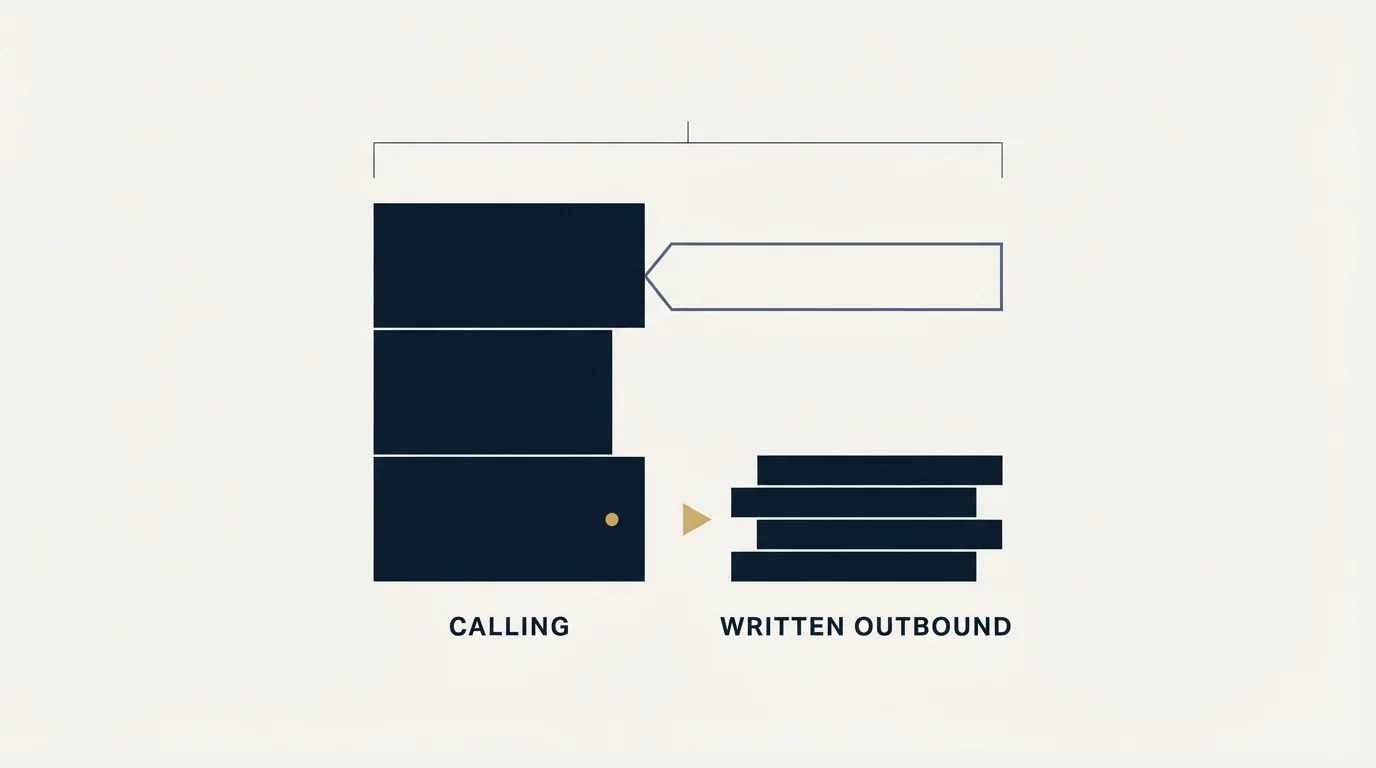
If you are pricing calling because pipeline is short, price the written channels in the same exercise rather than sequentially. They fail differently, cost differently, and suit different market sizes. Cold email and LinkedIn scale to markets no calling team could physically cover, and they cost infrastructure rather than salary. Calling reaches people who never open email and gives you an answer the same day.
Vendors marketing themselves as omnichannel outbound providers deserve scrutiny too, since the site's piece on omnichannel agency purchases separates the customer-experience version from the outbound version and explains when an extra channel earns its cost.
RevenueFlow runs the written half. Our campaigns send one message per prospect with nothing scheduled behind it, which is a deliberate constraint rather than a limitation of the tooling, and it is why our numbers are comparable across clients. If you want that half priced alongside the calling firms you are already talking to, RevenueFlow is paid only for meetings that are actually attended: see if you qualify, and compare it like for like against our outbound programmes.
Vendor pricing is taken from each vendor's own pages, with dated snapshots retained. Vendors change prices and contradict themselves across their own pages. Verify current terms with the vendor before relying on them.
Frequently asked questions.
Frequently asked questions- How much do cold calling agencies charge per qualified meeting for manufacturing buyers?
- None of the seven firms read publishes a per-qualified-meeting price, for manufacturing or any buyer. They price capacity: a rep per four weeks, a pod per month, or a starter package. Ask for the written meeting definition, the meetings a comparable team held, and the monthly price, and the ratio is the real price per meeting.
- How much does it cost to outsource cold calling?
- Published entry points range widely. Superhuman Prospecting starts at $1,998 a month, Belkins publishes from $5,000, SalesRoads shows one SDR at $11,950 per four weeks, and Callbox estimates $15,000 to $30,000 a month for one campaign pod. Several firms, including SalesHive and Martal, publish no figures at all.
- Is a per-appointment price better than a retainer?
- Only if the appointment definition is tight. Per-appointment pricing moves volume risk to the vendor, which is why qualification standards get strict, and it turns the definition into the contract. A retainer keeps the risk with you and is easier to compare across vendors, since it converts to a cost per meeting after the first month anyway.
- What should be in a cold calling contract?
- A written qualified-meeting definition with a named reviewer and a rejection window, whether callers are dedicated or shared with headcount stated, who owns list building and how it is priced, compliance ownership and the jurisdictions being called, the ramp period and its billing, and what happens to the list and the recordings at the end.
About the author.

B2B cold email experts helping companies generate qualified leads through done-for-you outreach campaigns.
RevenueFlow Team
Explore more.
Ready to scale your outreach?
We build GTM engines that book real meetings. See the receipts.
Related articles.
SDR Outsourcing for Logistics Companies: The Brokerage Line
What an outside sales development team may do in a freight company's name, the calling and email rules it inherits, and which arrangement survives a bid-shaped market.
SDR Outsourcing for Business Brokers: The Fee Timing
Whether a success-fee brokerage should rent sales development at all: the fee timing, the texts that limit what an outside person may say about value, and who signs.
Appointment Setting for Business Brokers: The Seller Meeting
What a bought meeting with a business owner has to be for a brokerage: the three-part qualification, the confidentiality rules, the licence line and the owner's reasons.
B2B Lead Lists for Aviation Companies: Build or Buy
Aviation is one of the few industries whose accounts are published by its regulator, which changes what is worth buying and what is worth downloading yourself.
LinkedIn Outreach for Banks: A Regulated Message
How a bank's relationship managers use LinkedIn to reach business owners: what the FFIEC guidance, FINRA's notices and LinkedIn's own rules require, and where to stop.
Cold Calling for PPC Agencies: What You Can See First
A paid media prospect is partly readable before the call and has already been told by the platform what to do when a stranger rings about its ads.