Gojiberry AI Pricing: One Plan, Then a Quote
Gojiberry AI publishes one plan and quotes the rest. The dated price, the meters it names, the billing terms, and the look-alike domain that is not the vendor.
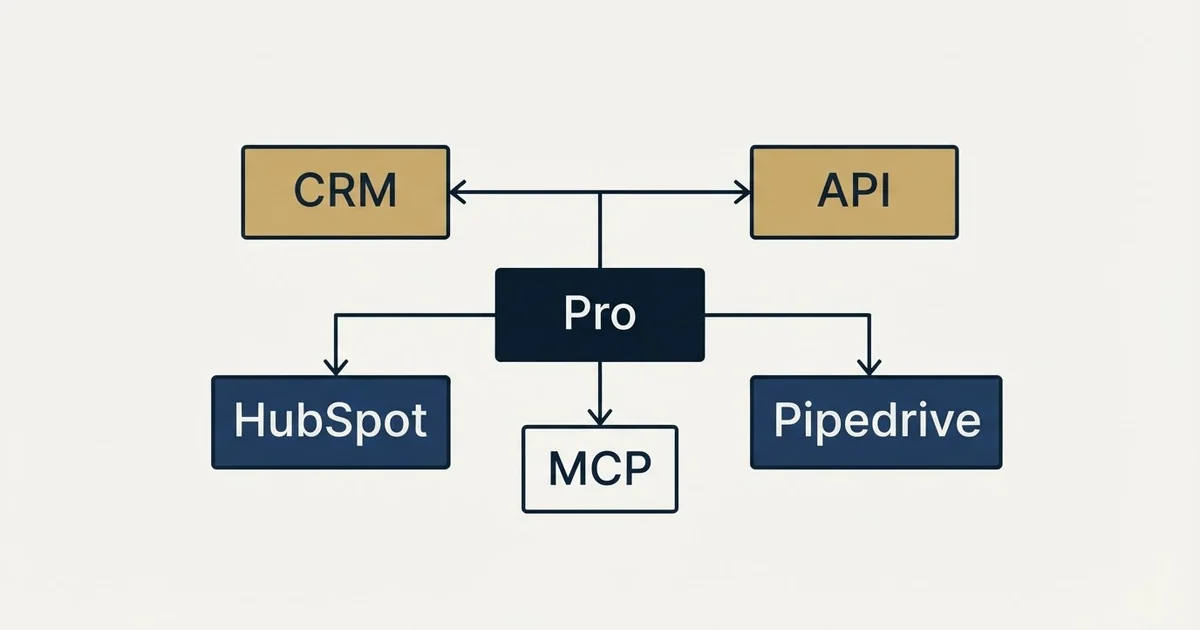
Gojiberry AI pricing is one published plan: Pro at $99 a month in US dollars, with two AI agents, up to 1,800 prospects contacted a month, and CRM, API and MCP integrations, plus a free trial. The Custom tier for teams of five or more and agencies has no published price.
Key takeaways
- Gojiberry AI's homepage publishes one price, Pro at $99 a month, with no annual tab, no per-seat rate and no overage figure.
- Pro includes two AI agents and up to 1,800 prospects contacted a month; the rate for more and the Pro sender ceiling are not published.
- The MCP connection to Claude is listed on the Pro card and priced nowhere separately; the vendor's MCP page says setup takes two minutes.
- Under the general terms, fees are charged immediately and are non-refundable after the trial, and significant price changes get 30 days' notice.
Reviewed and updated September 21, 2026
Gojiberry AI pricing is a section of its homepage, and it publishes one number. The Pro plan is $99 a month, in US dollars, for the plan as a whole rather than per seat, and the Custom tier above it is a conversation. There is no annual tab, no per-seat rate and no overage figure anywhere on the page, and a pricing page on a different domain, gojiberry.app, sits among the search results for this query although the vendor's own site never mentions it.
That last point is worth settling early, because it is where a buyer reading the results goes wrong. Everything below comes from gojiberry.ai's own pages, each statement attributed to the page it appears on.
Gojiberry AI pricing: Pro at $99, then Custom
Gojiberry AI's homepage lists one priced plan, Pro at $99 a month, with two AI agents and up to 1,800 prospects contacted a month, plus a free trial. The Custom tier for sales teams of five or more and outbound agencies carries no figure. No annual price, seat price or overage rate is published.
The pricing section is headed simple pricing for all your needs. Under it sit two cards.
The Pro card reads $99 a month and describes the plan as a first AI sales rep for founders and operators running their own outbound. Its included list runs: two AI agents prospecting around the clock; up to 1,800 prospects contacted a month, with more available; warm leads sourced automatically from signals and lookalikes; a unified inbox; smart lead scoring; an AI copilot mode; email waterfall enrichment across more than fifteen data providers; CRM, API and MCP integrations naming HubSpot, Pipedrive and Claude; and live chat support. The card's button offers a free trial.
The Custom card carries no figure and reads talk with us. It is described as being for sales teams of five or more and for outbound agencies scaling multichannel outreach, and its list adds to Pro: a custom number of agents, a custom number of prospects contacted a month, more senders across all channels, a dedicated customer success manager, deep and custom integrations, and admin access and views.
| Pro | Custom | |
|---|---|---|
| Price | $99 a month | No figure: talk with us |
| Agents | Two, prospecting around the clock | A custom number |
| Prospects contacted | Up to 1,800 a month, more available at no published rate | A custom number a month |
| Senders | Not stated | More senders across all channels |
| Integrations | CRM, API and MCP: HubSpot, Pipedrive, Claude | Deep and custom integrations |
| Support | Live chat | A dedicated customer success manager, admin access and views |
A strip near the foot of the page reads free trial, live in five minutes, cancel anytime. Nothing on the page states how long the trial runs or whether a card is required, and a rendered browser read of the section returns the same single figure the served page carries, so there is no client-rendered ladder behind the two cards. The in-app address app.gojiberry.ai/pricing opens a sign-in form, so whatever it shows a customer is not a public price.
The meters the page names, and the one it prices
Three quantities on the Pro card behave like meters, and only one of them has a number attached to the price.
Prospects contacted a month is the published allowance: up to 1,800, with the words more available beside it. The rate for more is not on the page, so the cost of a heavier month is unknown from the vendor's surfaces.
Agents is the second. Pro includes two agents prospecting around the clock, and Custom offers a custom number. Whether a third agent on Pro is possible, and at what price, is not stated.
Senders is the third. Custom lists more senders across all channels as an upgrade, which implies a sender ceiling on Pro that the Pro card does not state. On a product whose outreach runs across LinkedIn and email, the number of accounts sending is the quantity that most directly limits volume, and it is the one the page is least specific about.
The one priced meter does give a unit cost, as long as it is read as illustrative arithmetic on the card. Spread over the full allowance, $99 for 1,800 prospects contacted is 5.5 cents a prospect, or 60 a day across a 30-day month. A month that uses half the allowance doubles that unit cost, which is why the allowance, rather than the price, is the number to size against.
The terms behind the monthly figure
The general terms page carries the billing rules the pricing section does not. A paid subscription authorises the vendor to charge the payment method immediately and on a recurring basis. Fees are exclusive of taxes, which the vendor collects and remits where required, and a VAT number is requested where applicable. Subscription fees are non-refundable except as required by law, with no refunds for partial periods, unused time or non-use, and refunds at the vendor's discretion for duplicate charges and billing errors.
Cancellation is at any time, with the plan staying active until the end of the billing cycle. The vendor reserves the right to change pricing and features, and commits to communicating significant pricing changes at least thirty days in advance. The terms name the operating company as a French simplified joint-stock company registered in Paris, and the site footer states the product is made and hosted in the European Union.
Two things follow for a buyer. The monthly figure on the card is a rolling subscription with a thirty-day pricing-change notice, which is a reasonable term for a $99 plan. And the non-refund clause means the free trial is the evaluation window; there is no money-back period after it.
Gojiberry MCP: what the $99 plan connects to Claude
Gojiberry's MCP connection is part of the Pro plan rather than a separate purchase: the $99 card lists CRM, API and MCP integrations naming HubSpot, Pipedrive and Claude, and the vendor's own MCP page, headed "Run your multichannel outbound. Just talk to Claude.", prices nothing separately. The page says setup takes two minutes with no code.
What the connection does, on that page, is let a user run the agent from a Claude conversation: find warm leads, write messages, ask pipeline questions and research a prospect. Its examples are typed prompts, such as "Find me 20 SaaS founders hiring SDRs in the US", "Write a message for each of them" and "Which job titles replied most this week?". The page also describes dropping a company name into Claude to find the right contact, enrich it and add it to a list, and it frames the setup as connecting Claude to LinkedIn.
Claude, connected to Gojiberry over MCP
"Find me 20 SaaS founders hiring SDRs in the US" 1
"Write a message for each of them" 2
"Which job titles replied most this week?" 3
- 1Lead search, with leads scored by intent signal and pushed into Gojiberry.
- 2Drafting from social activity and intent data. What is sent, and how often, stays your own policy.
- 3Pipeline questions: reply rates, lead breakdowns and intent analysis.
That convenience does not change what the outreach is. A message drafted in Claude and sent through Gojiberry is the same LinkedIn or email touch it would have been from the Gojiberry app, and the same limits and policies apply to it.
The domain that is not the vendor
A pricing page at gojiberry.app appears among the top results for this query. Its search snippet describes a survey product priced from a monthly figure.
The raw bytes of gojiberry.ai's homepage, FAQ, general terms and MCP page carry no reference to gojiberry.app at all. The vendor's own application runs at app.gojiberry.ai, which the homepage links to throughout. On the vendor's evidence, gojiberry.app is a different product on a different domain that shares a fruit, and nothing on it is a fact about Gojiberry AI's pricing. Anyone comparing the two figures is comparing a survey tool to an outbound agent.
What the product is, and the doctrine that applies to it
The homepage describes an agent that reads your website, identifies best-fit prospects from buying and social signals, scores them against your ideal customer, and runs outreach across email and LinkedIn with AI-written messages. The FAQ is explicit that LinkedIn is one of the main channels today and that the product is not built to be just another LinkedIn tool, and it lists the signals it watches, from profile visits and company followers to engagement around competitors, job changes and hiring activity.
Two doctrine notes belong here because the product's channels invite them. On LinkedIn, a second message to someone who has not replied lands in the same thread and reads as a bump, so we run no LinkedIn no-reply retargets at all; the conditional multichannel steps the FAQ describes, from connection requests to email follow-ups, are reported as the vendor's features rather than as a recommended sequence. And on the account-safety question, the FAQ lists human-like sending limits, smart pacing and delays, quality filters and controlled daily activity, and adds in its own words that "results and risk depend on how your account is used, your sending volume, and your messaging quality." That is the vendor's claim about its own safeguards, and what LinkedIn's terms permit is a separate question the tool cannot answer for you. The wider trade-offs of automating LinkedIn outreach are worked through in LinkedIn automation tools.
The signal layer is the part of the product that distinguishes it from a sequencer, and what an intent signal can and cannot tell you before the first message is the subject of B2B intent data. Where an agent that both finds and contacts prospects sits against copilots that assist a rep, and how to locate the human checkpoint in each, is the test set out in AI SDR and AI sales agents.
Where the number sits in the category
At $99 a month for two agents and 1,800 contacts, the published plan is priced like a single-operator tool, and the vendor says as much: it is for founders and operators running their own outbound. The Custom tier is where teams and agencies are sent, without a figure.
That is a familiar shape in this category. Regie.ai's pricing page now lists RegieGO Pro at $49 a month for one person filling their own pipeline, above a free tier of 250 one-time credits. A single published entry plan with a quoted tier above it is the common pattern, and the evaluation question is whether the ceiling on Pro, the unstated sender count and the 1,800 contacts, is enough for the motion you run before the conversation with the vendor starts. For the broader boundary between a rep-team tool and a sending programme, sales engagement platforms sets out what each shape is built for.
Before subscribing, three questions are worth putting to the vendor during the trial and getting answered in writing: the sender ceiling on Pro, the rate above 1,800 prospects a month, and whether a third agent can be added without moving to Custom.
The short version
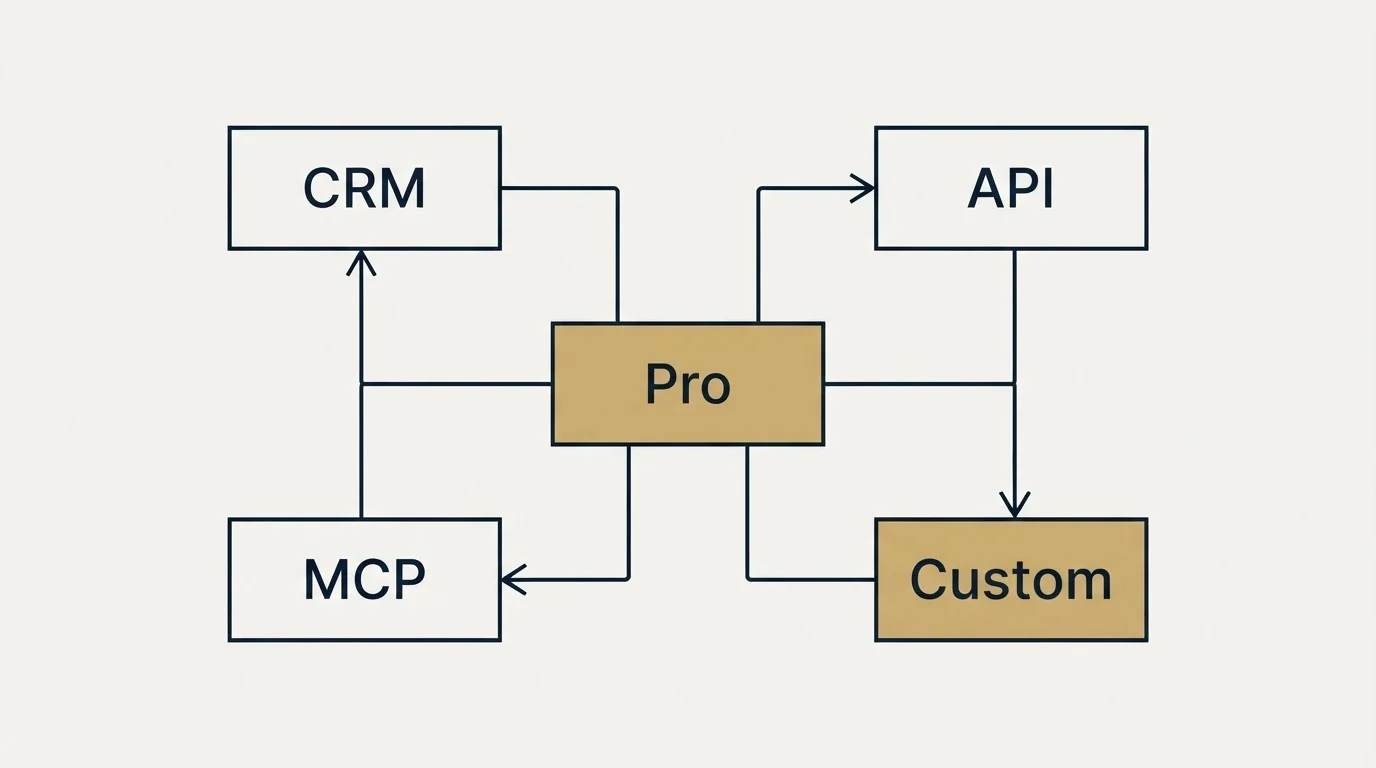
Gojiberry AI's homepage lists Pro at $99 a month for two AI agents, up to 1,800 prospects contacted a month, automatic warm-lead sourcing, a unified inbox, lead scoring, waterfall enrichment across fifteen plus providers and CRM, API and MCP integrations, with a free trial and no annual state. The MCP connection to Claude is part of that plan. The Custom tier for teams of five or more and agencies is quoted, adding agents, volume, senders and a success manager. The general terms make the subscription recurring and non-refundable after the trial, with thirty days notice of significant pricing changes. The gojiberry.app pricing page in the search results is a different product.
Size on prospects contacted and senders, get the overage rate in writing during the trial, and ignore the survey tool that shares the name.
If the constraint is the supply of qualified conversations rather than the agent that starts them, you can see what a first campaign produces on your own market.
Pricing and features are taken from the vendors' own pages. Verify current terms with the vendor before relying on them.
Sources: Gojiberry AI homepage, pricing section, Gojiberry AI general terms, Gojiberry AI FAQ, Gojiberry AI MCP page
Frequently asked questions.
Frequently asked questions- How much does Gojiberry AI cost?
- Gojiberry AI's homepage lists one priced plan: Pro at $99 a month, for two AI agents and up to 1,800 prospects contacted a month, with a free trial. The Custom tier for sales teams of five or more and outbound agencies carries no figure and is quoted after a conversation. No annual price, per-seat price or overage rate is published.
- Does Gojiberry have an MCP server?
- Yes. The Pro card lists CRM, API and MCP integrations naming HubSpot, Pipedrive and Claude, and Gojiberry's own MCP page shows Claude being used to find warm leads, write messages and answer pipeline questions. The page says setup takes two minutes with no code, and no separate price for the connection appears on any page read.
- Can I get a refund on Gojiberry AI?
- Generally no. Gojiberry AI's general terms say subscription fees are non-refundable except as required by law, with no refunds for partial periods, unused time or not using the service. Refunds are at the vendor's discretion for duplicate charges and billing errors. The free trial is therefore the evaluation window, and a plan cancelled stays active to the end of the cycle.
- Is gojiberry.app the same company as Gojiberry AI?
- Nothing on Gojiberry AI's own pages suggests it. The homepage, FAQ, general terms and MCP page carry no reference to gojiberry.app, and the vendor's application runs at app.gojiberry.ai. The gojiberry.app pricing page that appears in search results describes a survey product, so its figures say nothing about Gojiberry AI's outbound agent.
About the author.

B2B cold email experts helping companies generate qualified leads through done-for-you outreach campaigns.
RevenueFlow Team
Explore more.
Ready to scale your outreach?
We build GTM engines that book real meetings. See the receipts.
Related articles.
Alta Pricing: No Rate Card, a Quote in Hours
Alta publishes no price. What its plans page, FAQ and blog disclose about how the platform is priced, the inputs that set a quote, and the numbers to ignore.
Sales Automation Software for Small Business: Four Buys
One search returns four unrelated products, and on at least one vendor's published plan list the automation is gated above the tier a small team buys.
Avoma Pricing: Recorder Seats, Free Viewers, and the Add-Ons
Avoma charges only for people whose meetings get recorded and makes viewers free, so the seat count to price is smaller than the team and the add-ons are larger.
Calendly Pricing: Every Plan and What Changes With Seats
Calendly's published rates read as annual by default. What each tier unlocks, why the same page shows three currencies, and where the non-profit discount lives.
Chili Piper Pricing: Seat Floors and What Each Rep Costs
Chili Piper publishes its floors, seat allowances and overage rates. What the $15,000 entry tier includes, and why the standalone calendar costs almost twice as much.
Apollo and Clay Integration: What Connects, Who Meters What
Clay's docs list one Apollo source and eleven actions. How the account connects, which way each action moves data, and which vendor bills each step.