High Pressure Sales Tactics: What They Cost in B2B
Pressure selling manufactures scarcity, consensus and fatigue. The consumer has a statutory cancellation window against it and the B2B buyer has none.
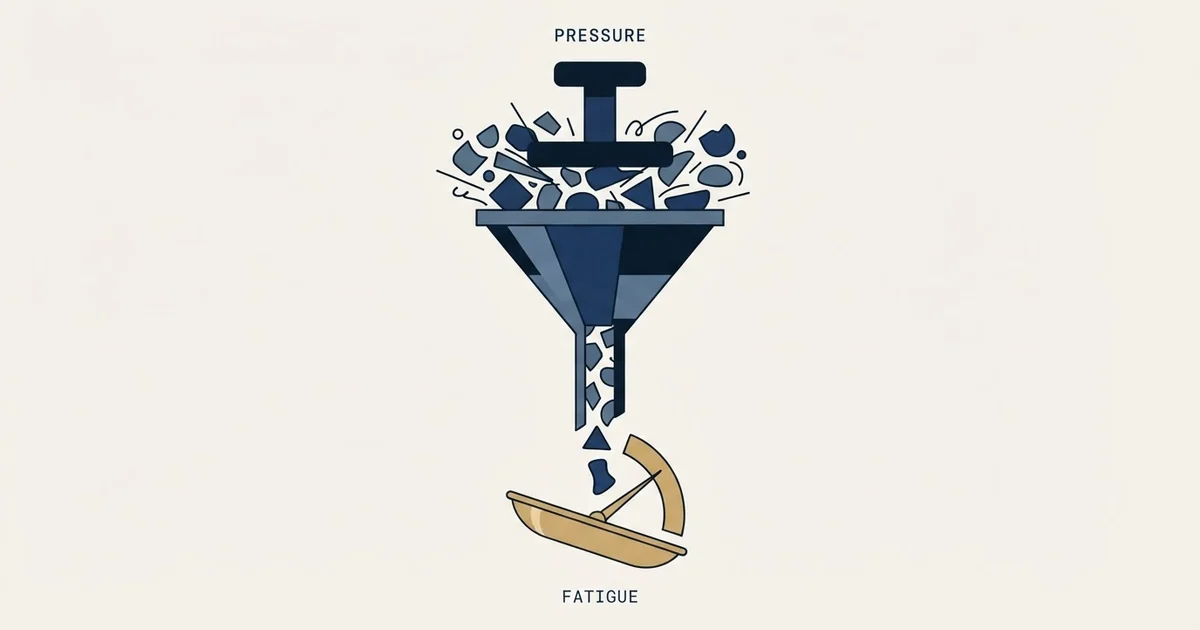
High pressure sales manufactures a condition the buyer's situation lacks: a deadline, a consensus or fatigue. The tactics were built for one-sitting sales between strangers. A B2B purchase is made by a committee with no statutory cancellation window, so the regret a pressured signature creates surfaces at renewal.
Key takeaways
- High pressure sales tactics fall into three families, manufactured scarcity, manufactured authority and exhaustion, each inventing a deadline, a consensus or fatigue.
- The FTC cooling-off rule at 16 CFR part 429 lets a buyer in a covered door-to-door sale cancel before midnight of the third business day.
- That rule reaches only goods and services bought primarily for personal, family or household purposes, so a company signing under pressure has no equivalent window.
- The test for real urgency is whether the deadline would still exist if you had never made contact; if not, you are asking the buyer to absorb yours.
Reviewed and updated September 21, 2026
Search for high pressure sales tactics and the results serve two audiences. Some pages are written for sellers. The rest teach buyers how to survive the tactics, and that group includes a small business agency, a legal explainer and a home improvement contractor writing about its own industry. Two audiences, one query, and the split is the most useful thing on the page.
It is useful because it tells you where the tactics come from. Pressure selling was built in markets where the seller meets the buyer once, the decision is made in one sitting, and nobody involved will speak again. Almost none of that describes a B2B purchase, and importing the technique into one carries costs the original market never had to price.
High pressure sales tactics: three families, three manufactured conditions
High pressure sales is selling that manufactures a condition the buyer's situation does not contain, so that a decision gets made on the seller's timetable. Structurally the tactics fall into three families: manufactured scarcity, a deadline that belongs to the seller; manufactured authority, an invented consensus; and exhaustion, where a stated no is treated as an opening position.
Named individually the tactics run to dozens. Structurally there are three, and each manufactures a condition that does not exist.
Manufactured scarcity. A price that expires tonight, a cohort with two seats left, a discount tied to signing before the call ends. The condition being manufactured is a deadline, and the tell is whose calendar it belongs to. A deadline that comes from the seller's quarter is manufactured. A deadline that comes from the buyer's renewal, budget cycle or compliance date is real, and it was already there before anyone called.
Manufactured authority. The manager who appears on the call to approve an exception, the claim that everyone in the buyer's sector has already moved, the framing that hesitation is a failure of understanding rather than a reasonable position. The condition being manufactured is consensus.
Exhaustion. The appointment that does not end, the same objection answered four times until agreeing is cheaper than continuing, the refusal to accept a stated no as information. The condition being manufactured is fatigue, and it works, which is the uncomfortable part. It works on one person, once. Pressure at the exit, where a buyer trying to end a call or a subscription meets one more offer or one more objection, belongs to this family too.
Each of the three produces a signature on a day the buyer would not have chosen. In a transaction that ends at the signature, that is the whole job. In a purchase that is the start of a multi-year relationship, it is the beginning of the problem.
| Family | Creates | In outbound |
|---|---|---|
| Manufactured scarcity | A deadline. The tell is whose calendar it belongs to | An offer that expires, sent to somebody who has never heard of you |
| Manufactured authority | Consensus: the approving manager, or everyone in the sector has already moved | A competitor named as a customer to imply the recipient is behind |
| Exhaustion | Fatigue: a stated no refused as information | The second and third message into silence |
The legal frame, and the reason it does not reach you
The consumer-defence half of that search result exists because consumers have a statutory backstop. In the United States the Federal Trade Commission's cooling-off rule, codified at 16 CFR part 429, requires a seller in a covered door-to-door sale to hand the buyer a notice stating, in the rule's own words, that "You, the buyer, may cancel this transaction at any time prior to midnight of the third business day after the date of this transaction." That text is quoted from the rule as published on ecfr.gov.
The rule's coverage is the part that matters here. Its definitions section applies it to sales of consumer goods or services, defined as goods or services purchased "primarily for personal, family, or household purposes", at a purchase price of "$25 or more if the sale is made at the buyer's residence" and "$130 or more if the sale is made at locations other than the buyer's residence", with hotel or motel rooms, convention centres, fairgrounds and restaurants among the eCFR definition's examples.
So a person pressured into a home improvement contract in their kitchen has three business days to undo it. A company pressured into a two-year software contract in a conference room, or at a booth in one of those same convention centres, has whatever its own contract says, and no equivalent window under this rule. The buyer with the least protection is the commercial one, which inverts the intuition that consumer tactics are the aggressive end of the trade.
That asymmetry is no argument for using pressure in B2B because you can; it is the reason the cost lands somewhere the seller does not look. There is no rescission window to absorb the buyer's regret, so the regret goes into the relationship instead.
What pressure does to a purchase made by a committee

The structural reason pressure underperforms in B2B has nothing to do with ethics and everything to do with who was in the room. A commercial purchase of any size is made by several people with different jobs, different objections and different exposure if it goes wrong, and the ones who were not on the call still have to agree. The buying committee is the object being sold to, and a single participant is not authorised to feel urgency on behalf of the rest of it.
Three things follow.
A pressured yes from one participant is not a decision. It is a commitment that participant now has to sell internally, to people who did not hear the pitch and did not feel the deadline, and who will ask why the timeline was so short. The seller has converted their own urgency into the buyer's internal credibility problem.
Procurement reads a compressed timeline as a signal. A deal that has to close this week gets read as a deal that will not be available on the same terms if it is examined, which is the opposite of the impression the compression was supposed to create, and it invites the scrutiny it was designed to skip.
The relationship keeps running after the signature. Renewals, expansions, references and the account team's next conversation all depend on a buyer who thinks the first decision was theirs. A buyer who thinks they were worked does not stop buying immediately, but they stop being an advocate, and an account that will not vouch for you is worth less than its contract value suggests.
The outbound versions nobody calls pressure
The tactics above are recognisable because they happen in a room. The same three families show up in outbound with different names, and they are easier to run at scale, which makes them easier to run without deciding to.
The deadline in a cold email. An offer that expires in a message to somebody who has never heard of you. The scarcity is manufactured twice over: the deadline is invented, and so is the premise that they were considering it.
Manufactured urgency is one way an opening line fails to earn its place, and the difference between personalization and relevance names the property that decides a reply.
The second and third message into silence. This is exhaustion, automated. Every message after the first goes only to people who received the previous one and chose not to answer, which is exactly the definition of the population being worn down. We do not send them. The reason is structural rather than squeamish: the reply lift is measured inside the campaign while the complaint cost is paid by the sending domain across every campaign running on it, so no per-campaign report can show you the trade you are making. The full argument is in why we stopped using follow-up emails, and the wider question of cadence is covered in sales cadence.
Social proof used as consensus. Naming a competitor of the recipient as a customer in order to imply they are behind is manufactured authority in a subject line. Naming one because the work is genuinely comparable is evidence. The same sentence does both jobs depending on whether it is true and relevant.
Real urgency exists, and it belongs to the buyer

The correction for pressure keeps the urgency and changes its source: the buyer's calendar rather than yours.
Fiscal year ends, budget that does not roll over, a contract renewal date, a compliance deadline, a hiring wave that has already started, a system being sunset by its vendor. Each of these is a genuine reason a decision is better made in October than in January, each of them is checkable, and none of them evaporates if the buyer asks a colleague about it.
The test is simple enough to apply while drafting. Would the deadline still exist if you had never made contact? If yes, it is theirs and you are describing it. If no, it is yours and you are asking them to absorb it. The corpus's urgency email templates are built on the first kind, and the distinction is the reason that page exists at all.
What replaces it, structurally rather than as an attitude
Pressure fills a gap left by qualification. A seller pushes hardest on the deals that should not have reached a proposal, because the alternative is admitting the pipeline is thinner than it looked. Fix the intake and the pressure loses its job.
That is the reasoning behind our own operating policy: what counts as a qualified meeting is agreed in writing before a campaign launches, and budget, timing and authority are never treated as billing conditions. Writing the standard down in advance is what makes it survive the end of a tight month, which is precisely when a manager is asked to accept a meeting that does not meet it.
The other half is what happens to a no. Much of what gets logged as an objection is a reflex rather than a position, and the two need opposite responses: one is worth answering and the other is worth accepting so the account is still reachable next year. Objection handlers covers the sorting, including which entries in a handler library earn their place and which are simply arguments against being told no.
The short version
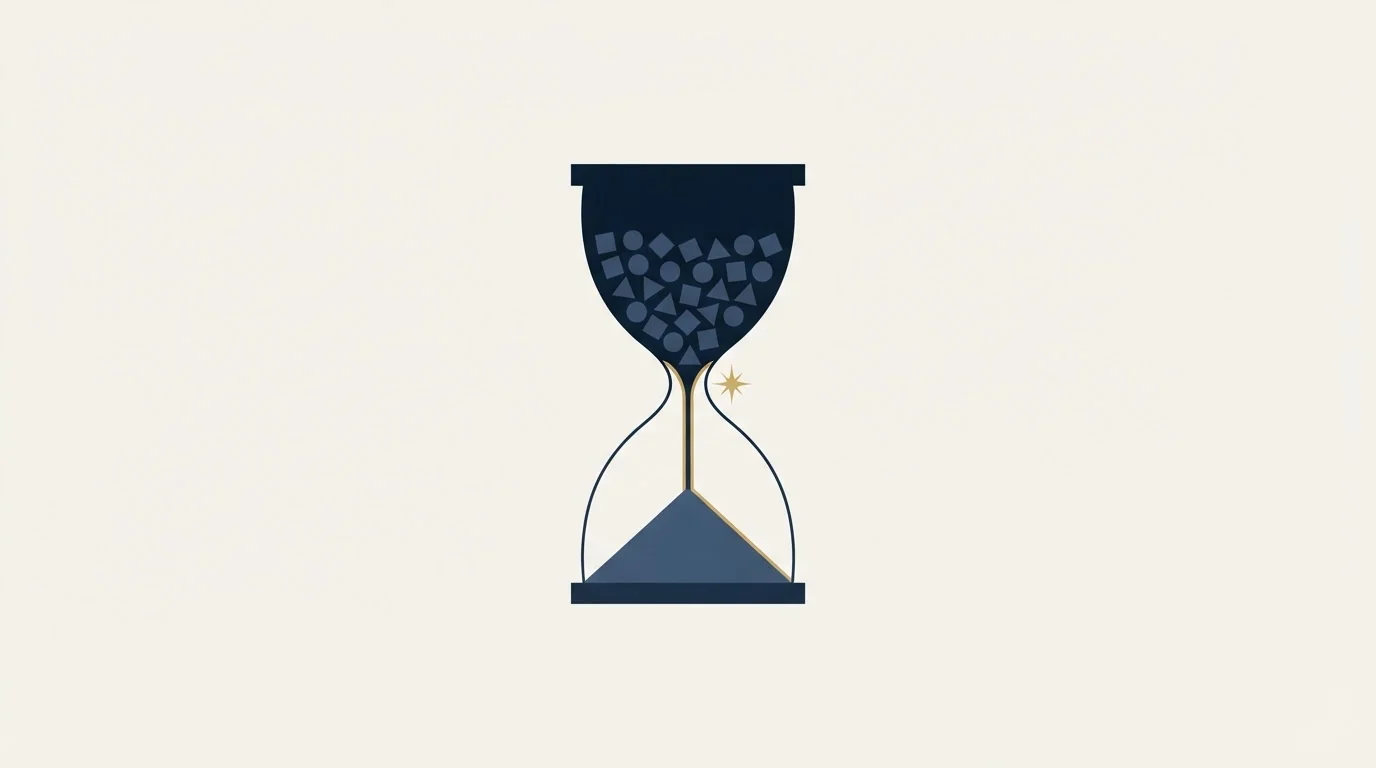
High pressure sales tactics manufacture three conditions that are not there: scarcity, consensus and fatigue. They were built for one-sitting transactions between strangers and they still work in that setting, which is why they persist.
They travel badly into B2B for a reason the tactic cannot see. The FTC's cooling-off rule gives a consumer three business days to cancel a covered door-to-door sale, and it reaches only goods and services bought primarily for personal, family or household purposes, so the commercial buyer has no equivalent window. The regret has nowhere to go except into the relationship, where it surfaces at renewal, in procurement and in the reference call the seller never hears.
The correction is sourcing urgency from the buyer's own calendar, testing every deadline against whether it would exist had you never made contact, and fixing the qualification standard that pressure is usually compensating for. In outbound that means one message per campaign and no bumps, because a sequence into silence is exhaustion with a scheduler attached.
If the reason a pipeline needs pressure is that there is not enough of it, we run the outbound half and are paid on attended meetings that meet criteria agreed in writing before anything sends.
The regulatory text above is from the eCFR, 16 CFR 429.0 and 429.1. Verify the current rule text before relying on it.
Sources: 16 CFR 429.1, 16 CFR 429.0
Frequently asked questions.
Frequently asked questions- What is high pressure sales?
- It is selling that manufactures a condition the buyer's situation does not contain, so a decision gets made on the seller's timetable. The three families are manufactured scarcity, a deadline from the seller's quarter; manufactured authority, an invented consensus; and exhaustion, where a stated no is refused as information until agreeing is cheaper than continuing.
- Are high pressure sales tactics illegal?
- Some conduct is regulated and most is not. In the United States the FTC's cooling-off rule gives a buyer three business days to cancel certain sales made away from the seller's place of business, and its definitions limit it to goods and services purchased primarily for personal, family or household purposes. Commercial purchases fall outside it, so a B2B buyer's remedy is their contract.
- Why do pressure tactics work worse in B2B?
- Because the person being pressured is rarely the person who decides. A commercial purchase involves several people with different jobs and different exposure, most of whom were not on the call. A pressured yes converts the seller's urgency into the buyer's internal selling problem, and a compressed timeline reads to procurement as a reason to look harder.
- What replaces pressure without losing urgency?
- Urgency sourced from the buyer's own calendar: a fiscal year end, budget that does not roll over, a renewal date, a compliance deadline, a system being sunset by its vendor. Each is checkable and none evaporates when the buyer asks a colleague. The drafting test is whether the deadline would exist had you never made contact.
About the author.

B2B cold email experts helping companies generate qualified leads through done-for-you outreach campaigns.
RevenueFlow Team
Explore more.
Ready to scale your outreach?
We build GTM engines that book real meetings. See the receipts.
Related articles.
SDR Outsourcing for Business Brokers: The Fee Timing
Whether a success-fee brokerage should rent sales development at all: the fee timing, the texts that limit what an outside person may say about value, and who signs.
SDR Outsourcing for Logistics Companies: The Brokerage Line
What an outside sales development team may do in a freight company's name, the calling and email rules it inherits, and which arrangement survives a bid-shaped market.
Appointment Setting for Business Brokers: The Seller Meeting
What a bought meeting with a business owner has to be for a brokerage: the three-part qualification, the confidentiality rules, the licence line and the owner's reasons.
Objection Handling Frameworks: LAER, AAA and Others Compared
The named objection-handling frameworks with their publishers quoted: Carew's LAER, RAIN Group's four steps, HubSpot's five, Gong's three and both AAAs.
SDR Outsourcing for Financial Services: The Third Party
What a bank, broker-dealer, adviser or agency's regulators say about an outside team that speaks for it, the licensed line, and which arrangement survives due diligence.
Sales Prospecting for Health Systems: The Public Record
Where health systems are written down in public: the Medicare cost report, the facility list a non-profit system files, and the two gates that follow qualification.