Lead Generation Tools for Small Businesses: The Stack Cost
Nine subscriptions, each cheap and each defensible, cost a two-person company more than a part-time hire. The money was never the expensive part of the stack.
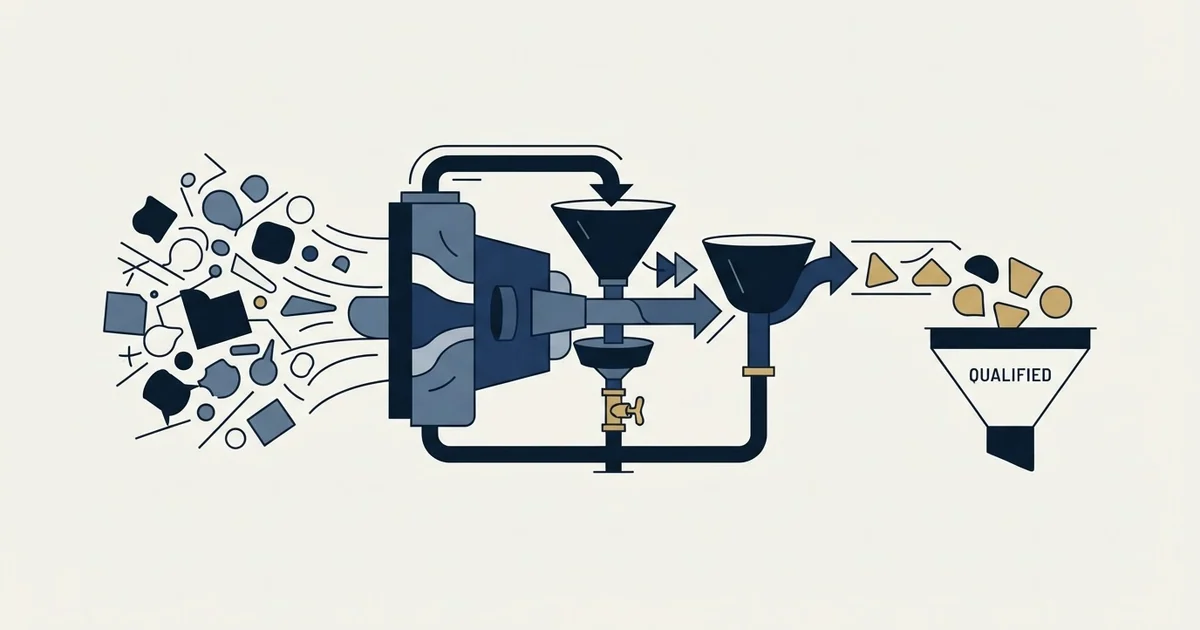
In a business of one to ten people the scarce resource is hours rather than licence fees, so a tool has to remove more of your time than it adds at your current volume. Cover reach, find, record and decide in that order, measure the manual baseline first, and name what each new tool replaces before buying it.
Key takeaways
- Every tool added is work added, so the test is whether it removes more hours than it costs to run at today's volume rather than at ten times today's volume.
- Deliverability comes first and is the layer small teams skip, because its absence is invisible until it damages the domain customers use to reach you.
- Prioritisation software solves a problem you do not have when your entire addressable market is a few hundred companies.
- Time the manual version once, for fifty accounts, and most of the tool comparison answers itself.
Reviewed and updated September 1, 2026
Lead Generation Tools for Small Businesses: The Stack Costs More Than the Subscriptions
A two-person B2B company audits its software at the end of a year. There are nine subscriptions attached to lead generation. Individually none looked significant when it was signed. Together they cost more than hiring somebody part-time, and four of them have not been opened in three months.
The interesting part is not the money. It is that the person who bought all nine did so rationally. Each one solved a real problem, each was cheap relative to the problem, and each promised to save time. What none of the purchase decisions accounted for is that a stack has a cost of its own, and in a very small team that cost is the binding one.
The scarce resource is hours, and tools consume them too
At larger companies a tool is evaluated on whether it improves an outcome, because there is somebody whose job includes running it. In a business of one to ten people there is no such person, and every tool added is work added: configuring it, keeping data consistent with the others, remembering it exists, and eventually migrating off it.
That changes the test a tool has to pass. Not whether it helps, because almost all of them help a little. Whether it removes more hours than it adds, within about a month, for the volume you actually run.
- Does this solve a real problem
- Is the monthly price defensible
- Does it have the features we might need
- Would a bigger company use it
- Does it remove more of my hours than it costs me
- At my actual volume, not at ten times my volume
- What breaks if I do this manually instead
- What does it cost to leave in eighteen months
The third line in the right-hand column is the one that saves the most money. For many jobs at small volume, doing it by hand is genuinely faster than configuring an automation, and it stays faster until the volume is several times higher than it is today. A tool that automates a task you do twenty times a month is usually a bad trade.
Four jobs, and how few tools they need

Any lead generation motion has to cover four things. The useful question is the minimum viable coverage rather than the ideal.
- Step 1Reach
Somewhere to send from, that arrives reliably
- Step 2Find
Accounts and contacts, with addresses that are real
- Step 3Record
One place that remembers who you contacted and what happened
- Step 4Decide
Prioritisation, and only once volume makes prioritising worthwhile
Reach comes first and is the one small teams under-invest in, because it is invisible until it fails. If you are sending cold, that means separate sending domains rather than your main company address, and enough of them that no single one carries damaging volume. Skipping this does not save money; it defers a cost onto the domain your customers email you at. Choosing among the platforms in this layer, without a vendor's thumb on the scale, is covered in how to actually choose a cold email platform.
Choosing sending infrastructure gets more concrete once you compare specific platforms, and email sending tools built for consultants weighs options against personalization and budget needs for small teams.
Find comes second, and the honest news is that this layer has become cheap and good. Verification in particular is inexpensive and it protects the first layer, so it is close to mandatory rather than optional. The available options are compared in best email finder tools.
Record comes third and can be a spreadsheet for a surprisingly long time. What matters is that one place knows who has been contacted, so the same person does not receive the same approach twice from two different lists. A dedicated system earns its place when more than one person is sending, or when you can no longer hold the state in your head. The lightweight end of that market is surveyed in best CRM tools for solopreneurs.
Decide comes last and is usually the first thing bought. Scoring, intent data and prioritisation solve the problem of having more accounts than you can contact. A small team contacting a few hundred accounts a month does not have that problem. It has the opposite one, and an hour of thinking beats a subscription.
What small teams buy too early
Three purchases recur, and all three are defensible in principle and premature in practice.
Intent data is the clearest. It answers which of these thousands should I contact first, which is a real question at scale and not a question you have when your entire addressable market is eight hundred companies. At that size the correct answer is to contact all of them thoughtfully over a year.
Workflow automation is the second. Connecting five tools so that a record flows automatically is satisfying, and it produces a fragile arrangement that only one person understands. At low volume the manual version takes minutes a week and never breaks silently.
An AI product that promises to run outbound is the third, and it deserves the most caution at this size. These tools generate volume, and volume is not what a small business is short of. A one-person operation that sends four hundred messages a day has not solved anything, because it cannot handle four hundred messages a day of replies and it has spent its small market in a fortnight.
The manual baseline is the thing you are actually comparing against
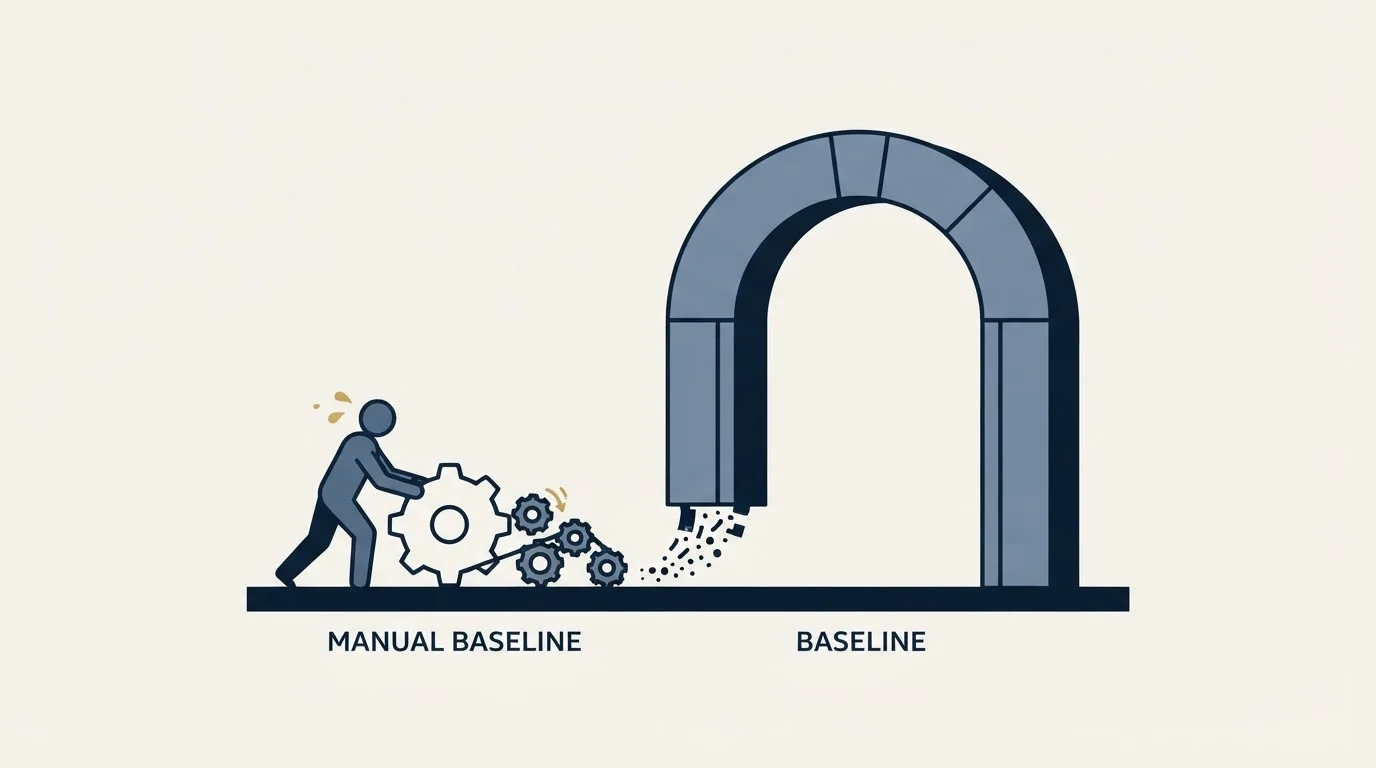
Before evaluating any tool it is worth knowing what the no-tool version costs, because that is the real alternative and almost nobody measures it.
For a small B2B business the manual version of a month of outbound looks roughly like this. Assemble a list of accounts from public sources and your own knowledge of the market. Find the right person at each. Verify the addresses. Write to them. Record what happened somewhere you will look again.
Time that honestly, once, for fifty accounts. Most people discover two things. The finding and verifying steps are genuinely tedious and worth paying to remove, which is why that layer is the first sensible purchase. The choosing and writing steps take real time and are also the steps that determine whether any of it works, which is why automating them is the trade that most often disappoints.
That timing is also the honest answer to free lead generation, because the version with no subscription attached still costs the hours you have just counted.
That single measurement replaces a great deal of tool comparison, because it tells you which line items in your month are large enough to be worth attacking. It also gives you a number to check the vendor's claim against, rather than accepting a general promise about efficiency.
The pricing traps worth knowing before you sign
Small-business software pricing is designed around a predictable set of moments, and knowing them is worth more than negotiating.
The free tier that stops being free at exactly the point it starts working is the most common. The limit is usually set just below the volume at which the tool becomes genuinely useful, which is not an accident and is not unreasonable, but it should be part of the decision rather than a surprise in month three.
Credit systems are the least predictable. A credit rarely corresponds to one useful result: a failed lookup often costs one anyway, a single enriched record can consume several, and a misconfigured run can consume a month's allocation in an afternoon. Ask what happens on a miss before you buy.
Since metered credits punish an unlucky miss the same way a hit does, it helps to see how that model plays out in practice, as covered in ZoomInfo's assistant integration and pricing.
Per-seat minimums catch growing teams. A tool that costs one amount for one person can cost several times that at three, because the plan that supports three has other things bundled into it.
The same tiering decides whether the automation is included at all, and sales automation software for a small business sets out the four products that one search returns and which tier each vendor gates its workflow engine behind.
Annual commitments are worth taking when the tool has already proven itself and worth refusing before that, even at a discount, because the discount is priced against the probability that you will stop using it.
- Yes: It removes more of your hours than it adds, at your current volume
- Yes: You have done the job manually at least a few times first
- Yes: You know what a credit or unit actually buys, including on a failure
- Yes: Your data comes out in a usable format if you leave
- Yes: It replaces something rather than sitting alongside it
- No: It was bought to solve a prioritisation problem you do not yet have
- No: Its headline capability is producing more messages per day
The fifth line is the discipline that keeps a stack small. Adding is easy and removing never happens on its own, so the habit worth building is to name what a new tool replaces at the moment of buying it, and to actually cancel that thing.
Where the tools stop mattering

The uncomfortable conclusion of a page about software is that the tool choice is not where small-business outbound is won or lost. Two teams with identical stacks will get very different results, and the difference is in who they chose to contact and whether the message said anything true and specific.
Our own practice reinforces that. One message per campaign, built on one premise, sent once. If a different premise is worth putting to the same account later, that is a separate campaign with its own reason to exist. For a small business this constraint is a considerable practical relief, because it removes the largest ongoing time sink in outbound and puts the effort into the list and the message, which is where the outcome is decided anyway. It also fits the volume reality: a small addressable market rewards care and punishes repetition faster than a large one does.
The corollary is a cheap annual habit. Once a year, list every subscription attached to lead generation, write down what each one replaced, and cancel anything whose answer you cannot remember. That exercise takes under an hour and it is the only reliable defence against a stack that grew one defensible decision at a time.
For the operating motion around all of this, lead generation for a small business covers what one person can realistically run, and if the answer is to buy the motion instead of building it, lead generation companies for small business works through where that arithmetic stops holding.
If you would rather see a target list and a first message built against your own market before adding anything to the stack, see what a first campaign looks like.
Frequently asked questions.
Frequently asked questions- What lead generation tools does a small B2B business actually need?
- Four jobs, and fewer tools than most stacks contain. Somewhere to send from that arrives reliably, a way to find and verify contacts, one place that records who was contacted and what happened, and prioritisation only once volume makes prioritising worthwhile. The record layer can be a spreadsheet for a surprisingly long time.
- Which tools do small teams buy too early?
- Intent data, workflow automation and anything that promises to run outbound for you. Intent data answers which of thousands to contact first, which is not a question you have at small scale. Automation produces something fragile that one person understands. Volume tools generate more messages, and volume is not what a small business lacks.
- How do credit-based pricing models catch people out?
- A credit rarely corresponds to one useful result. A failed lookup often consumes one anyway, a single enriched record can consume several, and a misconfigured run can burn a month's allocation in an afternoon. Ask what happens on a miss, whether credits expire, and how a partial return is billed before signing anything.
- Is it worth committing annually for the discount?
- Only once the tool has proven itself in your actual workflow. Before that the discount is priced against the probability that you stop using it, and the vendor is better at estimating that probability than you are. Take the monthly rate first, and convert when the tool has survived a few months of real use.
About the author.

B2B cold email experts helping companies generate qualified leads through done-for-you outreach campaigns.
RevenueFlow Team
Explore more.
Ready to scale your outreach?
We build GTM engines that book real meetings. See the receipts.
Related articles.
RevOps Tools: Nine Products and the Job Each Does
Nine revenue operations products sorted by the six jobs the category covers, with every product fact and price read off the vendor's own pages and dated.
Video Prospecting Tools by Job: What Each One Is For
Ten video prospecting tools sorted by the job each vendor's own page describes: record and share, personalise at volume, avatars, hosting and interactive demos.
The Real Cost per 1,000 Emails, Verifications and Data Credits in 2026
Unit prices computed from verified vendor plans: $1.00 per 1,000 emails sent, $2.00 per 1,000 verifications and $19.60 per 1,000 enrichment credits.
Which CRMs and Tools the Outbound Stack Connects To: Integration Data From 342 Sales Tools
HubSpot is named as an integration by 52.3% of 342 verified sales tools, Zapier by 50.3% and Salesforce by 43.3%. Here is the full map by category.
Sales Engagement Platform Pricing in 2026: What 61 Tools Charge and Which Hide It
Sales engagement platforms start at a median of $75 a month, 70.5% carry a quote-only tier, and AI SDR platforms start at $204.50. Data from 61 verified tools.
Free Tiers and Trials in Sales Tools: What $0 Gets You Across 386 Vendors
37.0% of 386 verified sales tools have a permanent free plan. The median free data tier gives 50 credits and the median free sending plan 2,500 emails a month.