RevOps Tools: Nine Products and the Job Each Does
Nine revenue operations products sorted by the six jobs the category covers, with every product fact and price read off the vendor's own pages and dated.
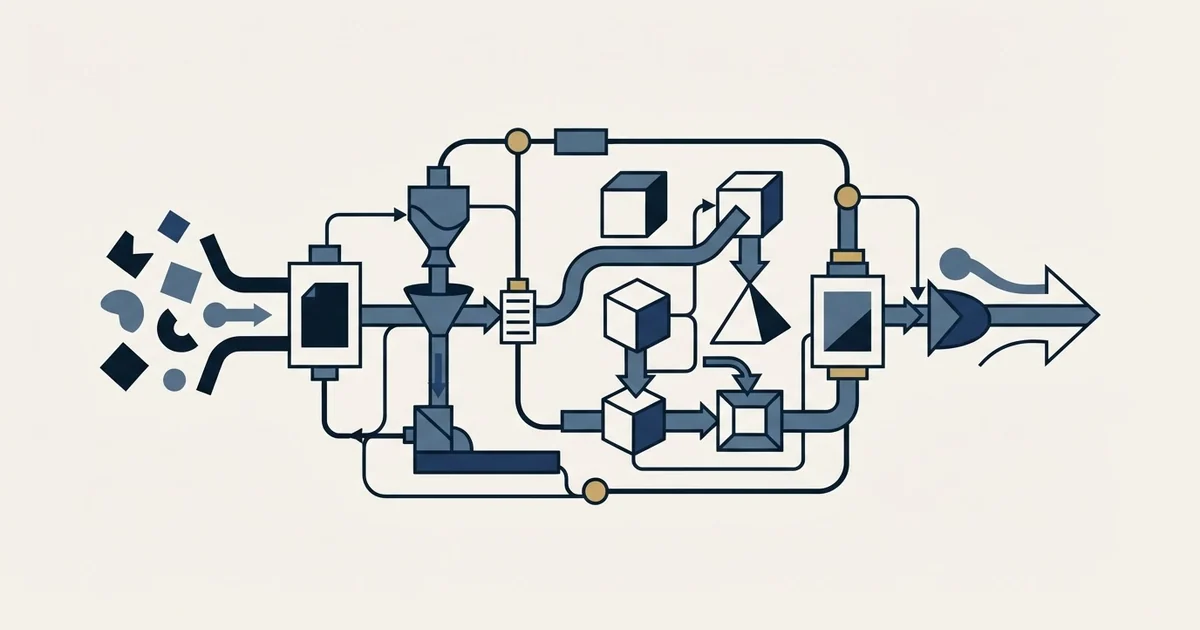
RevOps tools is a shopping term covering six separate jobs: record and data quality, signal to owner, data supply, forecasting and revenue intelligence, commission administration, and the wiring between them. Products in different rows are not alternatives. Sort your broken number into one job before reading any product page, and read the meter before the price.
Key takeaways
- Chili Piper's pricing page publishes a starting price of 1,250 dollars a month with fifteen seats included, read on 2 September 2026.
- LeanData's pricing page states that package pricing is based on features, objects, and number of Salesforce users or queues, and carries no dollar figure.
- CaptivateIQ defines a seat as admin users plus the total number of payees, so the bill scales with the sales organisation rather than the ops team.
- Clari's pricing page published no tier and no figure in its visible text on the date it was fetched, answering with a contact form instead.
Reviewed and updated October 1, 2026
Chili Piper's pricing page publishes a starting price of $1,250 a month for its Routing and Scheduling tier, with fifteen seats included, and its own calculator renders that as $15,000 a year on a one year contract. Clari's pricing page, headed "Priced to run revenue, not hurt the bottom line", publishes no figure at all: the page fetched on the same date answers with a contact form and nothing else. Both products are sold as revenue operations software, both were fetched on 2 September 2026, and a buyer comparing them on price is comparing two different kinds of decision.
That is the first thing to know about this category: it is not a category. RevOps tools is a shopping term covering at least six separate jobs, bought by different people at different moments, and the expensive mistake is buying at the wrong job rather than choosing the wrong product inside one.
Who buys at each of those moments is a separate argument, and which function owns a definition once it exists settles more than any scope statement about the two.
What follows sorts the nine products below by the job each does, with every product fact taken from that vendor's own pages and dated to the day it was read. Nothing here is a ranking, because products in different rows are not competing with each other at all.
The six jobs a RevOps stack is asked to do
The function itself owns systems, data, process and reporting across marketing, sales and customer success, which is set out in full in what revenue operations actually owns. The tooling divides along those lines.
Record and data quality. The CRM is the system of record and everything else reads from it. The job here is keeping the records complete, deduplicated and current, which is not a purchase so much as a configuration and a maintenance habit.
Signal to owner. Getting an inbound hand raiser or a matched account to the right person fast enough that the interest is still live. Matching, routing rules, service level enforcement and scheduling all sit here.
Data supply. Enrichment and research: the fields the CRM does not hold and somebody has to fetch. Metered by the vendor, which makes it the layer whose bill moves with usage rather than with headcount.
Forecasting and revenue intelligence. Reading the pipeline and saying what will close, usually by adding evidence generated outside the CRM fields themselves.
Which evidence that reading rests on sorts the category, and platforms that start at the buyer interaction can know different things from those starting at the record.
Commission administration. Calculating what gets paid, from closed business and a plan document.
Wiring. The integration layer that moves records between all of the above and decides which system wins a disagreement, covered at the engineering level in CRM integration.
A layer built on an unreliable one below it inherits the unreliability and presents it in a better interface. The general form of that argument, with the five layer version of this map, is in sales operations software, and it is worth reading before shortlisting anything here.
Record and data quality
HubSpot Data Hub. HubSpot's operations product page describes combining scattered data, enhancing data quality automatically and activating customer intelligence across the platform. The commercial shape is stated plainly on the same page: "Data Hub is available in Free, Starter, Professional, and Enterprise editions." The page adds that Professional and Enterprise editions include additional HubSpot Credits for using data studio, that credits are consumed when syncing data outside data studio, and that all other Data Hub features are included in the subscription without additional credit usage. As published on hubspot.com on 2 September 2026.
The important property of this one is that it is a layer inside a CRM rather than beside it. If your system of record is HubSpot, some of what a separate data quality vendor sells is already in a tier you may be paying for. If it is not, this product is not available to you at all.
Syncari. Syncari's home page positions the same job as master data management rather than as a CRM feature, describing "One master data foundation with infinite multi-domain possibilities" and a hub and spoke architecture with real time cleansing. As published on syncari.com on 2 September 2026. That is a different buyer: a company with several systems each holding a version of the same account, where no single CRM can be declared the winner.
Signal to owner

LeanData. LeanData's platform page names three products in capitals, ORCHESTRATION, SCHEDULING and JOURNEYS, and sets out the first as a way to "Capture demand by connecting people, data, and systems to evaluate every buying signal and trigger the right follow-up action." As published on leandata.com on 2 September 2026, the second turns buyer intent into booked meetings and the third covers buying groups.
Its pricing page is the more useful document, because it says how the bill is built without giving a number: "Package pricing is based on features, objects, and number of Salesforce users or queues." As published on leandata.com on 2 September 2026, that page carries no dollar figure anywhere in its visible text. Two things follow. The product is priced against a Salesforce install, which tells you which system of record it assumes. And the meter is objects and queues rather than seats, so the bill moves when the routing model gets more complicated rather than when the team grows.
Chili Piper. Chili Piper's home page describes one engine covering "Qualification, enrichment, routing, scheduling, and follow-up" between a form fill and a booked meeting. Its pricing page publishes real numbers, which in this category is unusual enough to be worth stating: the Routing and Scheduling tier "Starts at $1,250" a month with "Up to 15 seats included, $45/seat/mo after that", the Experiences tier starts at $3,500 a month with up to thirty seats and $50 per seat after, and the scheduling component is sold on its own at "$12 / user / month" with a "Minimum 200 seats". All as published on chilipiper.com on 2 September 2026.
That ladder tells a small team something worth knowing before a demo: the entry tier includes fifteen seats whether or not you have fifteen people, and the standalone calendar needs two hundred. This is a product priced for a company that already has an inbound volume problem.
Data supply
Clay. Clay's pricing page meters the product in two units rather than one. Actions measure platform usage and data credits buy data from vendors in its marketplace, and the second unit is priced openly: as published on clay.com on 2 September 2026, "Data Credits start at $0.05 each and become more cost-effective as you grow." Monthly and annual commitments are rendered on the same page. The two meter design is the fact that matters at shortlist time, because a workflow can be cheap in one unit and expensive in the other, and a quote built from a seat count will not predict either.
The house position on this layer is that enrichment is bought against a specific list build rather than subscribed to at a level somebody guessed, and the reason is that the meter is the only part of the bill you control.
Forecasting and revenue intelligence

Clari. Clari's product page runs the heading "Products Purpose-Built To Run Revenue" over an "AI Revenue Orchestration Platform", and lists Clari, Clari Copilot for conversation intelligence and Groove by Clari for sales engagement as separate products under one login. As published on clari.com on 2 September 2026. Its pricing page names no plan, no tier and no figure: the visible text of the page fetched on that date carries no dollar amount, and the call to action is a form. Clari's pages now redirect to Salesloft: the two companies completed their merger on December 3, 2025, Salesloft's merger page says they "are now operating as one company, with Salesloft as our go-forward company and platform brand," and Salesloft's site offers a separate Clari Forecast login.
Gong. Gong's revenue operations software page lists the components it considers standard for the category, among them "Automated data capture from calls, emails, and meetings", unified pipeline and forecast management, and workflow automation. As published on gong.io on 2 September 2026. The capture half is the load bearing part: this layer exists because somebody decided the fields a rep types cannot be trusted on their own.
Before buying at this layer, read which layer of forecasting software you are buying. A forecasting product reads your CRM, so it renders whatever is underneath it more attractively without changing it, and the stage definitions that decide whether any of it means anything are a configuration problem covered in pipeline management in a CRM.
Commission administration
CaptivateIQ. Its pricing page describes "Simple, per-seat pricing" with a one time setup fee, and defines the seat precisely: "Seats are based on the number of admin users plus the total number of payees who will be managing their compensation on our platform." As published on captivateiq.com on 2 September 2026. That page also carries no dollar figure in its visible text and directs the reader to a custom quote.
The definition is the useful part. A seat here is not an operator, it is a payee, so the bill scales with the size of the sales organisation rather than with the size of the ops team. That is the opposite shape to LeanData's, and it is why a single blended budget for RevOps tooling tends to be wrong in both directions.
Wiring

Workato. Workato's home page describes a control and execution platform that governs artificial intelligence, and the line that names the integration job is its own: the platform is there to "connect apps and data, and orchestrate workflows and agents". As published on workato.com on 2 September 2026.
Middleware buys configurable mappings without code and costs a subscription, a second place where logic lives, and a failure mode where the logic sits in a web interface rather than in a repository. The three integration shapes and what each one costs are worked through in CRM integration.
- Chili Piper: tiers, included seats and an additional seat rate
- Clay: plans metered in actions and data credits
- HubSpot Data Hub: four named editions plus a credit meter
- LeanData: features, objects and Salesforce users or queues
- CaptivateIQ: admin users plus payees, and a one time setup fee
- Clari: no tier and no figure in the page's visible text
- Gong: the category page describes components rather than plans
- Syncari and Workato: enterprise motions with a demo as the entry point
What none of these products does
Three things get expected of a RevOps stack and are in none of it.
Deciding the definitions. What counts as a qualified lead, when an opportunity may enter a stage, and which team owns a handoff are written agreements between people. Every tool above executes definitions and none supplies them, which is why a routing product bought to settle an ownership argument installs the argument rather than ending it.
Making a bad number honest. A forecasting layer with unreliable stage data produces a confident forecast from bad inputs and nothing about it announces the problem. The order that works is definitions, then data quality, then integration, then tooling.
RevOps automation is this same map read as a shopping list, and the buying order does not change: automate inside the job where the number is actually broken, because a triggered workflow running on records nobody trusts distributes the existing errors faster and reports that it is working.
Supplying demand. None of this creates conversations. A stack that routes, enriches, forecasts and pays perfectly against an empty pipeline is an expensive way to watch the same number.
- Yes: You can name the specific number that is currently wrong or missing
- Yes: You have checked whether the layer below is producing reliable input
- Yes: You know whether this vendor meters on seats, objects, payees or usage
- Yes: You know who owns the configuration after the implementation ends
- Yes: You can state what the team stops doing once it is in place
- No: The trigger is a plan for next year rather than a broken number
- No: You are buying here because the layer below is politically hard to fix
Where outbound sits inside this
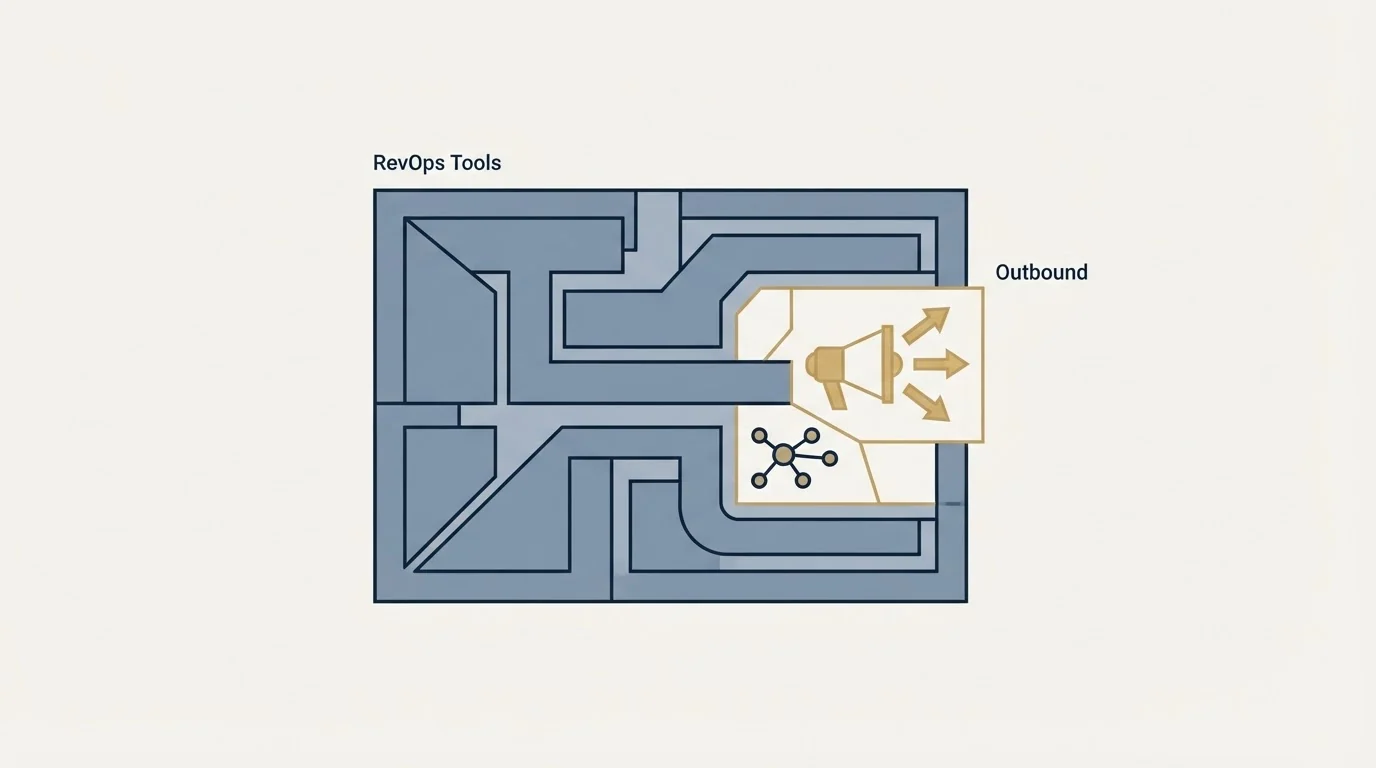
An outbound programme touches four of the six jobs and owns none of them. It reads the record, it consumes the data supply, it writes activity back, and its meetings land in the forecast.
The one requirement worth naming at shortlist time is write back quality. An outbound tool has to write its activity against the right record, with the right owner and the right timestamp, or the reporting dispute arrives every month and gets blamed on the sending platform. Test that path with real records and real owners during a trial rather than after one.
Our own practice sets a lower bar on this stack than a multi step cadence needs, and for a specific reason: we send one message per campaign, with no bumps and no thread replies, so there is no multi step cadence for a tool to orchestrate. That removes the sequencing layer from the requirement list entirely and puts the weight on the list and the record instead.
The short version
RevOps tools is six jobs under one search term: record and data quality, signal to owner, data supply, forecasting, commission administration, and the wiring between them. Sort your problem into one of the six before reading a single product page, because the products in different rows are not alternatives.
Read the meter before the price. LeanData bills on features, objects and Salesforce users or queues; CaptivateIQ bills on admin users plus payees; Clay bills on actions and data credits; Chili Piper bills on tiers with included seats. Those four bills move for four different reasons, and a headcount based budget predicts none of them.
Six of the nine name a meter or nothing at all rather than a number, on the pages fetched for this article. That is information rather than an obstacle: a vendor that prints a ladder is telling you which size of company it was built for, and a vendor that prints a meter without a number is telling you the shape of the bill without the amount.
Buy at the layer where the number is actually broken, and fix definitions before data, data before integration, and integration before tooling. Where the broken number is the count of qualified conversations rather than anything in the stack, no product on this page changes it: see what a first campaign produces against your market.
Vendor facts and prices verified against each vendor's own pages on 2 September 2026, with dated snapshots retained. Verify current terms with the vendor before relying on them.
Sources: Chili Piper pricing, Chili Piper home, LeanData pricing, LeanData platform, Clay pricing, Clari and Salesloft complete merger, Salesloft and Clari are now one company, CaptivateIQ pricing, HubSpot operations products, Syncari, Gong revenue operations, Workato
Frequently asked questions.
Frequently asked questions- What counts as a RevOps tool?
- Anything sold against one of six jobs: keeping the record complete and current, getting a signal to the right owner fast, supplying data the CRM does not hold, forecasting from pipeline and activity, calculating commissions, and wiring the systems together. Those are bought by different people at different moments, which is why a single shortlist across the category usually compares products that are not alternatives.
- Do RevOps tools publish their prices?
- About half do. On pages fetched on 2 September 2026, Chili Piper published tiers with included seats and an additional seat rate, Clay published plans metered in actions and data credits, and HubSpot named four Data Hub editions. LeanData and CaptivateIQ published the meter without a number, and Clari's pricing page carried no figure at all.
- Which RevOps tool should a small team buy first?
- Usually none of them. Most of the first year of the job is definitions and data quality, which are configuration and habit rather than purchases. The honest trigger for a tool is a specific number that is wrong or missing, plus evidence that the layer beneath it is producing reliable input. A plan for next year is not a trigger.
- Will a forecasting tool fix an unreliable pipeline?
- No, and it will make the problem harder to see. A forecasting product reads your CRM, so inconsistent stage definitions and stale close dates produce a confident forecast from bad inputs with nothing announcing the problem. Fix definitions first, then data quality, then integration, then tooling. Buying at the forecast layer to solve a hygiene problem is expensive twice.
About the author.

B2B cold email experts helping companies generate qualified leads through done-for-you outreach campaigns.
RevenueFlow Team
Explore more.
Ready to scale your outreach?
We build GTM engines that book real meetings. See the receipts.
Related articles.
Which CRMs and Tools the Outbound Stack Connects To: Integration Data From 342 Sales Tools
HubSpot is named as an integration by 52.3% of 342 verified sales tools, Zapier by 50.3% and Salesforce by 43.3%. Here is the full map by category.
Sales Engagement Platform Pricing in 2026: What 61 Tools Charge and Which Hide It
Sales engagement platforms start at a median of $75 a month, 70.5% carry a quote-only tier, and AI SDR platforms start at $204.50. Data from 61 verified tools.
Is Clay Free? The Free Plan, the Trial and Where Each Stops
Clay's free plan, its 14-day trial and the no-charge-on-a-miss rule are three different things. What each holds and where it stops, from clay.com on 19 September 2026.
Seamless.AI Email Finder: How It Works, What a Credit Buys
How Seamless.AI's email finder resolves a contact in real time, what one Universal Credit buys, the Total AI score on every address, and what the Chrome extension reads.
Video Prospecting Tools by Job: What Each One Is For
Ten video prospecting tools sorted by the job each vendor's own page describes: record and share, personalise at volume, avatars, hosting and interactive demos.
Social Selling Tools by Job, and the Account-Risk Line
Fourteen social selling tools sorted into six jobs, split by whether each acts through your LinkedIn account or beside it, from the vendors' own pages.