The Sales Process: Writing Steps a Buyer Has to Complete
The seven-step template names things the seller does, so a process built on it advances in quarters where nothing is bought. What to write instead, and how.
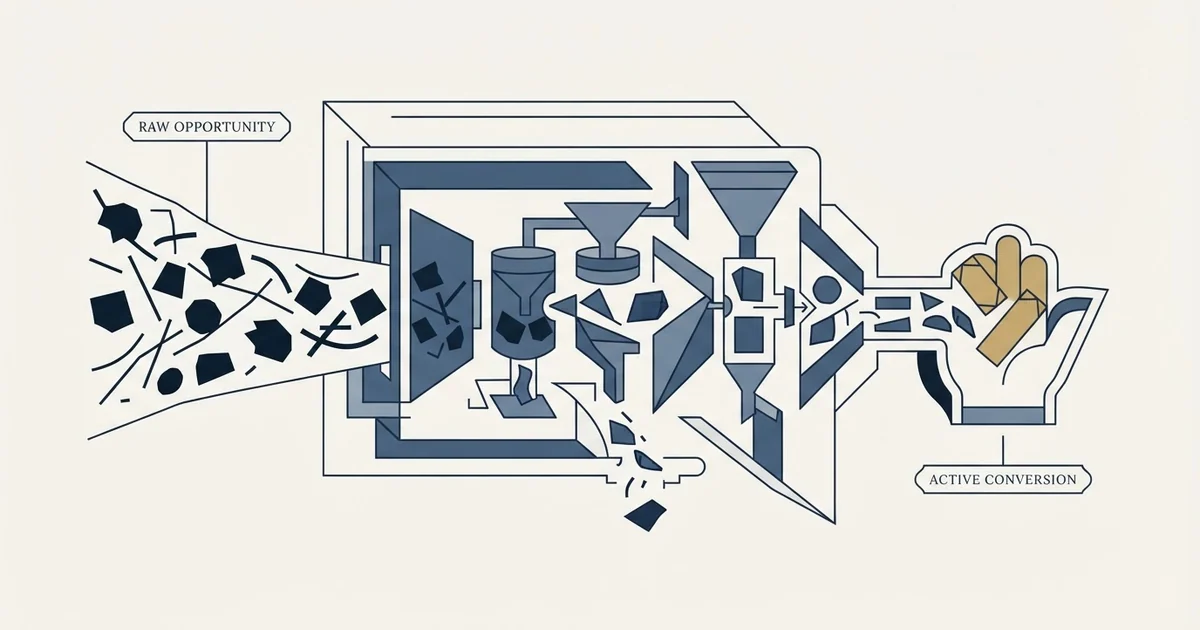
A sales process is the ordered set of events that turn a stranger into a customer, written so an uninvolved person can verify each one from the record. Steps phrased as buyer evidence can fail; steps phrased as seller activity always complete, which is why they break forecasts.
Key takeaways
- The classic seven steps describe seller activity, and seller activity is always available, so a process built on it shows movement whether or not anyone is buying.
- Derive your own steps by listing the observable buyer events in ten wins and ten losses, and keeping the ones that separate them.
- The process and the CRM pipeline are different objects: a step earns a stage only when the forecast should change as a result of it.
- Objections are evidence about which earlier step did not complete, not a stage that sits between presentation and close.
Reviewed and updated August 28, 2026
Ask five people in the same company to describe their sales process and you will get five answers, all of them sincere. One will describe the CRM stages. One will describe what a good rep does. One will describe what the deck says. The gap between those descriptions is not a communication problem. It is the process, and the fact that nobody can state it the same way twice is the reason deals fall over in places nobody predicted.
A sales process is the sequence of things that have to happen, in order, for a stranger to become a customer, written so that two people looking at the same deal agree on where it currently is. Everything else on the subject is downstream of that sentence.
Sales workflow is the other common name for the same object, and teams using it usually mean the sequence plus the systems and owners each step runs in, which is that sequence with its plumbing attached.
Defining a sales process starts with that sentence, because everything else on the subject is downstream of it.
Asked for the elements of a sales process, most answers list activities. The elements that matter are the buyer event each step asserts, the entry criteria, the expected duration, and the artefact that lets an uninvolved person confirm the step actually completed.
Published versions of the template run to four, six, seven, eight and ten steps, and an eight-step sales process is not more rigorous than a four-step one. The count is a formatting decision. The variable that changes outcomes is whether each step names something the buyer did.
The approach step is the clearest illustration of the problem. It names the seller making contact, so it completes on schedule whether or not the person on the other end has done anything at all.
Set out as the sales process in order, the classic sequence runs prospecting, preparation, approach, presentation, handling objections, closing and follow-up, and the ordering matters far less than whether each box names something the buyer did.
The seven-step template, and what it is for
Buyers evaluating a supplier usually ask about the outbound process and pricing in one breath, and the two answers separate cleanly: the process is the sequence below, and what it costs depends on the billing unit rather than on the steps.
Almost every published version of the process is a variant of the same seven steps: prospecting, preparation, approach, presentation, handling objections, closing, follow-up. It has circulated for decades and it appears on most of the pages that rank for this topic.
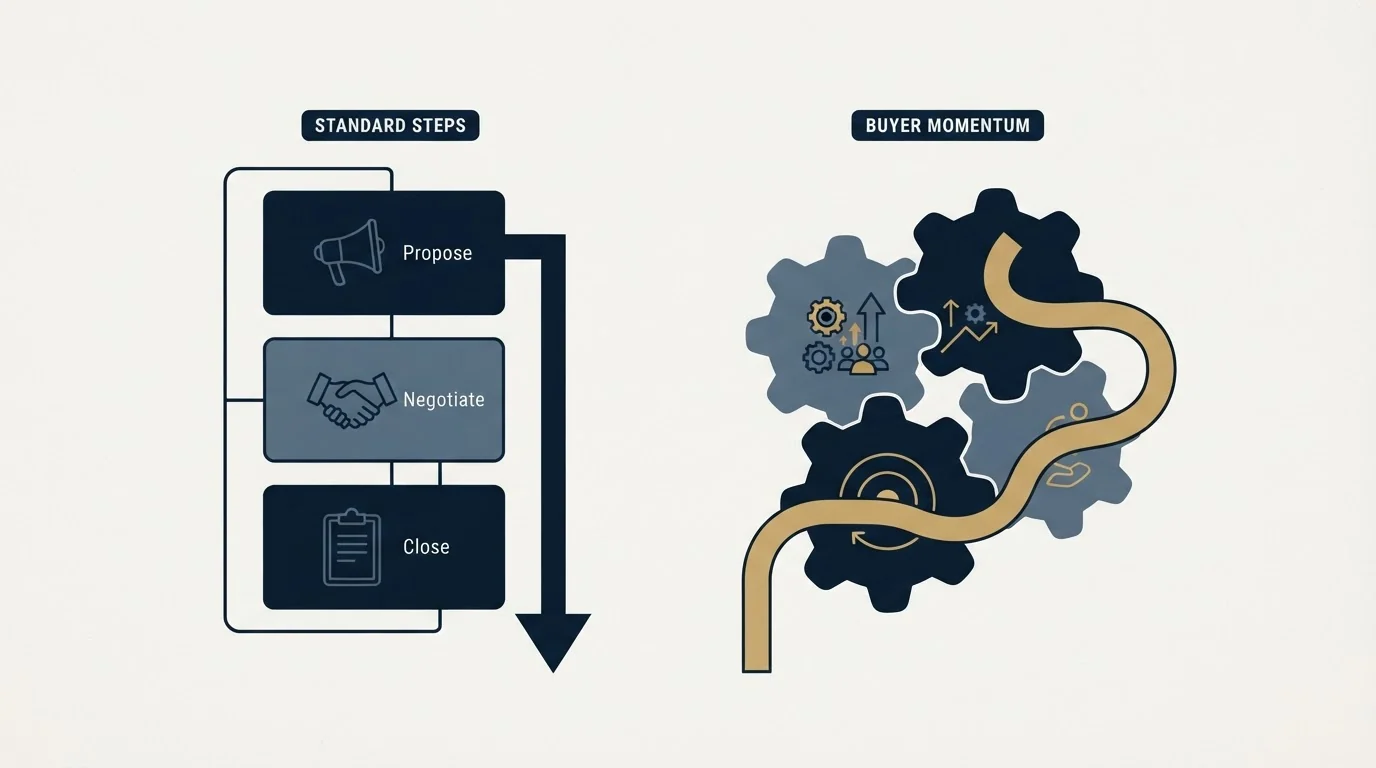
It is a useful shape and a poor process. Useful because it names the activities in roughly the order they occur, which gives a new seller somewhere to start. Poor because every step describes something the seller does, and a process built entirely out of seller activity advances whether or not anybody is buying.
That is the single most important idea on this page, so it is worth putting plainly. Seller activity is always available. A rep can prepare, approach, present and follow up without the buyer doing anything at all. A process whose steps are seller activities will therefore show healthy movement in a quarter where nothing is being bought, and the first evidence anyone gets that this happened is the number at the end of it.
Once seller activity stops counting as progress, the natural next step is redefining each stage around buyer verification, an edit covered in the customer centric sales process.
Build the process from what the buyer does
The repair is to write each step as a thing the buyer did, phrased so somebody who was not there could confirm it from the record.
- We qualified the account
- Discovery call completed
- Demo delivered
- Proposal sent
- Following up on the proposal
- Chasing signature
- They attended a meeting and the account meets criteria written before we looked
- They described their current process, its cost and who else is involved, in their words
- They confirmed the solution addresses the problem they described
- A priced proposal reached the person with authority to act on it
- They responded with terms, questions or redlines
- Signature routing is under way with a named owner
The second column is longer, and the length is the point. Each line can be checked by a manager who was not on the call, which means the process can be audited, forecast from, and used to find where deals actually die. Those are the only three jobs a process step has.
The practical way to derive your own is to work backwards from ten closed-won deals and ten closed-lost ones. For each, list the observable buyer events in order. The steps that appear in almost every win and are missing from almost every loss are your process. The steps that appear in both are activity, and they belong in activity reporting where they can be measured properly.
The stages a process is not
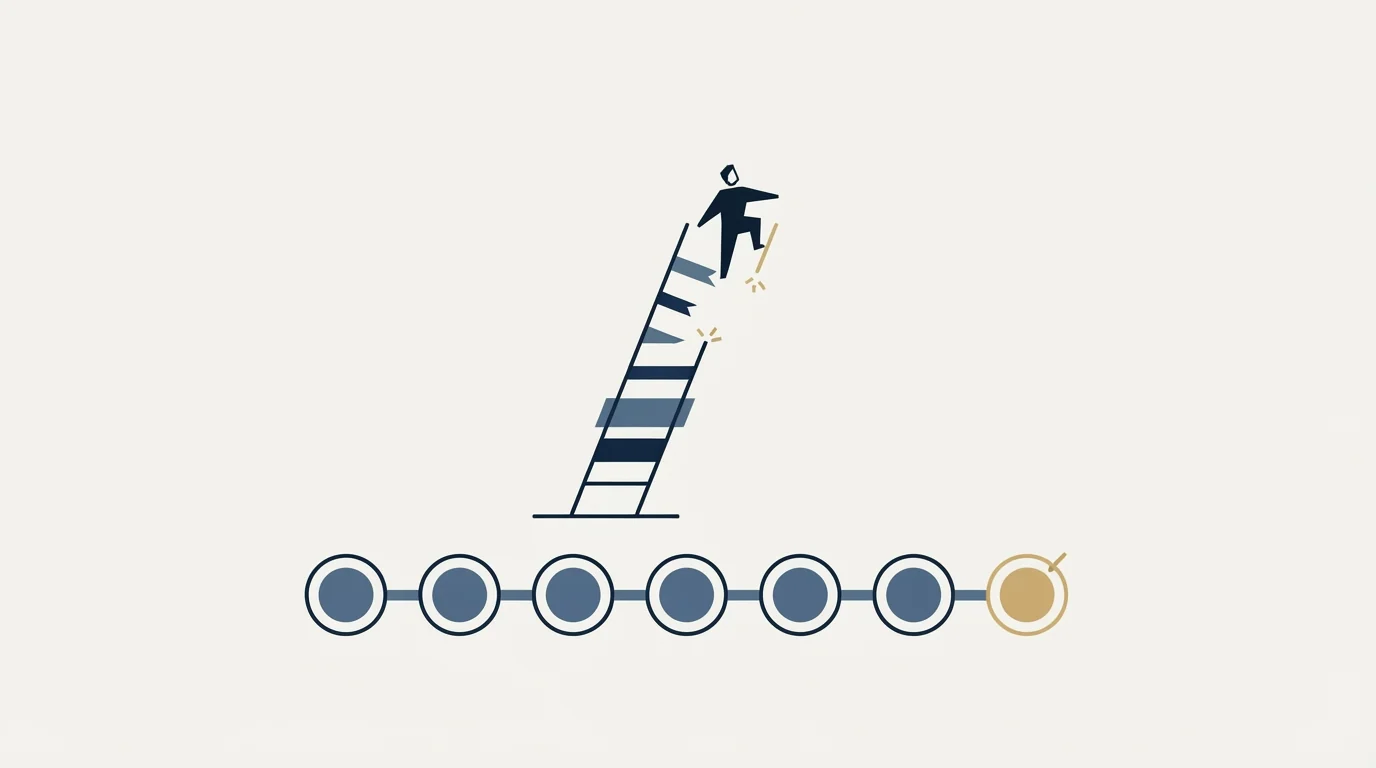
There is a persistent confusion between the sales process and the pipeline stages in the CRM, and they are related without being the same thing.
The process is the sequence of events. The pipeline is where the record sits while those events happen, and it exists to make the forecast arithmetic mean something. A process can have more steps than the pipeline has stages, and usually should: several things happen inside a single stage, and promoting each of them to its own stage produces the eleven-stage pipeline that nobody can explain. The stage design question, and the specific stages worth deleting, are worked through in pipeline stages that earn their place.
The practical rule is that a process step earns a stage only when the forecast should change as a result of it. Everything else is a field, a flag or an activity.
Where the process starts is a decision, not a fact
Most published versions of the process start at prospecting, which quietly assumes the same team does the finding and the closing. In a lot of companies that has not been true for years, and pretending otherwise creates a specific and expensive failure at the join.
- Step 1Targeting
Who is worth contacting, decided against a written profile rather than by availability of data
- Step 2Contact
One message, one premise, sent once, with the reply handled by a person
- Step 3Meeting agreed
A specific person agreed to a specific business conversation
- Step 4Meeting held
They attended and participated, which is the first event only the buyer can produce
- Step 5Accepted
Sales accepts the deal against criteria written before the campaign started. The sales process begins here
The join is where the arguments live, because the two sides are measured on opposite quantities. Whoever generates the meetings is measured on how many, and whoever receives them is measured on what closes. If the criteria for acceptance are not written down before contact starts, the bar moves with whichever number is currently short, and neither side can prove anything. The boundary two teams negotiate covers what that acceptance step actually asserts, and MQL versus SQL covers the handover one rung earlier.
Our own commercial position is a version of this rule made contractual. A meeting counts when the company matches the audience agreed in writing before launch, the person has genuine responsibility for the area, they agreed to a relevant business conversation and they attended. Budget, timing and authority are deliberately outside that definition, because a real conversation with the right person should not be voidable afterwards on a fact that changes every quarter.
Objection handling is a step in the wrong place
The classic seven-step version puts objection handling between presentation and close, as though objections arrive at a known point in the timeline.
They do not. They arrive whenever the buyer discovers something that conflicts with proceeding, which is frequently in the first two minutes and frequently after the proposal. Making it a step produces two habits, both bad: sellers who do not surface objections early because it is not time yet, and sellers who treat any resistance late in the deal as a scripted moment rather than as information.
The better treatment is that objections are a category of buyer evidence, not a stage. What they tell you is which of your process steps did not actually complete. A price objection at proposal usually means the impact of the problem was never established. A late arrival of a new stakeholder usually means the decision map was assumed. Which objection responses are worth keeping works through the taxonomy on the phone, where objections are most concentrated.
Documenting it so it survives contact
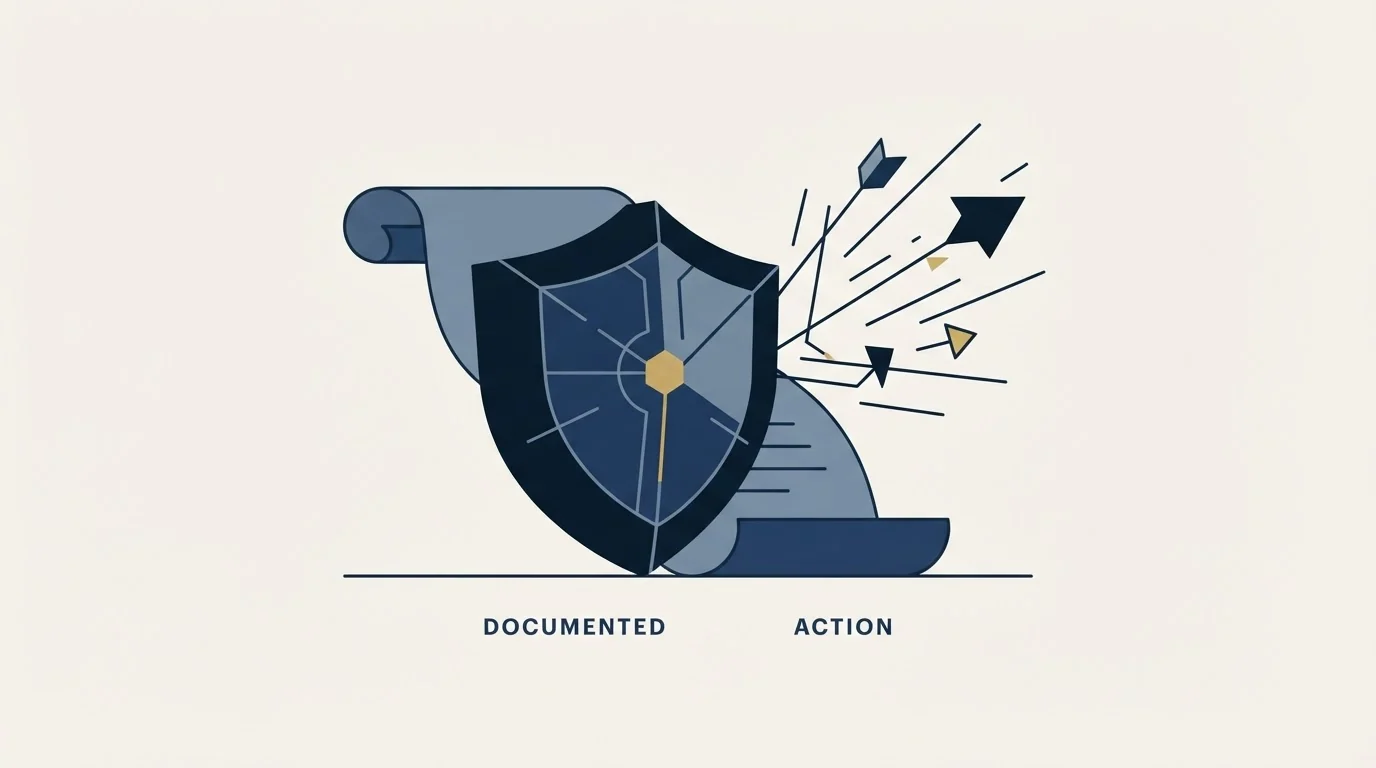
A process that lives in a slide deck is a description. A process that lives in the CRM, the review agenda and the onboarding of new sellers is an operating system. The difference is mostly about who is required to look at it.
- Yes: Every step names something the buyer did
- Yes: Two people reading a record agree on whether each step is complete
- Yes: The entry point is defined, including who accepts and against what criteria
- Yes: Deals are allowed to move backwards when the evidence says they should
- Yes: Each step has a typical duration drawn from your own closed deals
- No: Steps exist because a manager once asked a question nobody could answer
- No: Completion is attested by the seller with no artefact behind it
The backwards-movement item is the one most teams have never permitted, and its absence is diagnostic. If no deal ever moves back a step, either your sellers are unusually accurate or the steps have no criteria that can fail. The second is far more common.
Duration matters for a reason that is easy to miss. A step with no expected duration cannot produce a stalled-deal signal, so stalls are only noticed when somebody happens to look. With a duration, the review question changes from how the deal feels to why this one has been in a step for three times its normal age, which is a question with an answer.
How often to change it
Rarely, and never mid-quarter.
A sales process is a measuring instrument as well as an operating one, and every change breaks comparability with the period before it. Change it at a period boundary, map old steps to new one way only so historical conversion stays reconstructible, and re-check open deals against the new criteria by hand. Expect the pipeline to shrink when you do, because the re-check is where deals that had quietly stopped qualifying get found. A pipeline that does not shrink during a re-check was probably not carrying the problem the change was meant to fix.
The exception is the entry criteria, which should be revisited whenever the rejection reasons say something consistent. If a third of accepted deals die at the same step, the acceptance bar and the step before it are the two candidates, and the rejection reasons tell you which.
Deciding which step to fix first is exactly the question addressed by measuring and pruning a sales process.
Where we differ from standard practice
Much of the advice on this subject reflects how outbound is commonly run, and since this page sits on our site it is worth saying where we diverge and what it costs us.
Standard practice attaches a contact cadence to the prospecting step: a sequence of messages to each prospect over several weeks, later messages landing in the same thread. We run one message per campaign with no bumps and no thread replies. Where an audience does not respond, we build a new campaign with a genuinely different premise rather than sending a reminder of the old one. The reasoning is mechanical: a follow-up is delivered to the population that already saw the message and chose not to answer, which is the population most likely to complain, and the cost of that lands on the sending domain across everything else it sends. The full argument is in our write-up on why we stopped using follow-ups. The cost we accept is reaching each contact less often, which pushes the work into targeting and into the single message. The full argument, including what it costs us, is in why we stopped using follow-ups.
The short version
A sales process is the ordered set of buyer events that turn a stranger into a customer, written so an uninvolved person can verify each one. The seven-step template names activities rather than events, which is why processes built on it advance in quarters where nothing is bought.
Derive yours from ten wins and ten losses, keep it distinct from the pipeline stages in the CRM, define the entry point and who accepts against written criteria, allow deals to move backwards, and attach an expected duration to every step so stalls announce themselves. Treat objections as evidence about which step did not complete rather than as a stage in the middle.
The half of this that produces the conversations in the first place is what we run, on criteria agreed in writing before launch. See what a first campaign looks like for your market.
Frequently asked questions.
Frequently asked questions- What are the seven steps of the sales process?
- The circulating template runs prospecting, preparation, approach, presentation, handling objections, closing and follow-up. It is a reasonable list of activities and a poor process, because every item is something the seller does. A usable process names what the buyer did instead, so that a step can genuinely fail.
- How is a sales process different from pipeline stages?
- The process is the sequence of events. The pipeline is where the record sits while they happen, and exists to make weighted forecasting arithmetically meaningful. A process usually has more steps than the pipeline has stages, because several events happen inside one stage and promoting each to its own produces unmanageable bloat.
- Where should a sales process start?
- At acceptance, when a held meeting is checked against criteria written before anyone was contacted. Starting at prospecting assumes one team does the finding and the closing. Where those are separate, the acceptance test is the interface between them and has to exist in writing or the bar drifts with whichever number is short.
- How often should the process change?
- Rarely, and never mid-period. Every change breaks comparability with the quarter before it, so move at a period boundary, map old steps to new one way only, and re-check open deals by hand. Entry criteria are the exception and should be revisited whenever rejection reasons say something consistent.
About the author.

Ben Carden is CRO at RevenueFlow, which builds and operates outbound revenue engines for B2B companies. Previously at Gartner Enterprise. Studied at London School of Economics.
Ben Carden · CRO
Connect on LinkedIn →Explore more.
Ready to scale your outreach?
We build GTM engines that book real meetings. See the receipts.
Related articles.
The Seven-Step Sales Process: What Each Step Assumes
Prospecting through follow-up, walked one box at a time. Each of the seven steps carries an assumption about the buyer, and most of them have quietly stopped holding.
The Five-Step Sales Process: What You Stop Checking
Cutting a process to five steps is a decision about which checks you drop. Which deals the short version fits, and the two loss patterns that say it does not.
The Customer-Centric Sales Process: The Edit That Matters
Renaming the pitch achieves nothing. Writing every step as buyer evidence changes the forecast within a quarter, and three other things nobody warns you about.
The Managed Services Sales Process: Qualifying on the Estate
Selling an ongoing obligation at a fixed price changes what the process has to establish. The assessment step, the four signals that predict margin, and payback.
The Consultative Sales Process: What Diagnosis Costs
Diagnosis before prescription is easy to say and expensive to run. What the approach actually requires, and why proposal volume falls before close rate rises.
The B2B Sales Process: When Nobody Can Decide Alone
A process that works for one signer falls over when four people have to agree. What changes, which checks the committee forces, and where the process starts.